Side-by-Side Cognitive Profiles
At The Cosmic Pet Pet IQ Lab, we assess canine intelligence across five key dimensions: Problem Solving, Training Speed, Social Intelligence, Instinctive Drive, and Memory. Interestingly, both the Komondor and the Norwegian Lundehund score a consistent 3 out of 5 in each of these categories, suggesting an average capacity. However, these scores manifest in profoundly different ways, reflecting their distinct working histories and physical attributes.
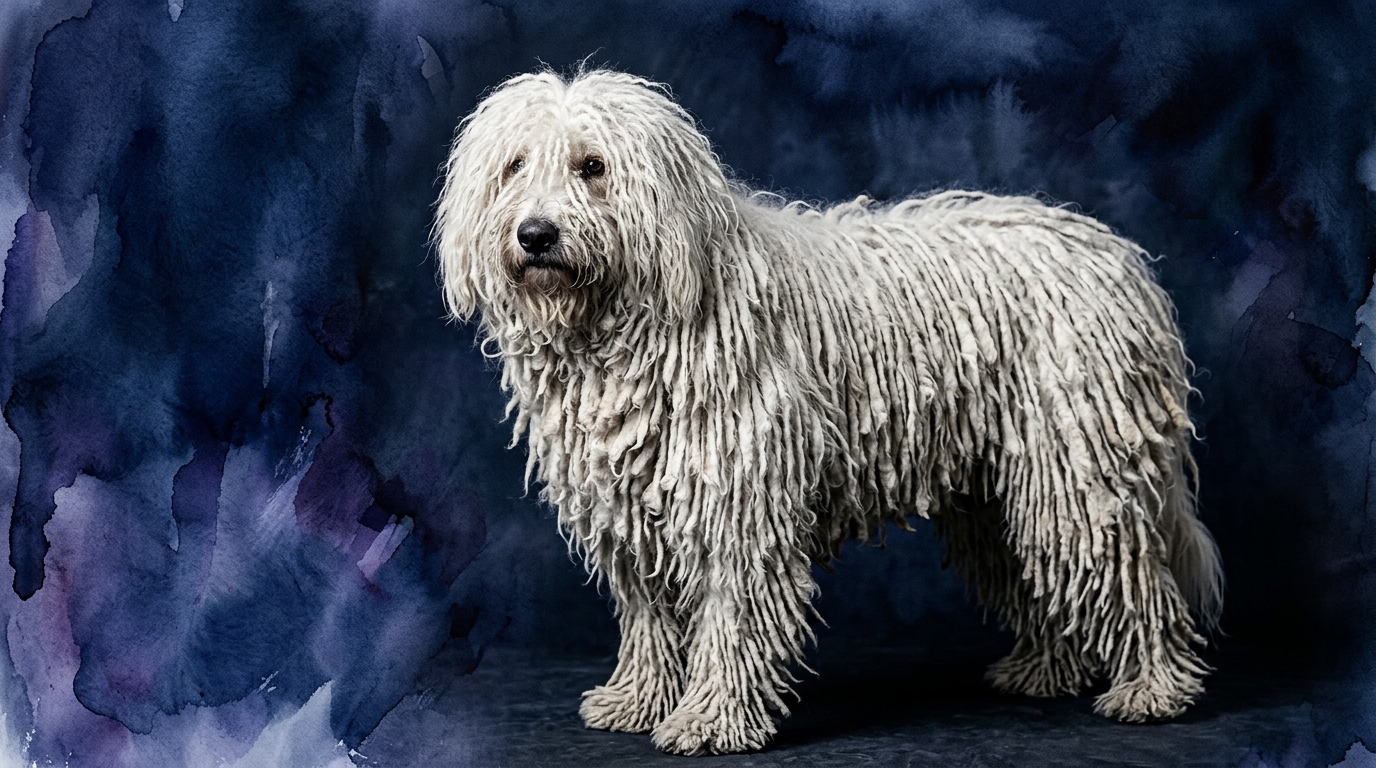
The Komondor, a majestic dog from the Working group and ranked #67 by Coren, developed its intelligence as an independent livestock guardian. Its Problem Solving at 3/5 isn't about fetching a specific toy from a complex setup, but rather about autonomously assessing threats to its flock and making split-second decisions on how to neutralize them, often without human direction. Training Speed at 3/5 means it can learn commands, but its deep-seated independence often leads it to evaluate whether a command is truly necessary or logical in a given situation. Social Intelligence at 3/5 reflects its strong bond with its immediate family and flock, coupled with a wary, discerning attitude towards strangers, crucial for its protective role. Its Instinctive Drive, also 3/5, is overwhelmingly focused on guarding and territorial defense. Memory at 3/5 allows it to recall specific threats, safe individuals, and patterns of its territory, reinforcing its guarding efficacy.
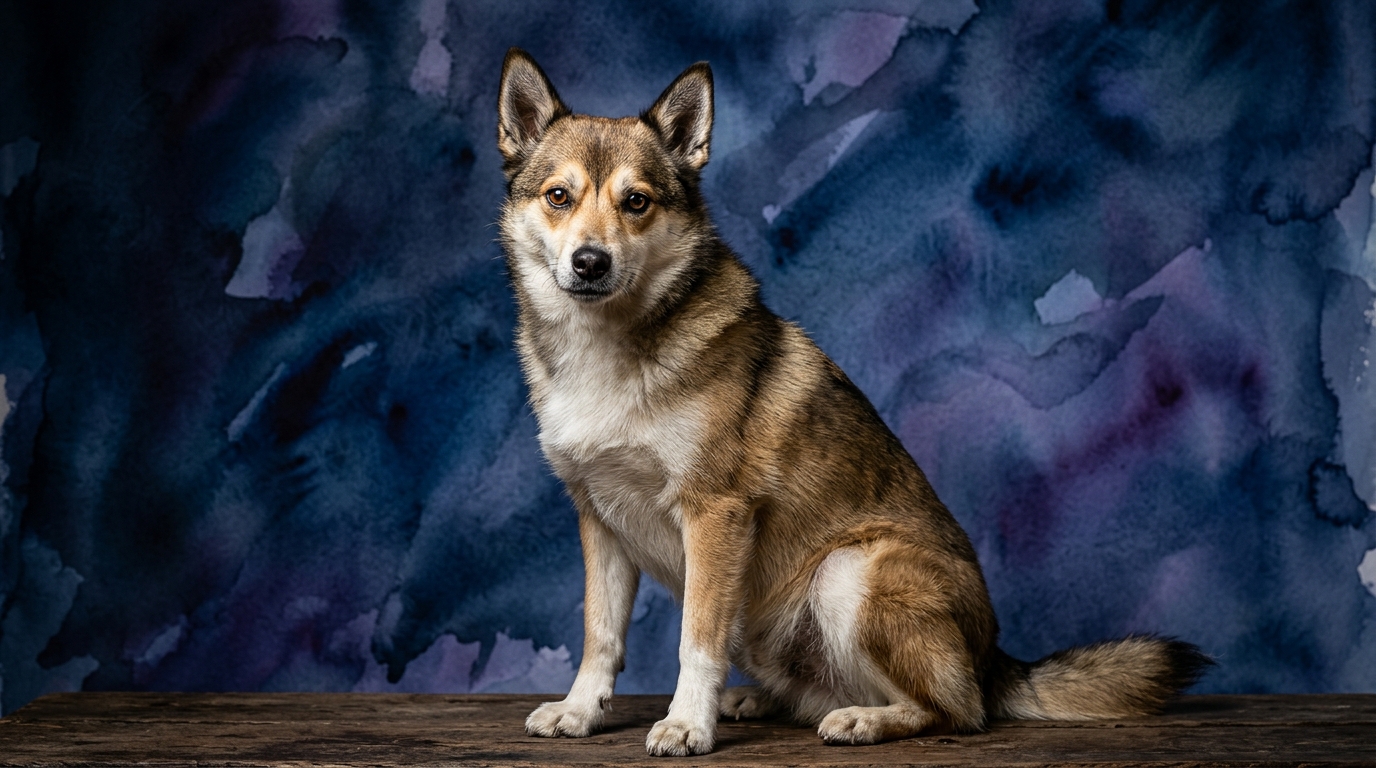
In contrast, the Norwegian Lundehund, a unique breed from the Non-Sporting group, developed its cognitive abilities as a specialized puffin hunter on steep coastal cliffs, a role requiring remarkable agility and ingenuity. Its Problem Solving at 3/5 is less about human-centric tasks and more about navigating treacherous, vertical terrains, squeezing into narrow rock crevices, and using its unique joint flexibility to reach prey. Training Speed at 3/5 is influenced by its historical need for self-reliance; it learns, but its independent spirit and innate curiosity can make consistent, rote obedience a challenge. Social Intelligence at 3/5 means it forms strong bonds with its family, often displaying a playful nature, but can be reserved or cautious around new people. Its Instinctive Drive, also 3/5, is strongly geared towards exploration, climbing, foraging, and a natural prey drive for small animals. Memory at 3/5 enables it to recall complex routes, the locations of puffin nests, and safe passages through challenging landscapes.
Where the Komondor Excels Cognitively
The Komondor's cognitive strengths are deeply rooted in its ancient purpose: autonomous protection. While its problem-solving score is 3/5, this represents a sophisticated ability to independently assess and manage dynamic threats. For instance, a Komondor will not wait for a human command to position itself between its flock and a perceived predator; it makes that strategic decision based on its evaluation of the environment and the intruder's intent. This form of practical, real-time tactical problem-solving, executed with unwavering conviction, is a hallmark of its intelligence. Its memory, at 3/5, is particularly adept at storing information about territory boundaries and the identities of friends versus potential foes, allowing it to quickly identify anomalies and react appropriately, showcasing a specific type of situational awareness.
Where the Norwegian Lundehund Excels Cognitively
The Norwegian Lundehund's cognitive triumphs lie in its remarkable spatial reasoning and physical adaptability within extreme environments. Its 3/5 problem-solving capability is profoundly tied to its unique physical characteristics, such as its extra toes and flexible joints, which it leverages to navigate nearly vertical rock faces and squeeze into tight, dark crevices. This isn't just physical prowess; it involves an intricate understanding of its own body in three-dimensional space, calculating angles, distances, and potential footholds in a way few other breeds can. Its instinctive drive for exploration and climbing, also at 3/5, is coupled with a keen ability to map and remember these complex routes, demonstrating a highly specialized form of environmental intelligence essential for its historical hunting role.
Trainability: Independent Minds at Work
When it comes to trainability, neither the Komondor nor the Norwegian Lundehund are typically described as 'easy' in the conventional sense, largely due to their historical roles demanding significant independence. Both breeds score 3/5 in training speed, indicating they are capable of learning but often require patient, consistent, and understanding approaches. The Komondor, while deeply loyal, will often weigh a command against its own perceived duty. If a command seems to conflict with its protective instincts or appears illogical, it may hesitate or choose not to comply, reflecting its independent decision-making rather than a lack of understanding. Training requires establishing clear, fair leadership and leveraging its natural protective drive, perhaps by channeling it into appropriate guarding tasks.
The Norwegian Lundehund, on the other hand, presents different training challenges stemming from its solitary hunting background. Its instinctual drive to explore, climb, and forage, coupled with a tendency towards stubbornness, can make consistent obedience a longer and more creative endeavor. They are often easily distracted by novel scents or sights, and their independent nature means they can be less inclined to perform repetitive tasks purely for human approval. Owners often report that Lundehunds will 'think for themselves,' which is a direct byproduct of needing to make autonomous decisions in challenging environments. For both breeds, positive reinforcement and building a strong, trusting relationship are paramount, but trainers must recognize and respect their intrinsic motivations and historical purposes.
Matching Breeds to Lifestyles: Active vs. Relaxed Owners
The Komondor and Norwegian Lundehund cater to vastly different owner lifestyles, despite their similar IQ scores. The Komondor, with its profound instinctive drive for guarding and a more deliberate pace, is better suited for owners who appreciate a steadfast, independent protector. While they need regular exercise, their 'activity' often involves patrolling a securely fenced yard, observing their territory, or a calm walk, rather than high-intensity sports. They thrive with owners who can provide consistent, calm leadership, ample space, and understand that their intelligence is expressed through vigilance and self-sufficiency, making them ideal for individuals or families who prefer a more settled, watchful companion.
The Norwegian Lundehund, however, is a breed for active, adventurous owners. Their cognitive strength in spatial reasoning and their strong instinctive drive for exploration, climbing, and foraging means they require significant mental and physical stimulation. These dogs are not content with simple backyard romps; they need varied environments, opportunities to climb (even if it's agility equipment), and puzzle toys that engage their problem-solving minds. Owners who enjoy hiking, exploring new trails, or engaging in canine sports like agility will find the Lundehund a fascinating and energetic partner, well-suited for a dynamic, outdoor-oriented lifestyle.
The Verdict
Choose a Komondor if you seek a calm, independent, and fiercely loyal guardian, requiring an owner who respects its protective instincts and provides consistent, gentle guidance within a spacious, secure environment.
Opt for a Norwegian Lundehund if you are an active, adventurous owner fascinated by a breed with remarkable physical dexterity and problem-solving skills rooted in navigating challenging terrains, eager to provide engaging, stimulating outlets for its unique drives.
🧠 Find Your Pet's IQ Score
Our Pet IQ Lab assessment covers 25+ tests across 5 cognitive dimensions — personalized to your breed.
Take the Full IQ Test →Frequently Asked Questions
Do their average IQ scores mean they are similar in all cognitive aspects?
Not at all. While both breeds score 3/5 across our dimensions, the application and context of these scores differ dramatically, shaped by their distinct historical roles and physical attributes. The Komondor's problem-solving is about independent guarding, while the Lundehund's is about navigating complex physical environments.
How does their independence affect their trainability?
Both breeds, having historically worked with significant autonomy, require patient, consistent training methods that build trust and leverage their natural drives, rather than relying solely on rote obedience. Their independence means they often evaluate commands based on their own judgment, requiring owners to be understanding and creative in their approach.
Can a Komondor live in an apartment?
Generally, a Komondor is not well-suited for apartment living. Their inherent guarding nature and need for space to patrol and observe their territory make them much happier and more balanced in a home with a securely fenced yard.