Side-by-Side Cognitive Profiles
At The Cosmic Pet Pet IQ Lab, we assess canine cognition across five key dimensions. For both the Komondor and the Tibetan Mastiff, each of these dimensions registers a solid 3 out of 5, indicating capable but not overtly compliant intellects, heavily influenced by their guarding heritage.
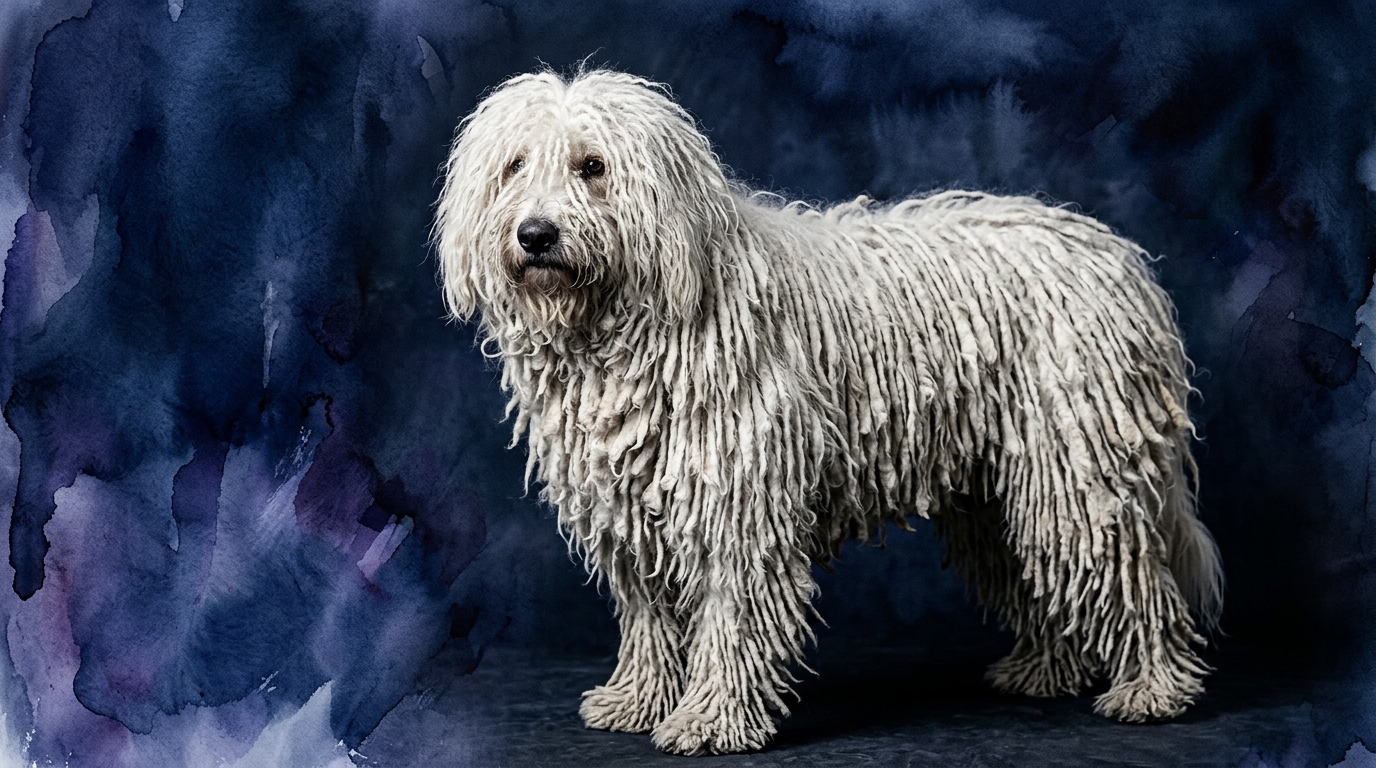
The Komondor's Problem Solving ability (3/5) is often observed in its nuanced approach to predator deterrence, which historically involved assessing threats to its flock and deciding whether to bark, posture, or intervene directly, often without human command. Training Speed (3/5) for a Komondor implies they grasp concepts but are selective in their application, requiring consistent, patient reinforcement to integrate new commands into their independent decision-making framework. Their Social Intelligence (3/5) is robust within their established 'flock' – be it sheep or family – exhibiting deep loyalty and protective instincts, though they maintain a reserved demeanor with strangers. Instinctive Drive (3/5) is overwhelmingly focused on guarding; it is the core of their being, manifesting as vigilance and a strong territorial imperative. Memory (3/5) serves them well in recalling territory boundaries, familiar faces, and past threats, crucial for their role as autonomous sentinels.
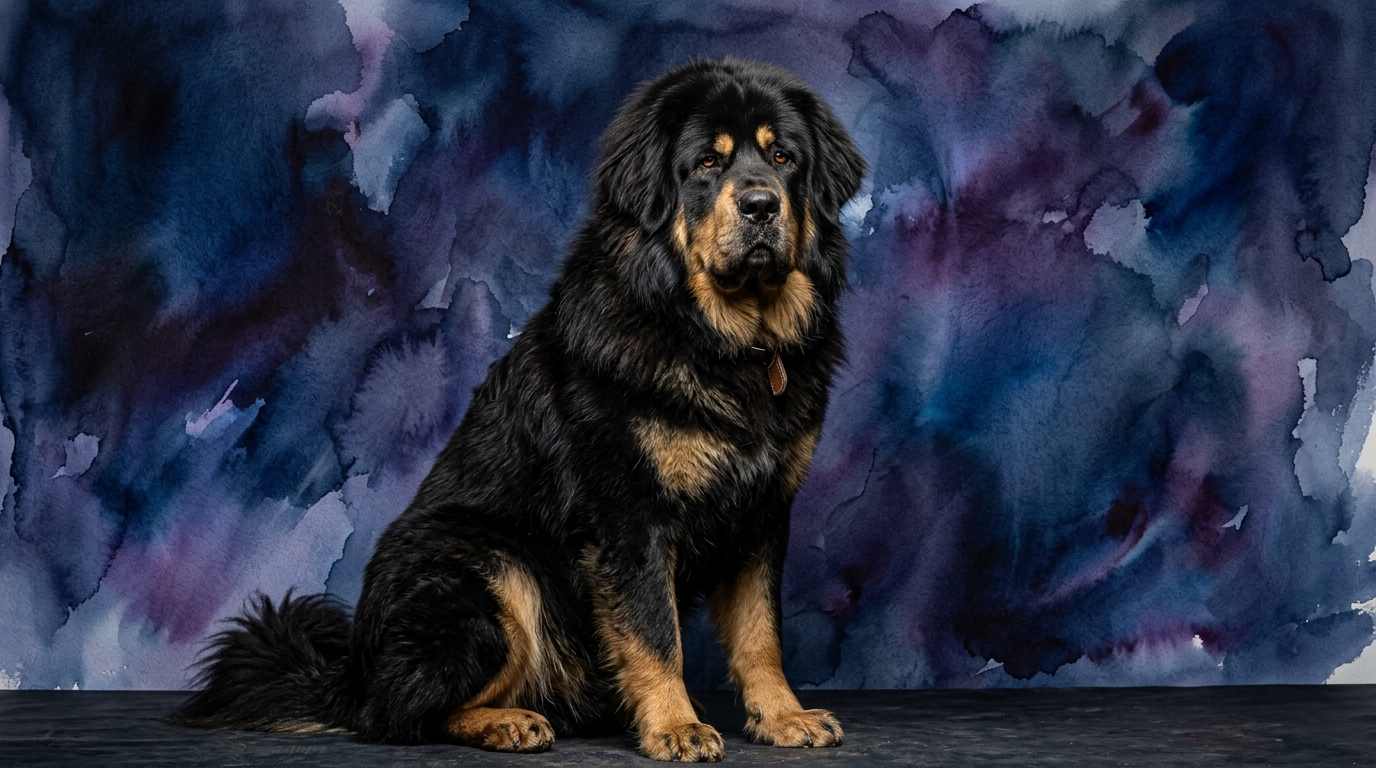
The Tibetan Mastiff also demonstrates a Problem Solving capacity of 3/5, which historically manifested in their ability to protect monasteries and villages in challenging, isolated environments, often requiring independent judgment in complex situations. Their Training Speed (3/5) reflects an ability to learn, but their strong will and inherent self-reliance mean they require a handler who understands their motivation, which is often rooted in respect rather than eagerness to please. Social Intelligence (3/5) for a Tibetan Mastiff is characterized by profound devotion to their immediate family, coupled with a highly discerning and often aloof stance towards outsiders, a trait refined over centuries of guarding. Instinctive Drive (3/5) is powerfully geared towards territorial protection and family guardianship, expressing itself through a commanding presence and an unwavering watchfulness. Memory (3/5) in the Tibetan Mastiff is particularly strong for recalling individuals and perceived threats, allowing them to distinguish between welcome visitors and potential intruders over long periods.
Where the Komondor Wins Cognitively
While both breeds are formidable guardians, the Komondor, with its Coren rank of #67, exhibits a slightly more adaptable problem-solving approach in dynamic, open-field scenarios. Their historical role demanded constant assessment of shifting environmental factors and livestock behavior, fostering a cognitive flexibility to react to unpredictable threats in diverse landscapes. This translates to a subtle edge in responding to novel situations that fall outside strict territorial boundaries. A Komondor's 3/5 in problem solving might manifest as a quicker, more fluid adjustment to changes in routine or environment, particularly concerning the welfare of its perceived charges, allowing for proactive, rather than purely reactive, decision-making when protecting. This nuanced ability to 'read' a situation and adapt its guarding strategy in real-time, without explicit instruction, often gives them a slight advantage in situations requiring swift, independent judgment within a fluid context.
Where the Tibetan Mastiff Wins Cognitively
The Tibetan Mastiff's cognitive strengths, while also rated 3/5 across the board, shine particularly in their unwavering territoriality and discerning social intelligence. Their deep-rooted instincts for guarding a fixed domain have cultivated a profound ability to assess and manage threats within a defined perimeter. This breed's 3/5 in social intelligence, for instance, translates into an exceptional capacity for distinguishing between familiar individuals and strangers, coupled with an almost innate understanding of social hierarchies within its family unit. Their memory (3/5) is often applied to a meticulous recall of who belongs and who does not, and where every potential entry point or vulnerability lies within their territory. This focus on fixed, long-term assessment of their domain and its inhabitants makes them exceptionally reliable and consistent in their specific guarding duties, often operating with a quiet, observant intensity that belies their true cognitive engagement.
Which is Easier to Train and Why
When it comes to ease of training, neither the Komondor nor the Tibetan Mastiff are typically considered 'easy' in the conventional sense, largely due to their shared 3/5 Training Speed and deep-seated independence. However, subtle behavioral differences can sway the experience. The Komondor, while independent, often displays a working temperament that, when properly motivated, can be channeled into specific tasks. Their Coren rank suggests a capacity for understanding and executing commands, though their willingness is always filtered through their guarding instincts. Training a Komondor often involves convincing them that the command aligns with their protective duties or benefits their 'flock'.
The Tibetan Mastiff presents a different challenge. Their independence often borders on aloofness, and their respect must be earned before consistent cooperation can be expected. Their historical role as solitary guardians meant little direct human intervention, fostering a breed that makes its own decisions. Training a Tibetan Mastiff requires immense patience, consistency, and a deep understanding of their strong will. They are not eager to please in the way many other breeds are; instead, they operate on a framework of what they deem necessary or beneficial. While both breeds demand an experienced handler, the Komondor might offer slightly more 'working dog' compliance if the handler establishes clear leadership and motivation, whereas the Tibetan Mastiff requires a profound level of mutual respect and understanding to achieve reliable results.
Which Suits Active Owners vs. Relaxed Owners
Neither the Komondor nor the Tibetan Mastiff are ideally suited for truly 'relaxed' owners in the sense of minimal engagement, as both require significant commitment to socialization, training, and management of their guarding instincts. However, their activity levels differ. The Komondor, while a guardian, often has a more moderate exercise requirement compared to some working breeds. They appreciate purposeful activity, like patrolling a large yard or engaging in scent work, but are not typically high-energy dogs needing extensive daily runs. Their activity is often tied to their vigilance.
The Tibetan Mastiff, despite its imposing size, is generally more suited for a 'relaxed' owner in terms of physical exertion, provided 'relaxed' means an owner who appreciates a calm, watchful presence rather than a constant companion for strenuous activities. They are not built for endurance and prefer to conserve their energy, often patrolling their territory with quiet dignity before settling down. Their needs lean more towards mental stimulation, consistent boundaries, and a large, secure space to observe their domain. Therefore, an 'active' owner who enjoys long hikes might find the Komondor slightly more amenable, while an owner seeking a majestic, watchful companion content with a secure yard and focused, lower-intensity mental engagement might align better with the Tibetan Mastiff's natural inclinations.
The Verdict
Choose the Komondor if you seek a vigilant guardian with a more adaptable problem-solving approach and a willingness to engage in purposeful activities under a confident leader.
Opt for the Tibetan Mastiff if you prioritize an unwavering, discerning territorial guardian with profound loyalty to its family, thriving in a stable, well-defined home environment.
🧠 Find Your Pet's IQ Score
Our Pet IQ Lab assessment covers 25+ tests across 5 cognitive dimensions — personalized to your breed.
Take the Full IQ Test →Frequently Asked Questions
Are Komondors good with children?
Komondors can be good with children in their own family, often displaying a protective instinct towards them as part of their 'flock.' However, due to their guarding nature and size, supervision is always recommended, especially with unfamiliar children, as their protective instincts can be strong.
Do Tibetan Mastiffs bark a lot?
Tibetan Mastiffs are known for their deep, resonant bark, which they use primarily as a warning to deter intruders. While not incessant barkers, they are highly vigilant and will bark to alert their family to perceived threats, particularly during the night when their guarding instincts are heightened.
Which breed is better for first-time dog owners?
Neither the Komondor nor the Tibetan Mastiff is typically recommended for first-time dog owners. Both breeds possess strong independent temperaments and intense guarding instincts that require experienced handling, consistent training, and thorough socialization from an early age to ensure they become well-adjusted family members.