
Side-by-Side IQ Profile
The Cosmic Pet Pet IQ Lab assesses canine intelligence across five critical dimensions: Problem Solving, Training Speed, Social Intelligence, Instinctive Drive, and Memory. Both the Komondor and the Tibetan Spaniel register a consistent score of 3 out of 5 in each of these areas, suggesting a balanced, mid-range cognitive capacity. However, a closer look at their breed-specific applications of these scores illuminates significant differences in how their minds operate.
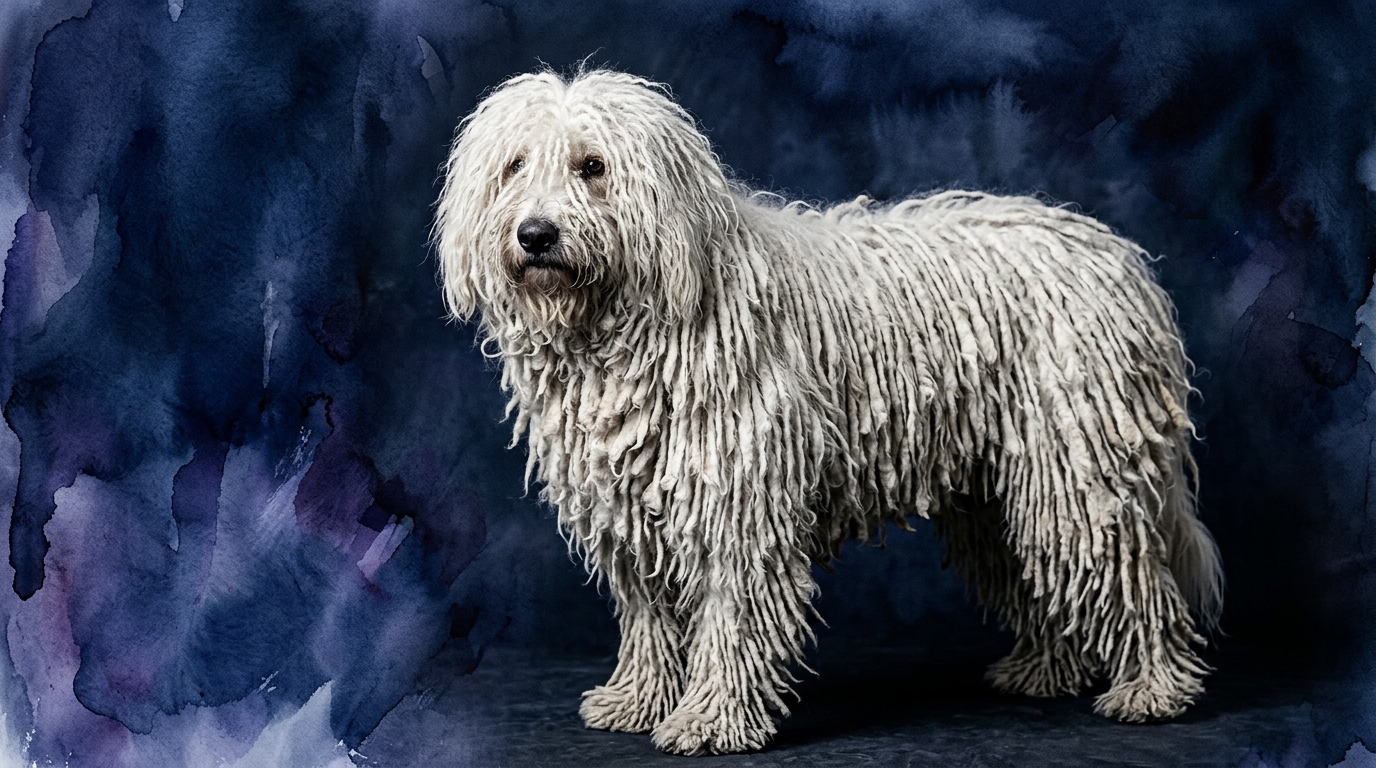
For the Komondor, a Working breed ranked #67 on the Coren scale for obedience and working intelligence, a 3/5 in Problem Solving reflects its historical need to independently assess and counter threats to livestock without direct human command. Its 3/5 Training Speed indicates it can learn, but its independent nature means it often evaluates the utility of a command before complying, rather than exhibiting a strong desire to please. Social Intelligence at 3/5 speaks to its reserved demeanor, being highly observant of its family and surroundings but not overtly demonstrative with strangers. Its Instinctive Drive of 3/5 is strongly oriented towards protection and territoriality, a core aspect of its ancient role. Finally, a 3/5 in Memory suggests it retains information about its environment, routines, and perceived threats effectively.
The Tibetan Spaniel, a Non-Sporting breed not ranked on the Coren scale, also scores 3/5 across the board. Its Problem Solving at 3/5 manifests in cleverness within a domestic setting, adept at navigating household dynamics or finding ways to get what it wants. A 3/5 Training Speed means it can learn commands but often possesses a charming stubborn streak, requiring engaging and consistent methods. Its Social Intelligence of 3/5 highlights its keen awareness of human moods and household routines, being a sensitive and observant companion. The 3/5 Instinctive Drive is rooted in its historical role as a companion and “little lion” watchdog, alerting its family to anything unusual. Its Memory at 3/5 allows it to recall routines, people, and experiences within its home environment.
Where Komondor Wins Cognitively
The Komondor's cognitive architecture shines brightest in its capacity for autonomous, complex decision-making in high-stakes environments. While its IQ scores are numerically identical to the Tibetan Spaniel, the *application* of its 3/5 Problem Solving and 3/5 Instinctive Drive is profoundly different, honed over centuries of livestock guardian work. A Komondor excels at assessing dynamic threats to its flock or family, often making split-second judgments on appropriate responses without needing human intervention, a demanding cognitive task that requires keen environmental awareness and situation analysis.
Its memory of 3/5 is not just about recalling commands, but about remembering the layout of its territory, identifying potential vulnerabilities, and recognizing patterns in predator behavior. This deeply ingrained cognitive framework for independent guardianship means it possesses a unique mental fortitude and self-reliance, capable of operating effectively in isolated, challenging conditions where direct human guidance is infrequent. This specialized form of intellect, focused on protection and vigilance, positions the Komondor as a master of independent security.
Where Tibetan Spaniel Wins Cognitively
The Tibetan Spaniel’s cognitive strengths are centered around its exceptional attunement to the human social environment and its role as an alert, observant companion. Its 3/5 Social Intelligence is not merely about recognizing family members, but about subtly interpreting human emotions, anticipating routines, and navigating complex household dynamics with finesse. This breed excels at being a sensitive barometer of its surroundings, using its keen observation skills to understand the ebb and flow of domestic life.
Its 3/5 Problem Solving, while not geared towards fending off wolves, is brilliantly applied to the challenges of coexisting with humans: figuring out how to gain attention, subtly manipulate for treats, or alert its people to the slightest anomaly. The Tibetan Spaniel’s 3/5 Instinctive Drive, manifested as a vigilant watchdog, leverages its memory and social intelligence to identify deviations from the norm, making it an extraordinarily effective, albeit small, alarm system. This breed's intellect is specialized for intimate companionship and nuanced communication within the home.
Which is Easier to Train and Why
When considering ease of training, both breeds present distinct challenges, despite their identical 3/5 Training Speed scores. The Komondor, with its working heritage, is an independent thinker. It learns commands and routines, but its compliance often hinges on its assessment of the command's purpose and its perceived relevance to its guardian duties. This means training requires immense patience, consistency, and a profound understanding of its innate protective drives. A Komondor will learn, but it may not always *obey* instantly or enthusiastically if it doesn't see the point, making true biddability a long-term endeavor focused on mutual respect rather than eager submission.
The Tibetan Spaniel, while physically smaller and less imposing, also possesses a strong will and a charmingly independent streak. Its 3/5 Training Speed suggests it can be taught, but its attention can wander, and it may choose to ignore commands if it's not sufficiently motivated or if something more interesting captures its focus. Training success often comes from making sessions fun, varied, and reward-based, leveraging its social intelligence and desire for companionship. While its size makes physical management less daunting, its mental tenacity requires a trainer who can engage its clever mind without resorting to harsh methods, which this sensitive breed would likely resist.
Therefore, neither breed is inherently “easy” to train in the traditional sense of a highly biddable working dog. The Komondor demands a trainer who respects its autonomy and can integrate commands into its guardian mindset, often requiring a more experienced handler. The Tibetan Spaniel requires a creative and patient approach to overcome its occasional stubbornness, making it more manageable for a novice willing to invest consistent effort in positive reinforcement and engaging mental exercises. The *type* of challenge differs more than the overall difficulty.
Which Suits Active Owners vs Relaxed Owners
The Komondor is unequivocally a breed for an “active” owner, not in the sense of needing daily long runs, but in terms of proactive management, socialization, and providing a purpose. Its robust 3/5 Instinctive Drive for guarding means it requires an owner who is actively engaged in directing and shaping this powerful instinct through consistent training and socialization from puppyhood. Owners must be prepared to manage a large, powerful dog with strong protective urges, ensuring it understands appropriate boundaries and interactions. This demands a high level of responsibility and commitment, making it unsuitable for a truly “relaxed” or hands-off owner.
The Tibetan Spaniel, conversely, can suit owners who might be considered “relaxed” in terms of physical activity requirements, but are “active” in their desire for close companionship and mental engagement. While they enjoy walks and playtime, they are not marathon runners. Their 3/5 Social Intelligence and Instinctive Drive for being a vigilant companion means they thrive on being central to family life and require consistent interaction. An owner who enjoys quiet evenings at home but is attentive to their dog's subtle cues and provides regular mental stimulation and affection would find a Tibetan Spaniel a delightful fit. They need an owner who is actively present, rather than actively outdoors.
The Verdict
Choose the Komondor if you are an experienced dog owner seeking a dedicated, independent guardian with a profound sense of purpose, prepared to commit to extensive socialization and management of its protective instincts. This breed thrives with an owner who respects its autonomy and can provide a structured environment for its unique cognitive strengths.
Opt for the Tibetan Spaniel if you desire an alert, sensitive, and charming companion who excels in domestic settings and enjoys being an integral part of family life. This breed is ideal for owners who appreciate a clever, observant dog and are willing to engage its mind with consistent, positive training and abundant affection.
🧠 Find Your Pet's IQ Score
Our Pet IQ Lab assessment covers 25+ tests across 5 cognitive dimensions — personalized to your breed.
Take the Full IQ Test →Frequently Asked Questions
Do the identical IQ scores mean Komondors and Tibetan Spaniels are equally intelligent?
Not necessarily in the same way. The identical 3/5 scores indicate a similar *level* of cognitive ability across the five dimensions, but their historical roles mean they apply these abilities in vastly different contexts. The Komondor's intelligence is geared towards independent guardianship, while the Tibetan Spaniel's is honed for nuanced companionship and domestic vigilance.
How does the Komondor's Coren rank impact this comparison?
The Coren rank primarily measures obedience and working intelligence, which is a specific subset of overall cognitive ability. The Komondor's #67 rank suggests it can learn and perform tasks, but its independent nature means it's not as instinctively biddable as higher-ranked breeds. The Tibetan Spaniel's absence from this list doesn't imply lower intelligence, but rather that its primary historical role wasn't focused on obedience trials.
Can a Komondor and a Tibetan Spaniel live together harmoniously?
With proper socialization from a young age, it is possible for them to coexist. However, the Komondor's strong guardian instincts and the Tibetan Spaniel's alert nature would require careful management, ensuring boundaries are respected and the Komondor's protective drive is appropriately channeled, especially towards a smaller housemate.