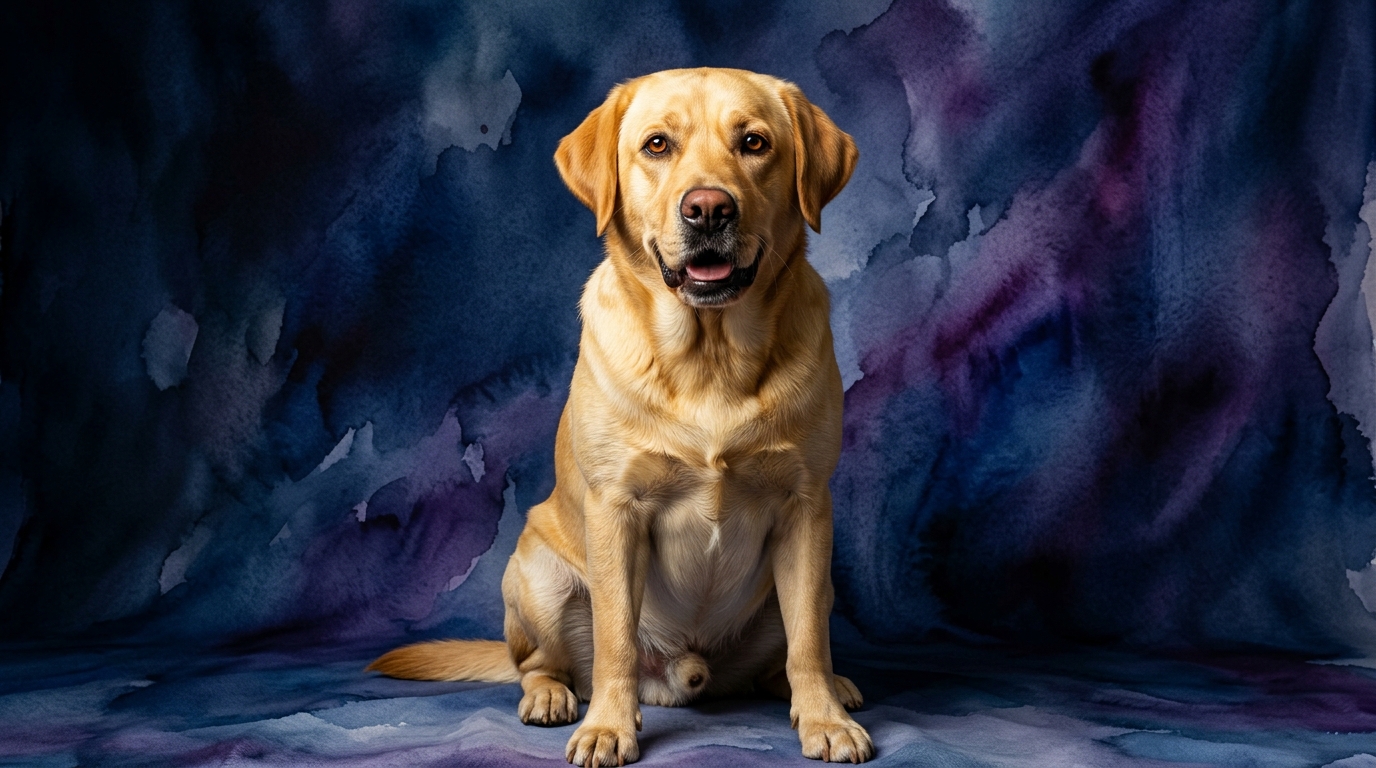
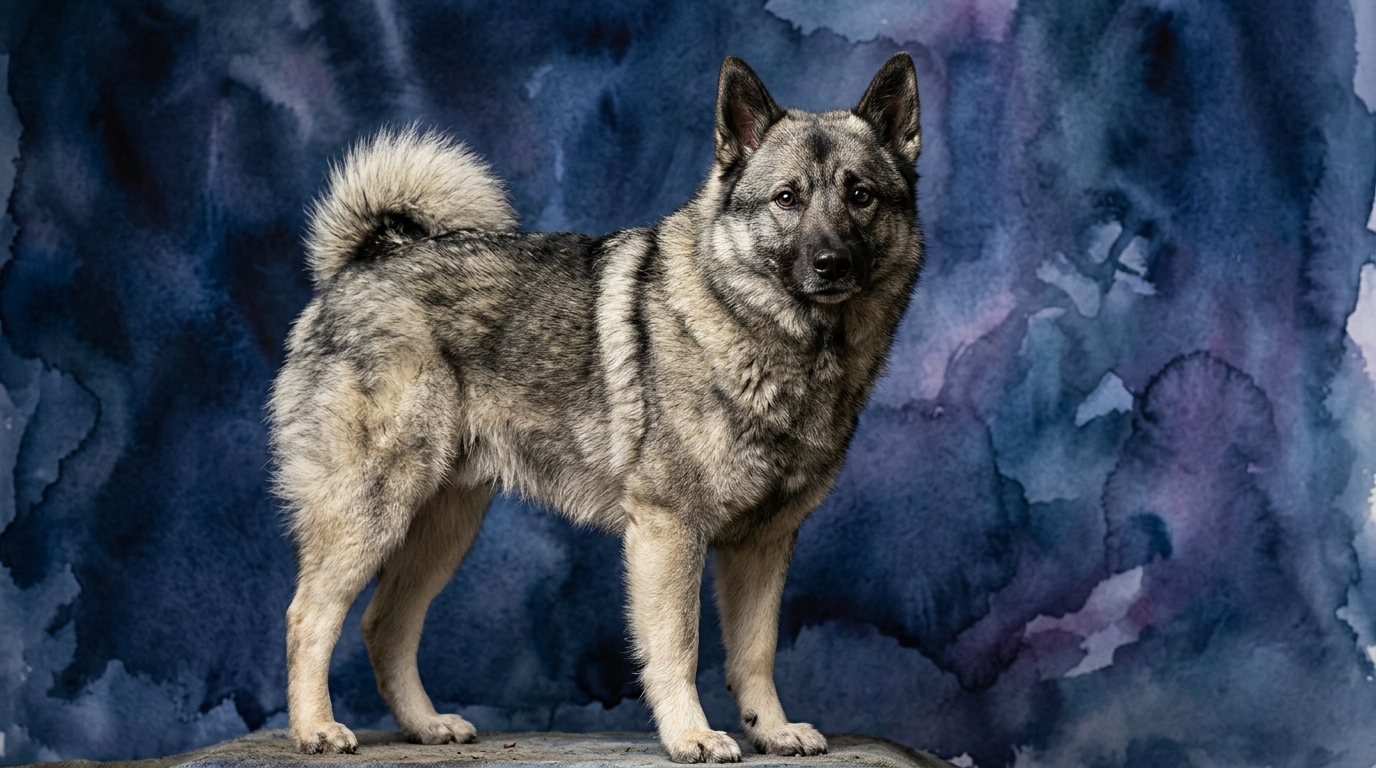
Side-by-Side IQ Profile: Labrador Retriever vs. Norwegian Elkhound
The Cosmic Pet IQ Lab employs a multi-dimensional approach to assess canine cognition, moving beyond simple obedience scores to understand the nuances of each breed's mental makeup. Here's how the Labrador Retriever (Sporting, Coren rank #7) and the Norwegian Elkhound (Hound, Coren rank #36) stack up across five key intelligence dimensions.
For the Labrador Retriever, we observe a Problem Solving score of 4/5, indicating a strong capacity to figure out complex tasks, often involving manipulation of objects or navigating environments to achieve a goal. Their Training Speed is an exceptional 5/5, reflecting an eagerness to learn and a rapid acquisition of new commands and routines. Social Intelligence for the Labrador is also a perfect 5/5, showcasing their deep understanding of human cues and their desire for cooperative interaction. Their Instinctive Drive registers at 4/5, primarily manifesting in their well-known retrieving behaviors and a natural inclination to work alongside humans. Finally, their Memory is solid at 4/5, allowing them to retain learned behaviors and recall past experiences effectively.
The Norwegian Elkhound presents a slightly different cognitive blueprint. They share a Problem Solving score of 4/5 with the Labrador, but this often translates into independent resourcefulness in the field rather than human-directed puzzle-solving. Their Training Speed is a commendable 4/5, meaning they are capable learners, though perhaps requiring more consistent motivation than a Labrador. Social Intelligence for the Elkhound is 3/5, suggesting they form strong bonds with their immediate family but can be more reserved or less overtly expressive in social settings, valuing their personal space. Their Instinctive Drive is 3/5, heavily influenced by their hound heritage, focusing on scent tracking and independent pursuit rather than cooperative fetching. Their Memory also scores 4/5, enabling them to remember complex scent trails and past hunting grounds, or learned routines that benefit them.
Where the Labrador Retriever Excels Cognitively
The Labrador Retriever's cognitive strengths are particularly evident in areas demanding cooperative engagement and rapid assimilation of new information. Their perfect 5/5 in Training Speed is a testament to their exceptional ability to pick up commands and routines with minimal repetition, making them highly responsive partners in structured activities. This rapid learning is deeply intertwined with their outstanding Social Intelligence (5/5); Labradors are acutely attuned to human emotions, body language, and vocal cues, which fosters a profound desire to please and work in sync with their owners. This social acumen allows them to seamlessly integrate into complex human family dynamics, anticipating expectations and adapting their behavior accordingly. Their robust Instinctive Drive (4/5) for retrieving, when channeled through training, further enhances their capacity for tasks requiring focused collaboration, such as assistance work, scent detection, or competitive obedience. The Labrador's Coren ranking of #7, reflecting their consistent performance in understanding and executing commands, solidifies their reputation as a highly trainable and cooperative canine companion.
Where the Norwegian Elkhound Demonstrates Unique Cognitive Strengths
While the Labrador shines in cooperative learning, the Norwegian Elkhound exhibits a distinct form of cognitive prowess, particularly in areas demanding independent decision-making and self-reliance. Their Problem Solving score of 4/5, while numerically matching the Labrador, often manifests in self-directed ways, such as navigating challenging terrain to pursue a scent or devising a strategy to overcome an obstacle encountered during an independent exploration. This isn't about solving puzzles for human approval, but for their own intrinsic motivation and the satisfaction of a task. Their Instinctive Drive (3/5) is rooted in their heritage as hardy hunting hounds, focused on tracking, scenting, and sustained pursuit, which requires prolonged focus and independent judgment in expansive, often challenging environments. The Elkhound’s memory (4/5) supports this by allowing them to recall intricate scent patterns or previously encountered environmental challenges, crucial for effective hunting. Their slightly lower Social Intelligence (3/5) means they are less swayed by the human desire to please and more guided by their own interpretation of a situation, which can be a significant advantage in tasks requiring self-sufficiency rather than constant human direction. Their cognitive profile is a reflection of their history as resilient, independent working dogs in demanding northern climates, where quick, autonomous thinking was paramount for success.
Trainability: Labrador Retriever vs. Norwegian Elkhound
When considering ease of training, the Labrador Retriever generally holds a distinct advantage. Their perfect 5/5 Training Speed is a direct indicator of their eagerness to learn and their rapid assimilation of new commands. This is profoundly supported by their 5/5 Social Intelligence; Labradors are naturally inclined to form strong cooperative bonds with humans and derive immense satisfaction from pleasing their owners. They are highly attentive to human body language, vocal tone, and expectations, making them exceptionally responsive to positive reinforcement and clear instruction. Their innate retrieving drive also makes them highly amenable to toy-based rewards and games, further facilitating training engagement. A Labrador's strong desire to interact and cooperate with its owner typically results in more reliable recall and quicker mastery of obedience.
In contrast, the Norwegian Elkhound, with a Training Speed of 4/5 and Social Intelligence of 3/5, presents a different training dynamic. While capable learners, they are often more independent and possess a strong-willed nature characteristic of hound breeds. Their motivation is less about pleasing for its own sake and more about self-interest or the satisfaction of a task, especially if it aligns with their strong scent drive. Training an Elkhound often requires more patience, unwavering consistency, and creative methods that tap into their intrinsic drives, such as scent work or problem-solving games, rather than relying solely on rote obedience. They may learn commands, but their execution might be less enthusiastic or immediate if they don't perceive a personal benefit or if a more compelling scent has captured their attention. Their independent nature means they can be more challenging to recall if a strong scent has captured their focus, requiring a dedicated approach to build a strong recall command.
Matching Canine Cognition to Owner Lifestyle
The choice between a Labrador Retriever and a Norwegian Elkhound often hinges on an owner's lifestyle and their capacity to meet a dog's specific cognitive and physical needs. The Labrador, with its robust instinctive drive and high social intelligence, thrives with active owners who enjoy engaging in cooperative activities such as fetch, swimming, hiking, or structured dog sports like agility and obedience. Their need for mental stimulation is often met through consistent training sessions, puzzle toys, and ample interaction that leverages their desire to work alongside their human. They are well-suited for families who can provide abundant opportunities for shared activity and companionship, integrating enthusiastically into most social settings. For more relaxed owners, a Labrador can adapt, but they still require daily exercise and mental engagement to prevent boredom and potential destructive behaviors.
Conversely, the Norwegian Elkhound, while also requiring significant exercise, suits an active owner who appreciates a more independent companion for activities like long hikes, trail running, or even skijoring, where their stamina and self-reliance can shine. Their strong scent drive means they benefit immensely from owners who can provide outlets for this natural behavior, such as tracking games, search-and-find activities, or allowing supervised exploration in secure, expansive areas. They are less likely to be content with simply 'being with' their owner and often prefer purposeful activity that engages their problem-solving and instinctive drives. Owners seeking a dog that will enthusiastically participate in every family outing and constantly seek interaction might find the Elkhound's independent streak less fulfilling, while those who value a loyal but self-sufficient companion for outdoor adventures and independent pursuits will find them a perfect match.
The Verdict
Choose a Labrador Retriever if you seek a highly cooperative, eager-to-please companion who thrives on shared activities and excels in structured training. They are ideal for active families looking for a dog that integrates seamlessly into a social lifestyle and responds readily to direction.
Opt for a Norwegian Elkhound if you appreciate an independent, resilient companion for outdoor adventures and are prepared to engage their strong scent drive and problem-solving skills with patience. They suit owners who value a loyal dog capable of self-directed activity and exploration.
🧠 Find Your Pet's IQ Score
Our Pet IQ Lab assessment covers 25+ tests across 5 cognitive dimensions — personalized to your breed.
Take the Full IQ Test →Frequently Asked Questions
Is a Labrador Retriever better for first-time dog owners than a Norwegian Elkhound?
Generally, yes. The Labrador's high training speed and social intelligence make them more forgiving and easier to guide through basic obedience and house manners, offering a smoother learning curve for new owners.
Do Norwegian Elkhounds require more mental stimulation than Labrador Retrievers?
They require different *types* of mental stimulation. Elkhounds benefit from activities that engage their independent problem-solving and scent drive, whereas Labradors thrive on cooperative tasks and training sessions with their owners.
How do their Coren rankings reflect their real-world intelligence?
Coren ranks primarily reflect 'working intelligence' or obedience-based trainability. The Labrador's higher rank indicates superior ability to understand and execute human commands, while the Elkhound's rank suggests a more independent nature that might require different motivational approaches.