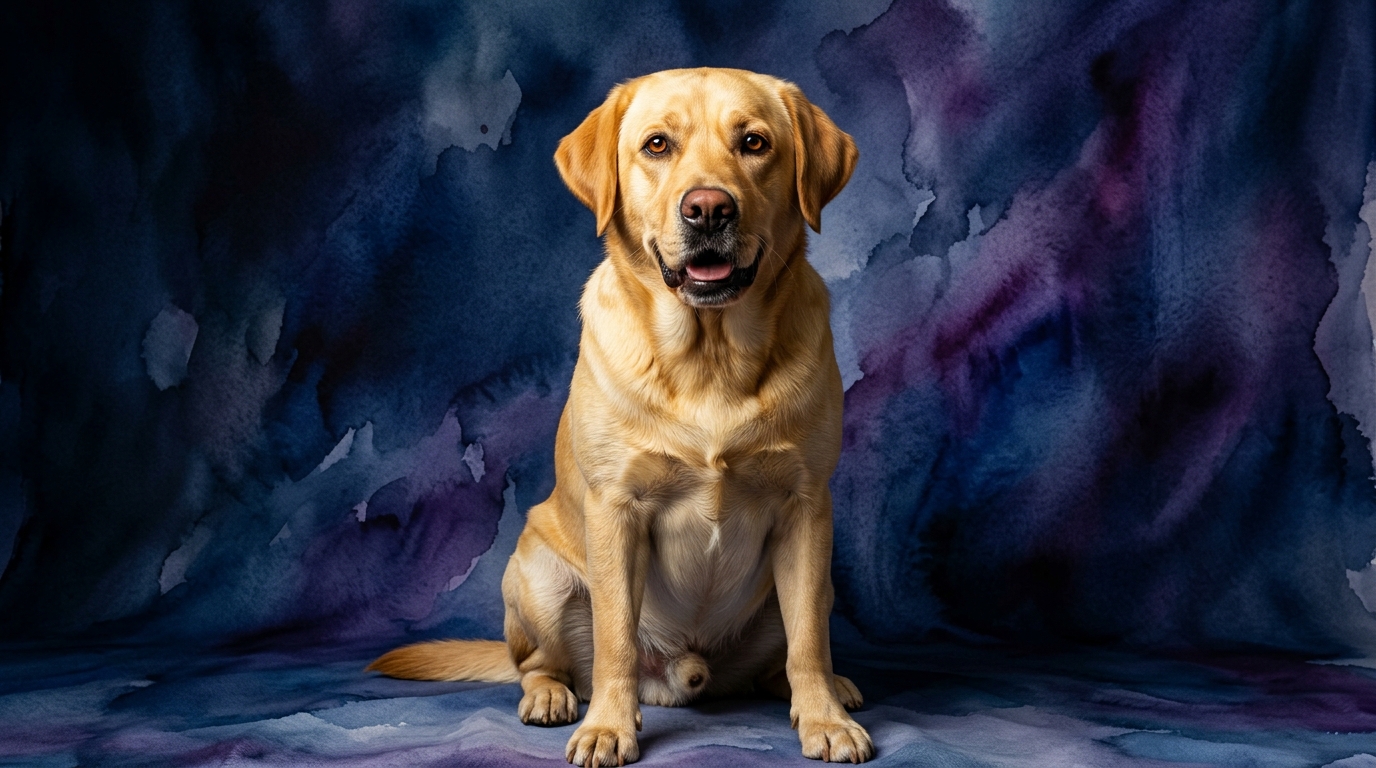
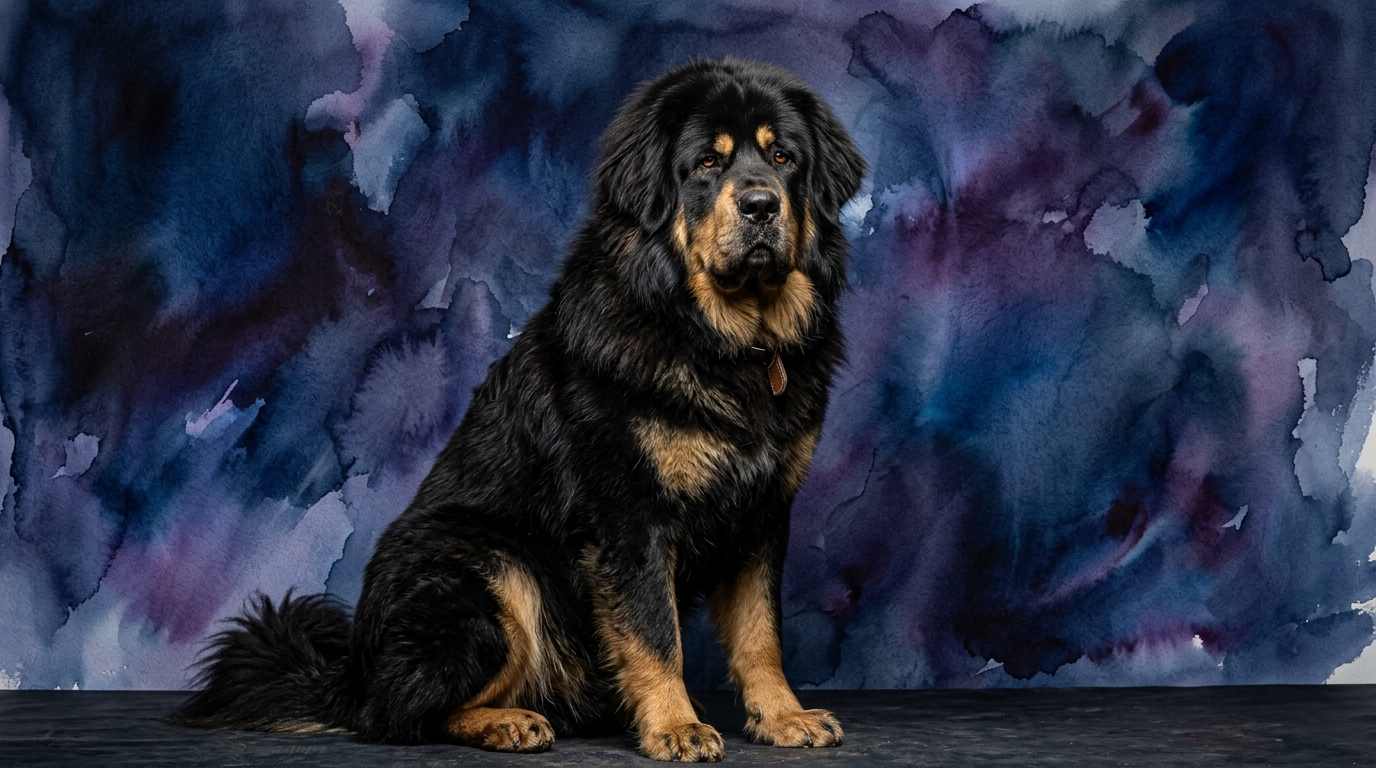
Side-by-Side Cognitive Profile: Labrador Retriever vs. Tibetan Mastiff
The Cosmic Pet Pet IQ Lab employs five key dimensions to evaluate canine intelligence, offering a nuanced understanding of each breed's mental capabilities. For the Labrador Retriever, a Sporting group dog ranked #7 by Coren, its profile highlights a robust capacity for learning and social engagement. Their Problem Solving is rated 4/5, indicating a strong aptitude for navigating novel situations and figuring out solutions to environmental puzzles, such as retrieving objects from challenging locations or understanding multi-step tasks like opening specific cabinets. Their Training Speed is an exceptional 5/5, reflecting an extraordinary ability to quickly associate commands with actions, often grasping new instructions within a few repetitions due to their eagerness to please. Social Intelligence, also 5/5, shows they are exceptionally attuned to human cues and emotions, demonstrating a deep understanding of social hierarchies and intentions, which underpins their effectiveness as service animals. An Instinctive Drive of 4/5 reveals their inherent drive to retrieve and a robust work ethic, fueling enthusiasm for tasks that tap into these natural inclinations. Finally, their Memory is rated 4/5, indicating a solid retention of commands, routes, and specific people, allowing them to recall learned behaviors and recognize familiar patterns over extended periods.
In contrast, the Tibetan Mastiff, a Working group dog not ranked by Coren, presents a cognitive profile shaped by its role as a self-reliant guardian. Their Problem Solving is rated 3/5, indicating they approach problems with a measured, independent thought process, often evaluating situations from a guarding perspective rather than seeking immediate human direction; this critical assessment of their environment, though appearing slower in conventional tests, is a deliberate form of cognitive processing. Training Speed is 3/5, reflecting their independent nature and historical role, which means they are not inherently driven by human approval for every action, leading to a more deliberate and sometimes challenging training process. Social Intelligence is also 3/5; while capable of forming deep, loyal bonds with their immediate family, Tibetan Mastiffs typically exhibit a reserved demeanor towards strangers and a less overt reliance on constant human social cues, preferring to make their own assessment of social situations. Their Instinctive Drive is 3/5, singularly focused on territorial guarding and protection, manifesting as a watchful, often aloof presence rather than an eagerness for interactive tasks or retrieving. Memory is rated 3/5, suggesting a functional memory for their territory, family members, and established routines, though recall of complex sequences of commands might require more consistent reinforcement due to their independent learning style.
Where the Labrador Retriever Excels Cognitively
Labrador Retrievers exhibit a clear cognitive edge in areas demanding rapid learning, enthusiastic cooperation, and nuanced social engagement. Their unparalleled 5/5 Training Speed is paramount; they process and internalize new commands with remarkable efficiency, often requiring fewer repetitions than many other breeds to achieve mastery. This rapid assimilation of information extends to their Problem Solving (4/5), where they readily apply learned principles to novel situations, such as strategically working to retrieve a toy from under furniture or understanding the sequence of actions required for a complex obedience routine. Furthermore, their superior Social Intelligence (5/5) allows them to keenly interpret human body language, vocal inflections, and emotional states, making them highly responsive partners in various tasks and deeply empathetic companions. This combination of quick learning, adaptable problem-solving, and strong social attunement means Labradors excel in roles requiring constant communication and adaptation to human expectations, thriving on collaborative endeavors and feedback from their human counterparts.
Unique Cognitive Strengths of the Tibetan Mastiff
While the Tibetan Mastiff's cognitive profile differs significantly from the Labrador's, its strengths are deeply rooted in its ancestral role as an independent guardian. Its Problem Solving (3/5), though not as quick as a Labrador's in a conventional obedience setting, is acutely honed for assessing and managing perceived threats within its territory. This involves a critical, self-directed evaluation of environmental changes and unfamiliar presences, often without direct human intervention, demonstrating a form of strategic thinking focused on security. The Tibetan Mastiff's Instinctive Drive (3/5) is singularly focused on protection, manifesting as a watchful vigilance and a capacity for independent decision-making when safeguarding its domain. Unlike breeds bred for partnership, the Tibetan Mastiff's cognitive architecture prioritizes self-reliance and autonomous judgment in security matters, allowing it to act decisively based on its own assessment rather than waiting for a command. This independent thought process, while making training more challenging, is a specific cognitive advantage in its specialized role, where a guardian must often act without immediate human instruction.
Training Dynamics: Ease and Behavioral Differences
Without question, the Labrador Retriever is significantly easier to train due to its exceptional Training Speed (5/5) and high Social Intelligence (5/5). Labradors inherently desire to please their human companions, making them highly receptive to positive reinforcement and eager to learn new behaviors. Their strong memory (4/5) ensures commands, once learned, are retained effectively, allowing them to quickly build a broad repertoire of skills. A Labrador's natural retrieve drive, for instance, makes games of fetch a joyous and easily reinforced activity, fostering enthusiasm for learning. In contrast, the Tibetan Mastiff, with a Training Speed of 3/5 and Social Intelligence of 3/5, presents a greater training challenge. Their independent nature, a hallmark of their guarding lineage, means they are less inclined to blindly follow commands and more prone to evaluating the necessity of an action from their own perspective. A Tibetan Mastiff often requires more patience, consistency, and a deep understanding of its motivations, as it is less driven by a constant need for human approval and more by its own internal logic and instinctual drives. For example, while a Labrador might enthusiastically perform a 'sit' on command, a Tibetan Mastiff might choose to remain standing if it perceives no immediate benefit or deems the request unnecessary for its current objective.
Matching Breeds to Owner Lifestyles
The Labrador Retriever's cognitive profile aligns perfectly with active owners who seek an engaged, cooperative partner for various pursuits. Their high instinctive drive (4/5) and strong problem-solving abilities (4/5) make them ideal for activities like agility, obedience trials, hunting, or long hikes where mental and physical engagement are paramount. They thrive on having a 'job' and enjoy interactive play that stimulates their minds, such as puzzle toys or scent work, consistently seeking opportunities to engage with their human companions. This breed's social intelligence means they genuinely enjoy being part of family activities and respond well to consistent interaction. Conversely, the Tibetan Mastiff, with its more independent and reserved nature, may suit owners who appreciate a dog that operates with a degree of autonomy and does not require constant, high-intensity interaction. While they need regular exercise and mental stimulation, their cognitive strengths are not typically directed towards collaborative sports but rather towards watchful observation and patrolling their territory. They are better suited for owners who understand and respect their self-reliant character, providing consistent guidance without expecting an eager-to-please response to every request, and who can appreciate a dog that is a devoted but often independent guardian of its home.
The Verdict
Choose the Labrador Retriever if you desire a highly biddable, enthusiastic, and socially responsive companion eager to learn and participate actively in family life and various canine activities.
Opt for the Tibetan Mastiff if you are an experienced owner seeking an independent, watchful guardian with a profound sense of loyalty to its family, willing to invest significant time in understanding and nurturing its unique, self-reliant cognitive style.
🧠 Find Your Pet's IQ Score
Our Pet IQ Lab assessment covers 25+ tests across 5 cognitive dimensions — personalized to your breed.
Take the Full IQ Test →Frequently Asked Questions
Does a lower Coren ranking mean a dog is less capable?
Not necessarily; Coren's ranking primarily measures obedience and working intelligence, reflecting a dog's ability to learn and follow human commands quickly. Breeds with lower rankings or unranked breeds, like the Tibetan Mastiff, often possess specialized cognitive strengths for their original purpose, such as independent guarding, which are not captured by standard obedience tests.
Can a Tibetan Mastiff be trained for complex tasks like a Labrador?
While a Tibetan Mastiff can learn complex tasks, it will typically require more time, patience, and a different motivational approach compared to a Labrador. Their independent problem-solving and lower training speed mean they are less inclined to perform tasks purely for human approval, often needing to perceive a purpose or benefit from their own perspective.
How does 'social intelligence' differ between these two breeds?
Labrador Retrievers exhibit high social intelligence by keenly reading human cues, seeking interaction, and adapting their behavior to social contexts, making them excellent companions. Tibetan Mastiffs, with lower social intelligence in this context, are more reserved, rely less on human social signals for decision-making, and often prefer to assess situations independently, especially regarding strangers or potential threats.