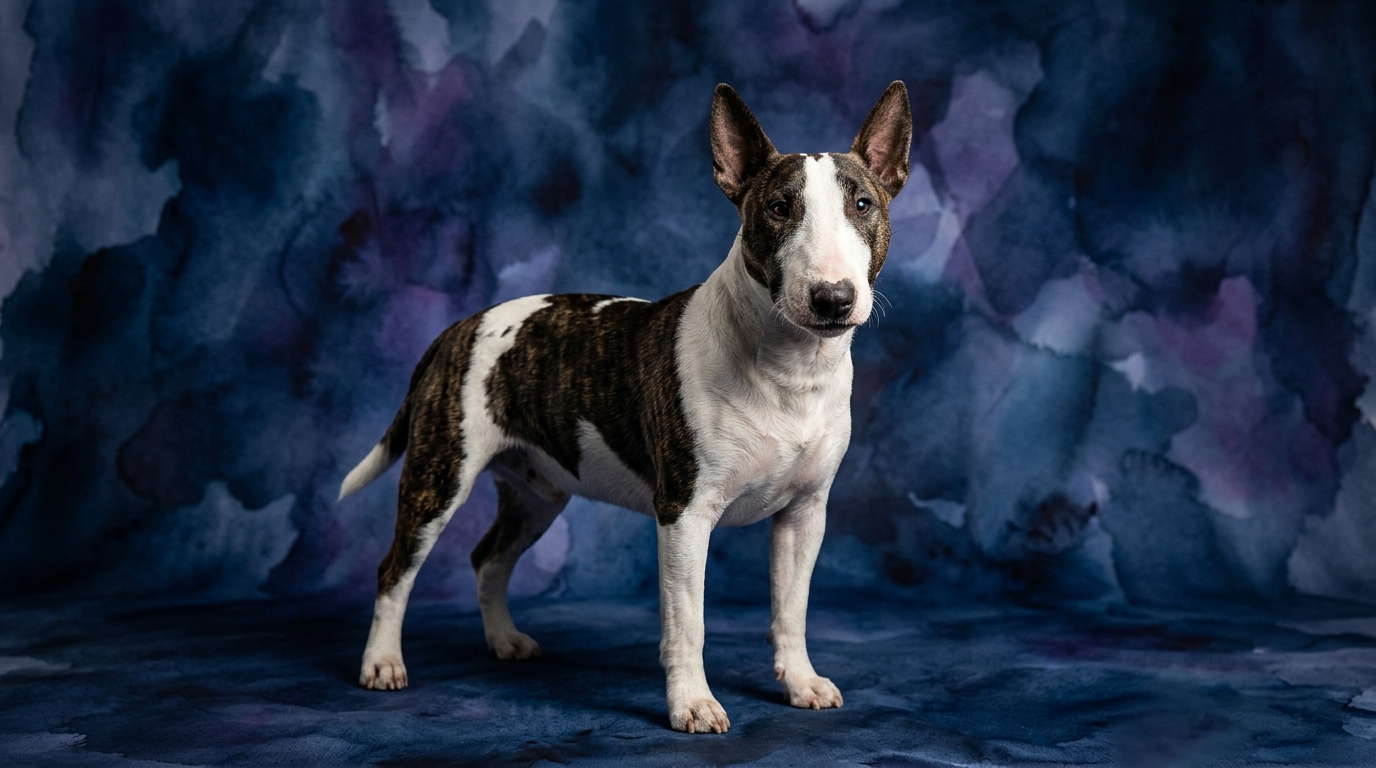
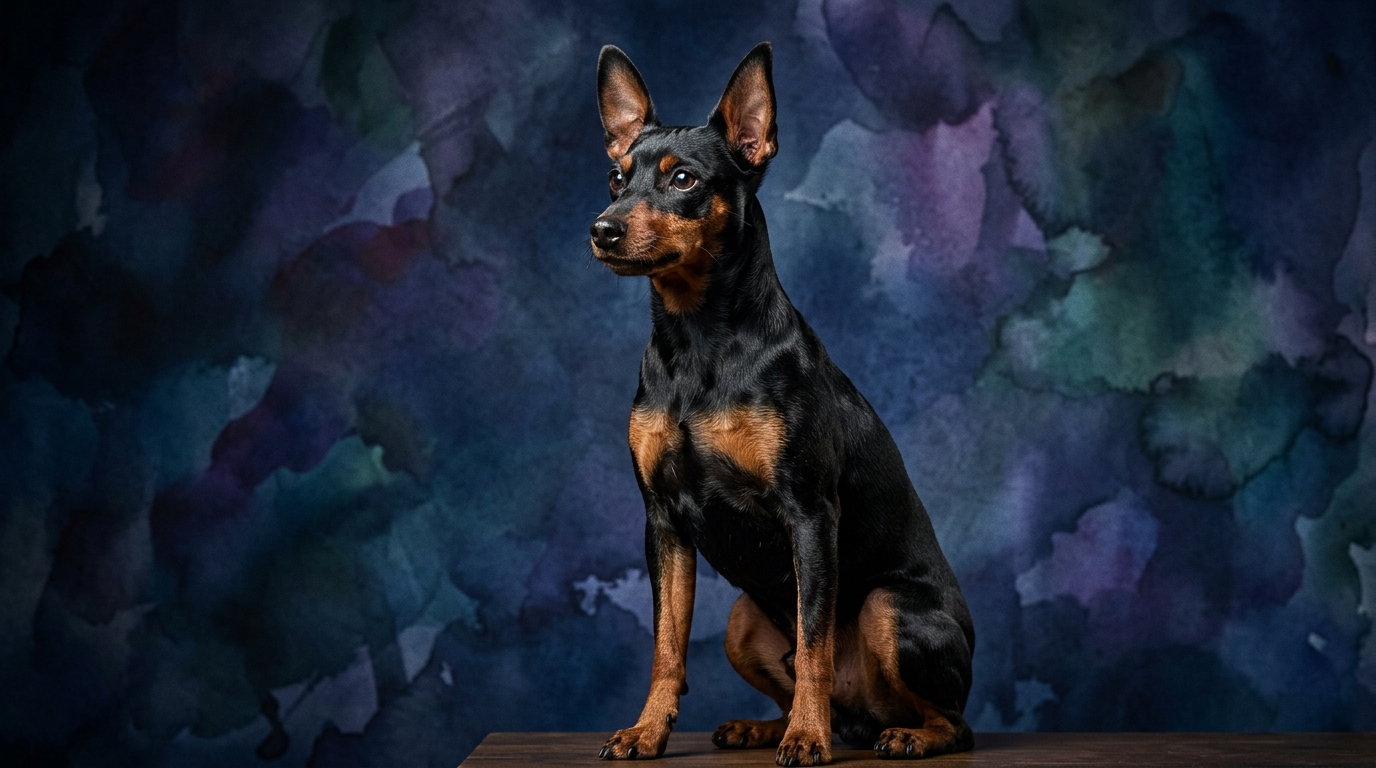
Side-by-Side Cognitive Profiles
While both breeds register a 3/5 across the board in our Pet IQ Lab, the expression of these cognitive abilities is deeply rooted in their distinct heritage and physical attributes. Understanding these subtle differences is key to appreciating their individual cognitive landscapes.
For the **Miniature Bull Terrier (Terrier Group)**, a **Problem Solving** score of 3/5 reflects a practical, hands-on approach to obstacles. This breed might persistently try different physical methods to get to a desired object or overcome a barrier, relying on their sturdy build and tenacity rather than complex strategizing. They are not easily deterred by initial failures, often circling back to a challenge with renewed vigor, characteristic of their terrier heritage in pursuit of prey. Their **Training Speed** at 3/5 indicates they are capable of learning new commands at a moderate pace, but their independent streak and occasional stubbornness can sometimes slow the process. They grasp concepts, yet their motivation often needs to be consistently high, responding best to positive reinforcement that makes training feel like a game or a rewarding interaction, as repetitive drills without a clear purpose might quickly bore them. Their **Social Intelligence** (3/5) is robust within their established pack, whether human or canine; they read familiar cues from their owners and respond with appropriate affection or playfulness. However, their terrier nature can make them less immediately open or discerning with strangers, taking time to assess new individuals and situations before fully engaging, and sometimes exhibiting a territorial awareness. The **Instinctive Drive** of 3/5 is strong and inherent, rooted in their terrier lineage, manifesting as a keen interest in chasing small moving objects, digging, and a general zest for physical activity, requiring appropriate outlets to prevent misdirection. Finally, a **Memory** score of 3/5 suggests they retain learned behaviors and routines effectively, especially those associated with positive experiences or strong emotional connections, remembering household rules and specific routes, though occasional refreshers might be needed for less frequent tasks.
The **Miniature Pinscher (Toy Group)**, also scoring 3/5 in **Problem Solving**, often leans towards resourcefulness and observation in their approach. They might figure out how to manipulate latches or use their agility to access high places, driven by curiosity or a desire for attention. Their solutions tend to be more about finesse and quick wit rather than brute force, reflecting their lighter build and alert disposition. Regarding **Training Speed** (3/5), Miniature Pinschers generally pick up new commands with moderate speed, particularly when motivated by high-value treats or praise. Their eagerness to please, combined with a desire for interaction, can make them receptive students; however, their lively, sometimes excitable nature can also lead to distractions, requiring consistent, engaging, and often short training sessions to maintain focus. Their **Social Intelligence** (3/5) often makes them highly attuned to their human family's moods and routines, displaying a strong capacity for bonding and emotional connection. They can interpret subtle body language and vocal tones, adjusting their behavior accordingly, though with strangers, their social intelligence might manifest as initial wariness or a bold, 'big dog in a small body' assertiveness. The **Instinctive Drive** at 3/5, while part of the Toy group, retains a strong 'ratting' instinct, evident in their quick movements, alert posture, and tendency to chase small, fast-moving objects, often expressed in playful pounces and energetic bursts. For **Memory** (3/5), Miniature Pinschers exhibit a good capacity for remembering routines, people, and specific command cues, especially those reinforced positively, recalling where treats are kept or the sound of a particular car, with reliable retention for daily interactions.
Where the Miniature Bull Terrier Excels Cognitively
Despite identical numerical scores, the Miniature Bull Terrier's cognitive strengths often shine in scenarios demanding persistent, physical engagement. Their 3/5 problem-solving, underpinned by a robust terrier tenacity, means they are less likely to abandon a challenge that requires sustained effort or a 'never-give-up' attitude. For instance, if a toy is stuck under furniture, a Mini Bull Terrier is more likely to methodically push, pull, and dig until it is retrieved, demonstrating a practical, hands-on determination that can outlast the more agile but potentially less enduring efforts of some other breeds.
Where the Miniature Pinscher Excels Cognitively
Conversely, the Miniature Pinscher often demonstrates a distinct advantage in situations requiring quick observation and a degree of social finesse. Their 3/5 social intelligence, combined with their characteristic alertness, allows them to be incredibly perceptive of subtle changes in their human environment, such as a shift in an owner's mood or an unfamiliar sound outside. This translates into a sharp awareness of their surroundings and a quickness to react, often making them excellent, if sometimes vocal, watchdogs, noticing details that a more robustly focused breed might overlook.
Training Dynamics: Nuances Behind Identical Scores
When evaluating trainability, the numerical score of 3/5 for both breeds belies crucial differences in their underlying motivations and approaches. The Miniature Pinscher, often eager to please and highly food-motivated, can be quite responsive to positive reinforcement in short, engaging sessions. Their desire for interaction and attention can be leveraged effectively, making them generally receptive to learning basic obedience and tricks, though their spirited nature demands consistency to prevent distraction from their surroundings or their own exuberance.
The Miniature Bull Terrier, while equally capable of learning at a moderate pace, presents a different training dynamic due to its independent streak and strong-willed terrier personality. They require an owner who understands how to make training feel like a partnership or an exciting game, rather than a command-and-obey scenario. While they grasp concepts, their enthusiasm for compliance is often tied to their perceived value of the reward or the enjoyment of the activity itself, meaning a trainer must be creative and patient to maintain their focus and enthusiasm over time, especially when faced with perceived boredom or a more interesting environmental stimulus.
Matching Breeds to Owner Lifestyles
For owners seeking an active companion, both breeds offer considerable energy, but with distinct expressions. The Miniature Bull Terrier thrives with an owner who can provide structured physical activities like long walks, vigorous playtime, or even dog sports that engage their sturdy build and persistent drive. They require consistent outlets for their instinctive drive, making them well-suited for individuals who enjoy regular outdoor adventures and have the time to channel their terrier zest for exploration and playful wrestling.
The Miniature Pinscher, while undeniably energetic, often expresses its activity through bursts of play and indoor acrobatics, making them suitable for owners who might prefer interactive play sessions over extensive outdoor excursions. Their smaller size and ability to entertain themselves with toys, combined with their love for being the center of attention, means they can adapt well to more relaxed home environments, provided they receive ample mental stimulation and opportunities for spirited engagement with their family, often enjoying short, frequent play sessions rather than prolonged endurance activities.
The Verdict
Choose a Miniature Bull Terrier if you value a robust, tenacious companion with a unique personality, and are prepared to engage their independent spirit with consistent, creative training and ample physical activity. They thrive with owners who appreciate their playful strength and unwavering determination in problem-solving.
Opt for a Miniature Pinscher if you desire an alert, spirited, and highly interactive companion who is attuned to your every move and enjoys being the lively heart of the home. They are ideal for owners who can provide consistent, positive training and enjoy a dog with a 'big personality' in a compact package.
🧠 Find Your Pet's IQ Score
Our Pet IQ Lab assessment covers 25+ tests across 5 cognitive dimensions — personalized to your breed.
Take the Full IQ Test →Frequently Asked Questions
Are Miniature Bull Terriers good with children?
Miniature Bull Terriers can be wonderful companions for children when properly socialized from a young age and raised in a household that teaches respect between dog and child. Their robust nature means they can tolerate rough-and-tumble play, but supervision is always key to ensure safe interactions for both.
Do Miniature Pinschers bark a lot?
Miniature Pinschers are known for their alertness and can be quite vocal, often barking to signal new sounds, people at the door, or simply to express excitement. Consistent training and early socialization can help manage excessive barking, teaching them when it's appropriate to alert and when to be quiet.
What are the exercise needs of these breeds?
Both breeds are energetic but express it differently. Miniature Bull Terriers require daily vigorous exercise, such as long walks or active play, to satisfy their terrier drive. Miniature Pinschers also need regular exercise, which can include walks and indoor play, but their smaller size means their needs are generally met with less extensive outdoor time than the Mini Bull Terrier.