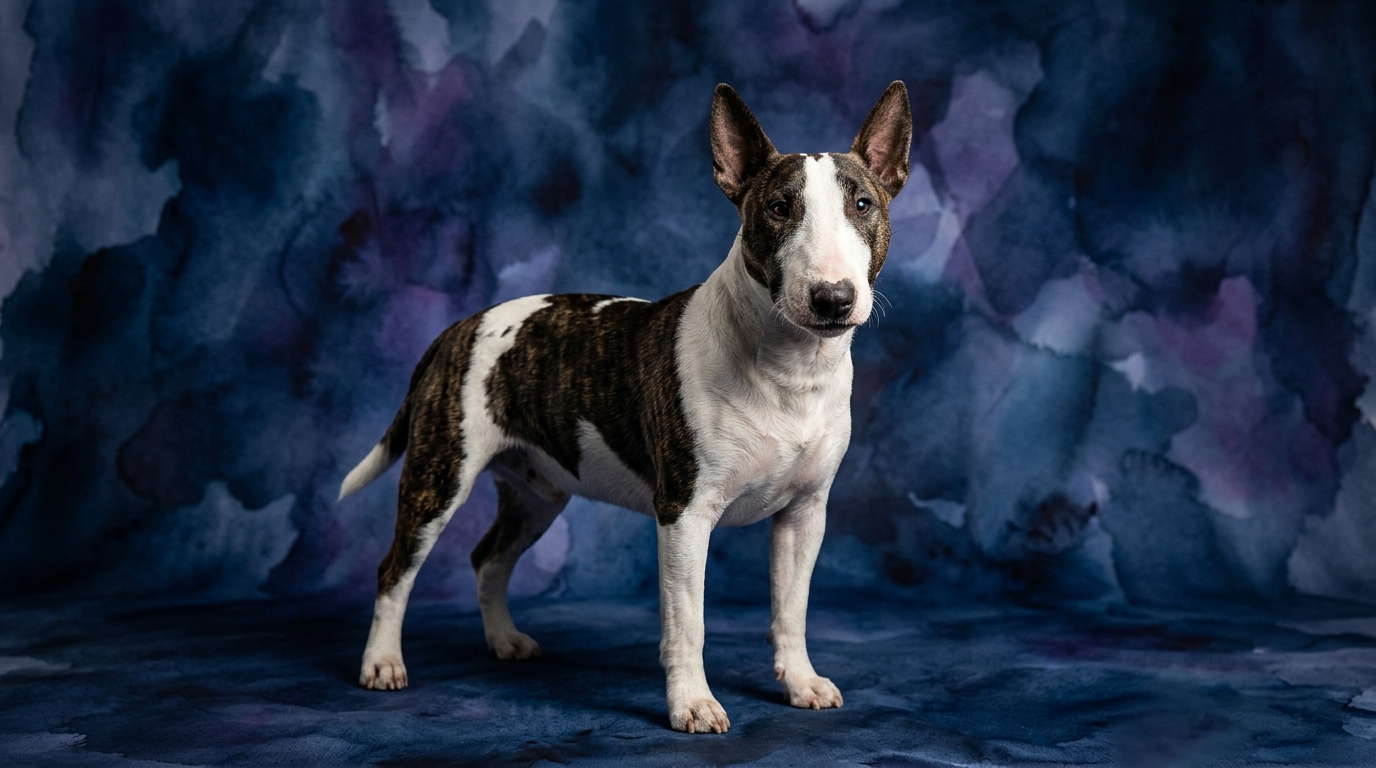
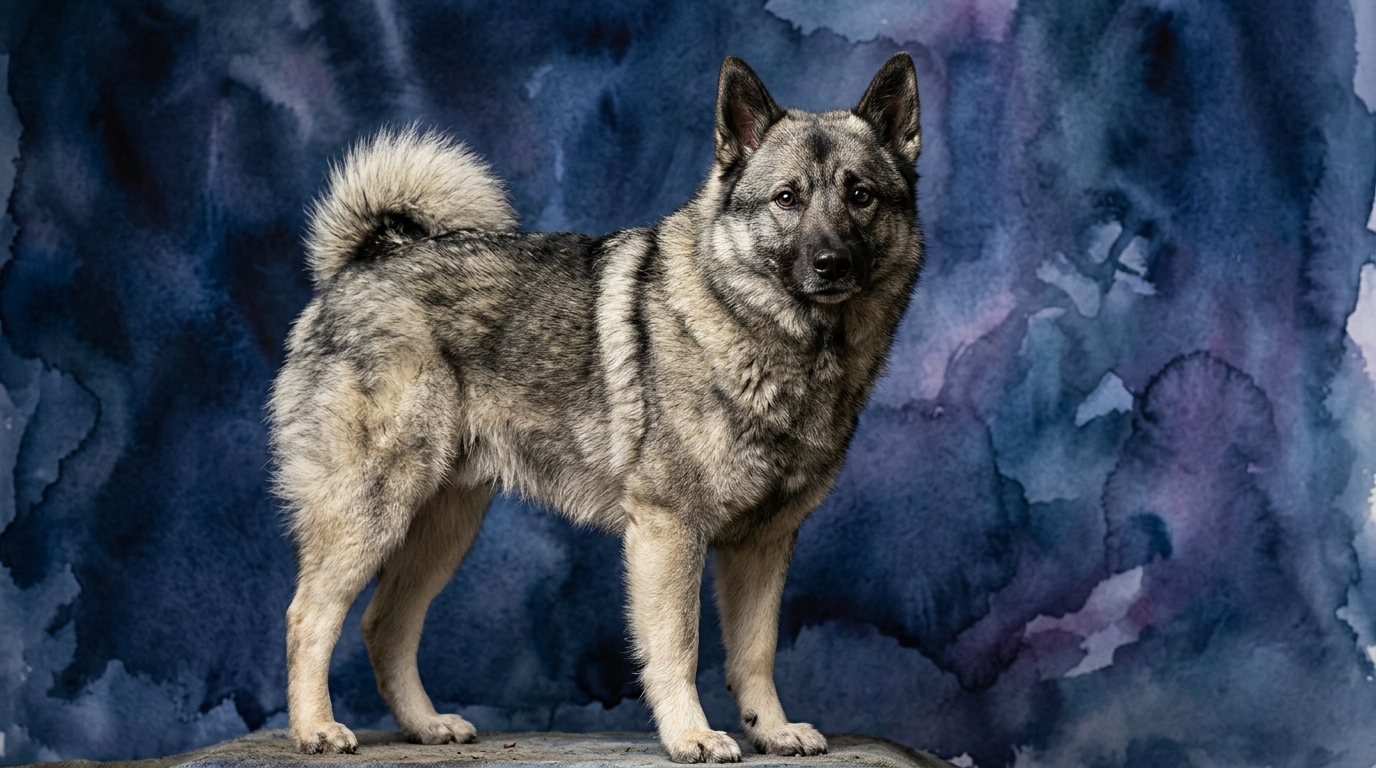
Side-by-Side Cognitive Profiles: Miniature Bull Terrier vs. Norwegian Elkhound
The Cosmic Pet Pet IQ Lab provides a unique framework for evaluating canine cognition across five key dimensions. For the Miniature Bull Terrier, problem-solving is rated at 3/5, indicating a resourceful nature that often finds novel, albeit sometimes circuitous, solutions to challenges. Their training speed also stands at 3/5, meaning they are capable of learning commands but benefit significantly from consistent, patient repetition and engaging methods to maintain focus. Social intelligence for the Miniature Bull Terrier is 3/5, reflecting a deep, often exclusive, bond with their immediate family and a nuanced ability to read their chosen human companions, though they can be more reserved with strangers or other dogs. Their instinctive drive is 3/5, manifesting as a terrier-typical inclination for chasing and digging, frequently channeled into play or focused tasks. Memory is also rated 3/5; they retain learned behaviors and routines, but consistent reinforcement is key to long-term recall.
In contrast, the Norwegian Elkhound presents a profile demonstrating a different set of cognitive strengths. Their problem-solving ability is rated 4/5, indicating a strong capacity to independently navigate complex environments and efficiently devise solutions to achieve their objectives. This efficiency extends to their training speed, also 4/5, meaning they typically grasp new commands and routines with relative quickness, especially when positive reinforcement is employed. The Elkhound's social intelligence is 3/5; they form strong attachments to their families and are generally amiable, yet they possess an independent streak and can be watchful, not always overly effusive with unfamiliar individuals. Their instinctive drive is 3/5, rooted in their heritage as endurance hunters, exhibiting a strong prey drive and stamina, which is typically well-managed and channeled into active pursuits within a domestic setting. Finally, their memory is a notable 4/5, reflecting a strong retention for learned tasks, specific places, and familiar people over extended periods.
Where the Miniature Bull Terrier Shines Cognitively
While the Elkhound might show more direct efficiency, the Miniature Bull Terrier's problem-solving at 3/5 often involves a unique brand of creative thinking. Their approach to overcoming obstacles can be less conventional, demonstrating a mental flexibility that finds solutions through persistence and sometimes, sheer will, even if it’s not the most obvious path. This determination, an intrinsic part of their terrier spirit, means that once they are committed to a task or a desired outcome, they exhibit a tenacity that can be remarkable. Their social intelligence, rated 3/5, while not broadly effusive, is often profoundly focused on their core family unit, allowing for an incredibly deep, almost intuitive, understanding of their specific human companions' moods and subtle cues. This intense, dedicated social bond can create a uniquely attuned partnership for those within their inner circle, often anticipating needs or reacting with precise emotional resonance to their preferred people.
Where the Norwegian Elkhound Holds a Cognitive Edge
The Norwegian Elkhound’s superior problem-solving (4/5) and memory (4/5) are distinct advantages, enabling them to grasp and retain complex sequences and information more readily. This makes them particularly adept at learning multi-step tasks or confidently navigating new and challenging environments, often with a remarkable degree of independence. Their faster training speed (4/5) signifies that they can acquire a broader repertoire of commands and behaviors more efficiently than the Miniature Bull Terrier, making advanced obedience, canine sports, or specialized tasks potentially more accessible and rewarding for both dog and handler. The Elkhound's Coren rank of #36 further underscores their capacity for adaptive learning and a willingness to cooperate, reflecting a cognitive profile that readily processes and responds to human instruction with consistency.
Ease of Training: Behavioral Differences Unveiled
When it comes to ease of training, the Norwegian Elkhound generally presents a more straightforward path. Their Coren rank of #36, coupled with higher scores in training speed (4/5), problem-solving (4/5), and memory (4/5), indicates a canine partner that typically learns faster, retains commands more reliably, and is more inclined to follow instructions. Their historical role as cooperative hunting companions required them to work closely with humans, fostering a natural predisposition towards responsiveness and partnership. This means an Elkhound is often more motivated by human praise and the satisfaction of a task well done, making consistent training sessions productive and rewarding.
The Miniature Bull Terrier, with a training speed of 3/5, while certainly capable of learning, often requires a different training approach. They are known for their independent streak and occasional stubbornness, a hallmark of their terrier heritage. This means they might prioritize their own interests or internal motivations over human directives at times. Training a Miniature Bull Terrier demands more patience, unwavering consistency, and creative motivation – often involving play or highly valued treats – to maintain their focus and ensure compliance. Owners should be prepared for sessions that may require more ingenuity to keep the Miniature Bull Terrier engaged and willing to participate, understanding that their intelligence manifests through a more independent filter.
Matching Canine Intellect to Owner Lifestyles
Considering owner lifestyles, neither breed is truly suited for a completely relaxed, sedentary owner, as both require engagement. The Norwegian Elkhound, with its background as an endurance hunter, thrives with consistent, sustained physical activity. An active owner who enjoys hiking, jogging, or structured canine sports will find an Elkhound to be an excellent, eager companion. Their problem-solving (4/5) and memory (4/5) mean they benefit immensely from mentally stimulating activities like scent work or agility, which can fulfill their innate drives. They need a clear routine and sufficient outlets for their energy to prevent boredom and potential vocalizations.
The Miniature Bull Terrier, while also energetic, often exhibits bursts of intense play followed by periods of remarkable relaxation. They need regular exercise and, crucially, consistent mental stimulation to manage their terrier energy and prevent boredom-induced behaviors. An owner who is active but perhaps appreciates a dog that can also settle down readily after a good play session might find the Miniature Bull Terrier a better fit. They thrive with owners who understand their independent nature and are prepared to provide creative mental challenges and structured play that channels their unique problem-solving (3/5) and instinctive drives (3/5) effectively. For truly relaxed owners, neither breed is ideal, but the Miniature Bull Terrier might adapt slightly better to variations in daily routine, provided their core needs for interaction and stimulation are met.
The Verdict
The Miniature Bull Terrier is an excellent choice for owners who appreciate a dog with a unique, spirited personality and are prepared to engage in consistent, creative training methods to channel their independent intellect.
The Norwegian Elkhound suits owners seeking a cooperative, capable canine partner for activities, who value a dog that learns quickly and retains information, thriving with structured engagement and a clear routine.
🧠 Find Your Pet's IQ Score
Our Pet IQ Lab assessment covers 25+ tests across 5 cognitive dimensions — personalized to your breed.
Take the Full IQ Test →Frequently Asked Questions
Are Miniature Bull Terriers good with children?
Their social intelligence (3/5) means they can form strong bonds with family members, including children, but their boisterous nature requires supervision, especially with very young kids. Proper socialization from a young age is crucial for harmonious family integration and teaching appropriate play.
Do Norwegian Elkhounds bark a lot?
Elkhounds were historically used to alert hunters to game, so they do have a propensity to bark; their instinctive drive (3/5) includes vocalization for communication. Consistent training and sufficient mental and physical exercise can help manage excessive barking, but owners should expect a certain level of vocal expression as part of their communication style.
How much exercise do these breeds need?
The Norwegian Elkhound, with its background as a hunting dog, requires significant daily exercise, often an hour or more of vigorous activity to satisfy its endurance and problem-solving needs (instinctive drive 3/5). Miniature Bull Terriers also need regular exercise and mental stimulation to prevent boredom and destructive behaviors, typically 30-60 minutes of active play daily, coupled with engaging mental challenges.