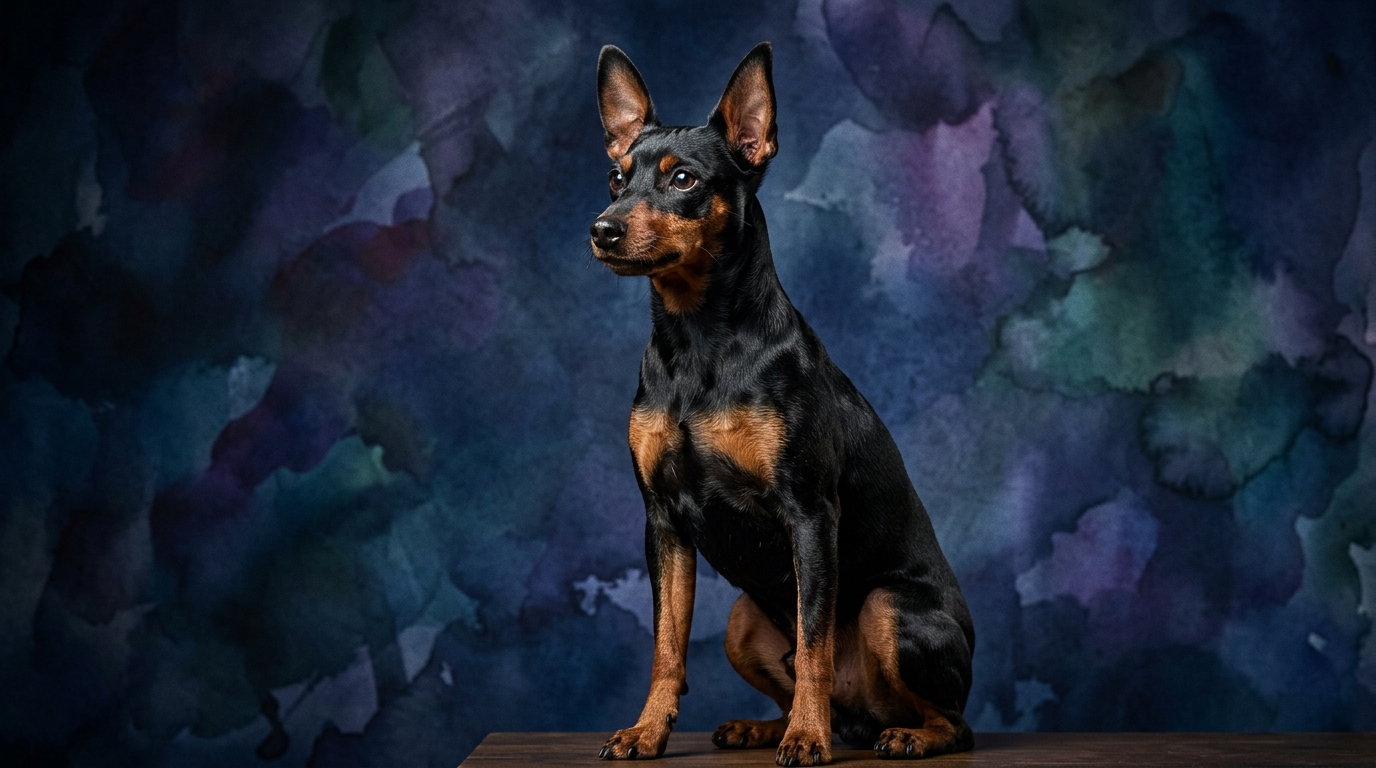
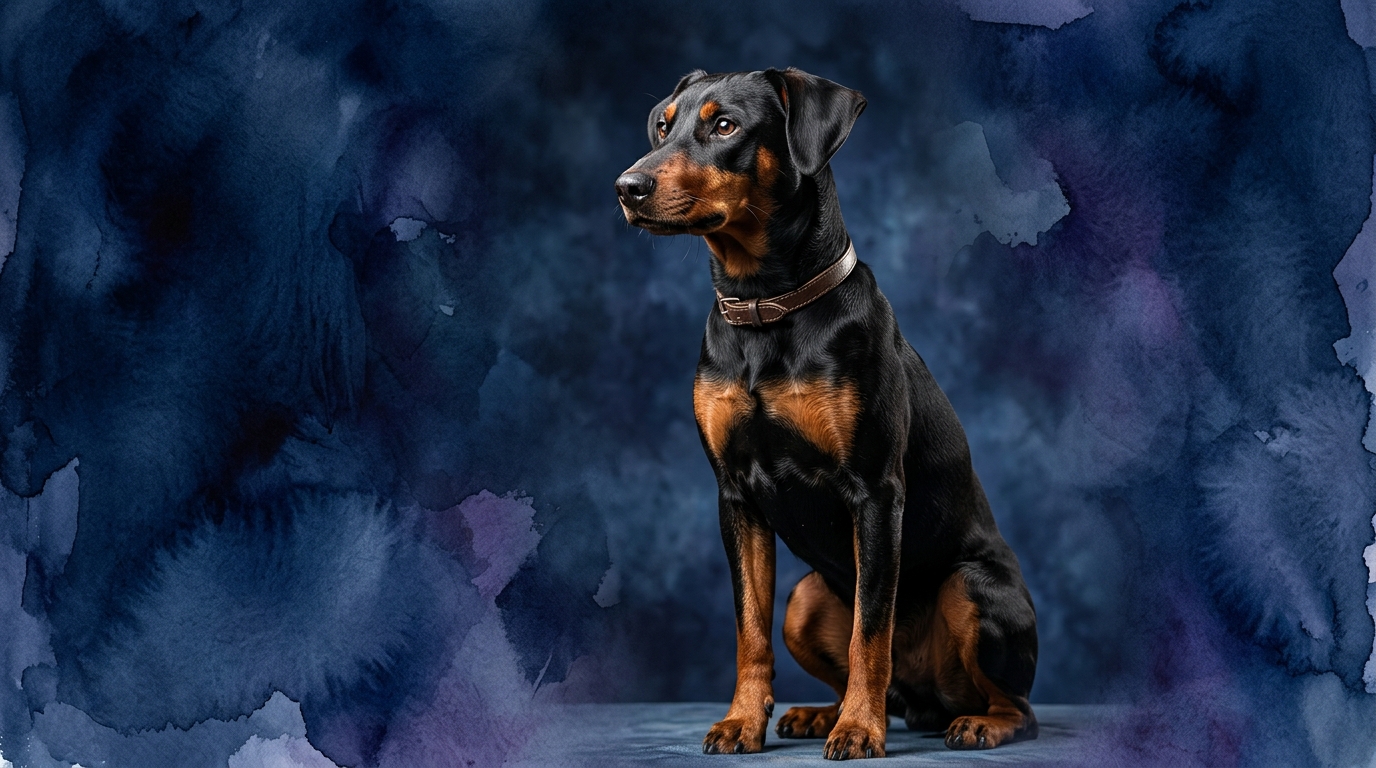
Side-by-Side IQ Profile: Miniature Pinscher vs. German Pinscher
At The Cosmic Pet Pet IQ Lab, we assess canine intelligence across five critical dimensions. Interestingly, both the Miniature Pinscher (a Toy group member) and the German Pinscher (from the Working group) register identical scores of 3/5 across all five metrics. However, these scores manifest in distinct ways, shaped by their ancestral roles and inherent temperaments. Understanding these nuances is key to appreciating their unique cognitive blueprints.
For **Problem Solving (3/5)**, the Miniature Pinscher exhibits a clever, often self-serving ingenuity. This isn't about complex logical sequences for abstract tasks, but rather a sharp ability to navigate their immediate environment to their advantage. They excel at figuring out how to open a treat cupboard, bypass a baby gate, or manipulate a human into providing attention or food. Their problem-solving is typically focused on immediate gratification and resource acquisition within a domestic context, often showing a surprising tenacity for their size. The German Pinscher, also scoring 3/5, approaches problem-solving with a more direct and purpose-driven mindset. Given their working heritage, their intelligence manifests in practical applications: understanding how to effectively herd livestock, identifying and deterring perceived threats, or figuring out how to remove an obstacle during a task. They possess a robust, methodical approach to overcoming physical or environmental challenges, driven by a desire to complete a 'job' or protect their territory, rather than purely personal gain.
In terms of **Training Speed (3/5)**, the Miniature Pinscher learns new commands and routines quickly, often grasping concepts after only a few repetitions. However, their independent and sometimes stubborn nature means that while they *understand* what is asked, they may choose to comply only if they perceive sufficient motivation or benefit. Consistent, engaging, and reward-based training is essential to channel their quick wit into reliable obedience. The German Pinscher, with the same 3/5 score, also learns commands efficiently, often showing an eagerness to engage in structured training with a trusted handler. Their working background means they generally respond well to clear, firm guidance and thrive on having a purpose, making them receptive to learning complex sequences of tasks. Their training speed is tempered by a need for mental stimulation; boredom can lead to selective hearing or self-employment in less desirable activities.
**Social Intelligence (3/5)** in the Miniature Pinscher is highly attuned to family dynamics. They are masters of reading human emotions and subtle cues, often using their charm to gain affection or leniency. They form strong bonds with their immediate 'pack' but can be quite reserved or even suspicious of strangers, meticulously assessing new individuals. Their social savvy helps them navigate and often orchestrate interactions within their household. The German Pinscher, also at 3/5, demonstrates social intelligence through a keen understanding of hierarchy and territory. They are protective of their family and home, capable of discerning genuine threats from benign visitors. While often reserved with strangers, they are generally observant and discerning, reading intentions effectively, particularly concerning their space and people. Their social interactions are often driven by a sense of duty and protection.
The **Instinctive Drive (3/5)** of a Miniature Pinscher is primarily characterized by a powerful prey drive for small animals, a remnant of their ratting heritage. This manifests as tenacious chasing, digging, and a relentless focus on anything that moves quickly. They also possess a strong territorial instinct for their home, often acting as diligent, albeit vocal, sentinels. The German Pinscher's 3/5 instinctive drive encompasses a broader range. While they share a strong prey drive, their heritage as farm dogs also imbues them with guarding, herding, and patrolling instincts. Their drives are often expressed in a more 'working' context, such as actively alerting to perceived threats, managing the boundaries of their space, or even attempting to 'herd' family members.
Finally, for **Memory (3/5)**, the Miniature Pinscher possesses an excellent recall for routines, the locations of hidden treats, and past interactions – both positive and negative. They are unlikely to forget a kind gesture or a perceived slight, and their ability to remember complex household rules (and how to circumvent them) is notable. The German Pinscher's memory, also 3/5, is robust for commands, learned boundaries, individuals they've encountered, and specific tasks. They retain complex sequences of actions and past training with impressive clarity, making them reliable partners in repeated activities or work scenarios. Their memory contributes significantly to their consistency in learned behaviors and their ability to anticipate routines.
Where the Miniature Pinscher Wins Cognitively
The Miniature Pinscher's cognitive strengths truly shine in their ability to adapt and manipulate within a domestic setting. They are exceptionally adept at charming their way into desired situations, using subtle social cues and their spirited personality to gain attention, treats, or access to forbidden areas. Their quick wit makes them superior in navigating complex social dynamics within a household, often seeming to 'play' family members against each other in pursuit of their goals, albeit in an endearing way. Furthermore, Min Pins often display a quicker cognitive adaptation to new domestic routines or changes in household structure, processing shifts in their immediate environment with a remarkable, though sometimes self-serving, flexibility. Their capacity for observing and exploiting human habits for personal gain is a distinct cognitive advantage in a home environment.
Where the German Pinscher Wins Cognitively
The German Pinscher's cognitive prowess is most evident in practical, task-oriented problem-solving, especially tasks requiring sustained focus and physical dexterity. Their working dog heritage has honed their ability to understand and execute multi-step commands, making them more effective in structured activities like dog sports, advanced obedience, or even simulated protection work. They demonstrate superior discernment in identifying genuine threats versus benign strangers, showcasing a nuanced social intelligence geared towards protection and guardianship rather than charm. This breed also excels in retaining and executing complex command sequences or multi-stage tasks over extended periods, making them highly reliable partners for consistent, purposeful engagement. Their robust memory for tasks and boundaries contributes significantly to their effectiveness in a working role.
Which is Easier to Train and Why
Neither the Miniature Pinscher nor the German Pinscher can be truly classified as 'easy' to train in the conventional sense, primarily due to their strong wills and independent streaks. However, their approaches to training differ. The German Pinscher, with its working background, often approaches structured training with a greater sense of purpose and a desire to engage with its handler, making them potentially more willing to comply with commands if the handler is consistent, clear, and confident. They thrive on having a 'job' and respond well to a leader who provides direction and mental stimulation, making them generally more receptive to formal obedience. Conversely, the Miniature Pinscher, while quick to learn, often requires a more creative, positive reinforcement approach. Their independence means they need to *want* to do something, rather than merely obeying. Training a Min Pin often feels like a negotiation, requiring patience, humor, and a deep understanding of their motivations. They are less inclined to perform simply to please and more likely to weigh the benefits of compliance, making their training a rewarding challenge for those who appreciate a thinking dog.
Suitability for Active vs. Relaxed Owners
It's crucial to understand that both the Miniature Pinscher and the German Pinscher are breeds that demand active owners. Neither is suited for a truly relaxed, sedentary lifestyle. The German Pinscher, originating from the Working group, requires significant daily physical exercise and consistent mental engagement. An under-stimulated German Pinscher can quickly develop destructive behaviors, anxiety, or an inclination towards self-employment in ways that are not always desirable, such as excessive barking or digging. They thrive in environments where they have a purpose, whether through dog sports, advanced obedience, or regular, challenging activities. The Miniature Pinscher, despite its smaller size, is also a high-energy dog. They are not content to be lap warmers all day. Min Pins need regular walks, vigorous play sessions, and mental challenges to prevent boredom and channel their spirited energy constructively. Without adequate outlets, their cleverness can be directed towards mischief, such as incessant barking, counter-surfing, or territorial aggression. Therefore, owners for both breeds must be prepared to commit significant time and energy to their dog's physical and mental well-being.
The Verdict
If you appreciate a clever, independent, and charming companion who will keep you on your toes with their spirited personality and quick wit, and you enjoy negotiating with a dog who thinks for themselves, the Min Pin could be your match.
If you seek a robust, intelligent working companion who thrives on purpose, excels in structured training with a confident leader, and offers discerning protection, the German Pinscher will reward your commitment with unwavering loyalty and capability.
🧠 Find Your Pet's IQ Score
Our Pet IQ Lab assessment covers 25+ tests across 5 cognitive dimensions — personalized to your breed.
Take the Full IQ Test →Frequently Asked Questions
Are Miniature Pinschers and German Pinschers good with children?
Both breeds can be good with older, respectful children who understand how to interact with dogs. Due to their strong personalities and potential for nipping if startled or teased, supervision and early socialization are crucial to foster positive interactions and ensure safety.
Do German Pinschers bark a lot?
German Pinschers are naturally alert and can be quite vocal, especially when guarding their territory or alerting to perceived threats. Consistent training and socialization from a young age, along with proper mental and physical stimulation, can help manage excessive barking.
Are Miniature Pinschers prone to 'small dog syndrome'?
Miniature Pinschers can exhibit 'small dog syndrome' if not properly socialized and trained. Their bold, confident nature, combined with their small size, can lead them to challenge larger dogs or be overly assertive if their owners don't provide firm, consistent leadership and boundaries.