Side-by-Side Cognitive Profiles
To understand the unique mental landscapes of the Newfoundland and Scottish Deerhound, The Cosmic Pet Pet IQ Lab utilizes five key dimensions of cognitive function. These metrics provide a nuanced view beyond simple labels, allowing us to appreciate each breed's specialized intellect.
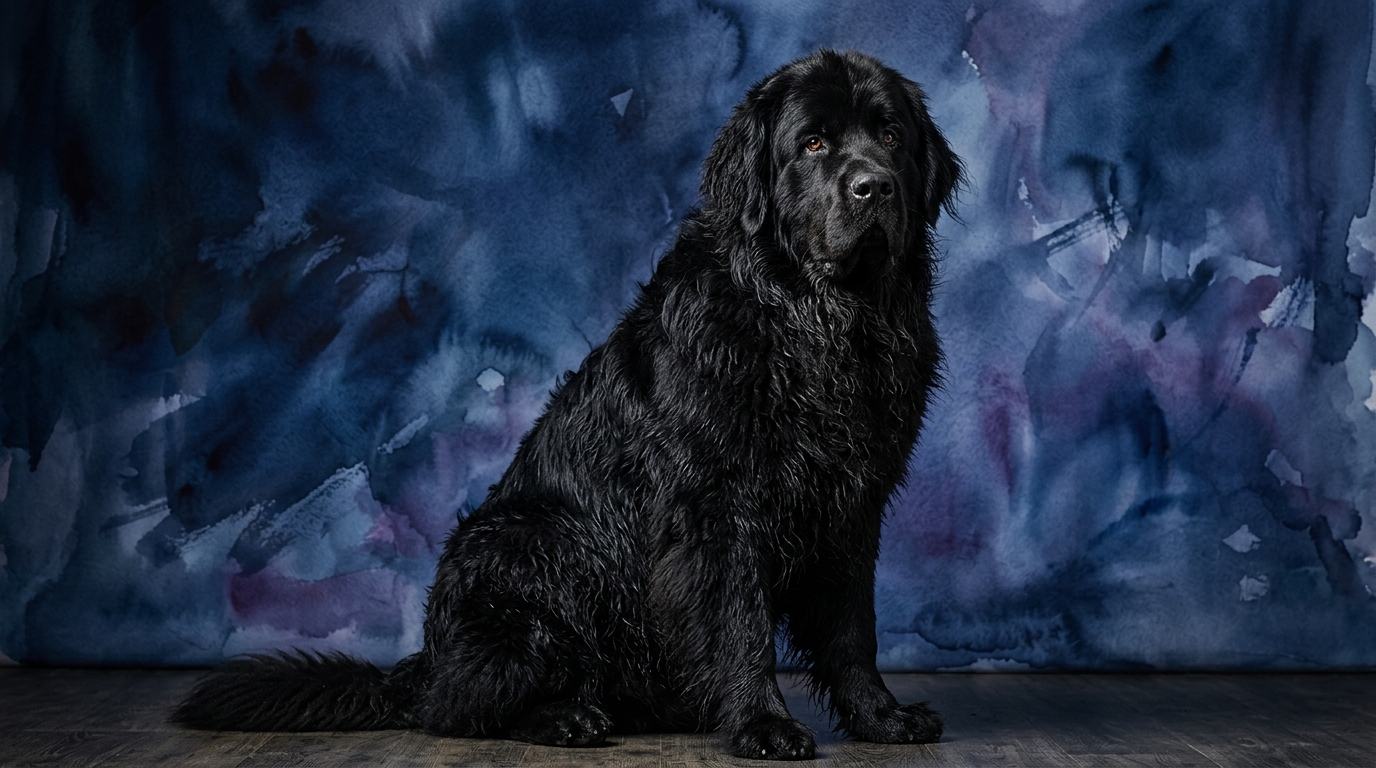
The **Newfoundland**, a venerable Working dog, exhibits a cognitive profile deeply rooted in collaboration and purpose:
Problem Solving (3/5): Newfoundlands demonstrate practical resourcefulness, adept at navigating their environment and assisting humans in tasks, though they may not independently initiate abstract solutions without clear direction. Their problem-solving is often applied to real-world scenarios, particularly those involving safety or aid.
Training Speed (4/5): These dogs absorb new commands and routines with impressive alacrity, driven by a strong desire to please and a natural inclination towards partnership. They respond quickly to consistent, positive reinforcement, making them eager participants in structured learning.
Social Intelligence (5/5): Unparalleled in their ability to read and respond to human and canine emotional cues, Newfoundlands possess profound empathy. They form deep, intuitive bonds, making them exceptionally gentle with children and highly adaptable in diverse social settings, often anticipating needs before they are expressed.
Instinctive Drive (5/5): A powerful inherent drive for protection, water rescue, and companionship defines the Newfoundland. Their instincts compel them towards purposeful, often lifesaving, work and a constant desire to be a supportive presence alongside their human family.
Memory (4/5): Newfoundlands exhibit strong retention of learned commands, routines, and past experiences. They recall people, places, and tasks with ease, contributing to their reliability and consistency in behavior over time.
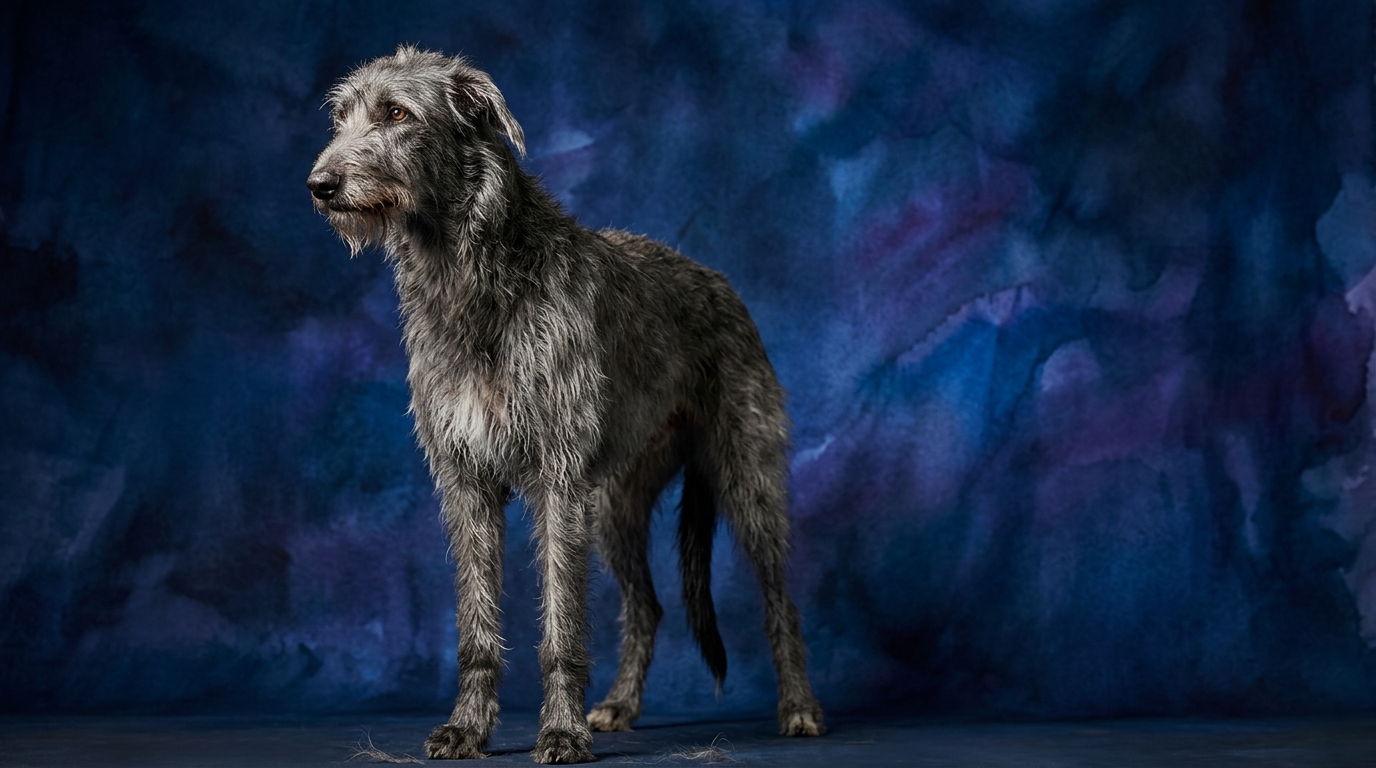
The **Scottish Deerhound**, a dignified Hound breed, showcases a different set of cognitive priorities, shaped by centuries of independent pursuit:
Problem Solving (3/5): Scottish Deerhounds can effectively devise solutions to immediate, self-serving needs, particularly those related to hunting or comfort. Their problem-solving often manifests as independent cunning to achieve a desired outcome, rather than collaborative task completion.
Training Speed (3/5): While capable of learning, Deerhounds often require more repetition and tailored motivation due to their independent streak and occasional disinterest in human-initiated tasks. They can be easily distracted by visual stimuli, which can slow the learning process.
Social Intelligence (3/5): Affectionate and devoted to their immediate family, Deerhounds can be reserved or aloof with strangers, taking time to warm up. They read social cues adequately but do not possess the Newfoundland's profound, generalized empathy or strong intrinsic desire to please in broad social contexts.
Instinctive Drive (3/5): A potent prey drive, characteristic of sighthounds, is their primary instinctive motivation. This drive is focused on pursuit and capture, with less inherent inclination towards human-directed work or generalized protective behaviors beyond their immediate kin. Their drive is often singular and intense when activated.
Memory (3/5): Deerhounds remember routines and familiar individuals, but may not retain complex or lengthy command sequences as readily as more biddable breeds, especially if not consistently reinforced. Their memory is sufficient for daily life but less geared towards extensive obedience repertoires.
Where the Newfoundland Wins Cognitively
The Newfoundland's cognitive strengths shine brightest in areas demanding collaboration, empathy, and consistent dedication. Their **Social Intelligence (5/5 vs. Deerhound's 3/5)** is a profound advantage. This isn't merely about being 'friendly'; it's a deep-seated ability to interpret complex social cues, understand human emotions, and respond with appropriate, often comforting, actions. This makes them exceptional therapy dogs, intuitive family companions, and remarkably adaptable to varied social dynamics.
Their **Instinctive Drive (5/5 vs. Deerhound's 3/5)** is another significant win, but with a specific nuance. While both breeds possess strong instincts, the Newfoundland's are geared towards purposeful work that benefits others, particularly rescue and guardianship. This translates into a cognitive inclination to apply their physical and mental capacities to tasks alongside humans, seeking to contribute and protect rather than merely self-preserve or pursue. This inherent desire for meaningful engagement fuels their cooperative spirit.
In terms of learning, the Newfoundland's **Training Speed (4/5 vs. Deerhound's 3/5)** and superior **Memory (4/5 vs. Deerhound's 3/5)** give them a distinct edge in formal training. Their eagerness to please, combined with their ability to quickly grasp and retain commands, makes them highly biddable. They find satisfaction in mastering tasks and working in concert with their human partners, allowing for more complex training endeavors and a greater likelihood of consistent, desired behaviors.
Where the Scottish Deerhound Wins Cognitively
While the Deerhound's overall IQ scores may appear lower in some metrics, their cognitive profile is specialized, not diminished, offering unique strengths. Their **Problem Solving (3/5)**, though numerically similar to the Newfoundland's, operates with a different focus. Deerhounds excel at independent problem-solving, particularly when it comes to achieving their own objectives, such as outsmarting small prey or finding the most comfortable spot. This involves a cunning, self-directed mental agility distinct from the Newfoundland's collaborative approach.
A key cognitive advantage for the Scottish Deerhound lies in their **situational awareness and rapid visual processing**, directly linked to their sighthound heritage. They possess an extraordinary ability to scan vast distances, detect the slightest movement, and instantly process visual information to make split-second decisions for pursuit. This highly specialized form of intelligence allows them to filter environmental noise and focus intensely on a moving target, demonstrating a unique cognitive filtering capability.
Furthermore, when their **Instinctive Drive (3/5)** is activated by a visual stimulus, Deerhounds exhibit a singular, unwavering focus. This ability to maintain intense concentration on a specific, high-priority task, to the exclusion of other distractions, represents a distinct cognitive strength. They are masters of the chase, mentally wired for efficient, independent action in pursuit scenarios.
Which is Easier to Train and Why
Based on their cognitive profiles, the **Newfoundland** is demonstrably easier to train for general obedience and task-oriented work. Their superior Training Speed (4/5) is directly linked to their powerful Social Intelligence (5/5) and strong Memory (4/5). Newfoundlands inherently desire to please their human companions and thrive on collaboration, making them highly receptive to instruction. They quickly understand what is expected and retain commands well, motivated by praise and partnership. Their biddability means they are more inclined to follow directions and less prone to independent decision-making that might conflict with training goals, making the learning process smoother and more rewarding for both dog and owner.
Conversely, the **Scottish Deerhound** presents a greater training challenge. Their lower Training Speed (3/5) and Social Intelligence (3/5) mean they are less inherently driven by a desire to please and may require more repetition, patience, and creative motivation. Their potent instinctive drive for pursuit, combined with a capacity for independent thought, means they can be easily distracted by environmental stimuli, particularly moving objects. Training a Deerhound often requires understanding their sighthound nature, tailoring methods to their independent spirit, and ensuring motivation is compelling enough to override their natural inclinations. Consistency and positive reinforcement are crucial, but trainers must be prepared for a less eager and more thoughtful response to commands.
Which Suits Active Owners vs. Relaxed Owners
For owners seeking a companion to share in structured activities and collaborative engagement, the **Newfoundland** is an excellent fit. While they possess a high instinctive drive (5/5) and require regular exercise, their activity is often purposeful and family-oriented. They thrive with owners who enjoy long, steady walks, swimming, carting, or other activities where they can work alongside their human. Their social intelligence means they are adaptable to various family routines, but they do require consistent mental engagement and a sense of belonging. They are not necessarily 'relaxed' in a sedentary sense, but their energy is typically calm and deliberate, rather than frenetic.
The **Scottish Deerhound** suits owners who appreciate a different rhythm of activity. They require bursts of intense, high-speed exercise, ideally in a large, securely fenced area where they can gallop freely. This fulfills their powerful sighthound instincts. However, once their exercise needs are met, Deerhounds are often remarkably relaxed indoors, content to lounge and observe. They are not suited for constant, structured 'work' in the same way a Newfoundland is. Owners must be prepared to manage their potent prey drive during outdoor activities and understand their need for both explosive exercise and significant periods of quiet companionship. They are ideal for those who can provide the necessary outlets for their speed, followed by a calm, low-key home life.
The Verdict
Choose the Newfoundland if you seek a deeply empathetic, highly trainable, and devoted companion who thrives on collaboration, purposeful engagement, and gentle family interaction, particularly if you appreciate their innate desire to serve and protect.
Opt for the Scottish Deerhound if you value an independent, elegant, and reserved companion capable of incredible bursts of speed, requiring a secure environment for exercise, and appreciate their calm indoor demeanor and unique sighthound traits.
🧠 Find Your Pet's IQ Score
Our Pet IQ Lab assessment covers 25+ tests across 5 cognitive dimensions — personalized to your breed.
Take the Full IQ Test →Frequently Asked Questions
Are Newfoundlands good with children?
Yes, their exceptional social intelligence (5/5) and gentle nature make them remarkably patient and protective companions for children. They instinctively understand boundaries and are often described as 'nanny dogs,' forming deep, empathetic bonds with their family's youngest members.
Can Scottish Deerhounds live with cats?
While individual temperament varies, their strong instinctive drive (3/5) for prey means introducing a Scottish Deerhound to cats requires extreme caution and careful, early socialization. Their powerful sighthound instincts can make them perceive smaller, fast-moving animals as prey, so a cat-free home is often safer.
Do Newfoundlands require a lot of grooming?
Yes, Newfoundlands possess a dense, double coat designed for water work, which necessitates significant grooming to prevent matting and maintain skin health. Regular brushing several times a week, especially during shedding seasons, and occasional professional grooming are essential to manage their luxurious fur.