Side-by-Side IQ Profile: Unpacking Cognitive Dimensions
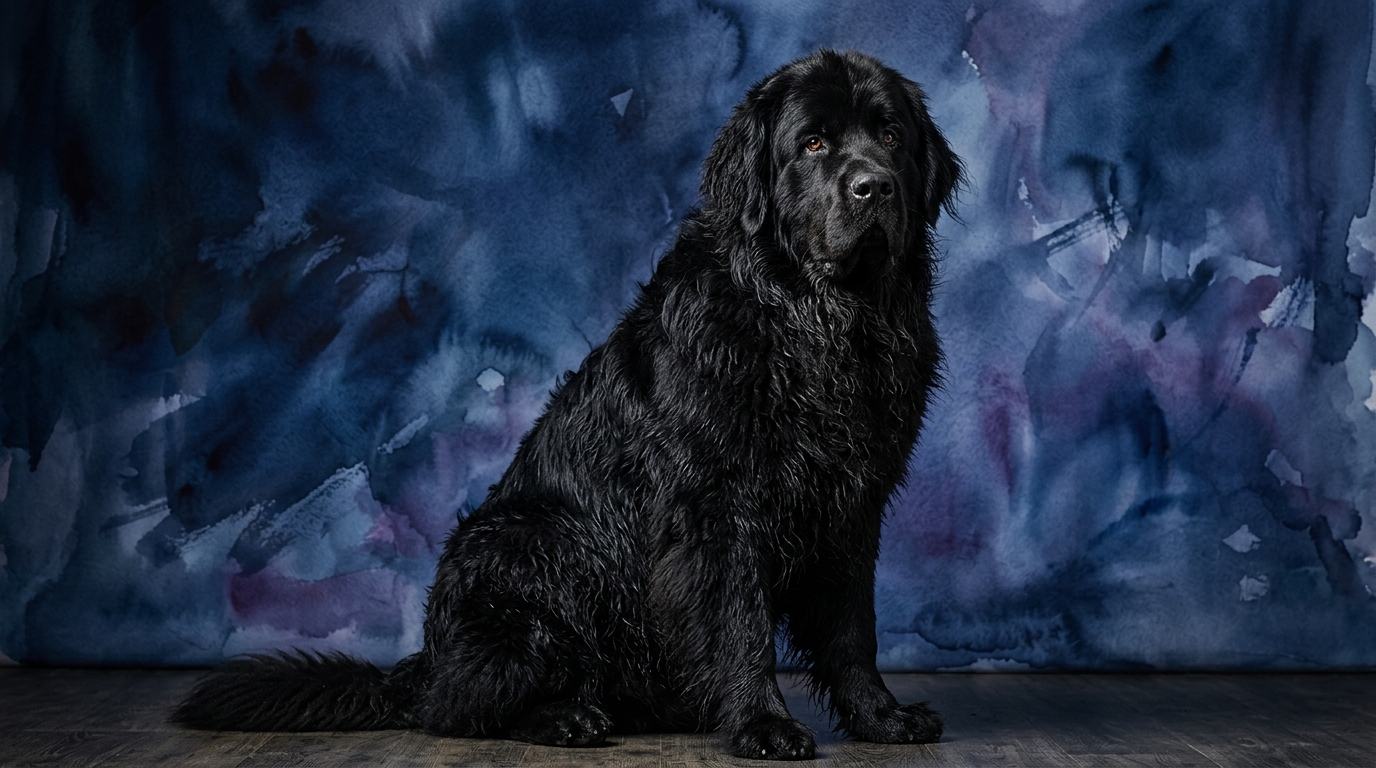
The Cosmic Pet Pet IQ Lab employs a multi-dimensional framework to assess canine intelligence, moving beyond simplistic 'smart' labels. For the Newfoundland, a breed renowned for its gentle nature and working prowess, we see a balanced and collaborative cognitive makeup. Their Problem Solving is rated at 3/5, indicating an ability to figure out moderate challenges, often within a cooperative context. Training Speed shines at 4/5, reflecting their eagerness to learn and respond to human cues. Social Intelligence is exceptional at 5/5, showcasing their profound understanding of human emotions and social dynamics. Instinctive Drive, particularly for rescue and caretaking, is also a high 5/5, while Memory stands strong at 4/5, allowing them to retain complex commands and experiences.
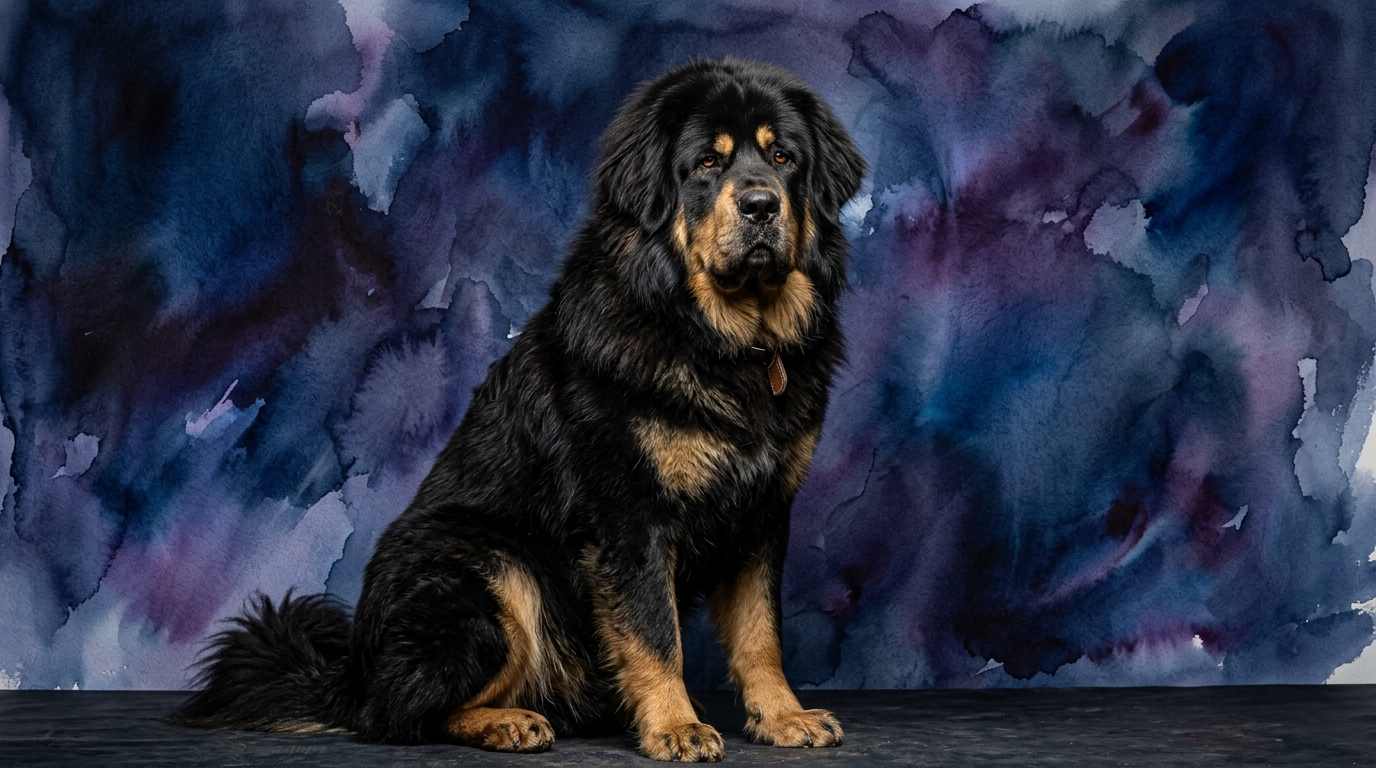
The Tibetan Mastiff, an imposing sentinel with a history rooted in guarding livestock and property, exhibits a different cognitive blueprint. Their Problem Solving also registers at 3/5, but this often manifests in independent, strategic thinking for territorial defense rather than collaborative tasks. Training Speed is 3/5, suggesting a more deliberate and independent approach to learning, often requiring greater patience and motivation. Social Intelligence is rated 3/5, indicating a deep, but typically reserved, bond with their immediate family and a cautious approach to strangers. Instinctive Drive, primarily for guarding and protection, is 3/5, focusing on vigilance and territorial awareness. Their Memory is also 3/5, sufficient for recalling their duties and boundaries, but perhaps less focused on a vast repertoire of human-initiated commands.
Where the Newfoundland Shines Cognitively
The Newfoundland’s cognitive strengths are deeply rooted in their history as working partners in demanding, often life-saving, scenarios. Their stellar 5/5 Social Intelligence makes them profoundly attuned to human emotional states and intentions. This isn't just about being friendly; it's a sophisticated ability to read subtle cues, anticipate needs, and respond empathetically, which is critical for their traditional role in water rescue where understanding a distressed person is paramount. This high social acumen also underpins their exceptional capacity for companionship, making them highly responsive to family dynamics.
Furthermore, their 4/5 Training Speed and 5/5 Instinctive Drive for tasks like water rescue and carting highlight a strong desire to engage and cooperate. Newfoundlands are eager to please and find satisfaction in working alongside their human companions. Their problem-solving, while rated 3/5, often involves navigating complex environments or situations collaboratively, such as figuring out how to retrieve a person from water or maneuvering a heavy cart, demonstrating practical intelligence geared towards shared objectives and effective teamwork.
Where the Tibetan Mastiff Excels Cognitively
The Tibetan Mastiff's cognitive profile, while appearing lower in some dimensions, reflects an intelligence finely tuned for its ancient role as an independent guardian. Their 3/5 Problem Solving, though numerically identical to the Newfoundland, often manifests as strategic, self-directed decision-making in the context of protection. A Tibetan Mastiff might independently assess a perceived threat, determine the most effective deterrent, and act without direct human instruction, relying on its own judgment to safeguard its territory and family. This isn't about solving a puzzle for a treat; it's about making complex security decisions.
Their 3/5 Instinctive Drive for guarding, while not a 5/5 like the Newfoundland's drive for rescue, is a testament to their unwavering vigilance and territorial devotion. Their memory, also 3/5, is particularly strong for spatial recall and recognizing friend from foe, crucial for maintaining their protective duties over vast areas. This breed thrives on understanding its boundaries and the identities of those within them, demonstrating a robust memory for patterns and associations related to their primary purpose. Their social intelligence, at 3/5, reflects a deep, discerning loyalty to their family unit, coupled with a deliberate wariness towards outsiders, which is a hallmark of an effective guardian.
Ease of Training: Cooperation vs. Independence
The difference in trainability between these two breeds is stark and directly correlated with their social intelligence and instinctive drives. The Newfoundland, with its 4/5 Training Speed and 5/5 Social Intelligence, is generally far more receptive to training. They possess a strong desire to interact and cooperate with their human companions, often viewing training as a rewarding collaborative activity. Their high social intelligence means they quickly grasp what is expected of them and are motivated by praise and positive reinforcement, making them adaptable to a wide range of commands and activities, from basic obedience to complex service work.
In contrast, the Tibetan Mastiff's 3/5 Training Speed and 3/5 Social Intelligence indicate a more independent and discerning learner. They are not inherently driven by a need to please and may question the utility of a command if it doesn't align with their natural guarding instincts. Training a Tibetan Mastiff requires immense patience, consistency, and a deep understanding of their independent nature. They respond best to fair, firm, and respectful leadership, and while they can learn commands, their execution might be less enthusiastic or immediate than a Newfoundland's, prioritizing their own assessment of a situation. Behavioral differences include the Newfoundland's natural inclination to follow direction versus the Mastiff's tendency to self-govern.
Matching Owners: Active Engagement vs. Watchful Companionship
For active owners seeking a dog deeply integrated into their daily adventures and social life, the Newfoundland is often the more suitable choice. While not requiring marathon runs, they thrive on consistent mental engagement and collaborative activities. Owners who enjoy teaching new tricks, participating in dog sports like obedience or water work, or simply having a highly responsive and affectionate companion during family outings will find the Newfoundland's social intelligence and cooperative spirit a perfect match. Their need for interaction means they prefer to be involved in the family's rhythm, adapting readily to social gatherings and new experiences with their characteristic calm demeanor.
Conversely, the Tibetan Mastiff is better suited for owners who appreciate and understand their independent, watchful nature. These are not dogs for casual dog parks or owners seeking a highly social, 'go-anywhere' companion in the traditional sense. They require a secure environment where they can fulfill their guarding instincts responsibly, often patrolling their territory. Owners must be prepared to manage a dog that makes its own decisions and is inherently wary of strangers. Their ideal owner is experienced, patient, and respects their need for a predictable routine and a clear hierarchy, valuing their quiet vigilance over effusive obedience. They suit a more 'relaxed' owner in terms of constant physical activity, but demand a highly engaged and understanding owner in terms of behavioral management and mental stimulation tailored to their breed's purpose.
The Verdict
Choose a Newfoundland if you seek a highly collaborative, empathetic, and trainable companion eager to participate in family life and cooperative tasks, thriving on social connection.
Opt for a Tibetan Mastiff if you are an experienced owner who values a fiercely loyal, independent guardian, capable of self-directed problem-solving for protection, and you respect their reserved social nature.
🧠 Find Your Pet's IQ Score
Our Pet IQ Lab assessment covers 25+ tests across 5 cognitive dimensions — personalized to your breed.
Take the Full IQ Test →Frequently Asked Questions
Is a Newfoundland or Tibetan Mastiff better with children?
The Newfoundland's exceptional 5/5 social intelligence and gentle disposition generally make them a more naturally patient and understanding companion for children, often displaying a nurturing instinct. Tibetan Mastiffs, while loyal to their family, are more reserved and protective, requiring careful socialization and supervision around children due to their sheer size and guarding instincts.
Which breed requires more exercise?
Neither breed demands extreme, high-impact exercise, but their activity needs differ in nature. Newfoundlands benefit from moderate daily walks, swimming, and mental engagement through training or play, thriving on purposeful activity. Tibetan Mastiffs typically prefer patrolling their territory and have bursts of energy, but are generally less interested in sustained, human-directed exercise, preferring to manage their own activity level.
Are Tibetan Mastiffs difficult to train for basic obedience?
Tibetan Mastiffs can be challenging for basic obedience due to their 3/5 training speed and independent nature, often questioning commands that don't align with their protective instincts. They require consistent, patient training with positive reinforcement, and an owner who understands their intrinsic motivation and respects their strong will.