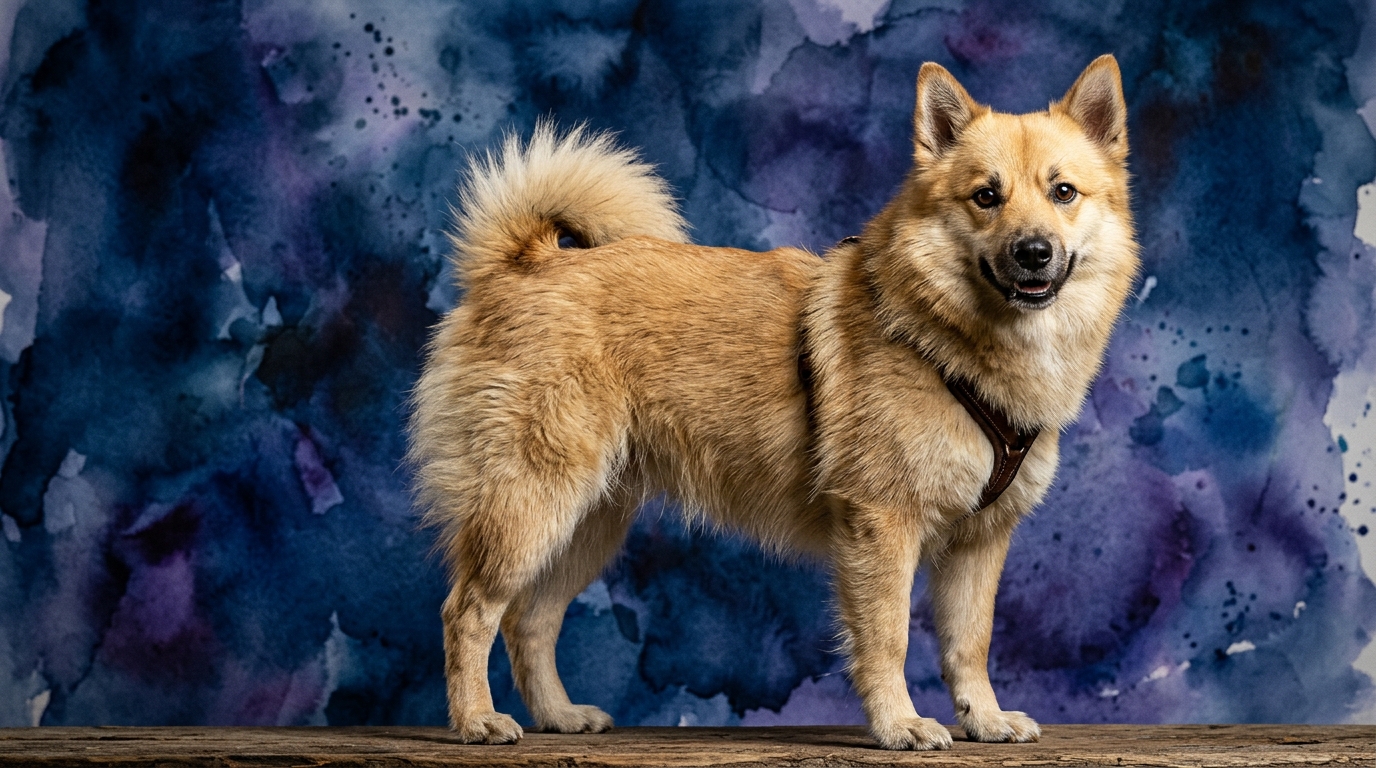
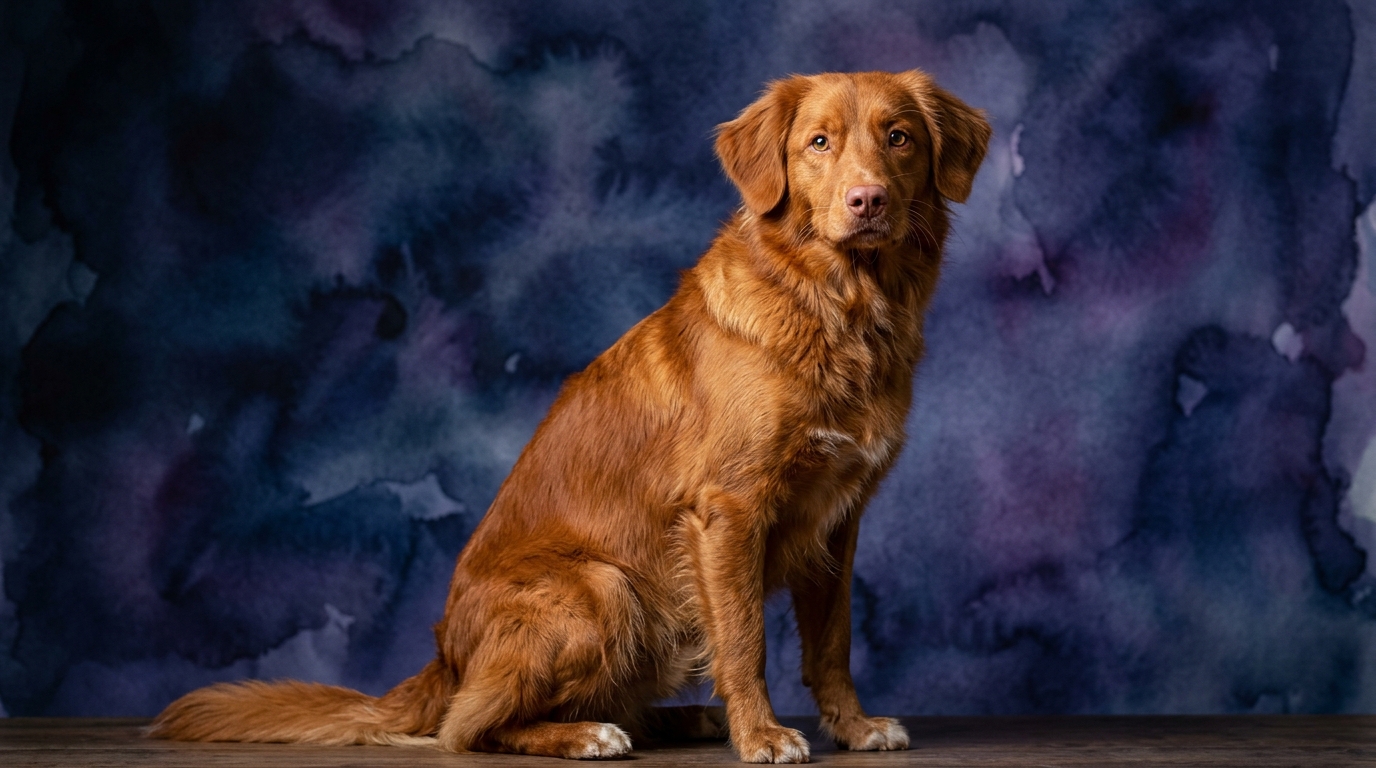
Side-by-Side IQ Profile: Buhund vs. Toller
At first glance, the Cosmic Pet Pet IQ Lab scores for the Norwegian Buhund and the Nova Scotia Duck Tolling Retriever appear identical, with both breeds registering a consistent 3/5 across all five cognitive dimensions: Problem Solving, Training Speed, Social Intelligence, Instinctive Drive, and Memory. However, these identical scores don't imply an identical expression of intelligence; rather, they highlight a comparable *level* of cognitive ability channeled through distinct breed-specific predispositions and historical functions.
The Norwegian Buhund, a Nordic Spitz-type dog, was historically bred for herding and guarding livestock across challenging terrains. Their Problem Solving score of 3/5 reflects an ability to independently assess dynamic situations, such as anticipating the movement of a flock or identifying a stray animal, often requiring quick, autonomous decisions. Their Training Speed, also 3/5, indicates they learn new commands and routines effectively, particularly when tasks align with their herding instincts, though their independent spirit might necessitate consistent, engaging methods. Social Intelligence (3/5) for a Buhund manifests in their capacity to read the moods and intentions of both their human handlers and the animals they manage, adjusting their behavior accordingly. Their Instinctive Drive (3/5) is strongly rooted in a watchful, protective herding impulse, compelling them to monitor their environment and respond to perceived threats or deviations. Finally, their Memory (3/5) allows them to recall complex routes, the layout of their territory, and established routines within their herding duties.
Conversely, the Nova Scotia Duck Tolling Retriever, a gundog originating from Canada, was developed for 'tolling' – luring waterfowl within gunshot range through playful antics – and retrieving. Their 3/5 Problem Solving capacity is directed towards figuring out the most efficient way to retrieve a fallen bird, navigating obstacles, or understanding the subtle cues required for effective tolling, often involving spatial reasoning and strategic planning. A Training Speed of 3/5 for the Toller signifies their eagerness and aptitude for learning intricate retrieve sequences, scent discrimination, and obedience commands, thriving on engagement and purpose-driven tasks. Their Social Intelligence (3/5) is evident in their profound ability to attune to their handler's instructions and body language during hunting, working as a synchronized team member. The Toller's Instinctive Drive (3/5) is powerfully geared towards prey drive, retrieving, and the unique 'tolling' behavior, showcasing an innate desire to work with game. Their Memory (3/5) enables them to accurately recall 'marks' (where a bird fell), remember complex training drills, and retain the sequence of actions required for successful hunting outings.
Where the Norwegian Buhund Excels Cognitively
The Norwegian Buhund's cognitive strengths truly shine in scenarios demanding independent judgment and adaptable problem-solving within a fluid, often unpredictable environment. While both breeds score 3/5 in Problem Solving, the Buhund's historical role as a herder means their cognitive framework is particularly adept at spatial reasoning involving multiple moving entities and the foresight required to prevent issues rather than react to them. They demonstrate a nuanced understanding of flock dynamics, capable of adjusting their approach based on the temperament of individual animals or changes in terrain, often making decisions without direct human command.
Furthermore, their social intelligence, while rated identically, leans towards a broader, more autonomous reading of their surroundings. A Buhund's 3/5 in Social Intelligence encompasses not just understanding human cues but also interpreting the subtle signals from livestock, potential predators, and even environmental shifts, allowing them to act as a proactive guardian. This extends to their memory, which is finely tuned for recalling complex territories and the routines of an entire flock, enabling them to maintain order and security across vast, open spaces.
Where the Nova Scotia Duck Tolling Retriever Excels Cognitively
The Nova Scotia Duck Tolling Retriever's cognitive prowess is distinctly geared towards focused, sequential task completion and intricate handler-dog communication, particularly within a sporting context. Their 3/5 Problem Solving ability is optimized for specific, goal-oriented challenges like determining the most efficient path through dense cover to retrieve a bird, or understanding the precise timing and movements required for effective 'tolling.' This involves excellent spatial awareness focused on a target and the strategic planning needed to achieve a defined objective.
The Toller's Social Intelligence, also 3/5, manifests as an intense, almost telepathic connection with their handler during work, making them exceptionally responsive to subtle commands and body language. This deep attunement allows for seamless teamwork in the field, where precision and immediate compliance are paramount. Their memory, while rated similarly, is particularly strong for recalling 'marks' – the exact location where a bird fell – even after distractions or delays, and retaining complex multi-step retrieving drills, showcasing a robust capacity for focused recall within a structured activity.
Which is Easier to Train and Why
Despite both breeds scoring 3/5 in Training Speed, the 'ease' of training can differ based on an owner's approach and expectations, rooted in their distinct behavioral predispositions. The Nova Scotia Duck Tolling Retriever, with their strong desire to please and innate drive for retrieving, often presents as an eager and cooperative student. They thrive on positive reinforcement and consistent, engaging training sessions that tap into their natural instincts for focused work and handler interaction; their motivation to retrieve and participate in 'games' makes them highly receptive to learning complex sequences and commands.
The Norwegian Buhund, while equally capable of learning with a 3/5 Training Speed, often brings a more independent and discerning mindset to the training process, a legacy of their herding role where autonomous decision-making was crucial. They may question commands or try to solve problems their own way if they don't immediately perceive the value, requiring a trainer to be patient, creative, and consistently demonstrate the purpose behind each command. While they are intelligent and learn quickly, their independence means they need a clear, fair leader and training that respects their inherent self-reliance, rather than just demanding blind obedience.
Which Suits Active Owners vs. Relaxed Owners
Neither the Norwegian Buhund nor the Nova Scotia Duck Tolling Retriever is ideally suited for a truly 'relaxed' owner, as both possess significant cognitive drives and physical energy that demand active engagement. However, the *type* of activity and engagement they require differs, making them suitable for distinct kinds of active owners. The Norwegian Buhund thrives with owners who can provide outlets for their herding instincts and problem-solving capabilities, which might involve dog sports like agility, herding trials, or even just complex puzzle toys and a consistent routine that allows them to 'patrol' and monitor their home environment. They benefit from varied mental challenges that tap into their independent decision-making.
The Nova Scotia Duck Tolling Retriever, on the other hand, is a perfect match for owners who are enthusiastic about high-energy, purpose-driven activities that mimic their retrieving and tolling heritage. This includes extensive games of fetch, swimming, dock diving, obedience, agility, or actual hunting. They require consistent, focused work that engages both their physical stamina and their sharp cognitive abilities for tasks like scent work or complex retrieve patterns. Their intense handler focus means they need an owner who enjoys being an active, collaborative partner in their daily life and activities.
The Verdict: When to Choose Each Breed
The Verdict
Choose the Norwegian Buhund if you're an active owner seeking an independent, watchful companion capable of autonomous problem-solving and who thrives on varied mental challenges and a sense of purpose in observing their environment.
Opt for the Nova Scotia Duck Tolling Retriever if you're an energetic owner looking for a highly engaged, focused partner for demanding sporting activities, who excels at sequential tasks and forms a strong, collaborative bond in work and play.
🧠 Find Your Pet's IQ Score
Our Pet IQ Lab assessment covers 25+ tests across 5 cognitive dimensions — personalized to your breed.
Take the Full IQ Test →Frequently Asked Questions
Do Norwegian Buhunds and Nova Scotia Duck Tolling Retrievers have the same intelligence?
Our Cosmic Pet Pet IQ Lab data assigns both breeds identical scores (3/5 across all dimensions), indicating a comparable *level* of cognitive ability. However, their intelligence manifests differently based on their historical roles and inherent drives, making their cognitive profiles distinct in application.
Which breed is better for first-time dog owners?
Both breeds require experienced, active owners due to their significant energy levels and cognitive needs. The Toller's strong handler focus might make their training feel more straightforward, but both present challenges that a first-time owner might find overwhelming without proper research and commitment.
Can a Norwegian Buhund retrieve like a Toller, or vice versa?
While a Buhund can certainly be taught to retrieve, it's not their primary instinctive drive, so they likely won't exhibit the same sustained passion or natural aptitude as a Toller. Similarly, a Toller can learn basic herding cues, but lacks the Buhund's innate spatial reasoning and independent decision-making for managing livestock effectively.