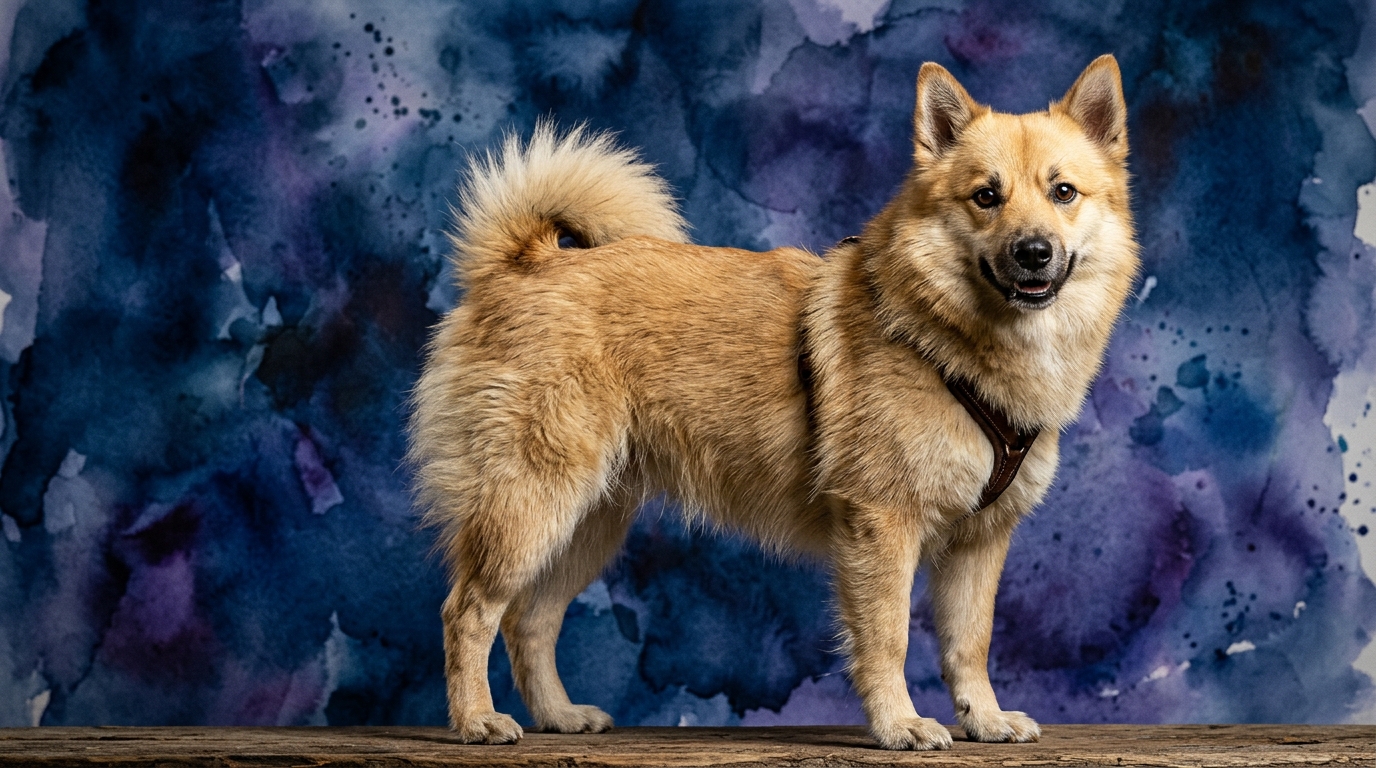
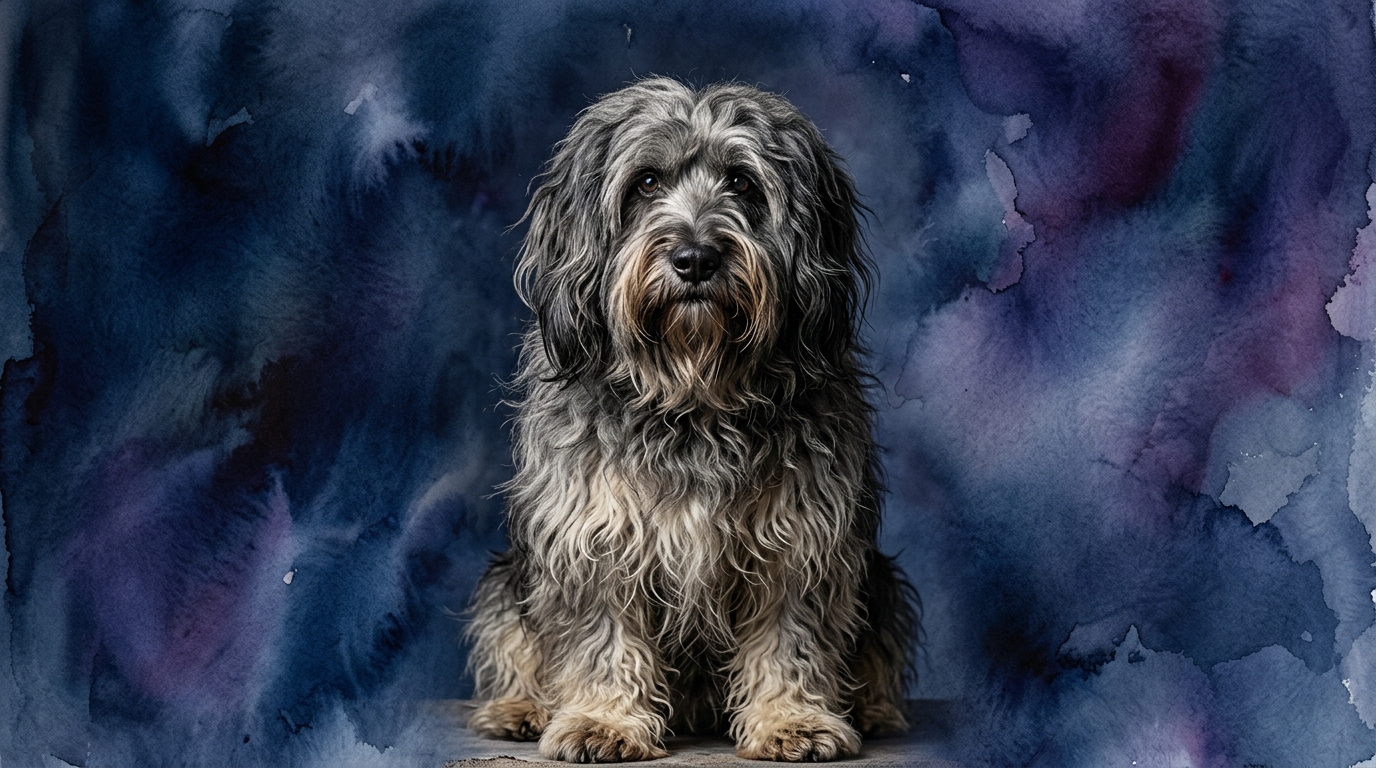
Side-by-Side Cognitive Profiles: Norwegian Buhund vs. Polish Lowland Sheepdog
At first glance, the Cosmic Pet Pet IQ Lab scores for both the Norwegian Buhund and the Polish Lowland Sheepdog present an intriguing uniformity: each breed registers a 3/5 across all five cognitive dimensions. This identical baseline, however, belies the distinct ways these herding specialists apply their mental faculties. Understanding these nuances requires a closer look at how each breed's intelligence manifests in real-world scenarios.
The Norwegian Buhund exhibits a problem-solving aptitude (3/5) that is generally adaptable and focused on finding solutions within a cooperative framework. They are capable of figuring out moderate puzzles and navigating new situations, often looking to their human companions for cues and guidance. Their training speed (3/5) reflects a steady learning curve, where consistency and positive reinforcement yield reliable results rather than instant mastery. Social intelligence (3/5) in the Buhund is marked by a strong ability to read human emotions and intentions, fostering deep, communicative bonds within their family unit and demonstrating discerning but generally friendly behavior towards strangers. Their instinctive drive (3/5) is a moderate herding impulse, often expressed through watchful attentiveness to their family's whereabouts and a desire to keep everyone together without intense, high-pressure herding behaviors. Finally, their memory (3/5) is robust for retaining established routines, learned commands, and positive associations, making them dependable participants in daily life.
In contrast, the Polish Lowland Sheepdog (PON) applies its problem-solving abilities (3/5) with a distinct streak of independent thought and resourceful cleverness. They are adept at devising their own solutions, sometimes with a touch of stubborn persistence, and can be quite ingenious in navigating their environment. Their training speed (3/5) indicates a capacity for quick learning, yet this is often tempered by their independent nature, requiring engaging, patient, and varied training methods to maintain their focus and cooperation. The PON's social intelligence (3/5) is characterized by keen observation and a protective discernment; they are excellent at assessing strangers and situations, forming strong, loyal bonds with their inner circle while remaining reserved or cautious with outsiders. Their instinctive drive (3/5) is a powerful combination of herding and guarding instincts, leading to a natural vigilance and a deep-seated need to protect their family and territory. Their memory (3/5) is particularly strong for both learned behaviors and long-term recollections of experiences, including spatial awareness and the details of their environment, reinforcing their role as watchful guardians.
Where the Norwegian Buhund Holds a Cognitive Edge
While sharing identical raw scores, the Norwegian Buhund’s cognitive profile often translates into advantages in specific areas, particularly those valuing adaptability and cooperative engagement. Their problem-solving (3/5) typically leans towards finding solutions that align with human expectations, making them more amenable to structured learning environments and less prone to independent 'reinterpretation' of tasks. This cooperative spirit is a direct extension of their social intelligence (3/5), which facilitates a more fluid integration into diverse social settings and family dynamics. A Buhund often excels at reading subtle human body language and vocal cues, allowing for more nuanced communication and a quicker understanding of what is expected of them in varied situations. Furthermore, their memory (3/5), while equally rated, appears particularly efficient at solidifying positive reinforcement training and retaining complex sequences of actions when those actions are performed in conjunction with their human companion. This makes them highly reliable for activities like rally obedience or performance sports where collaboration and precise recall of sequences are paramount, often showing a joyful willingness to participate rather than a calculated adherence to commands.
Where the Polish Lowland Sheepdog Shows Cognitive Strengths
Conversely, the Polish Lowland Sheepdog’s cognitive strengths emerge prominently in scenarios demanding independence, robust vigilance, and self-directed problem-solving. Their 3/5 problem-solving ability often manifests as a resourceful ingenuity, where they might independently assess situations and devise solutions without constant human intervention. This makes them particularly adept at tasks requiring cleverness and initiative, such as navigating complex environments or figuring out how to achieve a desired outcome on their own terms. The PON’s instinctive drive (3/5) is a powerful asset, combining herding acumen with a strong guarding instinct, which contributes to their exceptional awareness of their surroundings and their innate ability to protect their 'flock.' Their social intelligence (3/5) is keenly honed for observation and discernment, making them astute judges of character and potential threats, rather than universally gregarious. This translates into a dog that is highly perceptive and protective. Their memory (3/5) seems particularly effective for recalling intricate details of their territory, long-term spatial awareness, and deeply ingrained routines, bolstering their effectiveness as watchful, self-reliant guardians who remember perceived boundaries and past experiences with remarkable clarity.
Training Dynamics: Which Breed Offers an Easier Path?
Despite both breeds scoring 3/5 in training speed, the practical experience of training a Norwegian Buhund versus a Polish Lowland Sheepdog can feel remarkably different due to their underlying behavioral tendencies. The Norwegian Buhund generally offers a more straightforward training journey. Their inherent social intelligence and cooperative problem-solving mean they are often eager to engage with their human companions and keen to understand what is being asked of them. They typically respond very well to consistent positive reinforcement, clear commands, and a playful approach, quickly forming associations between actions and rewards. Their 3/5 training speed, in their case, is often amplified by their willingness to please, making them receptive students for basic obedience, trick training, and even more advanced dog sports like agility or rally. They are less likely to challenge commands or offer alternative interpretations, preferring to work with their handler.
The Polish Lowland Sheepdog, while equally capable of learning quickly, presents a more nuanced training challenge. Their independent problem-solving and strong instinctive drive can lead to a 'what's in it for me?' attitude or a tendency to test boundaries. A PON might quickly grasp a command but then choose whether or not to execute it based on their assessment of the situation or their current priorities. This independence, while a cognitive strength in their traditional role, can translate into a perception of stubbornness during training sessions. Owners must employ creative, engaging, and highly consistent training methods, often turning training into a game or puzzle to capture and maintain the PON's interest. Their 3/5 training speed requires a trainer who is patient, adaptable, and understands how to motivate a dog that is naturally inclined to think for itself. Without proper engagement, their keen memory might lead them to remember inconsistencies in training or past instances where they successfully 'outsmarted' their handler, making future training more difficult.
Matching Cognitive Profiles to Owner Lifestyles
Both the Norwegian Buhund and the Polish Lowland Sheepdog, as herding breeds, inherently require active owners. However, the nature of that activity and engagement differs significantly based on their cognitive leanings. The Norwegian Buhund is an excellent fit for active owners who seek a highly integrated, cooperative companion for a variety of family-centric activities. Their balanced instinctive drive (3/5) and strong social intelligence (3/5) mean they thrive on being a central part of family life, enjoying hikes, runs, and interactive play sessions that involve their humans. They need daily physical exercise and mental stimulation through training and games, but their cooperative problem-solving (3/5) makes them adaptable to different types of engagement, from learning new tricks to participating in dog sports or simply accompanying their owners on errands. They are generally content when their need for activity is met through shared experiences and consistent interaction, fitting well into dynamic family environments.
The Polish Lowland Sheepdog, conversely, demands an owner who is not only active but also deeply committed to providing structured, purposeful mental and physical outlets that tap into their independent and protective nature. Their potent instinctive drive (3/5) for herding and guarding, combined with their self-reliant problem-solving (3/5), means they require more than just casual exercise. They thrive on tasks that challenge their intellect and allow them to utilize their natural vigilance and ingenuity. This might include advanced obedience, agility, herding trials, nose work, or even serving as a watchful guardian for a family with a property to oversee. A PON left under-stimulated cognitively and physically can quickly become bored, potentially manifesting in behaviors like excessive barking, digging, or trying to 'herd' family members. They need an owner who respects their independent mind and provides consistent, engaging work that satisfies their deep-seated need for purpose.
The Verdict
The Norwegian Buhund is an excellent choice for active families seeking a cooperative, adaptable, and engaging companion who thrives on integrated activities and positive reinforcement.
Opt for the Polish Lowland Sheepdog if you are an experienced, dedicated owner prepared to provide structured mental challenges and purposeful activities for an independent, watchful, and highly capable working breed.
🧠 Find Your Pet's IQ Score
Our Pet IQ Lab assessment covers 25+ tests across 5 cognitive dimensions — personalized to your breed.
Take the Full IQ Test →Frequently Asked Questions
Are Norwegian Buhunds good with children?
The Norwegian Buhund's social intelligence and cooperative nature generally make them suitable family companions, often forming strong bonds with children. However, as with any breed, supervised introductions and teaching children respectful interaction are crucial for a harmonious household.
Do Polish Lowland Sheepdogs bark a lot?
Polish Lowland Sheepdogs possess a strong instinctive drive and watchful nature, which can lead to alert barking as they perceive their role to be guarding their family and territory. Consistent training, early socialization, and sufficient mental and physical stimulation are essential to manage this tendency effectively.
Which breed is more prone to separation anxiety?
Both breeds form deep attachments to their families and can develop separation anxiety if not properly conditioned to alone time from a young age. While the Buhund's cooperative nature might make them express anxiety more overtly, the independent PON might manifest their distress through destructive behaviors or excessive territorial marking.