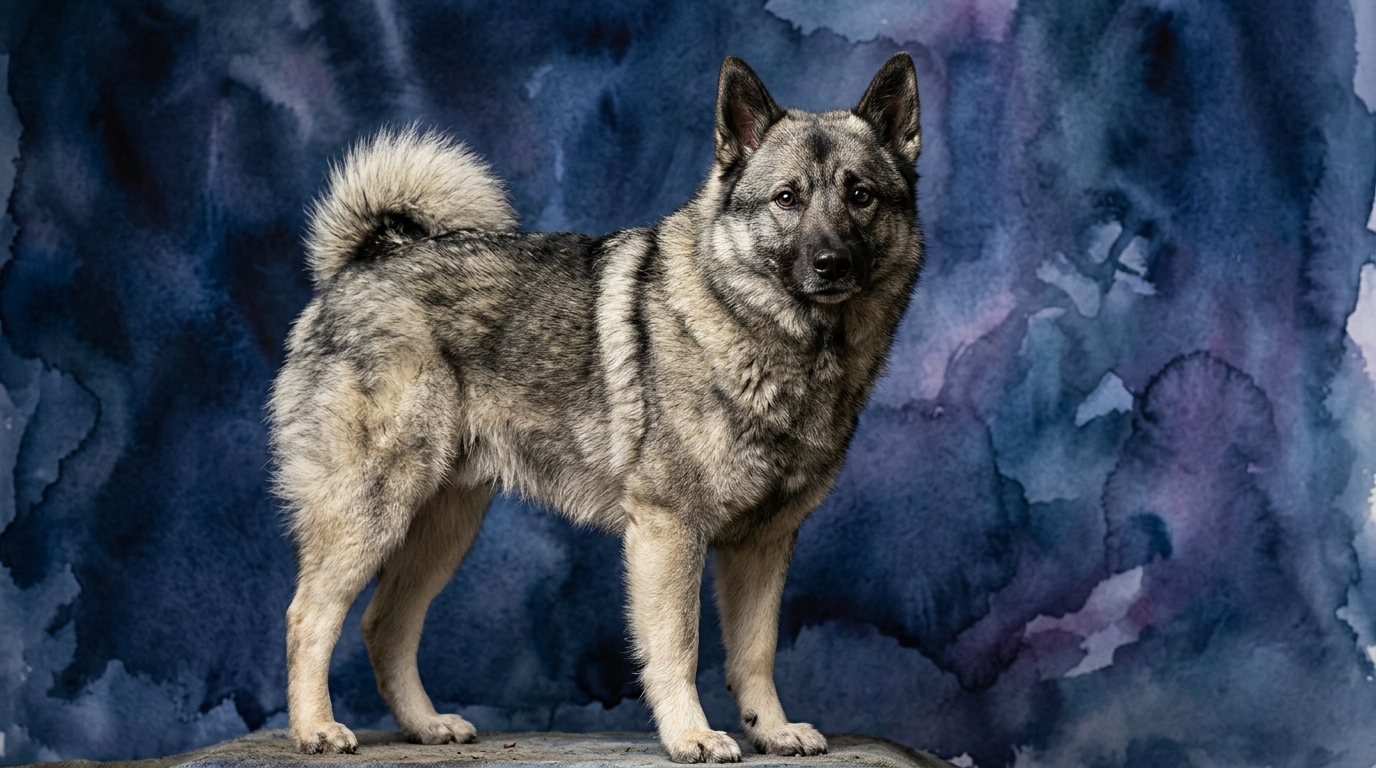

Side-by-Side IQ Profile: Norwegian Elkhound vs. Black and Tan Coonhound
The Cosmic Pet Pet IQ Lab provides a unique lens through which to compare canine intellect, breaking down intelligence into five core dimensions. Understanding these specific scores offers insight into how each breed processes information and interacts with its environment.
For the Norwegian Elkhound (Coren rank #36), its cognitive breakdown is notable: Problem Solving 4/5, Training Speed 4/5, Social Intelligence 3/5, Instinctive Drive 3/5, and Memory 4/5. This profile suggests a well-rounded and capable intellect, adept at learning and adapting.
The Black and Tan Coonhound, while not Coren-ranked, presents a distinct cognitive profile: Problem Solving 3/5, Training Speed 3/5, Social Intelligence 3/5, Instinctive Drive 3/5, and Memory 3/5. This consistent scoring across dimensions points to a specialized, focused intellectual approach rather than a broad, generalist one.
Let's delve into what each score signifies for these two captivating breeds.
**Norwegian Elkhound Cognitive Dimensions:**
* **Problem Solving (4/5):** This breed exhibits strong independent thought, often employing strategic approaches to novel situations rather than simple reactions. Their ancestors' needs to assess environments and adapt quickly are evident in their modern cognitive abilities.
* **Training Speed (4/5):** Elkhounds grasp new commands and routines with impressive alacrity, showing a clear willingness to learn when motivation is consistent. They are relatively quick studies in formal training contexts.
* **Social Intelligence (3/5):** While capable of deep bonds, their social cognition leans towards an independent streak, understanding human cues but often prioritizing their own assessment. They interact effectively within their family but aren't primarily geared for extensive social pleasing.
* **Instinctive Drive (3/5):** Their drive is balanced, rooted in tracking and holding game, but not overwhelmingly dominant. This indicates a purposeful, directed instinct that can be channeled.
* **Memory (4/5):** Elkhounds possess excellent recall for learned commands, routines, and experiences, contributing significantly to their trainability and consistent behavior.
**Black and Tan Coonhound Cognitive Dimensions:**
* **Problem Solving (3/5):** This breed's problem-solving excels in scent tracking, deciphering intricate trails rather than abstract puzzles. Their cognitive focus is persistent, methodical deduction within sensory-rich environments.
* **Training Speed (3/5):** Black and Tans learn steadily, requiring patient, consistent instruction to embed new behaviors. While not the fastest, their dedication once understood makes them reliable, though repetition is often key.
* **Social Intelligence (3/5):** Their social intelligence involves deep loyalty to family, understanding nuances within their close circle but often being reserved with strangers. They are attuned to primary caregivers' moods.
* **Instinctive Drive (3/5):** The Coonhound's instinctive drive is powerfully centered on scent work, a persistent urge to follow a trail. This score reflects a specialized, enduring drive dictating much of their focus.
* **Memory (3/5):** This breed exhibits good working memory, especially for scent trails and learned routines, relevant to their primary motivations and daily life.
Where the Norwegian Elkhound Wins Cognitively
The Norwegian Elkhound's cognitive profile distinctly shines in its capacity for independent, adaptable problem-solving and rapid assimilation of new information. With a Problem Solving score of 4/5, they frequently demonstrate an inventive approach to navigating challenges, often thinking through a situation rather than relying solely on instinct. This translates to an ability to learn from varied experiences and apply lessons to novel circumstances, making them less prone to getting stuck in a single behavioral loop.
Furthermore, their Training Speed of 4/5 indicates a mental agility that allows them to pick up complex command sequences and understand abstract concepts with relative ease. This isn't just about rote memorization, but a genuine comprehension of expectations, enabling them to generalize learned behaviors across different environments. Their strong memory (4/5) underpins this, ensuring that once a lesson is learned, it is retained and readily accessible, fostering consistent performance and a deeper partnership in activities requiring sequential understanding.
Where the Black and Tan Coonhound Wins Cognitively
While the Black and Tan Coonhound may not numerically "win" in broad cognitive categories, its specialized intellect presents distinct advantages, particularly within its ancestral purpose. Its Problem Solving (3/5) and Memory (3/5) scores, combined with a strong Instinctive Drive (3/5), indicate a cognitive profile exquisitely tuned for persistent, methodical scent work. This breed excels at intricate, sustained problem-solving that involves deciphering complex olfactory information over long distances and durations, a task few breeds can match.
Their cognitive strength lies in their unwavering focus and methodical deduction when on a trail, demonstrating an unparalleled tenacity and sensory processing ability. This isn't about quick, varied solutions, but about deep, focused engagement with a specific type of cognitive challenge. Their steady Training Speed (3/5) and Social Intelligence (3/5) also mean they are reliable, dedicated companions once a routine is established and a bond is formed, offering a steadfast presence that values consistency and clear communication within their social structure. Their "win" is in their specialized, unwavering dedication to a singular, complex cognitive task.
Which is Easier to Train, and Why?
Based on their respective IQ profiles, the Norwegian Elkhound is generally easier to train compared to the Black and Tan Coonhound. The Elkhound's Training Speed score of 4/5, juxtaposed with the Coonhound's 3/5, is a key indicator. Elkhounds typically grasp new commands and routines more quickly, exhibiting a greater eagerness to engage with human instruction and a faster rate of concept acquisition. This is further supported by their higher Problem Solving (4/5) and Memory (4/5) scores, which allow them to process information efficiently, understand the 'why' behind a command, and retain it long-term. They are often more motivated by a desire to please and engage in collaborative tasks.
In contrast, the Black and Tan Coonhound, while trainable, requires more patience and consistency. Their 3/5 Training Speed score reflects a steady learning pace rather than a rapid one, and their powerful Instinctive Drive (3/5) towards scent work can often override other motivations. While they learn thoroughly once a concept clicks, their focus can be singular, meaning trainers often need to work harder to maintain their attention and make training compelling enough to compete with the allure of a captivating scent. Their deep-rooted desire to follow a trail means that off-leash reliability, especially in stimulating environments, can be a significant training challenge, demanding extensive proofing and highly rewarding incentives.
Which Suits Active Owners vs. Relaxed Owners?
Both breeds benefit from active engagement, but their preferred types and intensities differ, making them suitable for distinct owner lifestyles. The Norwegian Elkhound, with its balanced Instinctive Drive (3/5) and higher Problem Solving (4/5), thrives with active owners who enjoy varied outdoor activities like hiking, agility, or even tracking games that engage both body and mind. They possess endurance and a love for exploring, but also appreciate structured mental challenges that prevent boredom. An Elkhound can adapt to a slightly less intense daily routine than some working breeds, provided their cognitive needs are met through training and interactive play. For relaxed owners, an Elkhound might still be manageable if mental stimulation is prioritized indoors and daily walks are consistent, but they are not content to be solely couch companions.
The Black and Tan Coonhound, conversely, demands a specific kind of "active" owner—one who is prepared to channel their profound Instinctive Drive (3/5) for scent work. While their overall training speed is 3/5, their drive is not easily suppressed; they require consistent, purposeful outdoor activity, ideally involving scent-based enrichment or dedicated tracking sports. A relaxed owner who cannot provide outlets for this intense drive will likely find a Coonhound frustrated and potentially destructive or vocal. They are less suited to owners seeking a dog for casual strolls and more suited to those who embrace long, exploratory walks, participate in scent work, or have ample, securely fenced outdoor space. Their physical activity is often driven by their nose, leading them on persistent, meandering investigations that require an owner who understands and respects this unique cognitive imperative.
The Verdict
Choose a Norwegian Elkhound if you seek a mentally agile companion eager to learn, capable of independent problem-solving, and enjoys varied activities that engage both their physical and intellectual capacities, offering a balanced blend of independence and desire for collaboration.
Opt for a Black and Tan Coonhound if you are an owner dedicated to understanding and channeling a dog's profound, specialized scenting drive, appreciating their methodical problem-solving and steadfast loyalty in extensive outdoor explorations.
🧠 Find Your Pet's IQ Score
Our Pet IQ Lab assessment covers 25+ tests across 5 cognitive dimensions — personalized to your breed.
Take the Full IQ Test →Frequently Asked Questions
Do Norwegian Elkhounds bark a lot?
Norwegian Elkhounds can be quite vocal, often using barks to alert their owners to new sights or sounds, a trait stemming from their historical role as hunting and guard dogs. Consistent training from a young age can help manage excessive barking, but their natural inclination to communicate vocally should be anticipated.
Are Black and Tan Coonhounds good with children?
Yes, Black and Tan Coonhounds are generally patient and affectionate with children, often forming strong bonds with their family members. Their laid-back nature indoors makes them tolerant, but supervision is always recommended, especially due to their size and enthusiastic play.
Which breed is better for apartment living?
Neither breed is ideally suited for small apartment living without significant owner commitment to exercise and mental stimulation, but the Norwegian Elkhound might adapt slightly better due to its more adaptable instinctive drive and less pervasive scenting focus. A Black and Tan Coonhound's strong scent drive often leads to vocalizations or destructive behaviors if not adequately exercised and engaged outdoors.