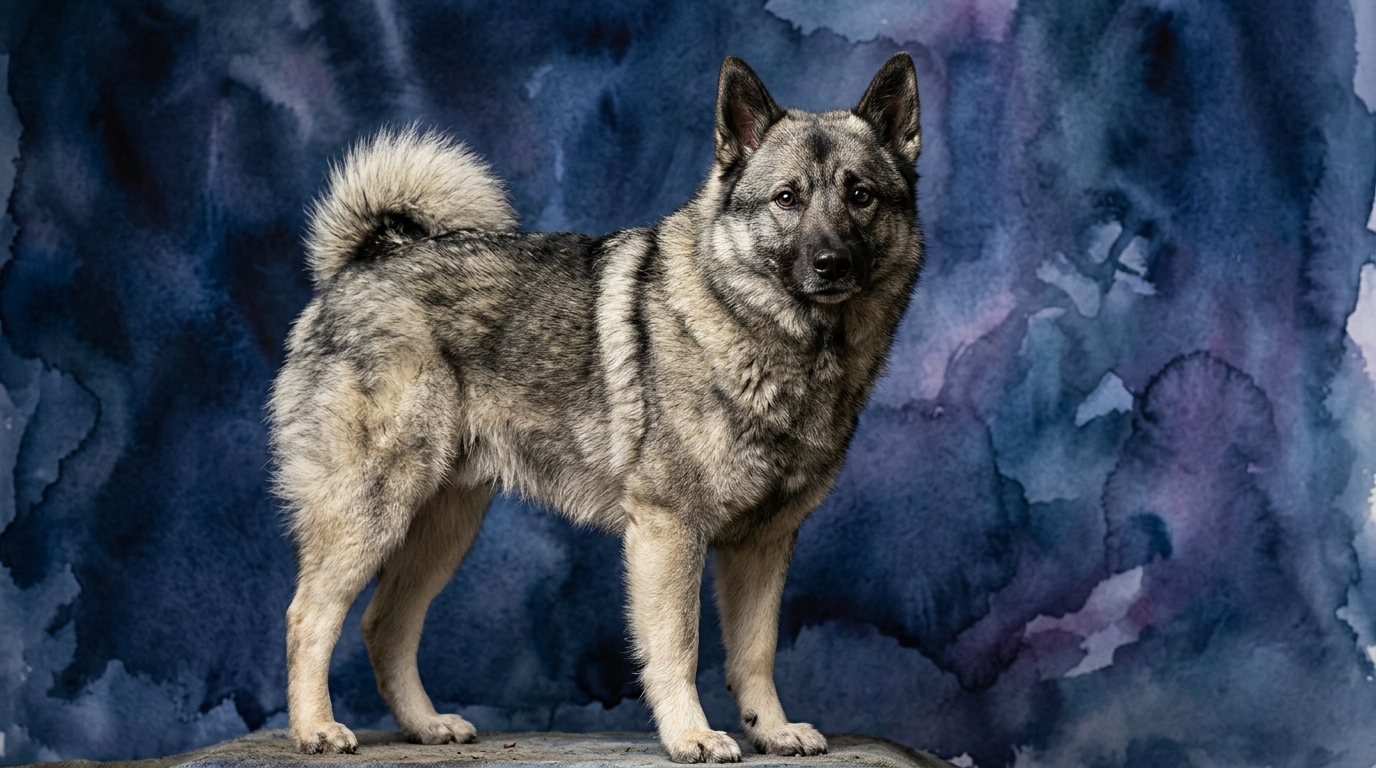
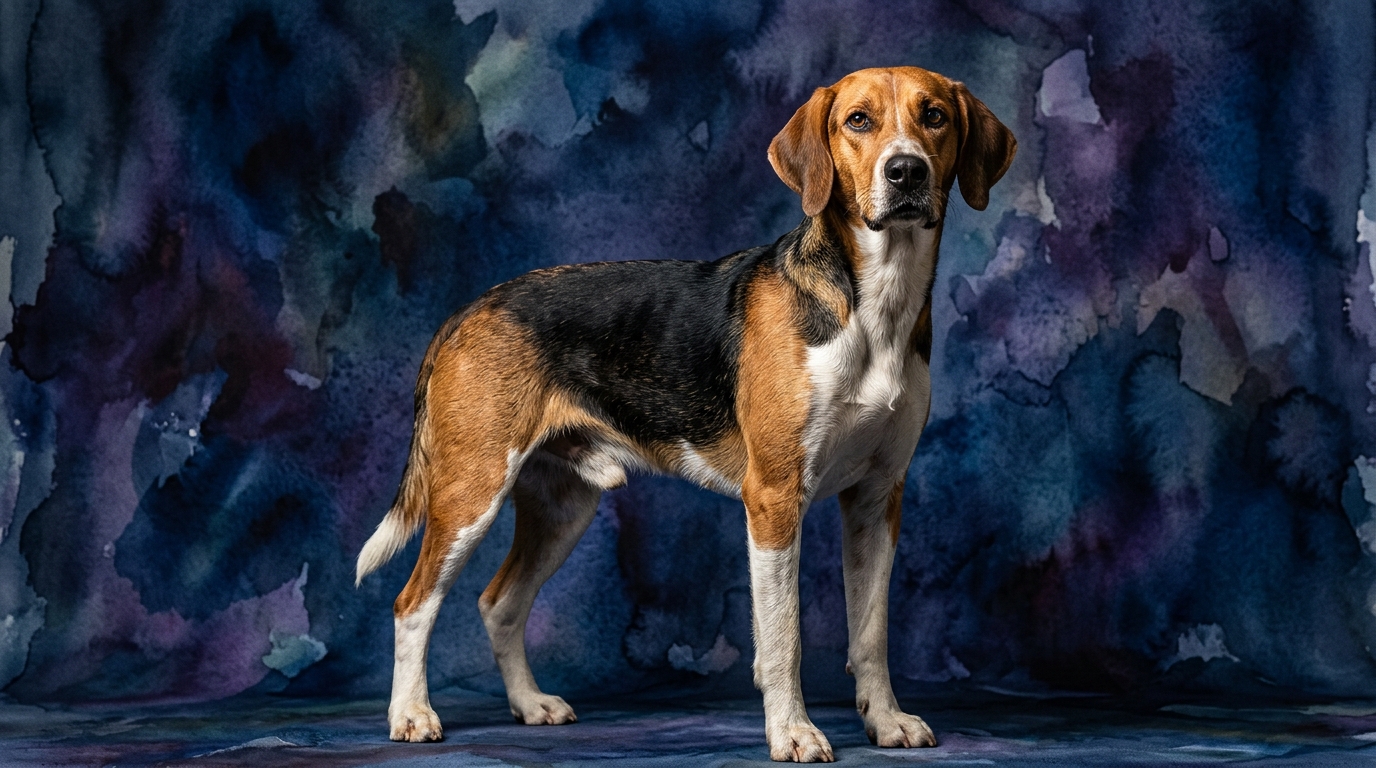
Side-by-Side Cognitive Profile
To understand the cognitive distinctions between these two hounds, The Cosmic Pet Pet IQ Lab evaluates five key dimensions: Problem Solving, Training Speed, Social Intelligence, Instinctive Drive, and Memory. Each dimension provides insight into how a breed processes information and interacts with its world. The Norwegian Elkhound is recognized with a Coren ranking of #36, reflecting its general cognitive aptitudes, while the English Foxhound, though historically significant, is not Coren-ranked, suggesting a more specialized cognitive niche.
The Norwegian Elkhound presents a robust profile: Problem Solving (4/5), Training Speed (4/5), Social Intelligence (3/5), Instinctive Drive (3/5), and Memory (4/5). This indicates a dog adept at independent thought and capable of quickly grasping and retaining new information. Their problem-solving capacity suggests an ability to analyze novel situations and devise effective solutions, which was crucial for their original role in hunting large game. Their training speed and memory scores highlight a readiness to learn and a strong capacity for consistent behavior over time. Social intelligence at 3/5 points to a breed that understands social cues but maintains a degree of independence rather than constant human deference. Their instinctive drive, while present, is balanced.
The English Foxhound exhibits a more uniform profile across the board: Problem Solving (3/5), Training Speed (3/5), Social Intelligence (3/5), Instinctive Drive (3/5), and Memory (3/5). These scores suggest a cognitive makeup highly specialized for their specific purpose. Their problem-solving ability is intensely focused on the challenges of tracking and pursuit, rather than generalized abstract tasks. A training speed of 3/5 indicates an average learning curve, requiring patience and consistency. Their social intelligence, while also 3/5, is primarily geared towards seamless cooperation within a dog pack. The instinctive drive, though numerically equivalent to the Elkhound, manifests as an incredibly powerful and singular focus on scent and the chase. Their memory is adequate for retaining routine commands and scent associations, serving their purpose of sustained tracking.
Where the Norwegian Elkhound Excels Cognitively
When we examine the nuances of their cognitive profiles, the Norwegian Elkhound exhibits clear advantages in several key areas. Its problem-solving score of 4/5 indicates a breed that excels at independent thought and strategic decision-making. Unlike dogs that primarily follow a trail, Elkhounds were historically required to locate and hold large, potentially dangerous game like moose, necessitating a nuanced understanding of their environment and the ability to adapt tactics on the fly. This isn't just about following a scent; it's about anticipating, outmaneuvering, and making independent judgments in complex situations.
Furthermore, the Elkhound’s training speed of 4/5 positions it as a more rapid learner compared to the Foxhound. This means new commands, routines, and behavioral expectations are typically grasped and internalized with greater efficiency. Paired with a memory score of 4/5, the Elkhound demonstrates a superior capacity for retaining these learned behaviors consistently over the long term. This cognitive synergy makes them generally more amenable to diverse training regimens and quicker to integrate into varied household dynamics, as they remember what is expected and can apply learned solutions to new contexts.
Where the English Foxhound’s Cognition Shines
While the English Foxhound’s individual scores of 3/5 across all measured dimensions might appear modest compared to the Elkhound, its cognitive strength lies not in broad versatility but in profound specialization and unwavering dedication to its ancestral purpose. Its problem-solving ability, though rated 3/5, is exquisitely tuned for the singular challenge of the chase. This means an unparalleled focus on deciphering complex scent trails, navigating challenging terrain, and maintaining endurance over vast distances, all while operating as part of a cohesive pack.
The Foxhound's social intelligence, also 3/5, is specifically honed for seamless inter-dog communication and cooperation within a hunting pack. This isn't about pleasing a human, but about working in concert with peers, understanding pack hierarchy, and contributing to a shared objective without explicit human direction once the hunt is underway. Their instinctive drive, rated 3/5, is a testament to this unwavering focus; it's a relentless motor that ensures they will pursue a scent with extraordinary persistence. For the tasks they were bred to perform, these cognitive traits, while perhaps not scoring higher in generalist tests, represent an optimized and profoundly effective intelligence.
Training Amenability: Elkhound vs. Foxhound
Based on their cognitive profiles, the Norwegian Elkhound generally presents as the more straightforward breed to train for a wide range of tasks. Its higher training speed (4/5) and memory (4/5) mean it picks up new commands and retains them more readily, requiring fewer repetitions to achieve proficiency. The Elkhound’s problem-solving ability (4/5) also contributes here; they often seem to understand the 'why' behind a command, leading to more engaged and consistent responses. While they possess an independent streak, their quicker cognitive processing makes diverse training endeavors more rewarding.
The English Foxhound, conversely, can pose a greater challenge for the average owner seeking varied obedience. Its training speed and memory scores of 3/5 suggest that consistency and patience are paramount, as new behaviors may take longer to solidify. The Foxhound’s profound instinctive drive, while also a 3/5, is intensely focused on scent work, making it highly susceptible to distraction outdoors. Once a compelling scent is detected, their single-minded pursuit can override learned commands, requiring significant dedication to proofing and recall training. Their social intelligence, geared for pack work, means they might be less inherently motivated by individual human praise and more by the natural rewards of the chase or interactions within a dog group, demanding a trainer who understands and can channel these specific motivations.
Lifestyle Match: Active vs. Relaxed Owners
When considering lifestyle compatibility, neither the Norwegian Elkhound nor the English Foxhound are suited for truly 'relaxed' owners in the sense of minimal daily activity. Both breeds originate from working lines and possess inherent needs for engagement.
The Norwegian Elkhound, with its background in hunting large game, requires an active owner who can provide consistent physical exercise and, crucially, mental stimulation. Their 4/5 problem-solving and memory scores mean they thrive on challenges, puzzle toys, and learning new skills. Daily brisk walks, hikes, or engaging in dog sports like agility or obedience are essential to prevent boredom and channel their cognitive energy constructively. While they can be calm indoors once their needs are met, they are not content with a sedentary existence.
The English Foxhound, however, demands an even more exceptionally active owner. Their highly specialized cognitive profile, particularly their intense instinctive drive for sustained scent work and pursuit, translates into an immense need for physical exertion. These dogs are built for long-distance running over varied terrain and require hours of vigorous exercise daily. Owners must be prepared for extensive off-leash opportunities in secure areas or dedicated running partners. A Foxhound without an appropriate outlet for its deep-seated drive will likely become restless and potentially destructive. They are unequivocally not a match for relaxed or even moderately active lifestyles; they require a commitment to high-intensity, long-duration activity.
The Verdict
Opt for the Norwegian Elkhound if you seek a cognitively adaptable companion who learns quickly, enjoys problem-solving, and thrives on varied mental and physical engagement, offering a rewarding partnership for an active, engaged owner.
Select the English Foxhound only if you are an exceptionally active individual or family utterly committed to providing vast amounts of daily, high-intensity exercise and dedicated outlets for its profound, specialized scenting and pursuit drives.
🧠 Find Your Pet's IQ Score
Our Pet IQ Lab assessment covers 25+ tests across 5 cognitive dimensions — personalized to your breed.
Take the Full IQ Test →Frequently Asked Questions
Are English Foxhounds suitable for apartment living?
No, English Foxhounds are not suitable for apartment living. Their intense instinctive drive and need for vast amounts of physical exercise and space to run mean they require a home with a large, securely fenced yard and owners dedicated to extensive outdoor activity. Confining them to a small space without adequate outlets for their energy can lead to frustration and behavioral issues.
Do Norwegian Elkhounds bark a lot?
Norwegian Elkhounds do have a tendency to be vocal, stemming from their history as hunting dogs that would alert hunters to game. They often use their voice to communicate excitement, alert to perceived threats, or express boredom. Consistent training and mental stimulation can help manage their barking tendencies.
How do their social intelligence scores (3/5 for both) manifest differently?
While both breeds score 3/5 in social intelligence, its manifestation differs significantly. The Norwegian Elkhound's social intelligence is more about independent interaction with its human family and occasional dogs, without being overly dependent. The English Foxhound's social intelligence is primarily geared towards seamless cooperation and communication within a dog pack during a hunt, making them less focused on nuanced human social cues compared to their pack dynamics.