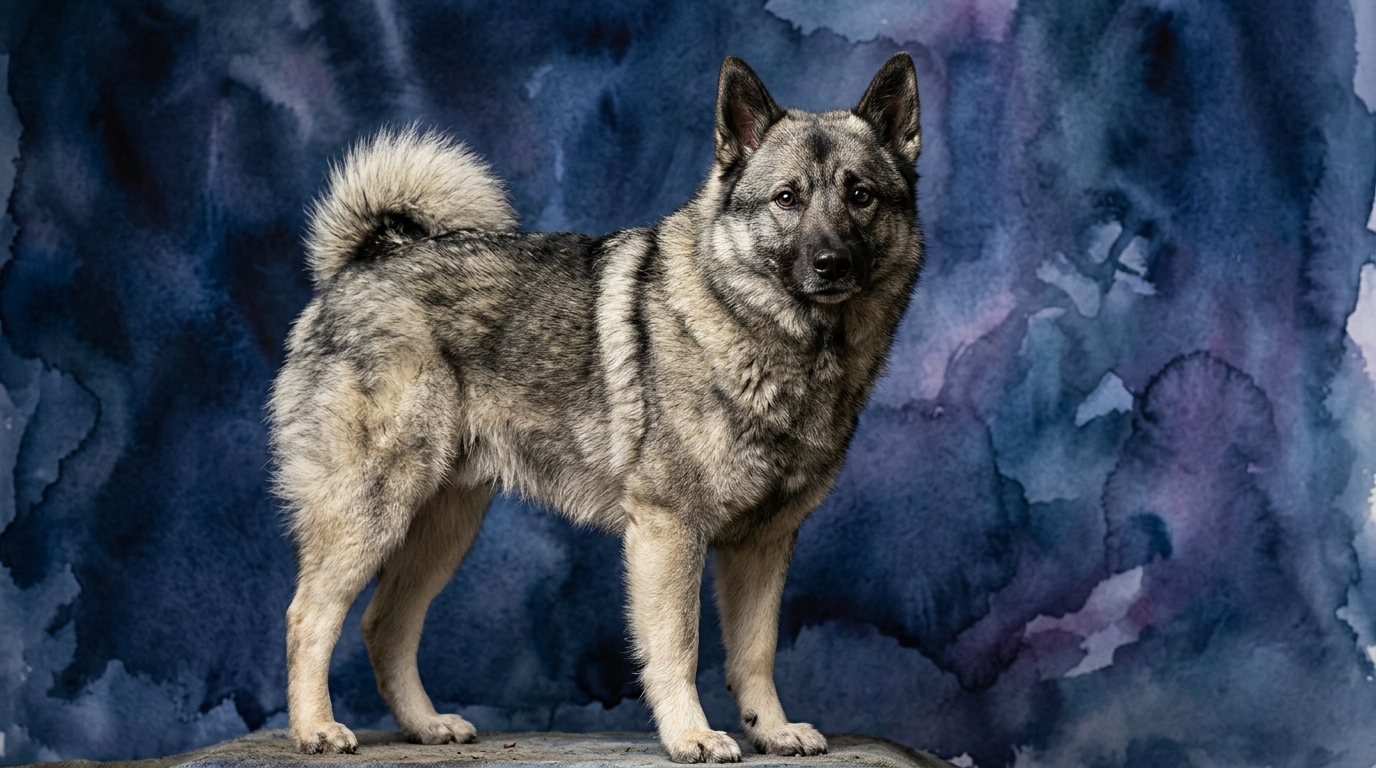
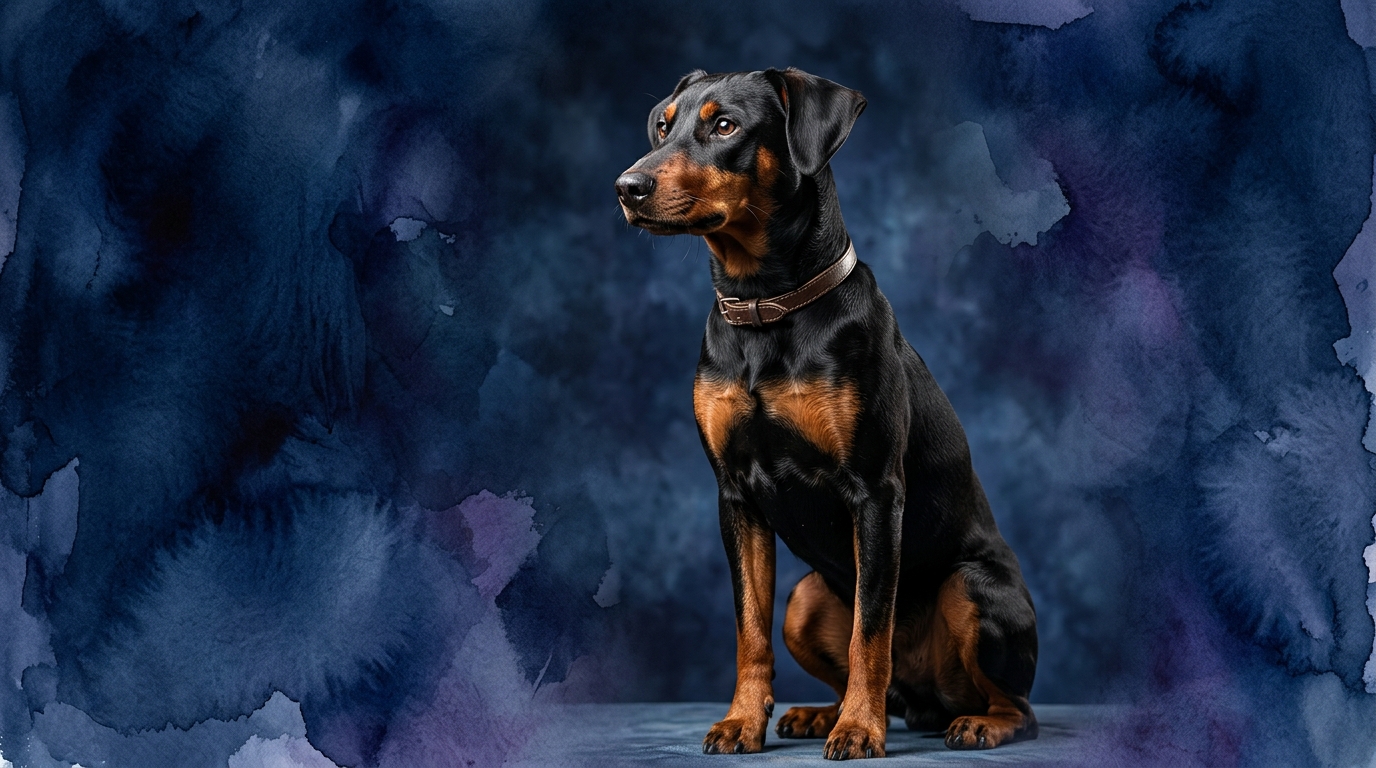
Side-by-Side IQ Profile: Elkhound vs. Pinscher
The Cosmic Pet Pet IQ Lab provides a detailed lens into canine cognition, assessing five key dimensions. For the Norwegian Elkhound, a breed with a notable Coren rank of #36, its profile reveals a Problem Solving score of 4/5, indicating a strong capacity for independent thought and adapting to new situations, often devising clever solutions. Its Training Speed of 4/5 means it quickly grasps new commands, making training sessions efficient and productive. Social Intelligence is rated 3/5, suggesting an adequate understanding of human cues while retaining an independent nature characteristic of its ancient heritage. An Instinctive Drive of 3/5 reflects a moderate pull towards its hound heritage, such as tracking and baying, which can be managed with proper outlets. Finally, its Memory of 4/5 ensures long-term retention of learned behaviors and experiences, building a reliable foundation for complex learning.
In contrast, the German Pinscher, while not Coren-ranked, exhibits a balanced cognitive profile with consistent 3/5 scores across all IQ dimensions. Its Problem Solving at 3/5 suggests it handles routine challenges well, learning established patterns reliably, though perhaps requiring more explicit direction for truly novel scenarios. A Training Speed of 3/5 means it learns at a steady, consistent pace, benefiting from clear, repetitive instruction and positive reinforcement. Social Intelligence at 3/5 points to a solid understanding of family dynamics and human social signals, often maintaining a watchful demeanor. An Instinctive Drive of 3/5 reflects its focused working heritage as a tenacious vermin hunter and guardian, a drive that is present and needs appropriate channeling. Lastly, its Memory of 3/5 indicates reliable information retention, though perhaps needing occasional refreshers for less frequently practiced commands compared to breeds with higher scores.
Where the Norwegian Elkhound Wins Cognitively
The Norwegian Elkhound's cognitive strengths are pronounced in areas demanding higher processing and retention, especially its 4/5 Problem Solving and Memory scores. This translates to a dog that actively engages with its environment, often independently strategizing to overcome obstacles or solve puzzles, showcasing a higher degree of initiative. Their superior Memory ensures lessons are deeply ingrained, reducing the need for constant refreshers and allowing for the development of complex behavioral repertoires over time. This cognitive fluidity, combined with a 4/5 Training Speed, means Elkhounds can master intricate command sequences and adapt to diverse training disciplines with remarkable efficiency, making them excellent partners for advanced obedience, canine sports, or complex scent work where sustained focus and recall are paramount.
Where the German Pinscher's Cognitive Profile Shines
While the German Pinscher's IQ profile features consistent 3/5 scores across all dimensions, this very balance offers distinct advantages for specific owners and lifestyles. Its 3/5 Problem Solving suggests a more straightforward learning approach, making it less prone to 'outthinking' owners or exhibiting mischievous independent problem-solving that higher-scoring breeds might display. This consistency ensures reliable trainability for specific tasks without the potential for unexpected cognitive detours. Their Instinctive Drive, while also 3/5, often manifests as an intense, focused tenacity on immediate tasks, whether patrolling the yard or engaging in specific games. This purposeful drive, coupled with its moderate training speed, allows them to become exceptionally proficient in structured environments where clear expectations are consistently reinforced, appealing to owners seeking predictable, direct, and purposeful engagement from their companion.
Which is Easier to Train and Why
In terms of training ease, the Norwegian Elkhound holds a distinct advantage, primarily due to its 4/5 Training Speed and 4/5 Problem Solving. Elkhounds typically grasp new commands and routines with fewer repetitions, often anticipating what is expected of them and adapting their behavior quickly. This rapid learning curve allows for faster progression into complex tasks, further solidified by their 4/5 Memory which ensures long-term retention. The German Pinscher, with 3/5 in both Training Speed and Problem Solving, requires a more patient, consistent, and perhaps more explicit approach. While certainly trainable, they may need more repetitions to solidify new commands and might take longer to generalize learned behaviors to new contexts. Both breeds respond well to positive reinforcement, but the Elkhound's cognitive architecture generally offers a smoother, faster training journey for most owners interested in advanced disciplines.
Matching Cognitive Needs to Owner Lifestyles
When matching these breeds to owner lifestyles, both the Norwegian Elkhound and the German Pinscher lean towards active companionship, yet their cognitive needs dictate different forms of engagement. The Elkhound, with its 4/5 Problem Solving and Memory, thrives with owners who can provide consistent mental challenges beyond just physical exercise. This breed needs puzzles, advanced training, and varied experiences to prevent boredom and channel its sharp intellect constructively. They are ideal for active owners who enjoy activities like scent work, agility, or advanced obedience, and who can dedicate time to complex training sessions or interactive games that stimulate their problem-solving abilities. For a more relaxed owner, an unstimulated Elkhound might invent its own, potentially undesirable, forms of entertainment. The German Pinscher, while also needing regular physical activity commensurate with its working heritage and moderate Instinctive Drive, might be more forgiving of less cognitively demanding activities, provided its physical and social needs are met. Its balanced 3/5 cognitive profile means it can be content with consistent routines, structured play, and clear expectations, rather than constant novel mental stimulation. While they still need engagement to prevent boredom, their cognitive profile suggests they are less likely to become destructive purely out of intellectual frustration compared to an Elkhound if the mental stimulation is slightly less intense or varied. Therefore, the Pinscher suits active owners who appreciate a direct, purposeful companion, whereas the Elkhound is better for highly engaged, mentally stimulating owners.
The Verdict
Opt for the Norwegian Elkhound if you are an engaged owner seeking a cognitively agile partner for advanced training, problem-solving games, and complex canine sports, appreciating a faster learning curve and excellent memory retention.
Select the German Pinscher if you desire a steadfast, purposeful companion who thrives on consistent routines and clear direction, and whose balanced cognitive profile offers predictable engagement for active, dedicated owners.
🧠 Find Your Pet's IQ Score
Our Pet IQ Lab assessment covers 25+ tests across 5 cognitive dimensions — personalized to your breed.
Take the Full IQ Test →Frequently Asked Questions
Does the Norwegian Elkhound's higher problem-solving score make it more challenging?
Not inherently more challenging, but an Elkhound requires consistent mental stimulation to prevent boredom and channel its sharp intellect constructively. Their capacity to figure things out can be rewarding in training, but an unstimulated Elkhound might apply that problem-solving to undesirable activities like opening cupboards if not properly engaged.
How does the German Pinscher's Instinctive Drive of 3/5 manifest compared to the Elkhound's?
Both breeds have a moderate instinctive drive, but its expression often differs due to their heritage. The Pinscher's drive often relates to its vermin-hunting and guarding heritage, leading to focused attention on small moving objects or a watchful, protective demeanor. The Elkhound's drive typically centers on tracking and baying, a persistent vocalization often associated with scent work or alerting to game.
Is the Coren ranking significant when comparing these breeds?
The Coren rank, which places the Norwegian Elkhound at #36, primarily measures 'working and obedience intelligence' or how quickly a dog learns commands. The German Pinscher is not Coren-ranked, but its consistent 3/5 scores across all IQ dimensions suggest it is a capable learner, just perhaps not as rapid in obedience acquisition as the higher-ranked Elkhound, which excels in speed of command learning.