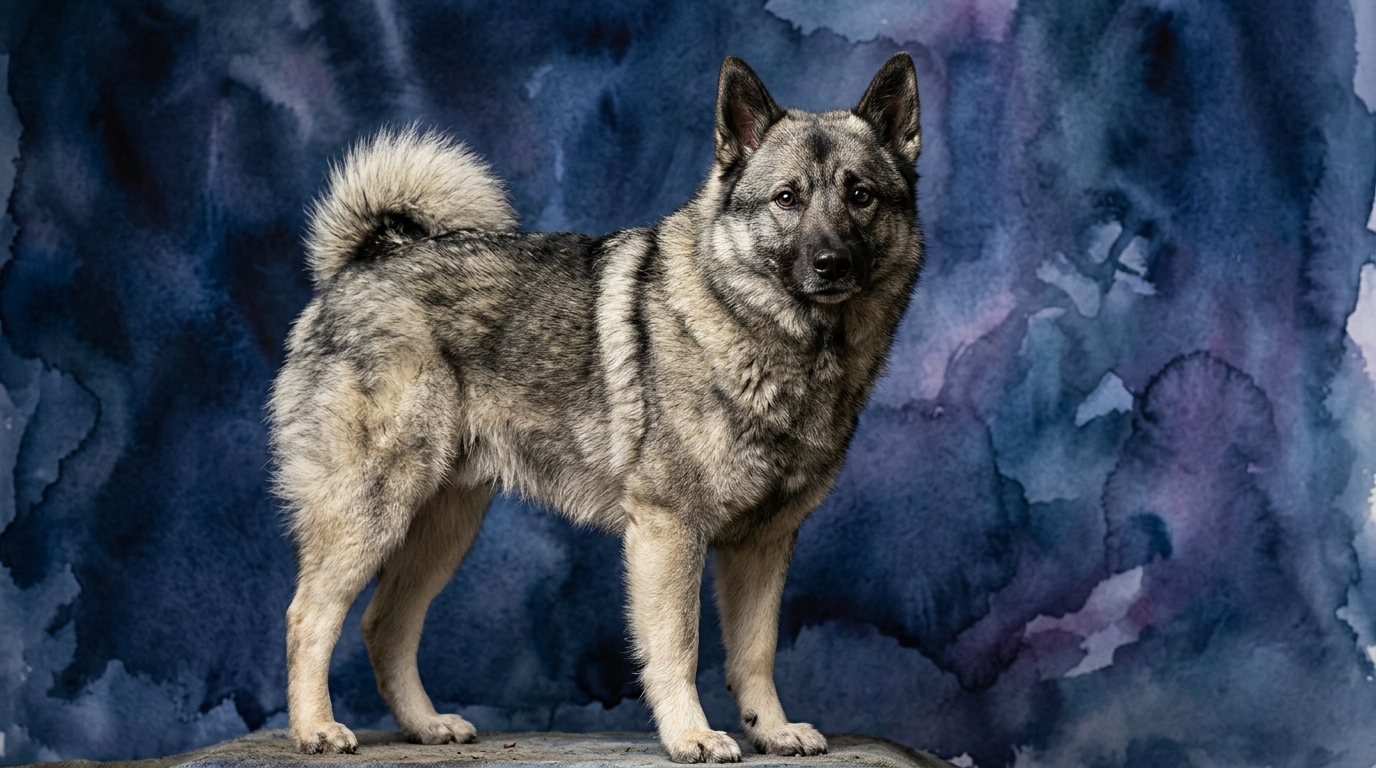
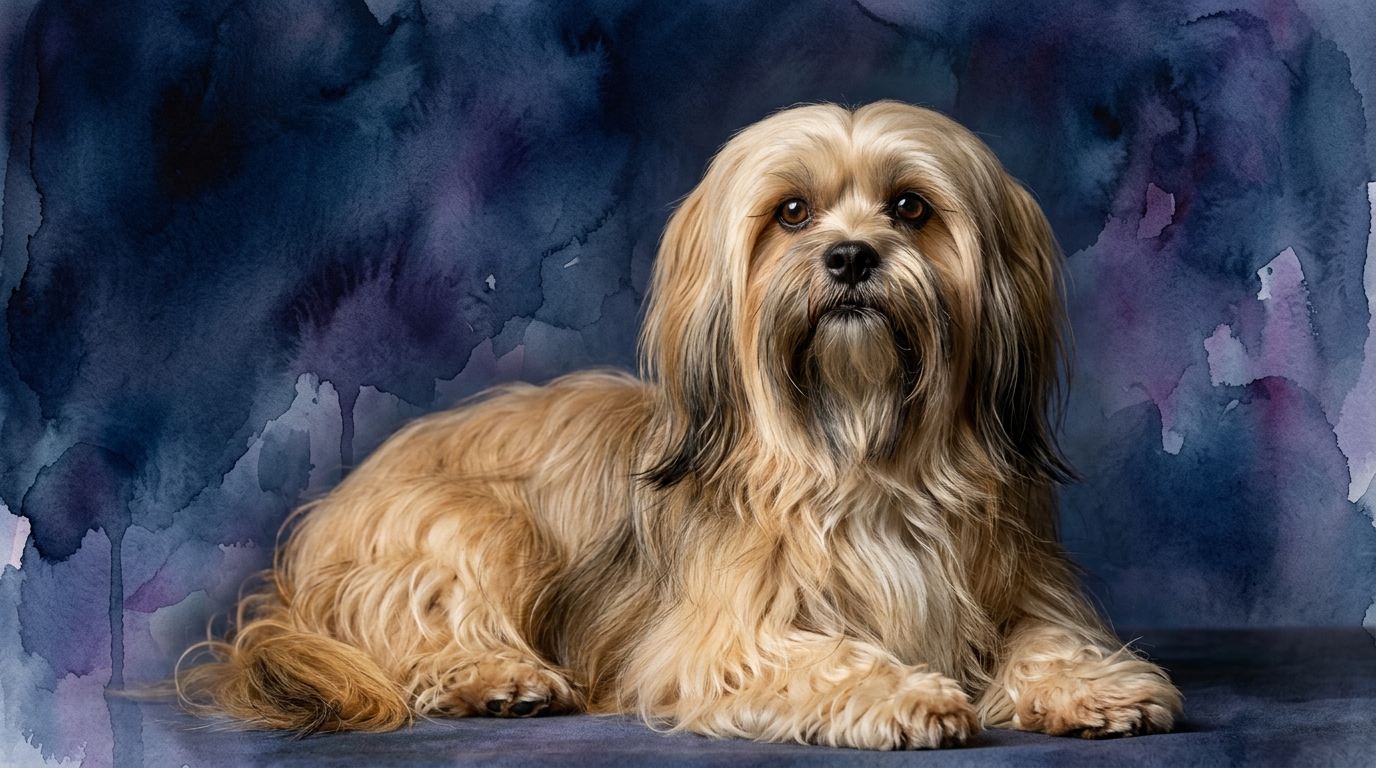
Side-by-Side IQ Profile: Elkhound vs. Lhasa Apso
At The Cosmic Pet Pet IQ Lab, we evaluate canine cognition across five crucial dimensions, offering a nuanced look at what makes each breed tick. The Norwegian Elkhound, a Hound breed with a Coren rank of #36, demonstrates a stronger bent towards independent problem-solving and rapid learning. Its Problem Solving score of 4/5 reflects a historical need to make complex decisions in the field, often far from human guidance, such as tracking elusive game or navigating challenging terrain. Training Speed, also at 4/5, indicates a breed that generally grasps new commands and routines with relative ease, though their independent spirit means engagement is key. Social Intelligence for the Elkhound stands at 3/5, suggesting they are attuned to their immediate family but may exhibit a more reserved or task-oriented demeanor with strangers. Their Instinctive Drive, at 3/5, points to a moderate but present prey drive and protective instincts. Finally, Memory, at 4/5, highlights their capacity to recall intricate routes, scent patterns, and learned behaviors.
In contrast, the Lhasa Apso, a Non-Sporting breed ranked #68 by Coren, presents a different cognitive blueprint, shaped by centuries as a vigilant sentinel. Its Problem Solving score of 3/5 indicates an ability to navigate their environment effectively, often with a clever, self-serving streak, such as finding the most comfortable spot or manipulating situations for attention. Training Speed, also at 3/5, suggests they can learn but often require more patience and consistency due to their strong-willed nature. The Lhasa Apso's Social Intelligence, scoring 3/5, manifests as a keen discernment, making them highly perceptive within their family unit but often aloof or wary of outsiders. Their Instinctive Drive, at 3/5, is heavily geared towards territorial guarding and alertness, making them excellent watchdogs. Their Memory, at 3/5, enables them to remember routines, preferences, and commands, though perhaps with less capacity for complex sequences than the Elkhound.
Where the Norwegian Elkhound Wins Cognitively
The Norwegian Elkhound's cognitive strengths distinctly emerge in areas demanding active engagement with the environment and quick assimilation of new information. Their superior Problem Solving score of 4/5, compared to the Lhasa Apso's 3/5, is a direct reflection of their heritage as a hunter of large game. This breed excels at tasks requiring strategic thinking, such as navigating complex obstacles, tracking scents over varied terrain, or learning multi-step sequences in dog sports like agility or obedience. They are adept at figuring out 'how to' achieve a goal, often showing initiative and independent thought when presented with a novel challenge. This cognitive edge makes them excellent partners for problem-solving games and advanced training.
Furthermore, the Elkhound's Training Speed of 4/5 outpaces the Lhasa Apso's 3/5, indicating a quicker initial grasp of commands and concepts. This doesn't necessarily mean they are easier to train overall (their independence plays a role), but they typically require fewer repetitions to understand what is being asked of them. Their higher Memory score of 4/5 (versus 3/5 for the Lhasa Apso) also contributes to this, allowing them to retain learned behaviors and recall specific instructions or locations with greater reliability over time. This combination of rapid learning and strong retention makes them particularly well-suited for owners who enjoy consistent training and canine activities that build on previous lessons, like competitive obedience or scent detection.
Where the Lhasa Apso Wins Cognitively
While the Lhasa Apso's scores might appear numerically lower in some cognitive dimensions, their specific mental aptitudes are finely tuned for their historical role as a companion and guardian, revealing unique strengths. Their Social Intelligence, though rated 3/5 like the Elkhound, often manifests as a highly discerning perception of human behavior and household dynamics. They are masters at reading subtle cues from their preferred people, understanding routines, and even manipulating situations to their advantage, such as securing a prime napping spot or extra attention. This isn't broad sociability, but a sharp, focused social awareness within their inner circle.
The Lhasa Apso's Problem Solving at 3/5, while not geared towards field work, is exceptionally effective in navigating domestic environments and achieving comfort. They can be remarkably clever in finding ways around rules they deem inconvenient, or in devising strategies to get what they want from their owners. This often translates into a cunning resourcefulness. Their Instinctive Drive, also 3/5, is laser-focused on territorial vigilance; they possess an unparalleled ability to detect and alert to unusual sounds or presences, making them exceptionally effective watchdogs. This keen awareness of their immediate surroundings and their steadfast commitment to their perceived duty are cognitive strengths that make them uniquely suited for their companion-guardian role, requiring a specific kind of focused, intuitive intelligence.
Which is Easier to Train and Why?
When evaluating ease of training, we must consider both the speed of learning and the willingness to comply, which are distinct aspects of canine cognition. The Norwegian Elkhound, with its Training Speed score of 4/5, generally picks up new commands and concepts more quickly than the Lhasa Apso (3/5). This means fewer repetitions are often needed for an Elkhound to understand what is being asked. Their Problem Solving (4/5) also means they can often generalize learned behaviors to new situations. However, their independent nature, stemming from their hunting heritage, means they can become bored with repetitive drills or may choose to follow their own instincts if not properly motivated. Training an Elkhound requires consistency, positive reinforcement, and engaging, varied sessions that appeal to their desire to work alongside their human partner, not just for them.
The Lhasa Apso, conversely, often presents a greater challenge in training due to its independent spirit and strong will, reflected in its 3/5 Training Speed. While capable of learning, they are not typically eager to please in the same way some breeds might be. Their Problem Solving (3/5) can sometimes be used to outsmart an owner or find loopholes in rules, and their territorial Instinctive Drive (3/5) can make them resistant to commands that conflict with their perceived duties. Training a Lhasa Apso demands exceptional patience, consistency, and a deep understanding of their unique personality. Positive reinforcement is crucial, and sessions should be kept short and engaging to maintain their interest. While they may not learn as quickly, a well-trained Lhasa Apso is a steadfast companion; the process simply requires more dedication to overcome their inherent stubbornness and convince them that cooperation is worthwhile.
Which Suits Active Owners vs. Relaxed Owners
The choice between a Norwegian Elkhound and a Lhasa Apso significantly hinges on an owner's lifestyle and activity level, as their cognitive profiles align with vastly different needs for stimulation. The Norwegian Elkhound, a breed forged for demanding work in harsh environments, thrives with active owners. Their high Problem Solving (4/5) and Memory (4/5) scores mean they require considerable mental engagement in addition to physical exercise. They are ideal for individuals or families who enjoy outdoor adventures like hiking, running, or dog sports such as agility, obedience, or scent work. An Elkhound needs at least an hour of vigorous activity daily, coupled with opportunities to use their natural tracking and problem-solving abilities. Without sufficient mental and physical outlets, an Elkhound can become bored, potentially leading to undesirable behaviors.
The Lhasa Apso, while not a complete couch potato, is far better suited for owners with a more relaxed lifestyle. Their exercise needs are moderate; daily walks and indoor play are typically sufficient to keep them content. Their intelligence, while keen, is often directed towards observing and managing their home environment and family dynamics, rather than extensive outdoor exploration. They appreciate comfort and routine, making them excellent companions for those who prefer a less physically demanding dog. However, a 'relaxed' owner for a Lhasa Apso doesn't mean neglecting their cognitive needs entirely. They still benefit from consistent, positive training to manage their independent streak and prevent them from becoming overly dominant or territorial within the home. They are well-suited for owners who appreciate a discerning, vigilant companion and are willing to engage them mentally through consistent training and social interaction within their comfort zone.
The Verdict
Choose the Norwegian Elkhound if you are an active, outdoorsy owner seeking a quick-learning, mentally engaging companion for adventures, dog sports, or challenging training. Be prepared to provide consistent physical and mental stimulation to satisfy their working dog instincts.
Opt for the Lhasa Apso if you prefer a discerning, independent, and vigilant companion with moderate exercise needs, and are patient with training. They thrive in a comfortable home environment where they can serve as a steadfast, albeit sometimes stubborn, sentinel.
🧠 Find Your Pet's IQ Score
Our Pet IQ Lab assessment covers 25+ tests across 5 cognitive dimensions — personalized to your breed.
Take the Full IQ Test →Frequently Asked Questions
Are Norwegian Elkhounds good family dogs?
Norwegian Elkhounds can be loyal and protective with their families, forming strong bonds. However, their independent nature and moderate prey drive mean they require consistent socialization and training, especially when introduced to small children or other household pets.
Do Lhasa Apsos bark a lot?
Lhasa Apsos are known for their vigilant nature and strong territorial instincts, which often manifest as frequent barking to alert their owners to anything unusual. Consistent training from a young age can help manage excessive vocalization.
How much exercise does a Norwegian Elkhound need?
Norwegian Elkhounds are an active breed that requires significant daily exercise, typically at least one hour of vigorous activity such as long runs, hikes, or engaging in dog sports. This helps to keep them physically fit and mentally stimulated.