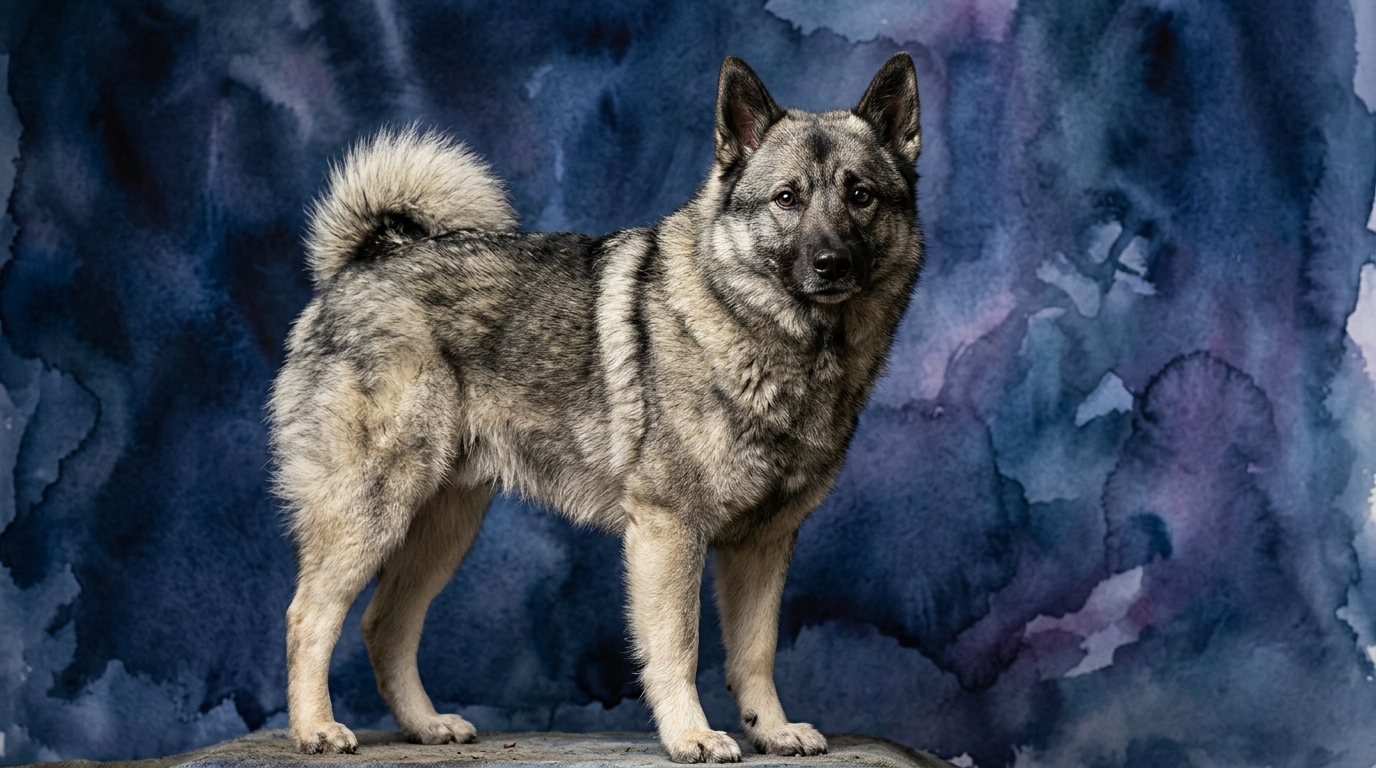
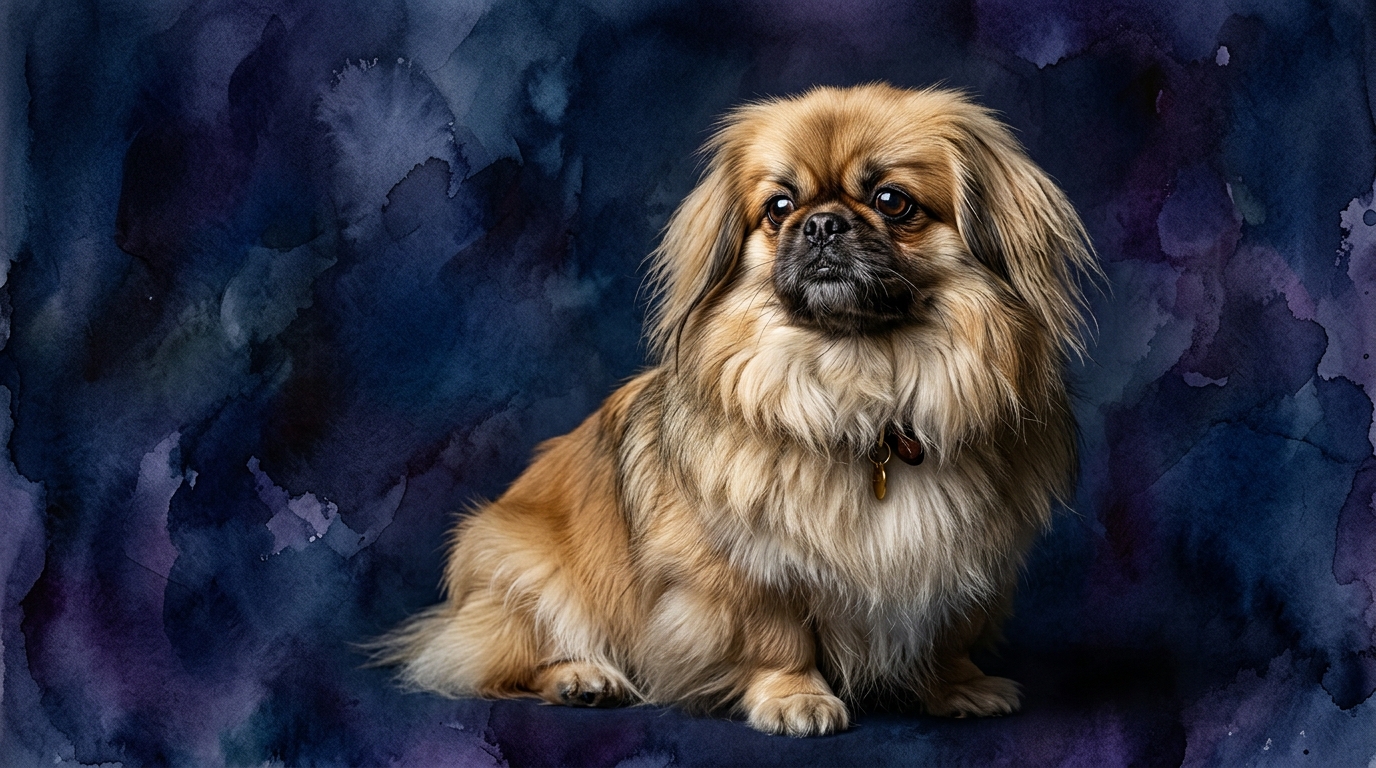
Side-by-Side IQ Profile: Elkhound vs. Pekingese
The Cosmic Pet Pet IQ Lab employs a multi-dimensional approach to assess canine cognition, moving beyond simple obedience to understand how breeds process information, learn, and interact. For the Norwegian Elkhound, ranked #36 by Coren, and the Pekingese, ranked #77, these dimensions highlight their unique mental architectures.
The Norwegian Elkhound, a dog of the Hound group, demonstrates a robust capacity for independent thought and strategic action, often excelling at navigating complex environments or figuring out how to access desired resources, earning a Problem Solving score of 4/5. Their heritage as a hunting companion means they frequently process situations to achieve a goal, rather than simply reacting. These dogs typically grasp new commands and routines with efficiency, often requiring fewer repetitions to solidify a behavior, reflected in their Training Speed of 4/5. Their attentiveness and eagerness to engage with their human partners contribute to a relatively swift learning curve in structured training settings. While capable of forming strong bonds, the Elkhound's Social Intelligence of 3/5 tends to be more focused on their immediate family unit; they can interpret human cues within this context but might exhibit a more reserved or independent demeanor in novel social situations. Possessing a moderate yet discernible Instinctive Drive (3/5), the Elkhound retains elements of its ancestral hunting behaviors, such as tracking scents or alert barking, which is present but generally manageable. Finally, the Elkhound exhibits a strong Memory (4/5), retaining learned commands, routines, and even specific locations or experiences over extended periods, aiding in consistent performance.
The Pekingese, a dog of the Toy group, approaches problem-solving with a more measured, sometimes pragmatic, mindset, scoring 3/5 in Problem Solving. They can navigate minor obstacles and learn to manipulate their environment for comfort or attention, but their solutions are often less about intricate planning and more about straightforward, immediate gratification. While trainable, the Pekingese typically requires more patience and consistency in training, earning a Training Speed of 3/5. Their learning pace is steady, but they may need more repetitions to fully integrate new commands, sometimes displaying a charming independence that can be misconstrued as stubbornness. The Pekingese is adept at reading the moods and intentions of their primary caregivers, often displaying a keen understanding of household dynamics, giving them a Social Intelligence of 3/5. This intelligence is finely tuned to their inner circle, allowing them to form deep, reciprocal bonds, though they may be less inclined to extend this to strangers. This breed possesses a moderate Instinctive Drive (3/5), often manifesting as a strong territorial instinct or a preference for comfort and routine, rather than intense hunting. The Pekingese demonstrates a functional Memory (3/5), recalling familiar people, places, and established routines with reliability, supporting their consistent daily habits and strong attachments.
Where the Norwegian Elkhound Wins Cognitively
The Norwegian Elkhound holds a clear cognitive edge in areas demanding independent strategic thought and rapid information absorption. Their 4/5 rating in problem-solving highlights a breed that doesn't just react but actively processes situations to achieve an outcome. For instance, an Elkhound might systematically explore various methods to open a cabinet for a treat, rather than simply pawing at it once. This translates into a dog that can often "figure things out" in novel scenarios, making them adept at navigating new environments or learning complex tasks that require multiple steps.
Furthermore, their 4/5 training speed signifies a quicker uptake of new commands and routines. This isn't merely about obedience; it reflects an ability to form strong associations between actions and consequences with fewer repetitions. An Elkhound learning a new agility course might string together several obstacles after only a few guided attempts, while other breeds might require more extensive drilling for each individual component. Their superior memory (4/5) reinforces this, allowing them to retain these learned sequences and solutions over extended periods, making their training more durable and less prone to forgetting. This combination of robust problem-solving, efficient learning, and lasting recall makes the Elkhound particularly suited for roles requiring consistent, adaptable cognitive engagement.
Where the Pekingese Wins Cognitively
While the Pekingese might not outpace the Elkhound in raw problem-solving or training speed, their cognitive strengths lie in their nuanced social understanding and capacity for quiet, observant learning within their preferred environment. A Pekingese excels at discerning subtle shifts in human mood or routine, often anticipating their owner's next move long before it's explicitly communicated. Their 3/5 social intelligence, while equal to the Elkhound's, manifests differently; it's a finely tuned sensitivity to their immediate human companions, allowing them to integrate seamlessly into a household's emotional rhythm. They might not solve a puzzle for a treat as readily, but they are masters at understanding how to elicit affection or gain a comfortable spot on the sofa through subtle cues and persistent, charming presence.
Their instinctive drive (3/5), though moderate, is often expressed as a strong sense of self-preservation and a profound appreciation for their personal space and comfort. This isn't a drive for complex outdoor pursuits, but an innate understanding of their needs for security and well-being. A Pekingese might "win" by consistently finding the sunniest spot for a nap or by successfully communicating their desire for quiet time through body language, demonstrating a practical application of their cognitive resources towards their own contentment. Their problem-solving (3/5), though not as high as the Elkhound's, is often applied to personal comfort and social manipulation, showcasing a different, yet effective, form of mental agility tailored to their lifestyle.
Which is Easier to Train and Why
When evaluating ease of training, the Norwegian Elkhound generally presents a more straightforward experience due to its higher training speed and problem-solving scores. With a 4/5 rating in training speed, Elkhounds tend to grasp new commands and routines with fewer repetitions. Their background as working dogs means they are often more inclined to engage in collaborative tasks and respond to direction. For example, an Elkhound might learn to "stay" for extended periods relatively quickly, understanding the spatial and temporal parameters of the command. Their problem-solving capacity also means they can generalize learned behaviors to new contexts more readily, applying a command like "come" effectively whether in the backyard or a new park.
The Pekingese, with a 3/5 rating in training speed, typically requires more patience and a consistent approach. Their charming independence, rooted in their dignified history, can sometimes be perceived as stubbornness. While they are certainly capable of learning, a Pekingese might need more focused, shorter training sessions to maintain engagement. They might also be more selective about when and where they choose to perform a learned behavior, often weighing the immediate reward against their own comfort or preference. For instance, house-training a Pekingese might involve a longer period of consistent reinforcement and a more rigid schedule, as their motivation might be less about pleasing and more about personal comfort. Therefore, while both breeds are trainable, the Elkhound's innate drive to work alongside humans and its quicker learning curve generally make it an easier subject for formal training.
Which Suits Active Owners vs. Relaxed Owners
The choice between these two breeds largely hinges on an owner's lifestyle and their capacity for providing specific types of engagement. The Norwegian Elkhound, with its background as a robust hunting dog, is inherently suited for active owners. Their moderate instinctive drive (3/5) and strong problem-solving skills (4/5) mean they thrive on regular physical exercise combined with mental challenges. Owners who enjoy hiking, running, or participating in dog sports like agility or obedience would find an Elkhound a willing and capable partner. Their need for consistent stimulation means a relaxed owner who offers minimal activity might find their Elkhound becoming bored or exhibiting unwanted behaviors, as their cognitive and physical energy remains untapped.
Conversely, the Pekingese is an ideal companion for more relaxed owners. Their cognitive strengths, while significant, are not geared towards intense physical output or complex outdoor tasks. A Pekingese finds contentment in a comfortable home environment, enjoying short, leisurely strolls and ample lap time. Their social intelligence is keenly attuned to their immediate human family, making them excellent, observant companions for those who appreciate quiet companionship. An active owner attempting to mold a Pekingese into a high-endurance partner might find frustration, as the breed's physical structure and inherent preferences lean towards a more sedate pace, though they still benefit from daily enrichment and gentle play.
The Verdict
Choose the Norwegian Elkhound if you are an active individual or family seeking a mentally engaged partner for outdoor adventures, consistent training, and a dog that can independently navigate and solve problems.
Opt for the Pekingese if you desire a devoted, observant companion for a relaxed household, appreciating their quiet presence, subtle social cues, and capacity for deep, comfortable bonds.
🧠 Find Your Pet's IQ Score
Our Pet IQ Lab assessment covers 25+ tests across 5 cognitive dimensions — personalized to your breed.
Take the Full IQ Test →Frequently Asked Questions
Is the Norwegian Elkhound good with children?
Norwegian Elkhounds can be good with older, respectful children, particularly if raised with them and properly socialized. Their independent nature means they might not tolerate rough play as readily as some breeds, making supervision important.
Do Pekingese dogs bark a lot?
Pekingese can be prone to barking, especially as a territorial alert or to express their desires. Consistent training and addressing the root cause of their vocalizations can help manage this trait effectively.
What kind of mental stimulation does a Pekingese need?
Pekingese benefit from gentle mental stimulation such as interactive puzzle toys, short training sessions for tricks, and opportunities for social interaction within their trusted circle. Their comfort-seeking nature means these activities should be low-impact.