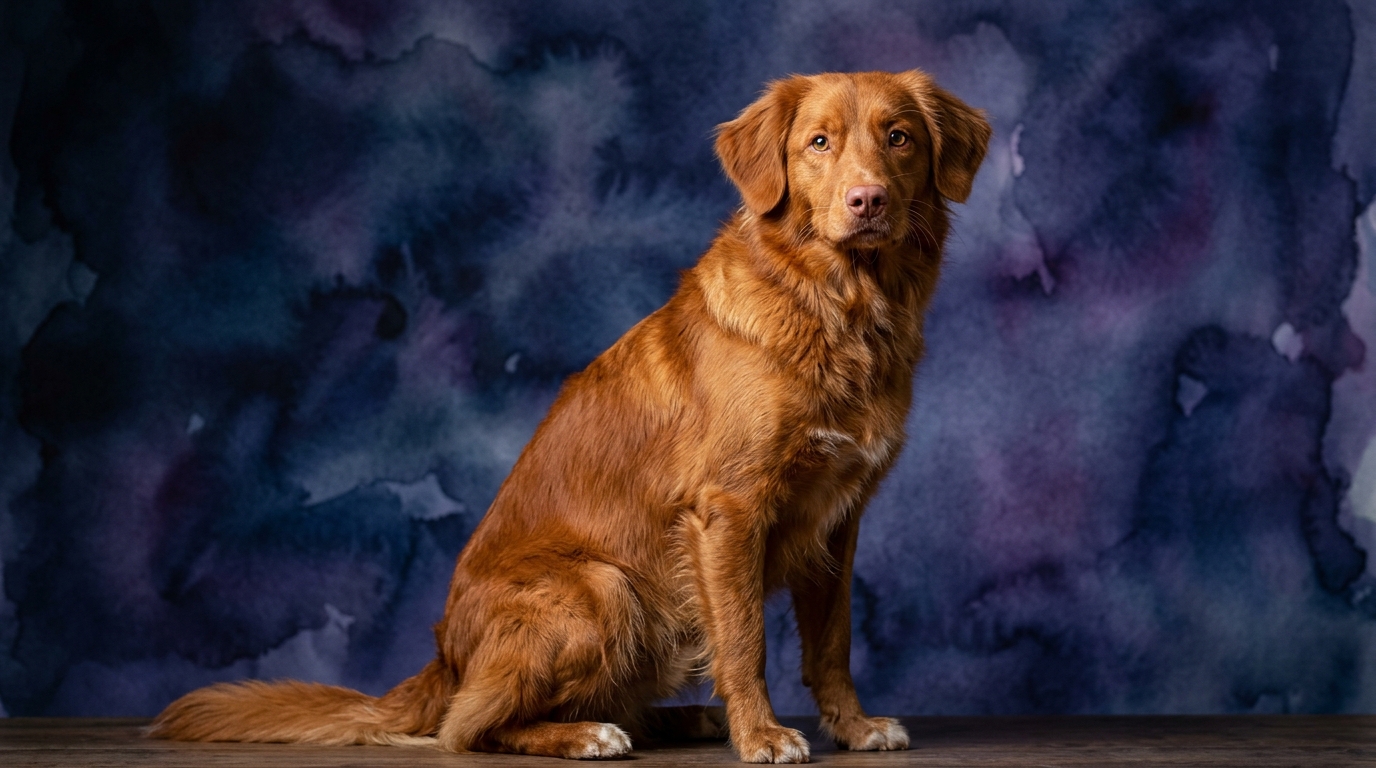
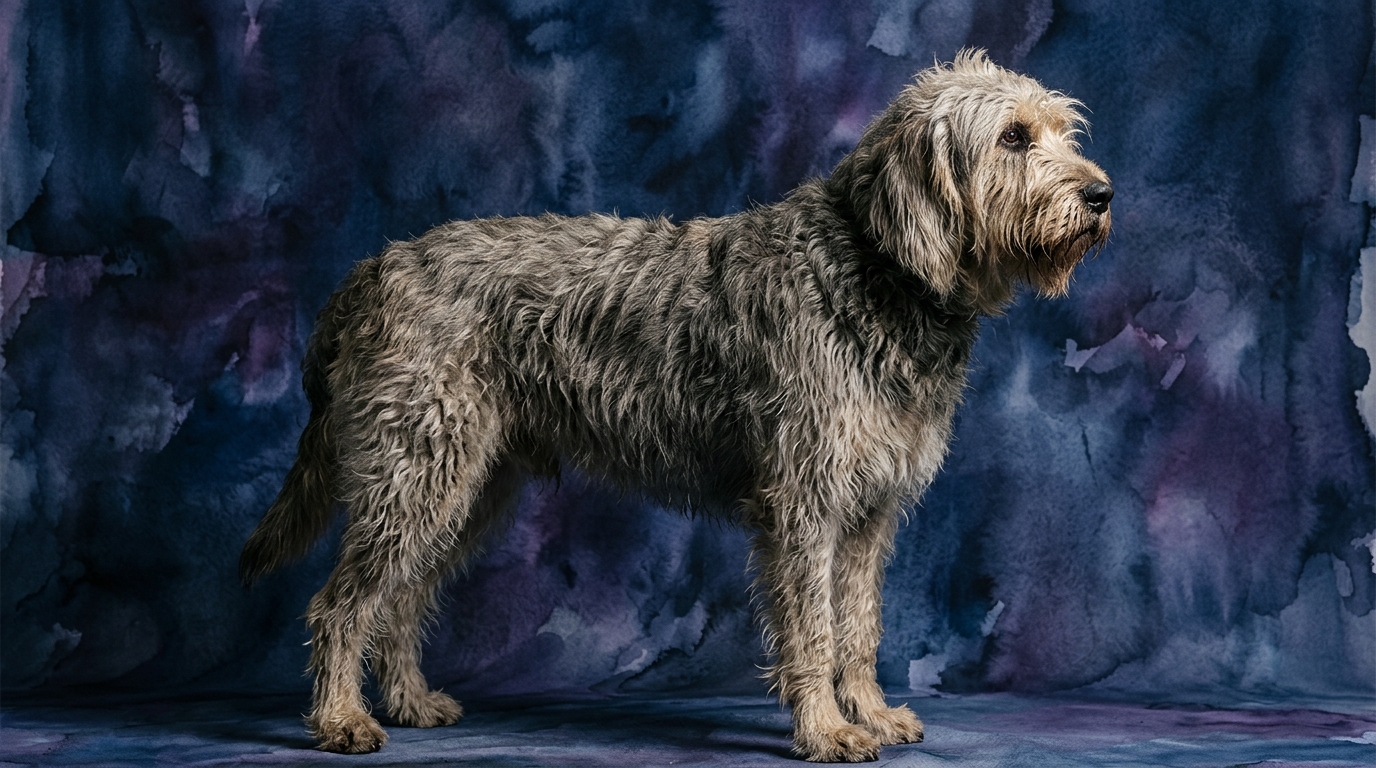
Side-by-Side Cognitive Profiles: Toller vs. Otterhound
While both the Nova Scotia Duck Tolling Retriever and the Otterhound share a consistent '3/5' rating across all five cognitive dimensions in The Cosmic Pet Pet IQ Lab, understanding these scores requires delving into the unique context of each breed's historical role and inherent nature. A '3/5' indicates a solid, functional capacity, but how that capacity is deployed and what drives it differs significantly between these two.
For the **Nova Scotia Duck Tolling Retriever**, a sporting breed, their '3/5' in **Problem Solving** often manifests as practical, goal-oriented intelligence. They excel at deciphering how to locate and retrieve downed game, navigating complex terrain, or strategizing the most efficient path back to their handler. Their problem-solving is typically collaborative, focused on achieving a task set by a human partner.
The Toller's '3/5' **Training Speed** reflects a good foundational capacity for learning new commands and routines, often driven by an eagerness to please and a desire for engagement. They can pick up multi-step tasks with consistency and positive reinforcement, making them responsive partners in various canine activities. Their '3/5' **Social Intelligence** is geared towards close partnership, understanding human moods and cues, and integrating seamlessly into a family or working unit.
A '3/5' **Instinctive Drive** in Tollers translates to a strong retrieve drive, an affinity for water, and a focused prey drive towards birds. This innate motivation is channelled into their work, making them persistent and dedicated. Their '3/5' **Memory** supports their training and working roles, allowing them to recall specific commands, locations of retrieves, and learned routines with reliability.
Conversely, the **Otterhound**, a hound breed, expresses its '3/5' cognitive scores through a very different lens. Their '3/5' in **Problem Solving** is deeply rooted in their primary purpose: tracking. This involves independently deciphering intricate scent trails, navigating diverse and often challenging environments, and overcoming obstacles with persistent focus. Their problem-solving is often self-directed, driven by an internal compass of scent.
The Otterhound's '3/5' **Training Speed** means they are capable of learning, but their strong, independent scent drive can often supersede human instruction. Training requires immense patience, creativity, and an understanding that their primary motivation is often the environment's olfactory tapestry. Their '3/5' **Social Intelligence** is typically expressed within a pack dynamic, where they understand their place and communicate effectively with other dogs, while also forming affectionate, though sometimes independent, bonds with their human family.
Their '3/5' **Instinctive Drive** is overwhelmingly focused on scent and tracking. This powerful drive fuels their endurance and determination, compelling them to follow a trail relentlessly. The Otterhound's '3/5' **Memory** is especially attuned to environmental details, remembering complex scent patterns, terrain features, and the progression of a hunt. This memory is less about recalling discrete commands and more about a rich, sensory-based understanding of their surroundings.
Where the Nova Scotia Duck Tolling Retriever Excels Cognitively
The Toller's cognitive strength shines brightest in scenarios demanding collaborative problem-solving and responsive partnership. While rated 3/5, their Problem Solving is finely tuned for interpreting human directives and executing multi-step tasks in cooperation. This includes their capacity to quickly learn and adapt to various retrieving scenarios, remembering specific cues and sequences vital for competitive dog sports or effective fieldwork. Their Social Intelligence, though numerically identical to the Otterhound's, is distinctly geared towards anticipating and responding to a handler's needs, fostering a dynamic intellectual partnership where communication is key to success. They demonstrate a cognitive flexibility in applying learned behaviors to novel, human-directed challenges.
Where the Otterhound Excels Cognitively
The Otterhound's cognitive prowess lies in its unparalleled olfactory intelligence and tenacious, independent problem-solving. Their 3/5 Problem Solving is manifested through an unwavering, methodical pursuit of scent, requiring complex spatial memory and the ability to filter out irrelevant stimuli over long durations and varied terrains. This breed excels at self-directed navigation and decision-making in the field, driven by their powerful 3/5 Instinctive Drive. Their memory is exceptionally robust for complex scent patterns and environmental mapping, allowing them to 'read' a landscape through smell and recall intricate paths. Their social intelligence, while rated 3/5, supports their ability to operate effectively within a pack or to make independent judgments when following a trail, demonstrating a self-reliant cognitive style.
Training Aptitude: Which Breed is More Amenable?
When considering ease of training, the Nova Scotia Duck Tolling Retriever generally presents a more straightforward path for most owners. Their '3/5' Training Speed is underpinned by a strong desire to please their human companions and a natural inclination towards cooperative work, a hallmark of sporting breeds. They are often eager to engage in structured learning, responding well to positive reinforcement and consistent methods. Their focus tends to remain on the handler, making them receptive to commands and more easily redirected from distractions.
The Otterhound, despite also having a '3/5' Training Speed, offers a distinct challenge due to its profound instinctive drive and independent nature. Hounds are bred to follow scent trails autonomously, meaning their primary motivation often lies in the environment's olfactory temptations rather than human direction. Training an Otterhound requires immense patience, a deep understanding of hound psychology, and creative strategies to make training more compelling than a captivating scent. While they are capable of learning, their focus can easily be diverted, making consistency and strong leash manners crucial to manage their independent spirit.
Lifestyle Match: Active Engagement vs. Relaxed Companionship
Neither the Nova Scotia Duck Tolling Retriever nor the Otterhound are suited for truly relaxed, sedentary lifestyles; both are working breeds requiring significant engagement. However, the *type* of activity they thrive on differs.
The **Nova Scotia Duck Tolling Retriever** is an excellent match for active owners who enjoy structured activities and collaborative pursuits. They flourish with consistent exercise that includes mental stimulation, such as retrieving games, agility, obedience training, or dock diving. Owners who can channel their Toller's 3/5 instinctive drive and problem-solving into purposeful activities will find a dedicated and engaging partner. Their energy is often best managed through routines and tasks.
The **Otterhound**, while requiring substantial physical activity, suits owners who appreciate a more investigative and enduring pace. Their exercise is less about rapid bursts and more about long, meandering 'sniffaris' where they can explore scents at length. Owners must be prepared for extended walks, often in varied terrain, allowing the Otterhound's 3/5 instinctive drive for tracking to be satisfied. They are ideal for those who value an independent companion for long outdoor adventures, understanding that their activity is often self-directed by their powerful nose, rather than strictly human-led.
The Verdict
Choose the Nova Scotia Duck Tolling Retriever if you seek a highly cooperative, adaptable partner for structured activities, dog sports, or a family life that values interactive training and a strong human-canine bond. They thrive when their cognitive skills are challenged in partnership with their owner.
Opt for the Otterhound if you are an experienced owner who appreciates a robust, independent thinker with an unparalleled nose, prepared to accommodate their powerful scent drive and provide extensive opportunities for self-directed exploration. They are a unique companion for those who understand and respect hound nature.
🧠 Find Your Pet's IQ Score
Our Pet IQ Lab assessment covers 25+ tests across 5 cognitive dimensions — personalized to your breed.
Take the Full IQ Test →Frequently Asked Questions
Are Nova Scotia Duck Tolling Retrievers and Otterhounds good family dogs?
Both breeds can make wonderful family dogs, though their '3/5' Social Intelligence manifests differently. Tollers often form strong, interactive bonds, eager to participate in family activities. Otterhounds are affectionate but can be more independent, enjoying family presence while sometimes prioritizing a captivating scent over immediate interaction. Socialization is key for both.
Do these breeds require a lot of exercise?
Yes, both breeds require significant daily exercise due to their working backgrounds and '3/5' Instinctive Drive. Tollers need structured activity like retrieving and active play, while Otterhounds thrive on long, investigative walks where they can follow scents. Neither is suited for a sedentary lifestyle.
Is their intelligence suitable for first-time dog owners?
The Nova Scotia Duck Tolling Retriever, with its cooperative nature and desire to please, can be a suitable choice for dedicated first-time owners willing to commit to consistent training and exercise. The Otterhound, however, is generally not recommended for first-time owners due to its strong independent streak and powerful scent drive, which requires experienced handling and a deep understanding of hound behavior.