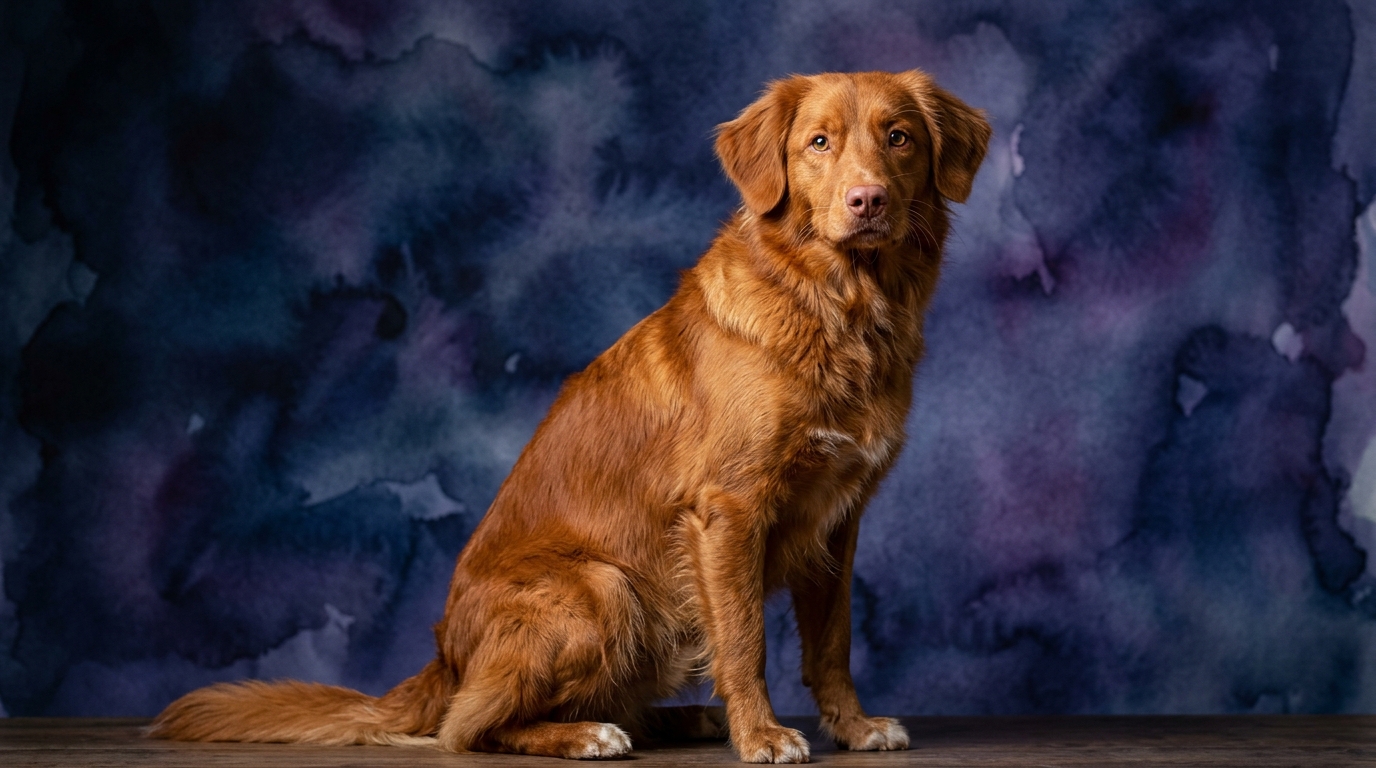
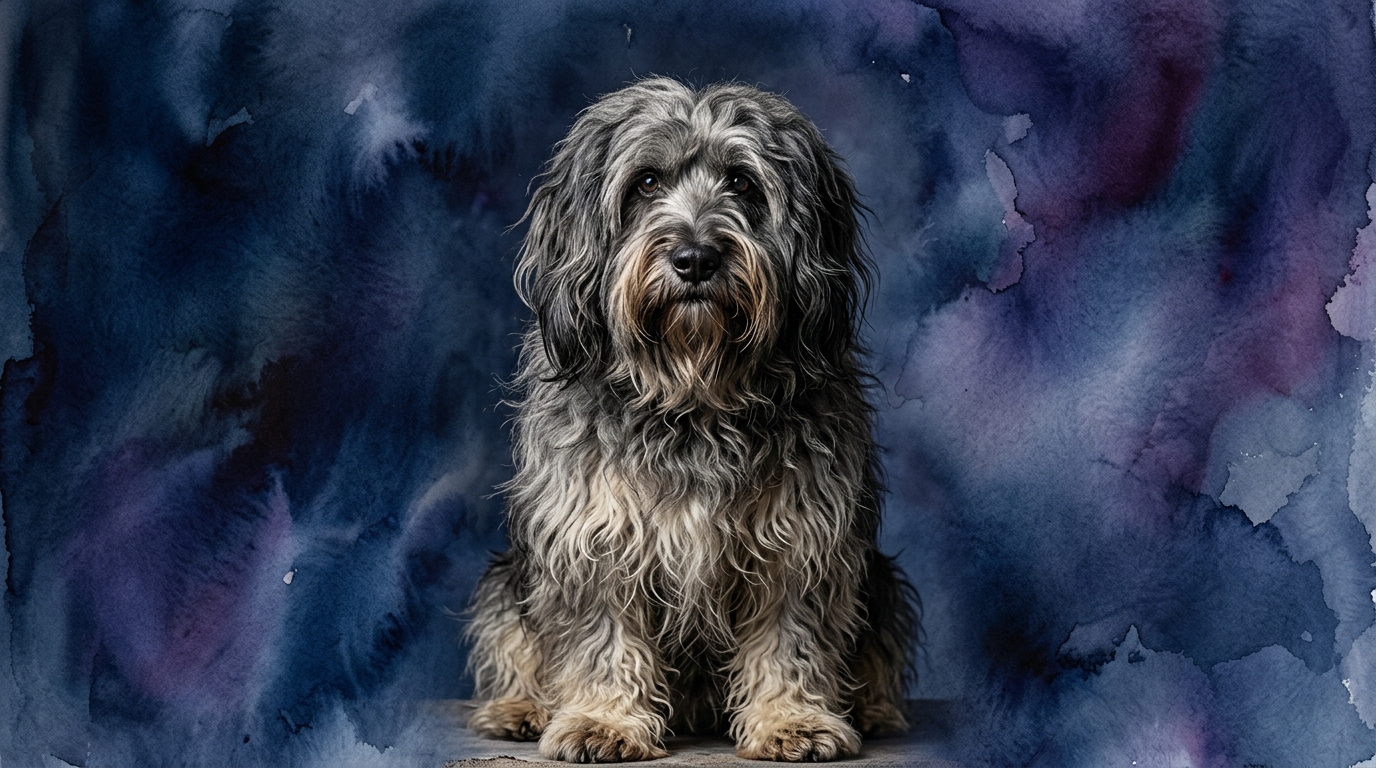
Side-by-Side Cognitive Profiles
The Cosmic Pet Pet IQ Lab assesses canine cognition across five dimensions, and both the Nova Scotia Duck Tolling Retriever and the Polish Lowland Sheepdog register a consistent 3 out of 5 across the board. This uniformity, however, doesn't mean their minds operate identically; rather, it suggests a similar *level* of cognitive ability applied to very different tasks and motivations.
For the **Nova Scotia Duck Tolling Retriever (Toller)**, a sporting dog, a Problem Solving score of 3/5 manifests as a practical ingenuity in their environment, figuring out the most efficient path to retrieve a thrown object or adapting to changing water currents during a hunt. Their Training Speed at 3/5 reflects a keen eagerness to engage with their handler and learn new commands quickly, especially when rewarded with interactive play or retrieval activities, though they can become bored with rote repetition. Social Intelligence, also 3/5, means they are generally adept at reading human cues and interacting cooperatively within a 'team' dynamic, crucial for their historical role alongside hunters. Their Instinctive Drive, rated 3/5, is strongly channeled towards retrieving, swimming, and a persistent drive to work, making them relentless in their focused tasks. Finally, their Memory at 3/5 enables them to recall complex sequences of retrieves, remember specific locations, and retain learned commands over time, essential for consistent performance in the field.
The **Polish Lowland Sheepdog (PON)**, a herding dog, interprets the same 3/5 scores through the lens of livestock management and guardianship. Their Problem Solving at 3/5 involves strategic thinking to manage a flock, anticipating animal movements, or navigating obstacles to keep their charges safe and together; it’s a more independent, observational form of problem-solving. Training Speed at 3/5 means they are capable learners, but their independent nature as a herding dog might lead them to question commands or seek understanding of the 'why' before complying, rather than simply eager-to-please obedience. Their Social Intelligence (3/5) is expressed in their astute observation of their environment and family, often reserved with strangers but deeply bonded and perceptive with their inner circle, understanding subtle cues within their 'flock.' The 3/5 for Instinctive Drive reflects a strong herding and protective impulse, a watchful nature, and a desire to maintain order and boundaries within their territory. Their Memory, also 3/5, is vital for recalling flock patterns, recognizing familiar faces and scents, and remembering the layout of their territory, contributing to their effective guardianship.
Where the Nova Scotia Duck Tolling Retriever Excels Cognitively
While both breeds share identical raw scores, the Toller's cognitive strengths shine particularly in areas requiring active collaboration and directed energy. Their sporting background has honed a specific kind of problem-solving that involves object manipulation and dynamic interaction with their handler. A Toller will often exhibit superior ingenuity in devising strategies to retrieve a toy from a tricky spot or learning complex agility courses that demand sequential actions and quick adjustments, all while maintaining enthusiastic engagement with their human partner. This focused, outward-bound cognitive style makes them exceptionally adept at tasks where their keen senses and physical prowess converge with directed human instruction, showcasing a practical intelligence geared towards efficient task completion in a partnership.
Their 3/5 for instinctive drive, when paired with their social intelligence, results in a cognitive profile that is exceptionally tuned for cooperative work. Tollers are masters of 'reading' their handler's intent during a retrieve or training session, making subtle adjustments to their approach based on body language or vocal cues. This isn't just about obedience; it's about anticipating the next step in a shared activity, demonstrating a proactive understanding of their role within a team. Their memory further supports this by allowing them to quickly recall complex patterns and sequences, enabling them to execute multi-part commands with impressive consistency and enthusiasm.
Where the Polish Lowland Sheepdog Excels Cognitively
The Polish Lowland Sheepdog's cognitive strengths lie in areas demanding independent judgment, observation, and a nuanced understanding of social dynamics within their perceived 'flock' or territory. Their 3/5 problem-solving score translates into a thoughtful, often self-directed approach to managing their environment. A PON might excel at figuring out how to prevent a gate from opening, identifying a new sound in the distance, or discerning subtle changes in family members' moods, acting as a watchful guardian. This form of intelligence is less about rapid, directed action and more about patient assessment and strategic, often subtle, intervention.
Their social intelligence, also rated 3/5, is profoundly expressed in their ability to monitor and manage. They possess a keen observational intellect, allowing them to understand the unspoken rules of their household and the individual personalities of their family members. This often manifests as a deep, albeit sometimes reserved, loyalty and a protective instinct that requires them to process complex social cues and potential threats independently. Their memory supports this by retaining extensive knowledge of their territory and routines, making them highly effective at identifying anything out of place or any potential disruption to the established order, showcasing a quiet, self-reliant form of cognitive prowess.
Training: Toller's Eagerness vs. PON's Independence
When it comes to training, the Nova Scotia Duck Tolling Retriever generally presents as the easier breed to work with, primarily due to their intrinsic biddability and strong desire for interactive engagement. Their Sporting Group heritage means they are bred to work in close partnership with humans, readily taking direction and thriving on positive reinforcement, especially when it involves retrieving games or active participation. A Toller's training speed of 3/5 is often fueled by their enthusiasm and a clear understanding that cooperation leads to rewarding activities, making them highly responsive to consistent, engaging methods. They are typically quick to grasp new commands and sequences, eager to please their handler and participate in a shared 'job.'
The Polish Lowland Sheepdog, while equally capable with a 3/5 training speed, presents a different kind of training challenge due to their Herding Group traits. They are bred for independent thought and to make decisions on their own when managing a flock, which can sometimes be perceived as stubbornness. A PON needs to understand the 'why' behind a command or feel that the instruction makes sense within their world view. They are not always driven by a simple desire to please but by a need for purpose and consistency. This means training a PON requires more patience, clear communication, and often a focus on building a strong, respectful relationship where the dog trusts the handler's leadership. While they learn quickly, their problem-solving intelligence might lead them to find loopholes or test boundaries if training isn't firm, fair, and engaging to their particular mindset.
Matching Owners: Active Partner vs. Thoughtful Guardian
Considering their cognitive makeup and historical roles, the Nova Scotia Duck Tolling Retriever is an ideal match for active owners who seek a highly engaged and collaborative canine partner. Their 3/5 instinctive drive for retrieving and working means they thrive on consistent physical and mental stimulation, excelling in dog sports like agility, dock diving, or obedience. Owners who enjoy hiking, running, or spending significant time outdoors with their dog will find a Toller to be an enthusiastic companion, always ready for the next adventure. They need owners who can channel their energetic, focused problem-solving into productive activities, preventing boredom that can lead to undesirable behaviors.
The Polish Lowland Sheepdog, conversely, suits owners who appreciate a more thoughtful, observant, and sometimes reserved companion. While still needing regular exercise, their cognitive needs lean more towards mental engagement through problem-solving puzzles, 'management' tasks around the home, or opportunities to observe and 'guard' their family. They are well-suited for owners who appreciate their independent spirit and watchful nature, and who can provide a structured environment where the PON feels secure in their role as a family guardian. They can adapt to moderately active lifestyles, but their primary fulfillment comes from understanding and managing their immediate world, making them a fit for owners who enjoy a companion with a quiet, self-reliant presence rather than constant, exuberant interaction.
The Verdict: When to Choose Each Breed
The Verdict
Choose the Nova Scotia Duck Tolling Retriever if you desire a vibrant, eager partner for active pursuits and enjoy a collaborative, task-oriented canine companion.
Opt for the Polish Lowland Sheepdog if you appreciate a thoughtful, watchful companion who thrives on understanding their environment and family dynamics, valuing their independent spirit.
🧠 Find Your Pet's IQ Score
Our Pet IQ Lab assessment covers 25+ tests across 5 cognitive dimensions — personalized to your breed.
Take the Full IQ Test →Frequently Asked Questions
Do Nova Scotia Duck Tolling Retrievers bark a lot?
Tollers are known for their distinctive 'Toller scream' or 'Toller yawp,' an excited vocalization. While not excessive barkers in general, they can be quite vocal when stimulated, particularly during play or anticipation, which is part of their expressive nature.
Are Polish Lowland Sheepdogs good with children?
Polish Lowland Sheepdogs can be excellent family dogs, often forming deep bonds with children in their immediate family, viewing them as part of their 'flock.' Their herding instinct means they might try to 'manage' children, so supervision and early training are essential to guide this natural behavior appropriately.
Which breed requires more grooming?
The Polish Lowland Sheepdog typically requires more intensive grooming due to their long, shaggy double coat, which needs regular brushing to prevent matting. The Nova Scotia Duck Tolling Retriever has a medium-length double coat that also requires regular brushing, but generally less effort than the PON's more abundant fur.