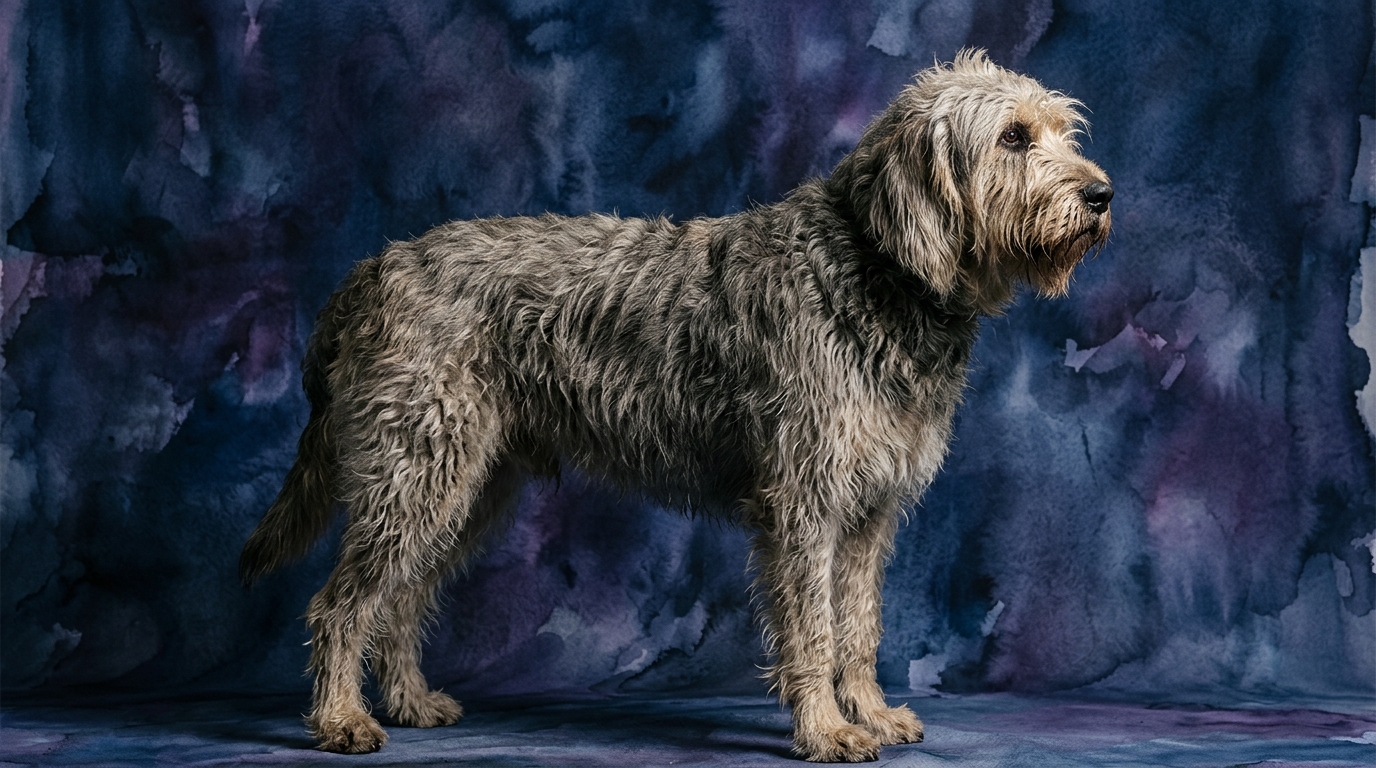
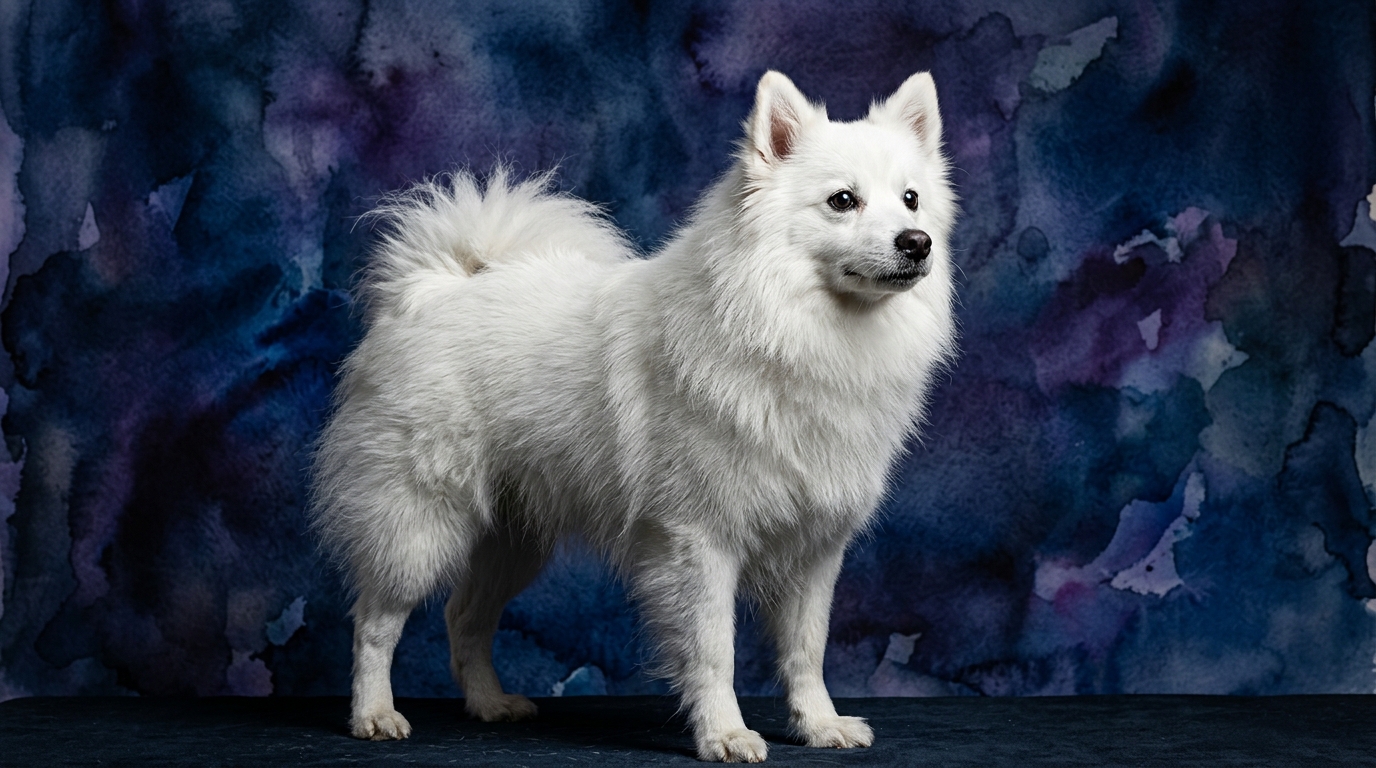
Side-by-Side Cognitive Profiles: A Deeper Look at 3/5
While both the Otterhound and American Eskimo Dog register a 3/5 across the board in The Cosmic Pet Pet IQ Lab, understanding what this means requires examining their distinct evolutionary paths and breed purposes. A score of 3/5 indicates a solid, functional cognitive capacity, suggesting these breeds possess practical intelligence suitable for their historical roles, though perhaps not the rapid learning pace or abstract problem-solving associated with breeds often at the top of traditional intelligence rankings.
For **Problem Solving (3/5)**, the Otterhound demonstrates its capacity primarily in environmental navigation and scent-related challenges. Their historical role as otter hunters demanded independent thought to track elusive prey across varied, often aquatic, terrain, figuring out how to bypass obstacles or interpret complex scent patterns. This isn't about solving complex logic puzzles for a treat, but rather applying persistent, intuitive reasoning to real-world, dynamic situations in their environment. The American Eskimo Dog, conversely, exhibits problem-solving often centered around human interaction and performance. They are adept at learning complex sequences of tricks or figuring out how to communicate their desires to their people, often through trial and error or by manipulating objects to gain attention. Their problem-solving leans towards understanding social cues and achieving desired outcomes within a structured human environment.
Regarding **Training Speed (3/5)**, the Otterhound learns commands at a moderate pace, but their independent hound nature means compliance can be optional if a compelling scent or environmental distraction arises. They grasp concepts but may require significant repetition and high-value motivation to consistently execute a behavior, especially in distracting environments. Their learning isn't slow, but their innate drive can supersede immediate obedience. The American Eskimo Dog, with a background rooted in performance and companionship, tends to pick up new behaviors at a similar moderate pace but often with greater enthusiasm for cooperation. Their desire to please their handler and engage in interactive learning means they are generally more receptive to traditional training methods, making the process feel more fluid and responsive.
**Social Intelligence (3/5)** in the Otterhound manifests as a deep understanding of pack dynamics and clear communication within their established family unit. They are affectionate and tolerant with those they consider their own, reading canine body language and expressing their needs effectively. They might be more reserved or discerning with strangers, taking time to assess new social situations. The American Eskimo Dog, however, exhibits a highly refined social intelligence tuned specifically to human emotions and interactions. They are often profoundly attuned to their owner's moods, thriving on attention and reciprocal communication. They can be quite adept at charming or 'working' their humans to achieve their goals, demonstrating a nuanced understanding of social influence within the family unit.
The **Instinctive Drive (3/5)** of the Otterhound is overwhelmingly dominated by its powerful scenting ability. This drive to track and follow a trail is not merely a preference but a fundamental aspect of their being, influencing nearly every aspect of their behavior and perception of the world. It's a persistent, all-encompassing instinct that requires significant outlets. The American Eskimo Dog possesses a strong instinctive drive for companionship, attention, and vigilance. They have a natural inclination to be near their people, to vocalize warnings, and to engage interactively. While they may have some prey drive, it is generally less intense and overriding than the Otterhound's scenting imperative, focusing more on social and territorial instincts.
Finally, **Memory (3/5)** in the Otterhound is exceptional when it comes to scent trails and environmental layouts, a crucial asset for their hunting legacy. They remember specific locations where interesting scents were found and can recall complex routes. While they remember training cues, their recall of an obedience command can be secondary to the memory of a compelling scent. The American Eskimo Dog displays a good memory for routines, learned tricks, and the details of social interactions. They recall specific commands, the sequence of behaviors in a trick routine, and who offers the best treats, making them consistent performers and companions who learn from past experiences with their human family.
Where the Otterhound Excels Cognitively
The Otterhound's cognitive strengths distinctly lie in its profound ability to process and remember olfactory information. Their superior scent discrimination and long-term memory for trails allow them to follow incredibly faint or aged scents, a feat few other breeds can match. This isn't just about sniffing; it's about complex information processing, pattern recognition within a scent, and persistent pursuit of a goal that requires immense mental focus. Their problem-solving in natural, complex environments, especially those involving water or varied terrain, also sets them apart. They demonstrate an intrinsic capacity to strategize independently to overcome physical barriers or navigate intricate landscapes while maintaining focus on their primary objective: the scent. This persistence in pursuing a perceived goal, often for hours, showcases a unique cognitive resilience and dedication.
Where the American Eskimo Dog Excels Cognitively
The American Eskimo Dog shines in its nuanced understanding of human social cues and emotional states. Their ability to read subtle shifts in tone, body language, and expressions allows them to anticipate human actions and tailor their responses, making them exceptionally empathetic and interactive companions. This social acuity is a distinct cognitive advantage. Furthermore, their adaptability in learning complex, multi-step tricks and performance routines, often requiring precise timing and sequencing, demonstrates a different facet of problem-solving and memory. They are often quick to grasp what their handler desires and eager to engage in cooperative learning, which is a significant cognitive strength in a human-centric world. Their capacity for sustained focus on a human task, unlike the Otterhound's environmental focus, is a hallmark of their cognitive profile.
Training Dynamics: A Tale of Two Motivations
When it comes to ease of training, the American Eskimo Dog generally presents a more straightforward experience for most owners. Their eagerness to please, focus on human interaction, and historical background as performers mean they are typically more receptive to traditional, reward-based training methods. They respond well to praise, food rewards, and toys, and their strong social intelligence allows them to quickly understand and comply with what their human wants. Their lower prey drive compared to the Otterhound also contributes to more reliable recall, as they are less likely to abandon a command for an environmental distraction. This makes them a more biddable and cooperative student in most training scenarios, especially those focused on obedience and tricks.
The Otterhound, by contrast, can be more challenging to train due to their powerful independent hunting instincts. Their primary motivation is often the pursuit of scent, which can override any desire to comply with a handler's command. Training an Otterhound requires immense patience, consistency, and a deep understanding of their hound nature. Owners must employ creative, high-value reinforcement strategies and be prepared for moments where the dog’s nose dictates its actions rather than direct instruction. Recall can be particularly difficult if a compelling scent is present, necessitating secure, fenced areas for off-leash exercise. Their problem-solving tends to be self-directed, focused on their environment, rather than handler-directed, making them less inclined to simply follow instructions if their instincts are engaged.
Matching Breeds to Lifestyles: Active vs. Relaxed Owners
The Otterhound is undeniably suited for very active owners who relish outdoor adventures and are prepared for a dog with substantial physical and mental exercise needs. Their stamina, robust build, and an insatiable need for scent work demand long, vigorous walks, opportunities for tracking, and engagement in activities that allow them to use their powerful nose. These dogs are not content with short strolls around the block; they thrive when given ample space to explore and investigate. Owners must be committed to providing regular, stimulating outlets for their instinctive drives, often requiring several hours of dedicated activity daily. They are ideal for individuals or families who enjoy hiking, exploring nature, or participating in dog sports like tracking or scent work, and who possess a secure, large outdoor space.
The American Eskimo Dog, while not a couch potato, is better suited for moderately active owners. They enjoy daily walks, playtime, and mental stimulation through puzzle toys or training sessions, but they do not require the same endurance or extensive wilderness treks as an Otterhound. They are more adaptable to various living situations, including apartments, provided they receive consistent daily exercise and mental engagement. These dogs thrive on interaction and being part of family activities, making them excellent companions for owners who want an engaged, playful dog to join them on walks, participate in dog sports like agility or obedience, and enjoy quality time indoors. They fit well with owners who can provide consistent attention and are willing to engage in daily interactive play and training.
The Verdict
Choose an Otterhound if you are an adventurous, active owner prepared to embrace a dog with a powerful independent spirit and a deep-seated scent drive, offering ample opportunities for tracking and exploration.
Choose an American Eskimo Dog if you seek a devoted, highly interactive companion who thrives on human connection, enjoys learning tricks, and can participate in various dog sports without needing extensive wilderness treks.
🧠 Find Your Pet's IQ Score
Our Pet IQ Lab assessment covers 25+ tests across 5 cognitive dimensions — personalized to your breed.
Take the Full IQ Test →Frequently Asked Questions
Do Otterhounds and American Eskimo Dogs learn at the same pace?
While both breeds score 3/5 in training speed, the motivation behind their learning differs significantly. American Eskimo Dogs are often more eager to please their handler, leading to quicker initial responses, whereas Otterhounds, driven by scent, may require more consistent, high-value reinforcement to overcome their independent nature and focus on commands.
How does social intelligence manifest differently in these breeds?
The American Eskimo Dog's social intelligence is often geared towards understanding and interacting with human family members, making them highly attuned and empathetic companions. The Otterhound's social acumen, while present with family, is also deeply rooted in understanding canine pack dynamics and communicating effectively within a group, reflecting their historical working role.
Can both breeds excel in dog sports?
Yes, but in different arenas. American Eskimo Dogs often shine in obedience, agility, rally, and trick training due to their eagerness to cooperate and biddability. Otterhounds can excel in scent work, tracking, and even some forms of agility, provided the activities incorporate their strong drive and are made engaging enough to compete with environmental distractions.