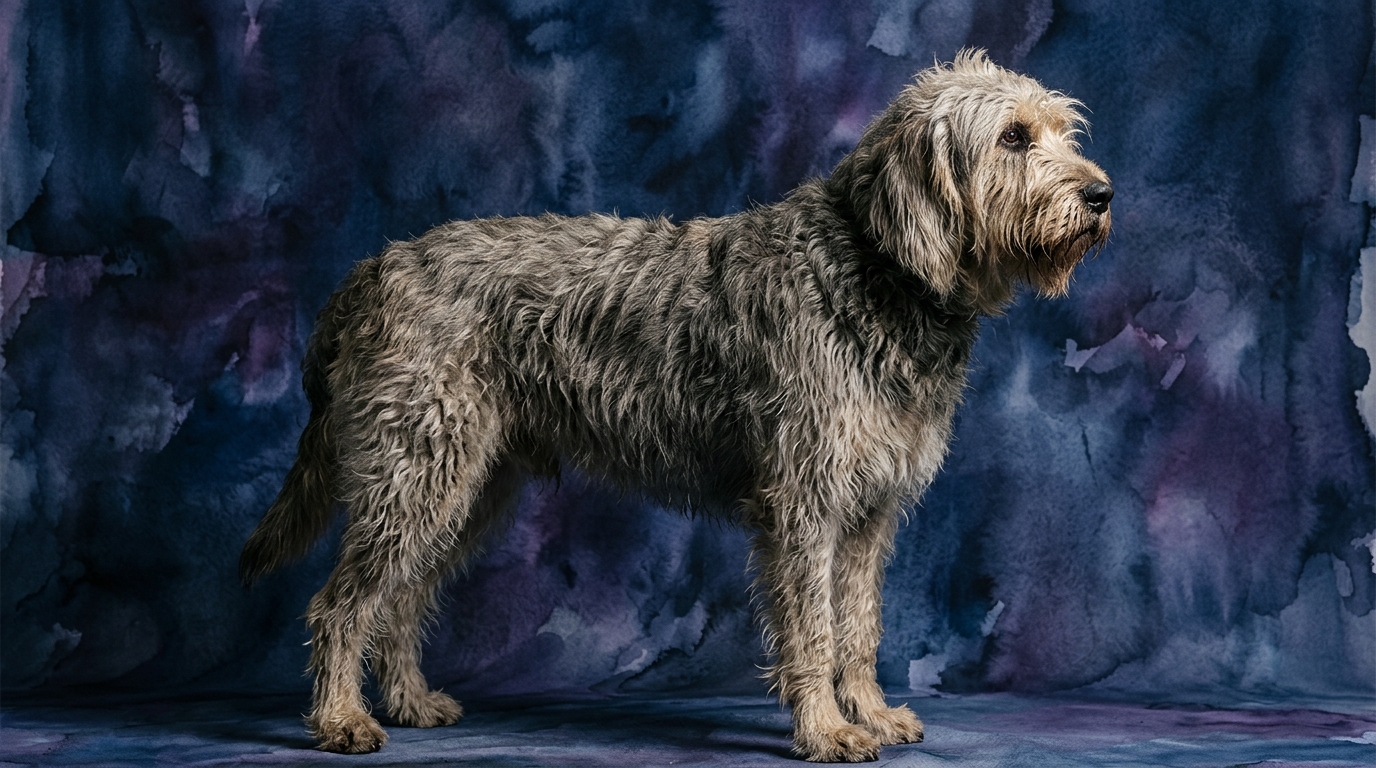

Side-by-Side Cognitive Profiles
Both the Otterhound and the Polish Lowland Sheepdog register a consistent 3/5 across all five dimensions of intelligence within The Cosmic Pet Pet IQ Lab framework. However, the *manifestation* of these scores is where their unique cognitive blueprints emerge. For the Otterhound, a breed steeped in the tradition of relentless pursuit, their Problem Solving (3/5) is deeply rooted in scent-based challenges. They excel at deciphering complex scent trails, navigating varied terrains, and persistently working through environmental obstacles to locate a target. This isn't abstract puzzle-solving but rather a physically demanding, nose-driven form of intellectual engagement. Their Training Speed (3/5) reflects a hound's independent spirit; while capable of learning commands, their primary motivation often stems from their profound scent drive, sometimes prioritizing an intriguing smell over a learned cue. Social Intelligence (3/5) for an Otterhound often revolves around cooperative pack dynamics, understanding their role within a hunting group or family unit, and expressing general amiability rather than nuanced human emotional interpretation. Their Instinctive Drive (3/5) is overwhelmingly dominated by their powerful olfactory capabilities, a persistent urge to track and explore. Finally, Memory (3/5) for an Otterhound is exceptional regarding scent recall, remembering specific routes, and locations associated with successful hunts or compelling smells.
The Polish Lowland Sheepdog, on the other hand, a breed developed for managing livestock, applies its 3/5 scores in a distinctly different manner. Their Problem Solving (3/5) often involves strategic thinking related to movement and control – figuring out how to guide a flock, block an escape route, or manage boundaries effectively. They can learn intricate routines and adapt their approach if an unforeseen obstacle arises during their 'work,' demonstrating a practical, spatial reasoning aptitude. Training Speed (3/5) for a Polish Lowland Sheepdog is moderate, with a strong desire to understand the 'why' behind a command. They can be strong-willed, requiring consistent, clear leadership and positive reinforcement, rather than rote repetition, to achieve compliance. Social Intelligence (3/5) for this breed is deeply tied to their protective and observant nature; they form strong bonds with their family and are keenly aware of their surroundings, often discerning intentions and exhibiting wariness towards strangers. Their Instinctive Drive (3/5) is channeled into herding and guarding, a powerful urge to oversee, protect, and maintain order within their perceived 'flock' or territory. Their Memory (3/5) is robust for routines, learned commands, and the intricate layout of their domain, recalling past interactions and applying those experiences to new situations, particularly concerning perceived threats or familiar individuals.
Where Otterhound Wins Cognitively
The Otterhound's cognitive strengths truly shine in scenarios demanding sustained focus on a singular sensory input: scent. While both breeds score 3/5 in Problem Solving, the Otterhound's specialized ability to unravel complex olfactory puzzles is unparalleled between the two. Imagine a sprawling, intricate outdoor environment with countless distractions; an Otterhound's problem-solving centers on filtering this sensory noise to lock onto and follow a specific, faint scent trail for hours. This isn't merely sniffing; it's a sophisticated cognitive process of discrimination, tracking, and environmental navigation driven by their nose. Their robust physical constitution complements this mental stamina, allowing them to persist where other breeds might falter due to fatigue or loss of interest. This breed excels when the 'problem' is a hidden object, a lost person, or a complex tracking exercise, leveraging their extraordinary memory for scent profiles and terrain features to achieve success. Their 3/5 Instinctive Drive, channeled almost entirely into scent work, gives them an inherent advantage in any task requiring profound olfactory dedication and persistence.
Where Polish Lowland Sheepdog Wins Cognitively
The Polish Lowland Sheepdog demonstrates a distinct cognitive advantage in adaptable, real-time management and observation. While also rated 3/5 in Problem Solving, their strength lies in dynamic spatial reasoning and situational awareness – tasks that require assessing an environment, anticipating movement, and making quick decisions to control a situation. Unlike the Otterhound's linear, scent-driven problem-solving, the PLS's cognitive strength is multi-faceted, involving visual cues, environmental changes, and the behavior of others. Their Social Intelligence (3/5), though shared at the same rating, is applied with a protective and watchful lens, making them more attuned to subtle shifts in human behavior or potential threats within their family unit or territory. This allows them to act as vigilant guardians, assessing situations and often making independent judgments based on their keen observation skills. Their 3/5 Instinctive Drive, geared towards herding and guarding, translates into a drive for order and a proactive approach to managing their environment, making them particularly adept at tasks requiring vigilance, protective instincts, and a desire to keep their 'flock' safe and organized. They are more likely to 'think on their feet' in social or territorial contexts, adjusting their strategy based on unfolding events.
Which Is Easier to Train and Why
When considering ease of training, the nuances of their 3/5 Training Speed scores become critical, pointing to differing approaches. The Polish Lowland Sheepdog generally presents as the 'easier' to train for a wider range of obedience and task-oriented behaviors, provided the owner establishes clear, consistent leadership. Their herding background instills a desire to work and a responsiveness to direction, even if they possess an independent streak. They often want to understand the purpose behind a command, and once they grasp it, they can perform reliably. However, their strong-willed nature means they will test boundaries and require an owner who is patient but firm, using positive reinforcement to build a cooperative relationship. Behavioral differences like their innate desire to 'manage' can be channeled into structured training, making them responsive to complex routines and duties.
The Otterhound, while certainly trainable, poses different challenges due to its profound scent drive and independent hound mentality. Their 3/5 Training Speed means they learn at a moderate pace, but their primary behavioral motivator is often their nose. A compelling scent can easily override a learned command, making off-leash reliability particularly challenging in stimulating environments. Training an Otterhound requires immense patience, creativity to make training more rewarding than any environmental distraction, and a deep understanding of their innate drives. For instance, teaching a recall might mean incorporating high-value scent rewards or making the 'come' command synonymous with an exciting tracking game. Their social intelligence, while good for cooperation, doesn't inherently translate into a strong desire to please a human in the same way a herding dog might, making motivation a more intricate puzzle for the owner to solve.
Which Suits Active Owners vs. Relaxed Owners
For the truly active owner, especially one who enjoys outdoor adventures and has a keen interest in scent work or robust physical activity, the Otterhound is an ideal match. This breed requires significant daily exercise, not just a casual walk around the block. Their exceptional stamina and love for water mean they thrive with opportunities for long hikes, swimming, or engaging in scent-based activities like tracking or mantrailing. An active owner who can fulfill their instinctive drive through purposeful 'work' that engages their nose and body will find a deeply satisfied companion. Their independent nature also means they can be content with an owner who provides the right outlets, rather than demanding constant direct interaction, as long as their physical and olfactory needs are met. They are not suited for a relaxed, sedentary lifestyle; without adequate stimulation, their robust energy and inquisitive nature can lead to boredom and destructive behaviors.
The Polish Lowland Sheepdog suits an active owner who appreciates a vigilant, engaged companion but perhaps with a different focus. While they certainly need regular exercise and mental stimulation to prevent boredom, their activity doesn't always need to be as intensely physically demanding as an Otterhound's. They thrive on having a 'job,' whether it's agility, obedience, or simply being a watchful family guardian with a consistent routine. An owner who enjoys training, provides mental challenges, and appreciates a dog that is an active participant in family life will find a rewarding companion. They are not a couch potato breed and will benefit from regular walks, play, and opportunities to observe their surroundings. While adaptable, a highly relaxed or infrequent owner might find their protective instincts and desire for engagement overwhelming, as they require consistent interaction and purpose to be well-adjusted.
The Verdict
Choose the Otterhound if you are an active, patient owner who relishes outdoor adventures, understands a hound's independent spirit, and can commit to fulfilling a profound scent-driven instinct through activities like tracking or long, exploratory walks.
Opt for the Polish Lowland Sheepdog if you seek a watchful, engaged family companion who thrives on purpose, enjoys mental challenges, and requires a consistent, firm yet positive training approach to channel their protective and herding instincts.
🧠 Find Your Pet's IQ Score
Our Pet IQ Lab assessment covers 25+ tests across 5 cognitive dimensions — personalized to your breed.
Take the Full IQ Test →Frequently Asked Questions
Are Otterhounds good family dogs despite their independent nature?
Yes, Otterhounds can be excellent family dogs. They are generally amiable, good-natured, and tolerant with children, especially when properly socialized. Their independent streak primarily manifests during scent-driven activities, but they are affectionate and loyal companions within their family unit.
Do Polish Lowland Sheepdogs bark a lot due to their guarding instincts?
Polish Lowland Sheepdogs can be prone to barking due to their natural guarding instincts and their role as vigilant watchdogs. They will often alert their owners to new sights, sounds, or perceived threats. Consistent training and early socialization can help manage excessive barking, but their inherent protective nature means they will likely remain vocal.
Which breed is better for apartment living?
Neither breed is ideally suited for small apartment living without significant commitment to exercise and mental stimulation. However, if forced to choose, a well-exercised Polish Lowland Sheepdog might adapt slightly better to an apartment due to its focus on its 'flock' (family) and less overwhelming need for vast, open spaces for scent work compared to an Otterhound's profound drive for outdoor exploration. Both require dedicated owners who can compensate for the lack of space.