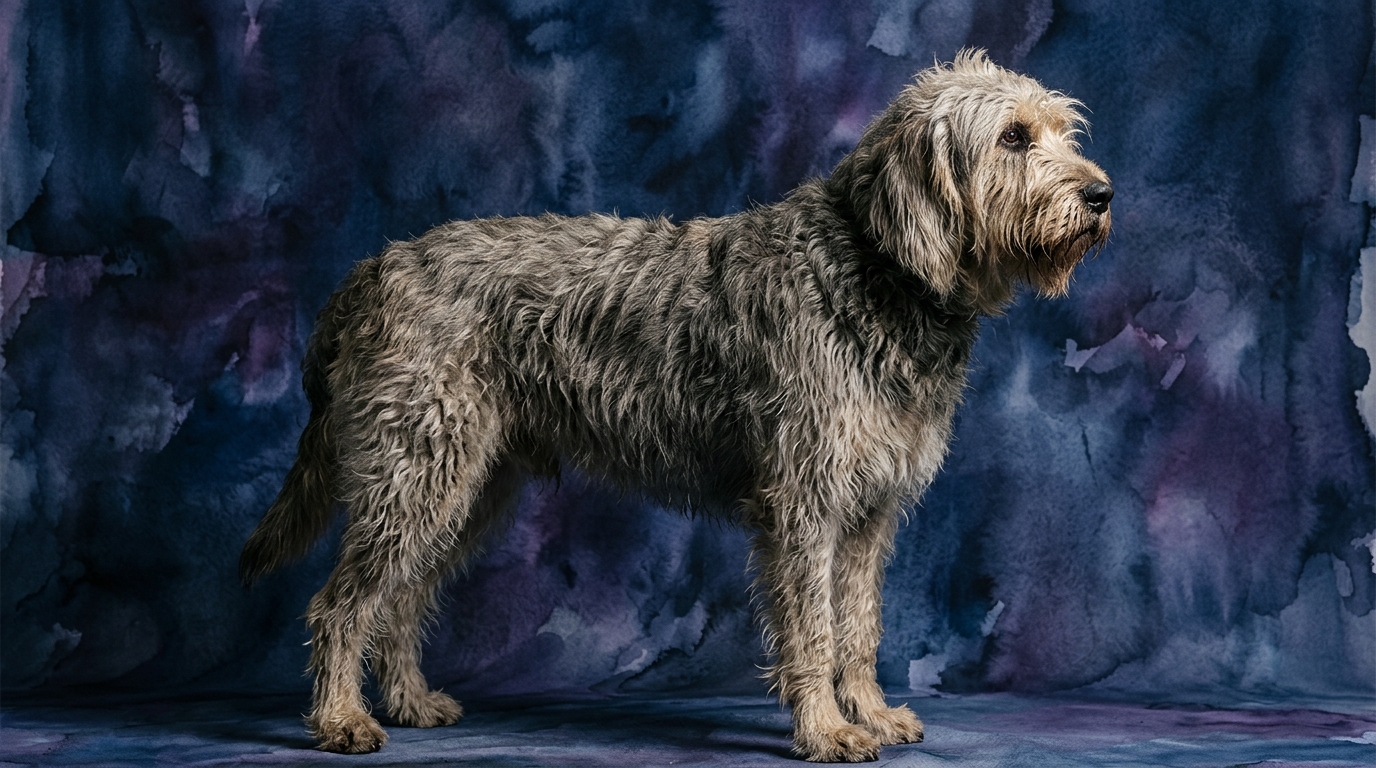
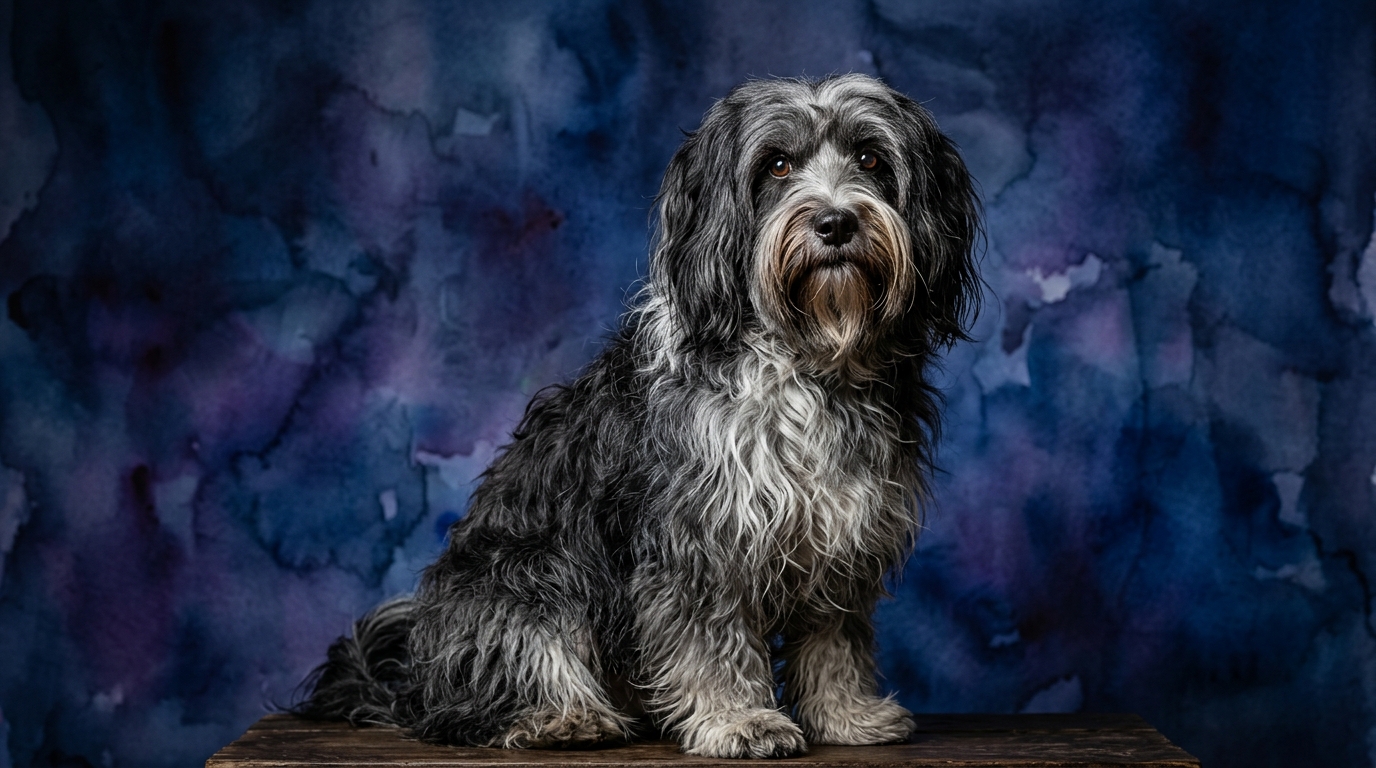
Side-by-Side IQ Profile: Otterhound vs. Tibetan Terrier
For the Otterhound, a 3/5 in problem-solving manifests as a tenacious ability to navigate complex scent trails and overcome environmental obstacles in pursuit of a quarry. This isn't about abstract puzzles, but rather the practical, iterative process of deciphering a fading scent line across varied terrain, demanding focus and independent decision-making in the field.
A 3/5 training speed for an Otterhound indicates a moderate pace of learning, often influenced by their powerful olfactory distractions. They can grasp commands, but their deep-seated instinct to follow a scent can override immediate compliance, requiring consistent, patient, and highly motivating training methods that often incorporate their natural drives.
Otterhounds exhibit a 3/5 in social intelligence through their pack-oriented nature, readily integrating into family dynamics and understanding social hierarchies within their human "pack." They read cues related to activity and shared purpose, displaying a robust but often boisterous affection, and thriving on collaborative efforts, even if those efforts are simply sharing a couch.
The Otterhound's 3/5 instinctive drive is overwhelmingly dominated by their exceptional scenting ability and endurance, bred for long days of tracking. This drive is not merely a preference but a fundamental aspect of their being, compelling them to explore the world through their nose and requiring outlets for this deep-seated, purposeful seeking behavior.
A 3/5 memory score for the Otterhound is evident in their capacity to recall specific scent profiles, remember complex routes they've traversed, and retain learned commands over time. Their memory serves their primary function, allowing them to build a mental map of their environment and past experiences, particularly those linked to their powerful sense of smell.
The Tibetan Terrier's 3/5 problem-solving capability is often observed in their cleverness within a domestic setting, such as figuring out how to open a cupboard, manipulate a toy to get a treat, or gain an owner's attention. Their intelligence leans towards adaptability and ingenuity in navigating their human-centric world, often involving observation and experimentation to achieve desired outcomes.
A 3/5 training speed in the Tibetan Terrier signifies a willingness to learn new behaviors and tricks, often with enthusiasm, but also a potential for selective hearing or a "what's in it for me" attitude. While they can pick up commands efficiently, their independent streak means training benefits greatly from positive reinforcement, engaging methods, and clear motivation.
Tibetan Terriers display a 3/5 social intelligence through their acute sensitivity to human emotions and household routines, forming deep, loyal bonds with their families. They are adept at reading body language and vocal cues, often acting as excellent alarm systems due to their perceptive nature, and thriving on close interaction and companionship.
The Tibetan Terrier's 3/5 instinctive drive is rooted in their historical role as companions, guardians, and herders of flocks in challenging mountain environments. This manifests today as a natural alertness, a desire to be involved in family activities, and a certain agile athleticism, though without the intense, singular focus of a specialized working breed.
A 3/5 memory score for the Tibetan Terrier is reflected in their excellent recall of routines, people, and places, alongside a strong ability to retain a wide repertoire of learned tricks and commands. They remember past interactions and consequences, contributing to their adaptability and their capacity for complex learning within a family structure.
Where the Otterhound Wins Cognitively
The Otterhound's cognitive strengths truly shine in scenarios demanding sustained, independent, and specialized sensory processing. While their problem-solving score is a 3/5, their unique advantage lies in their unparalleled ability to interpret and follow complex scent trails over vast distances and varied terrains. This isn't just about detecting a scent; it involves intricate cognitive mapping, filtering out extraneous odors, and making split-second decisions based on subtle olfactory cues, a feat few other breeds can match with such tenacity and focus.
Their memory, also a 3/5, is particularly robust for recalling specific scent profiles and previously traversed routes, allowing them to "remember" a trail even after a significant delay. This specialized memory is crucial for effective tracking, demonstrating a cognitive specialization that far surpasses a generalist's ability. In a working context, their social intelligence, while a 3/5, is uniquely geared towards cooperative efforts within a pack, understanding the nuances of group dynamics during a hunt, and responding to handler cues related to the task at hand rather than purely domestic interaction.
Where the Tibetan Terrier Wins Cognitively
The Tibetan Terrier, despite sharing a 3/5 problem-solving score, excels in a more generalized, adaptable form of cognitive ingenuity, particularly within a domestic environment. Their strength lies in their capacity to observe, learn, and manipulate their surroundings to achieve desired outcomes, whether it's figuring out how to get a favorite toy from a high shelf or subtly influencing their owner for extra attention. This type of problem-solving demonstrates a flexible, contextual intelligence that is highly valuable in a companion animal.
Their social intelligence, also a 3/5, is particularly refined for nuanced human interaction. Tibetan Terriers are often described as highly perceptive, capable of reading subtle shifts in human mood and responding accordingly, making them empathetic and responsive companions. This depth of social understanding, coupled with their Coren rank of #63, suggests a more readily trainable and generally adaptable learning capacity in a domestic setting compared to the Otterhound, whose cognitive strengths are more intensely specialized for their primary function. Their memory, while rated 3/5, allows them to master a broad array of commands and tricks, making them excellent candidates for agility and obedience sports, showcasing a versatile learning aptitude.
Which is Easier to Train and Why
When considering ease of training, the Tibetan Terrier generally presents a more straightforward path for the average owner. Their social intelligence and desire for companionship, rated at 3/5, often translate into a greater willingness to engage with their handler during training sessions. While they possess an independent streak and can be discerning about rewards, their motivation often lies in pleasing their human and the positive reinforcement received, making them responsive to consistent, engaging methods. Their problem-solving skills, also 3/5, are readily applied to understanding and executing new commands, making them suitable for a variety of obedience and trick training.
The Otterhound, by contrast, can be more challenging for a novice trainer, primarily due to their exceptionally strong instinctive drive, also rated 3/5. Their powerful nose and innate desire to follow a scent can be an overwhelming distraction, overriding learned commands if not managed expertly. Training an Otterhound often requires a deep understanding of their breed-specific motivations and a significant commitment to consistency, often needing to incorporate scent work into their training to keep them engaged. While their memory and training speed are 3/5, their independent working nature means they might choose to prioritize a fascinating smell over a handler's request, requiring more patience and creative strategies to maintain focus.
Which Suits Active Owners vs. Relaxed Owners
The Otterhound is unequivocally better suited for active, outdoors-oriented owners who can provide ample opportunities for physical exertion and mental stimulation related to their natural drives. Their 3/5 instinctive drive means they thrive on long walks, hikes, and, ideally, activities that engage their powerful nose, such as scent work or tracking sports. Owners who enjoy spending significant time outdoors, regardless of weather, and are prepared for a boisterous, often muddy companion will find the Otterhound a rewarding partner. A relaxed owner might find an Otterhound's energy and vocal tendencies overwhelming without sufficient outlets.
The Tibetan Terrier, while not a couch potato, offers greater adaptability for owners with varying activity levels. Their 3/5 instinctive drive includes a desire for companionship and moderate exercise, making them content with regular walks, playtime, and engaging indoor activities. They are agile and enjoy mental challenges like puzzle toys or learning new tricks, but are equally happy to curl up with their family. This balance makes them suitable for moderately active owners who appreciate an engaged companion that isn't solely driven by intense, specialized outdoor tasks, allowing them to fit into both active and more relaxed home environments, provided their basic exercise needs are met.
The Verdict
Opt for an Otterhound if you are an adventurous, active owner seeking a robust, scent-driven companion for extensive outdoor exploration and specialized tracking activities, understanding their independent nature requires dedicated training.
Select a Tibetan Terrier if you desire an adaptable, perceptive, and moderately active companion that thrives on close family interaction, is generally more amenable to diverse training, and fits well into various home environments.
🧠 Find Your Pet's IQ Score
Our Pet IQ Lab assessment covers 25+ tests across 5 cognitive dimensions — personalized to your breed.
Take the Full IQ Test →Frequently Asked Questions
Are Otterhounds difficult to manage due to their strong scent drive?
Otterhounds possess a powerful scent drive, rated 3/5, which can make them challenging to manage without proper outlets. Their inclination to follow a trail means they require secure environments and consistent training, often incorporating scent work, to channel this instinct productively.
Do Tibetan Terriers make good watchdogs for families?
Yes, Tibetan Terriers, with their 3/5 social intelligence and inherent alertness, often make excellent watchdogs. They are perceptive to strangers and unusual sounds, typically barking to alert their family without being overly aggressive, making them effective guardians of the home.
Can a Tibetan Terrier adapt to apartment living if given enough exercise?
Absolutely. The Tibetan Terrier's adaptability and moderate exercise needs mean they can thrive in apartment living, provided they receive regular walks, mental stimulation, and plenty of quality time with their family. Their social nature makes them content indoors when their needs are met.