Side-by-Side IQ Profile
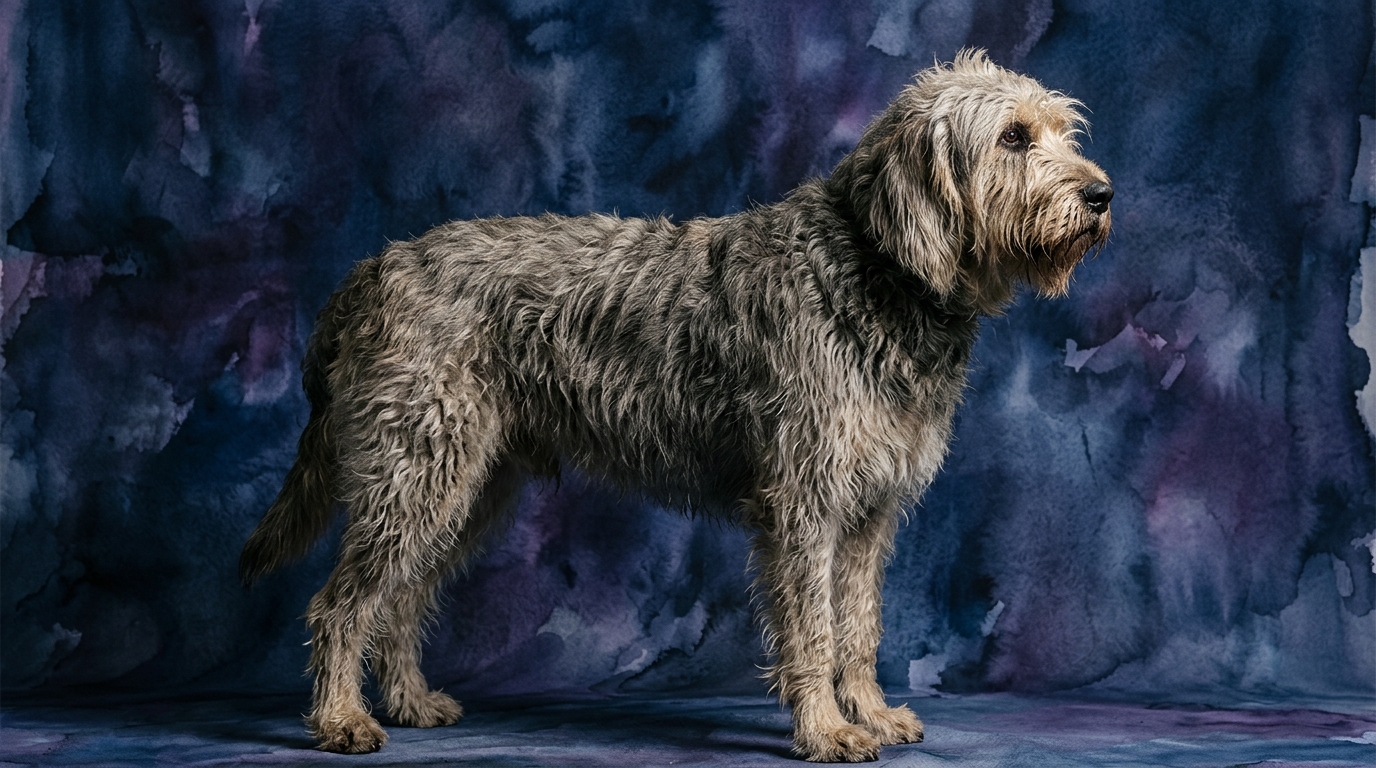
The Otterhound, a robust member of the Hound group, exhibits an intriguing cognitive profile shaped by centuries of tracking game in challenging environments. Their Problem Solving capability scores a 3 out of 5, indicating a practical, persistent approach to challenges, often relying on their primary sense of smell rather than abstract reasoning. Training Speed is also rated 3 out of 5, suggesting they can learn, but their independent nature and strong scent drive may require consistent, patient reinforcement. Social Intelligence, at 3 out of 5, reflects their ability to bond with their human pack and other canines, though they maintain a certain hound-like self-reliance. Their Instinctive Drive is a solid 3 out of 5, clearly centered around tracking and hunting, a powerful force that often guides their actions. Finally, their Memory, at 3 out of 5, indicates they retain learned behaviors and experiences, but perhaps not with the instantaneous recall seen in breeds designed for complex obedience.
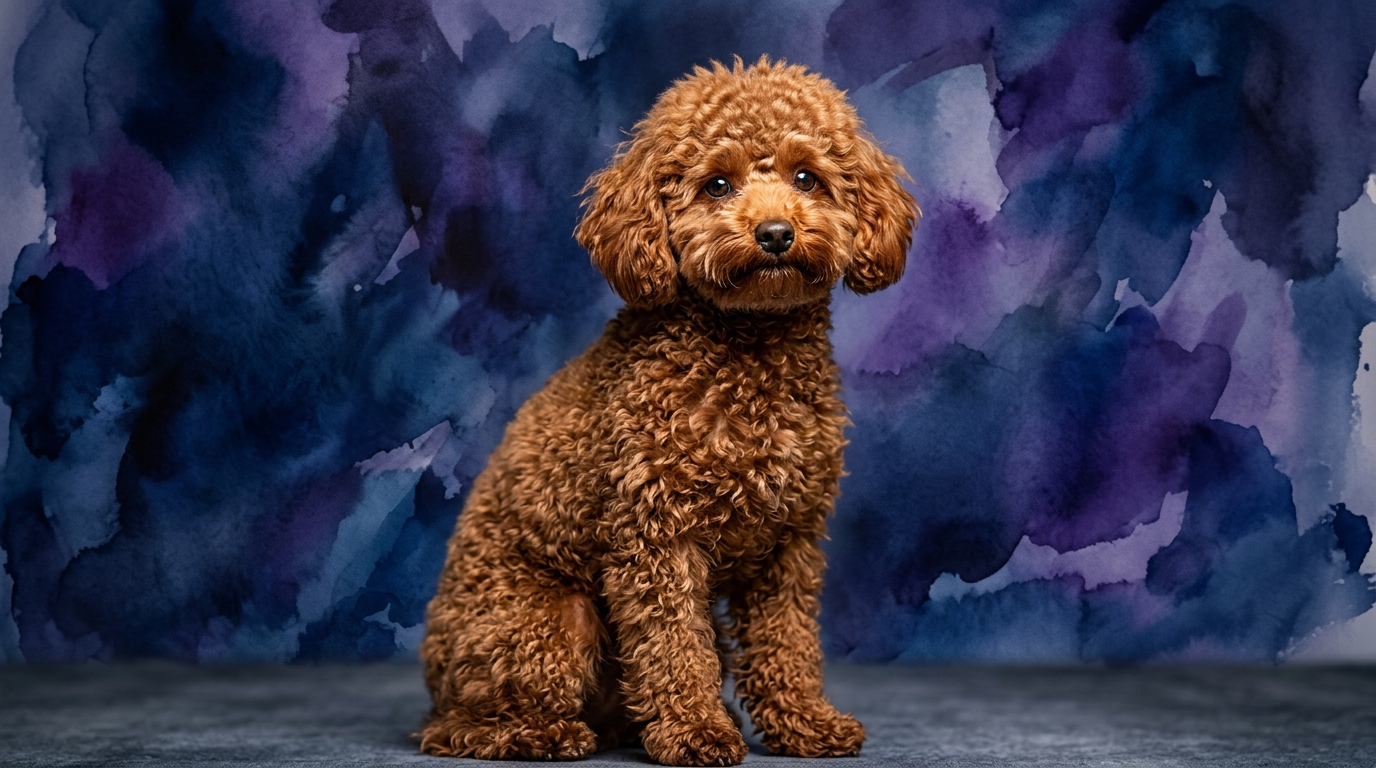
In stark contrast, the Toy Poodle, a refined member of the Toy group, presents a cognitive blueprint optimized for companionship and performance. Their Problem Solving ability shines at a perfect 5 out of 5, demonstrating an exceptional capacity for understanding complex tasks, adapting to new situations, and even manipulating their environment to achieve goals. Training Speed mirrors this at 5 out of 5, meaning they grasp new commands and routines with remarkable swiftness, often requiring few repetitions. Social Intelligence, rated 3 out of 5, shows they are adept at reading human cues and forming strong attachments, making them highly attuned companions. Their Instinctive Drive, also 3 out of 5, manifests less as a hunting urge and more as an innate desire to engage, learn, and perform, a legacy of their working ancestors. Their Memory, an impressive 5 out of 5, allows them to recall a vast repertoire of commands, routines, and even specific events with remarkable accuracy and over long periods.
Where Otterhound Wins Cognitively
While the Toy Poodle often outscores the Otterhound in traditional cognitive metrics, the Otterhound's unique cognitive strengths lie in their specialized, enduring instinctive drive and the problem-solving tenacity it fuels. Their 3/5 Instinctive Drive, while numerically matching the Poodle's, is profoundly different in its application, manifesting as an unparalleled focus on scent. When presented with a complex scent trail, the Otterhound's brain is wired for a sustained, methodical investigation that few breeds can match. This isn't about quick problem-solving, but rather an unwavering cognitive persistence in following a scent puzzle, a task requiring deep concentration and a refusal to be deterred by obstacles. Their 3/5 Problem Solving, within this context, means they are adept at navigating varied terrains and environmental challenges specifically to maintain a trail, demonstrating a practical, goal-oriented intelligence that is highly specialized and deeply ingrained.
Where Toy Poodle Wins Cognitively
The Toy Poodle demonstrates clear cognitive superiority across several key dimensions, making them exceptionally versatile and quick learners. Their perfect 5/5 score in Problem Solving indicates an outstanding capacity for abstract thought, allowing them to quickly analyze novel situations, figure out mechanisms, and even devise strategies to get what they want. This translates into a dog that can quickly learn to open latches, understand complex sequences, or adapt to new training games without extensive guidance. Coupled with their 5/5 Training Speed, Toy Poodles absorb new commands and routines with remarkable efficiency, often mastering new behaviors in just a few repetitions. This rapid learning curve is further supported by their 5/5 Memory, enabling them to retain a vast array of information—from intricate trick sequences to household rules—over extended periods, making them incredibly reliable in their learned responses.
Which is Easier to Train and Why
Based on their respective IQ profiles, the Toy Poodle is unequivocally easier to train than the Otterhound. The Toy Poodle's 5/5 Training Speed means they pick up new commands and behaviors with remarkable alacrity, often showing understanding after just a few repetitions. This quick comprehension, combined with their 5/5 Memory, ensures they retain what they've learned over time, making advanced training and proofing behaviors a relatively smooth process. Their strong desire to engage with their handlers also contributes to their trainability, as they are generally eager to please and respond well to positive reinforcement.
In contrast, the Otterhound's 3/5 Training Speed suggests a slower learning curve, requiring more patience and repetition. Their independent hound nature, coupled with a powerful 3/5 Instinctive Drive for scent, means they can be easily distracted by environmental odors, making focused training sessions more challenging. While they are capable of learning, their brain is often more attuned to the world of smells than to human commands, necessitating a handler who understands how to work with, rather than against, their natural instincts, often by incorporating scent work into their training regimen to maintain engagement.
Which Suits Active Owners vs. Relaxed Owners
The choice between an Otterhound and a Toy Poodle largely depends on an owner's lifestyle and their preferred level of daily engagement. Otterhounds are best suited for active owners who relish outdoor adventures and can commit to providing ample physical exercise and mental stimulation that taps into their strong instinctive drive. Their heritage as scent hounds means they thrive on long walks, hikes, or even structured scent work activities that allow them to utilize their powerful nose and robust stamina. A relaxed owner who cannot meet these needs might find an Otterhound prone to boredom and destructive behaviors, as their energy and cognitive focus need a productive outlet.
Conversely, the Toy Poodle offers greater adaptability for both active and more relaxed owners, provided their cognitive needs are met. While they enjoy walks and playtime, their smaller size means less physical space is required compared to an Otterhound, making them suitable for apartment living. However, their superior Problem Solving and Memory scores mean they demand consistent mental engagement through training, puzzles, or interactive games. A relaxed owner who is willing to dedicate time to daily training sessions and brain games will find a Toy Poodle a delightful and well-adjusted companion, whereas an owner who neglects their mental stimulation might find them developing unwanted habits out of boredom.
The Verdict
Choose the Otterhound if you are an experienced, active owner dedicated to providing consistent, stimulating outdoor activities and appreciate a dog with a robust, independent spirit and specialized scent-driven intelligence.
Opt for the Toy Poodle if you seek a highly trainable, cognitively agile companion who excels at learning complex tasks and thrives on consistent mental engagement, adaptable to various living situations.
🧠 Find Your Pet's IQ Score
Our Pet IQ Lab assessment covers 25+ tests across 5 cognitive dimensions — personalized to your breed.
Take the Full IQ Test →Frequently Asked Questions
Are Otterhounds difficult to manage for first-time dog owners?
Otterhounds can present challenges for novice owners due to their independent nature, strong scent drive, and need for consistent, patient training. Their stamina and preference for following a scent trail require a dedicated handler who understands hound behavior.
Do Toy Poodles require a lot of physical exercise despite their small size?
While Toy Poodles are not as demanding physically as larger working breeds, they still benefit from regular walks and playtime to maintain physical health. Their primary need is consistent mental stimulation to engage their agile minds.
Which breed is better for households with children or other pets?
Both breeds generally have good social intelligence, but the Toy Poodle's adaptability and eagerness to please often make them a more straightforward fit for diverse households, provided proper introductions and supervision occur. Otterhounds can be amiable but their boisterous nature and strong drive require careful management around very young children or small pets.