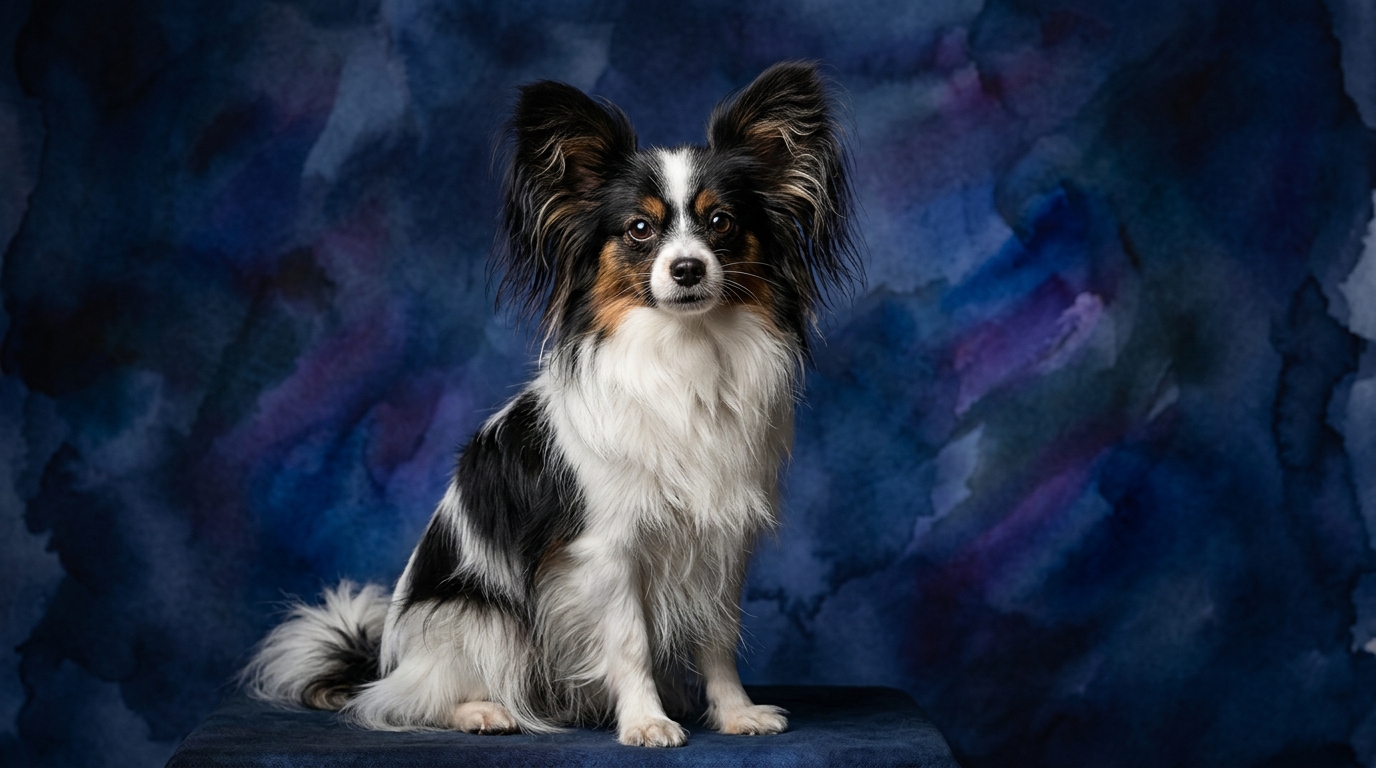
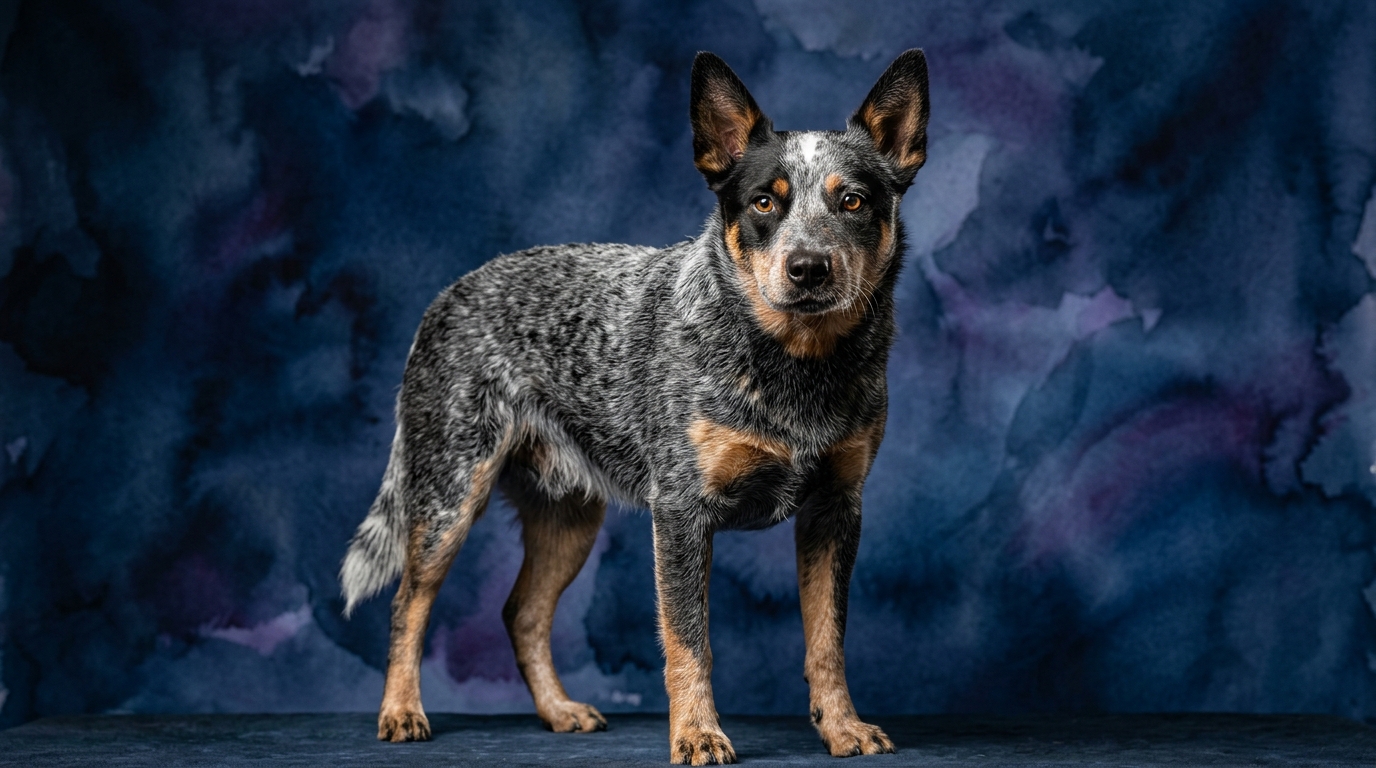
Side-by-Side Cognitive Profiles
At The Cosmic Pet's IQ Lab, our assessment of canine intelligence dimensions offers a granular view beyond simple rankings. Both the Papillon and the Australian Cattle Dog exhibit exceptional capacities in Problem Solving, each earning a perfect 5/5. The Papillon, despite its diminutive stature, demonstrates a remarkable ability to navigate complex environments or figure out novel toy mechanisms, often for the sheer joy of mental engagement. The Australian Cattle Dog, conversely, applies its problem-solving prowess to practical, often livestock-related challenges, quickly devising strategies to manage unruly herds or overcome environmental obstacles in its working domain.
Their Training Speed also aligns perfectly at 5/5. A Papillon can pick up intricate obedience commands or learn sequences of tricks with impressive rapidity, often eager to please and requiring minimal repetition. The Australian Cattle Dog, too, absorbs new instructions and elaborate multi-step tasks with speed, their focus intense and their retention robust, especially when the training aligns with a tangible purpose or job.
Where their cognitive profiles diverge significantly is in Social Intelligence. The Papillon scores a commendable 4/5, indicating a keen awareness of human emotional states and social cues. They often anticipate their owner's moods and respond with empathetic or comforting behaviors, making them highly attuned companions. The Australian Cattle Dog, while certainly capable of forming deep bonds, registers a 3/5 in this dimension. Their social understanding tends to be more utilitarian, focused on interpreting commands and maintaining working relationships rather than nuanced emotional reciprocity, often exhibiting a more independent and less overtly demonstrative social style.
Instinctive Drive presents another marked contrast. The Papillon has a moderate 3/5, with their drives often channeled towards companionship, play, and engaging with their human family. They possess an innate curiosity and a desire for interaction, but without the intense, focused drives seen in working breeds. The Australian Cattle Dog, however, achieves a perfect 5/5 in Instinctive Drive. This reflects their powerful, inherent herding behaviors, their relentless work ethic, and a deep-seated need for purpose and activity. This drive is not merely a preference but a fundamental aspect of their being, requiring constructive outlets.
Finally, Memory stands at 5/5 for both breeds. A Papillon remembers routines, people, and past training sessions with clarity, often surprising owners with their recall of details from long ago. The Australian Cattle Dog's memory is equally formidable, retaining complex sequences, boundaries, and the movements of livestock with precision, crucial for their roles in managing herds over vast territories.
Where the Papillon Excels Cognitively
The Papillon's cognitive strengths shine particularly in scenarios demanding social nuance and adaptable mental agility away from specific tasks. Their 4/5 Social Intelligence rating means they often possess an intuitive grasp of human communication beyond mere commands, frequently interpreting subtle body language or vocal inflections that an Australian Cattle Dog might overlook or deem less relevant to a task. This allows them to integrate seamlessly into diverse family dynamics, adapting their behavior to different individuals and situations with remarkable ease. Furthermore, their cognitive flexibility often manifests in a playful curiosity, making them adept at engaging with novel toys or puzzles that lack an immediate practical application, simply for the intellectual stimulation. They tend to transition between various mental activities with less internal friction than a breed whose cognitive processes are deeply anchored in specific instinctive drives.
Where the Australian Cattle Dog Excels Cognitively
Conversely, the Australian Cattle Dog's cognitive superiority emerges most clearly in their unparalleled Instinctive Drive (5/5) and its application to sustained, complex tasks. While both breeds solve problems, the ACD excels at tackling real-world, dynamic challenges, particularly those involving movement, strategy, and endurance. Their mental stamina allows for prolonged periods of intense concentration on a single objective, such as moving a herd across varied terrain or navigating an agility course with precision. This breed's problem-solving isn't just about figuring out a puzzle; it's about executing a solution repeatedly and effectively under varying conditions, often requiring independent decision-making in the field without constant human input. Their memory (5/5) is also uniquely tuned to spatial awareness and the patterns of movement, which is critical for their herding work, allowing them to recall intricate routes and the behavior of individual animals.
Training Dynamics: A Tale of Two Learners
While both the Papillon and the Australian Cattle Dog boast a perfect 5/5 for Training Speed, the ease of their training journeys differs significantly due to their underlying cognitive profiles and motivations. The Papillon's 4/5 Social Intelligence makes them inherently keen on human interaction and approval. They often find intrinsic reward in pleasing their owner, making positive reinforcement highly effective and fostering a cooperative learning environment. Their willingness to engage in a variety of activities, from agility to trick training, stems from this social bond and their general cognitive flexibility. Behavioral issues, when they arise, often stem from a lack of adequate mental stimulation or social engagement rather than a resistance to learning itself.
The Australian Cattle Dog, with its 5/5 Instinctive Drive, presents a different training landscape. While they learn commands with equal speed, their drive dictates that training must be purposeful and channel their formidable energy and herding instincts constructively. An ACD learns best when tasks are presented as a 'job,' and failure to provide such mental and physical outlets can lead to frustration and undesirable behaviors like nipping at heels or obsessive chasing. Their training requires an owner who understands how to harness and direct this powerful drive, transforming potential challenges into focused, productive work. Therefore, while both are quick learners, the Papillon is generally easier for a novice owner to train for general companionship, whereas the ACD demands an experienced hand capable of shaping their intense working ethic.
Matching Canine Cognition to Owner Lifestyles
Considering their cognitive profiles, the choice between a Papillon and an Australian Cattle Dog for active versus relaxed owners becomes clear. The Papillon, with its 3/5 Instinctive Drive and significant Social Intelligence, thrives with owners who can provide consistent mental engagement through varied play, training, and companionship. While they enjoy activity, their needs are more about intellectual stimulation and social interaction than intense physical exertion. A relaxed owner who enjoys teaching new tricks, engaging in puzzle games, and values a responsive, attuned companion will find the Papillon an excellent match. They adapt well to apartment living if their cognitive needs are met, enjoying walks and garden play but not demanding endless miles.
The Australian Cattle Dog, however, with its robust 5/5 Instinctive Drive and lower Social Intelligence score, is unequivocally suited for highly active owners. Their cognitive faculties are geared towards sustained work and problem-solving in dynamic environments. They require considerable physical exercise coupled with challenging mental tasks that tap into their herding instincts, such as advanced obedience, agility, flyball, or actual herding work. A relaxed owner would struggle immensely to meet the ACD's intrinsic need for purpose, which could lead to destructive behaviors born of boredom and unspent energy. These dogs are partners for adventurers, athletes, or those with a genuine interest in dog sports or working roles.
The Verdict
The Papillon is an exceptional choice for individuals or families desiring a cognitively flexible, socially perceptive companion who thrives on interaction, mental games, and adaptable living, even in smaller spaces, provided their clever minds are kept engaged.
Conversely, the Australian Cattle Dog is ideal for highly active, experienced owners prepared to channel immense instinctive drive into purposeful work or demanding dog sports, offering an unparalleled partnership for those who embrace a rigorous and structured lifestyle.
🧠 Find Your Pet's IQ Score
Our Pet IQ Lab assessment covers 25+ tests across 5 cognitive dimensions — personalized to your breed.
Take the Full IQ Test →Frequently Asked Questions
Are Papillons better for apartment living than Australian Cattle Dogs?
Yes, Papillons generally adapt better to apartment living due to their lower instinctive drive and moderate exercise needs, thriving on mental stimulation and companionship. Australian Cattle Dogs require significantly more space and rigorous activity to satisfy their intense working instincts.
Which breed is more affectionate, Papillon or Australian Cattle Dog?
Papillons typically display more overt affection and social responsiveness due to their higher social intelligence. Australian Cattle Dogs form deep bonds but often express affection in a more reserved or 'working partnership' manner, less focused on emotional reciprocity.
Do both breeds require extensive mental stimulation?
Absolutely, both breeds possess high problem-solving abilities and memory, necessitating consistent mental engagement to prevent boredom and behavioral issues. For Papillons, this might involve puzzle toys and trick training; for Australian Cattle Dogs, it means purposeful tasks and advanced obedience.