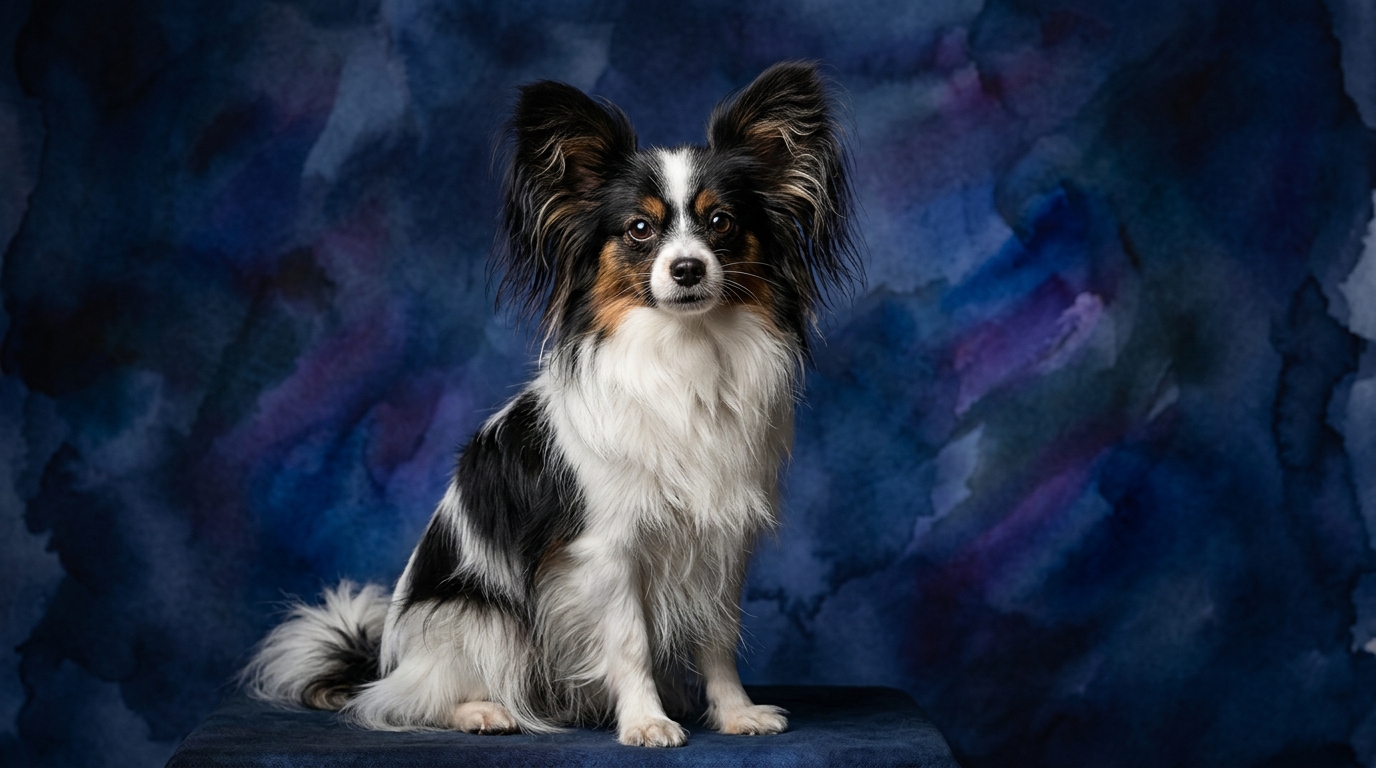
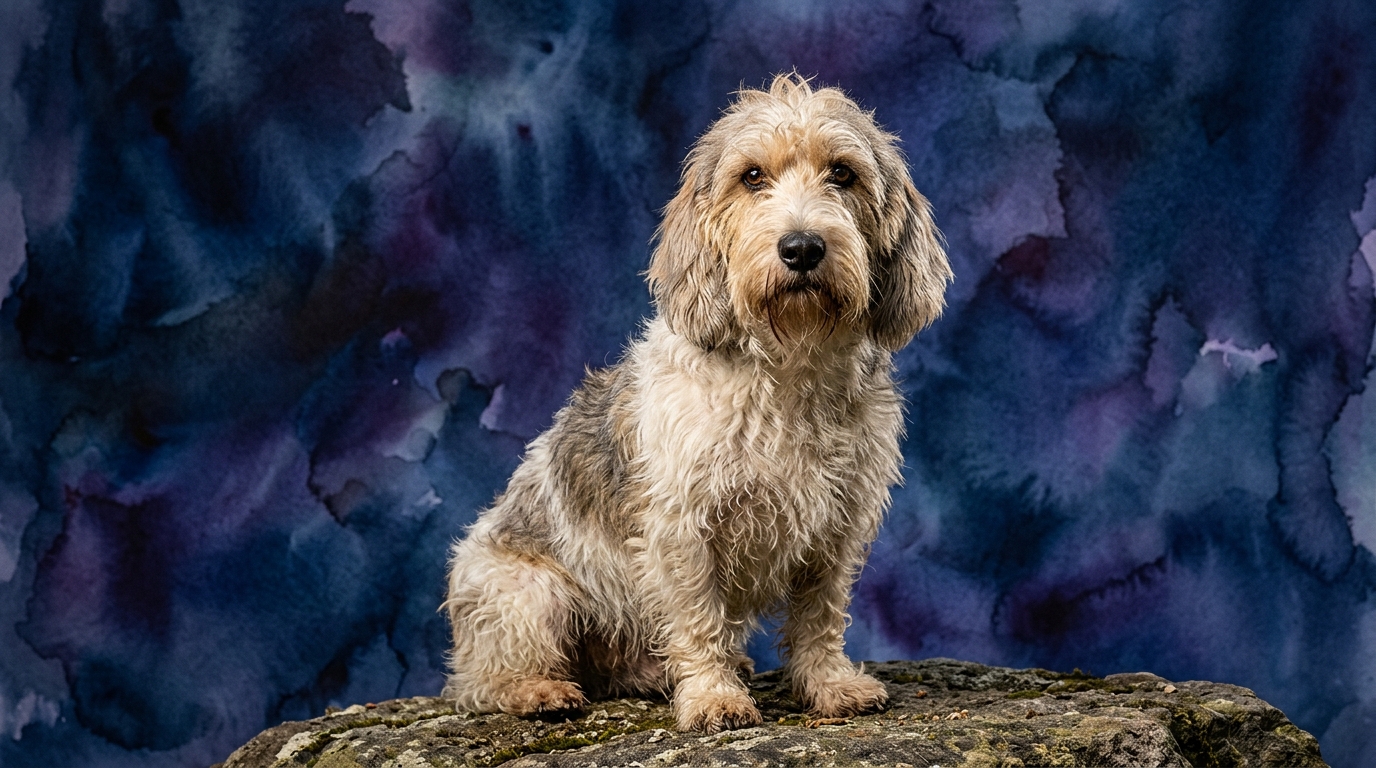
Side-by-Side IQ Profile
**Papillon (Coren rank #8):** This breed’s cognitive profile is marked by an exceptional capacity for learning and retention. Their **Problem Solving (5/5)** score indicates a remarkable ability to navigate complex situations, figure out puzzles, and adapt strategies when faced with novel challenges, often grasping cause-and-effect quickly. **Training Speed (5/5)** reflects an impressive swiftness in acquiring new commands and routines, often picking up cues after only a few repetitions due to their eagerness to engage and quick comprehension. Their **Social Intelligence (4/5)** means they are generally perceptive to human emotions and social cues, forming strong bonds and often adjusting their behavior based on their owner's mood. While their **Instinctive Drive (3/5)** is moderate, their focus is often on companionship rather than highly specialized instinctive behaviors. Finally, an outstanding **Memory (5/5)** ensures they retain commands, learned sequences, and even specific events or people over long periods, aiding significantly in their training and adaptability.
**Petit Basset Griffon Vendéen (Not Coren-ranked):** The PBGV’s cognitive strengths are deeply rooted in their heritage as a scent hound, influencing their approach to the world. Their **Problem Solving (3/5)** typically manifests as a blend of persistence and instinct, often focused on their innate drive to follow a scent rather than abstract reasoning, and they might take longer to connect actions with outcomes if it doesn't align with their primary sensory focus. **Training Speed (3/5)** suggests that while they learn, it’s often at a more deliberate pace; their independent nature and strong scent drive can make them less immediately responsive, especially when a compelling scent is present. Their **Social Intelligence (3/5)** shows they are friendly and enjoy companionship, but their interactions can sometimes be overshadowed by their own sensory world, making them less attuned to subtle human cues when their nose is engaged. The **Instinctive Drive (3/5)**, while numerically similar to the Papillon's, is almost entirely centered around their powerful scenting ability and drive to hunt, a foundational aspect of their cognitive makeup. Their **Memory (3/5)** is generally good for commands and routines, though recall might not be as sharp or immediate, often being highly contextual and particularly strong for scent trails and associated locations.
Where Papillon Wins Cognitively
The Papillon undeniably shines in areas demanding abstract reasoning, rapid acquisition of knowledge, and robust recall. Their Problem Solving score of 5/5 means they are often quick to understand complex sequences, like navigating agility courses or figuring out how to open child-proof latches. This isn't just about trial and error; it's about making logical connections and applying previous learning to new scenarios. Their Training Speed, also a perfect 5/5, reflects an eager-to-please temperament combined with swift cognitive processing, allowing them to master an extensive repertoire of commands and tricks with minimal repetition. Furthermore, a Memory score of 5/5 ensures that once learned, these skills and facts are retained remarkably well, making long-term training highly effective. For an owner seeking a canine partner capable of advanced obedience, intricate trick training, or even competitive dog sports requiring precise execution and understanding, the Papillon's cognitive toolkit is exceptionally well-suited.
Where Petit Basset Griffon Vendéen Wins Cognitively
While the PBGV's numerical scores may appear modest in direct comparison, their cognitive strengths are specialized and exquisitely honed for their ancestral purpose: scent tracking. Their Instinctive Drive, rated 3/5, is profoundly expressed through their nose, a primary cognitive tool. This drive isn't about general obedience; it's about an unwavering focus and persistence in following a scent trail, often for extended periods and over challenging terrain. Their Problem Solving, while 3/5, manifests as a tenacious ability to 'puzzle out' a lost trail, using every available sensory input to re-establish the path. This isn't abstract reasoning in the human sense, but a highly effective, instinct-driven form of environmental problem-solving. Their memory (3/5) might be particularly strong for scent profiles and the geography associated with tracking, allowing them to recall specific smells and their origins. Owners who appreciate a dog with a deep, specialized cognitive talent rooted in their primal function will find the PBGV's dedicated focus on the world of scent a compelling and rewarding aspect of their intelligence, even if it diverges from typical companion dog metrics.
Which Is Easier to Train and Why
Based on the Cosmic Pet Pet IQ Lab data, the Papillon is demonstrably easier to train, primarily due to their superior Training Speed (5/5 vs. PBGV's 3/5) and Problem Solving abilities (5/5 vs. 3/5). Papillons typically exhibit a keen desire to interact and cooperate with their human companions, quickly understanding what is expected of them and performing tasks with enthusiasm. Their quick grasp of concepts means fewer repetitions are needed for a new command to stick, making the training process feel highly rewarding and efficient. They respond well to positive reinforcement, often thriving on praise and the mental engagement of learning. In contrast, the Petit Basset Griffon Vendéen's independent nature and powerful scent drive present a greater challenge. While certainly capable of learning, their attention can be easily diverted by interesting smells, requiring a more patient, consistent, and often highly creative approach to training. Their 3/5 Training Speed indicates that new commands may take longer to solidify, and their 3/5 Problem Solving suggests they might not generalize learned behaviors as readily across different contexts without deliberate practice. Training a PBGV often means competing with their nose, requiring a strong recall command and a commitment to making training more engaging than any passing scent.
Which Suits Active Owners vs. Relaxed Owners
The choice between these two breeds for active versus relaxed owners hinges on the *type* of activity preferred. A Papillon, with its high Problem Solving and Memory scores, is an excellent fit for owners who enjoy mentally stimulating activities. This could involve complex trick training, agility, rally obedience, or even canine freestyle, all of which require focused attention and quick learning. Physically, they enjoy walks and playtime, but their exercise needs are generally moderate, making them suitable for active owners who prioritize mental engagement over relentless physical exertion, and also adaptable enough for more relaxed owners who can provide consistent mental enrichment indoors. The Petit Basset Griffon Vendéen, however, demands a different kind of activity. Their strong Instinctive Drive (3/5, focused on scent) means they thrive with owners who can accommodate their need to explore the world through their nose. This translates to long walks in varied environments, scent work, tracking, or even participating in earthdog trials. They are not content to be couch potatoes; their physical and mental well-being are deeply tied to exercising their olfactory senses and covering ground. Therefore, PBGVs are best suited for truly active owners who are prepared for consistent outdoor adventures and structured activities that engage their hound instincts, making them less ideal for purely relaxed, low-activity households.
The Verdict
Choose a Papillon if you seek a highly trainable, mentally agile companion eager to learn complex tasks and thrive on interactive, brain-stimulating games, adaptable to various living situations with moderate physical exercise.
Opt for a Petit Basset Griffon Vendéen if you are an active individual or family who cherishes a dog with deep, specialized instincts for scent work, prepared for consistent outdoor adventures and patient, consistent training.
🧠 Find Your Pet's IQ Score
Our Pet IQ Lab assessment covers 25+ tests across 5 cognitive dimensions — personalized to your breed.
Take the Full IQ Test →Frequently Asked Questions
Are Papillons good for first-time dog owners?
Yes, Papillons often make excellent choices for first-time dog owners due to their high trainability, eagerness to please, and relatively moderate exercise needs. Their cognitive abilities allow them to adapt quickly to routines and learn house rules with ease, making the initial ownership experience smoother.
How much exercise does a Petit Basset Griffon Vendéen need daily?
PBGVs require a significant amount of daily exercise, ideally incorporating opportunities for scent exploration. At least an hour of vigorous activity, such as brisk walks, off-leash play in a secure area, or dedicated scent work, is generally recommended to keep them physically and mentally content.
Can a Papillon participate in dog sports?
Absolutely. With their exceptional Problem Solving, Training Speed, and Memory, Papillons excel in a variety of dog sports, including agility, obedience, rally, and even flyball. Their small size combined with their cognitive prowess makes them formidable and enthusiastic competitors.