Side-by-Side IQ Profile
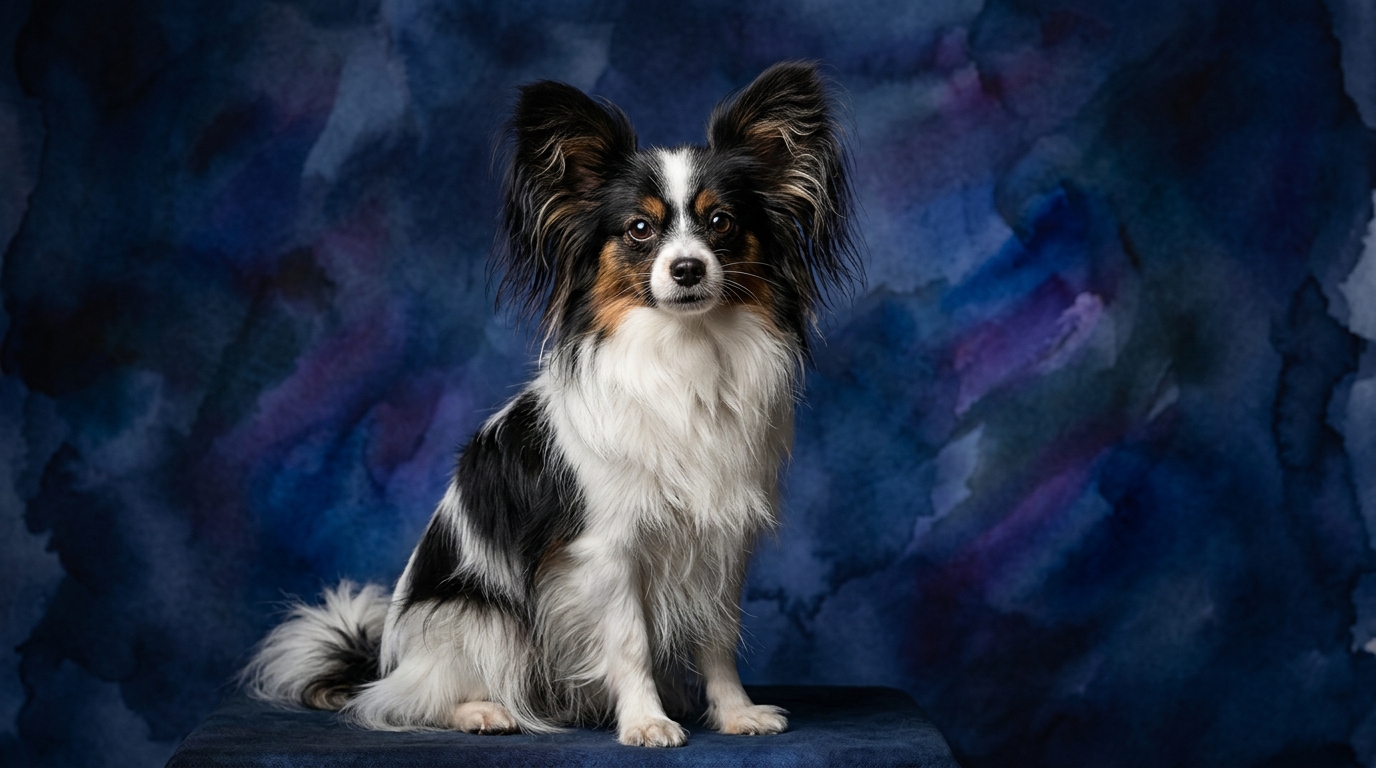
**Papillon (Coren rank #8):** This breed demonstrates exceptional problem-solving (5/5), navigating novel situations and adapting strategies to achieve outcomes, indicating a strong capacity for independent thought. Their training speed (5/5) is remarkable, grasping new commands with swiftness, often requiring only a few repetitions. Papillons exhibit a keen social intelligence (4/5), adept at reading subtle human cues, forming deep bonds, and responding empathetically. Their instinctive drive (3/5) is present but generally manageable, not overshadowing trainability. Finally, their memory (5/5) is excellent, retaining learned information and experiences over long periods, ensuring consistency in behaviors.
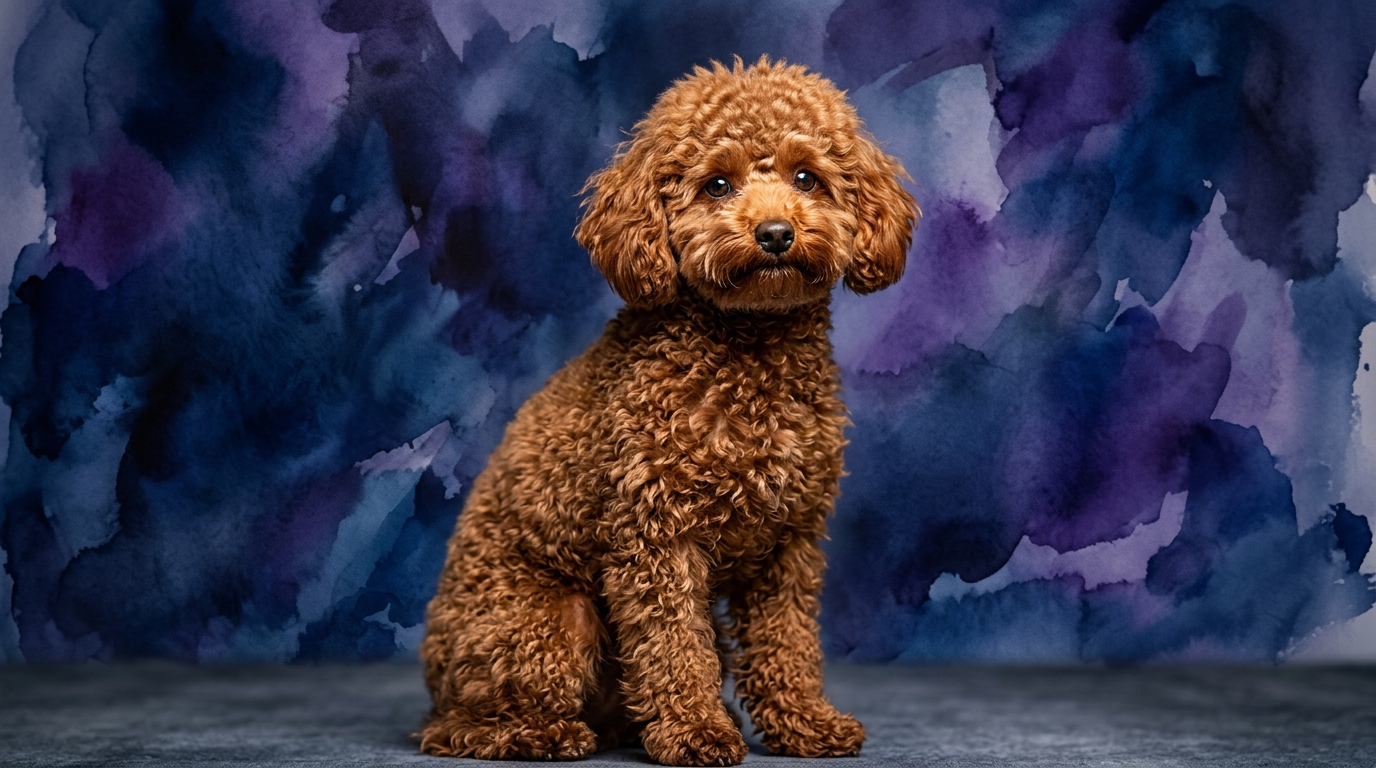
**Toy Poodle (Coren rank #2):** Toy Poodles excel at complex cognitive tasks, displaying profound problem-solving (5/5) and the ability to analyze situations and devise solutions, extending to intricate puzzles. Much like the Papillon, their training speed (5/5) is exceptional, absorbing new information and commands with focus and rapid acquisition of skills. Their social intelligence (3/5), while capable of forming strong bonds, suggests they might be slightly less attuned to human emotional nuances compared to the Papillon, often requiring more direct communication. They possess a moderate instinctive drive (3/5), well within the scope of being channeled through training. Toy Poodles also demonstrate excellent long-term memory (5/5), reliably recalling commands and routines after extended periods.
Where Papillon Wins Cognitively
The Papillon's distinct advantage lies in its superior Social Intelligence, scoring 4/5 compared to the Toy Poodle's 3/5. This isn't merely about friendliness; it reflects a deeper cognitive capacity to interpret and respond to human social cues, emotions, and intentions. A Papillon is often more adept at understanding subtle shifts in your tone, body language, or mood, leading to a more intuitive and emotionally synchronized companionship. They might anticipate needs or offer comfort without explicit commands, demonstrating a sophisticated grasp of interspecies communication and social dynamics within the household. This enhanced social radar fosters a uniquely responsive bond, making them highly empathetic companions who can seamlessly integrate into a family's emotional rhythm.
Where Toy Poodle Wins Cognitively
While individual IQ scores for Problem Solving, Training Speed, and Memory are identical between the two, the Toy Poodle's overall Coren rank of #2, significantly higher than the Papillon's #8, suggests a broader cognitive processing edge. This difference likely manifests in their capacity for generalization and abstract reasoning. Toy Poodles often demonstrate an exceptional ability to apply learned concepts to entirely new situations without explicit retraining, indicating a deeper understanding of underlying principles rather than just rote memorization. Their cognitive framework might allow for more complex conceptual connections, enabling them to excel in activities requiring multi-layered thought processes or understanding intricate sequences. This abstract prowess makes them particularly suited for advanced obedience, agility, or even service work where adaptive, conceptual thinking is paramount.
Which is Easier to Train and Why
Both breeds boast a perfect 5/5 score in Training Speed, indicating rapid learning. However, the Papillon's higher Social Intelligence (4/5) can often make the initial stages of training feel smoother and more intuitive for owners. Papillons are generally more attuned to their handler's desires and subtle feedback, often eager to please and respond to even slight encouragement. This inherent responsiveness can create a highly cooperative learning environment, where the dog actively seeks to understand and comply. Conversely, while Toy Poodles learn just as quickly, their slightly lower social intelligence might mean they require more explicit instruction or a more structured approach to training, focusing on clear commands and consistent reinforcement rather than relying as heavily on subtle emotional cues. For complex, multi-step tasks, the Toy Poodle’s superior abstract reasoning, as implied by their higher Coren rank, might give them an edge in mastering intricate sequences once the foundational behaviors are established.
Which Suits Active Owners vs Relaxed Owners
For the active owner seeking a dynamic companion, the Papillon often proves an excellent match. Their bright, inquisitive nature and inherent desire for engagement mean they thrive on varied activities, from agility and flyball to long walks and interactive play. While not needing extreme endurance, they require consistent mental and physical stimulation to prevent boredom, making them ideal for individuals who enjoy incorporating their dog into daily adventures and learning new tricks. Conversely, the Toy Poodle, while also energetic and requiring regular exercise, can adapt well to both active and more relaxed ownership, provided their mental needs are met. Their deep problem-solving skills mean they can be content with structured mental games, puzzle toys, and advanced training sessions, even if physical outings are less intense than a Papillon might demand. They appreciate routine and mental challenges, making them suitable for owners who might prefer focused, cerebral engagement over constant high-energy output, though they certainly enjoy a good romp.
The Verdict
Choose a Papillon if you prioritize an emotionally resonant companion deeply attuned to your moods and social cues, thriving on varied engagement and a responsive, intuitive training partnership.
Opt for a Toy Poodle if your focus is on a highly adaptive, conceptually brilliant learner capable of advanced abstract reasoning, excelling in complex tasks and structured mental challenges.
🧠 Find Your Pet's IQ Score
Our Pet IQ Lab assessment covers 25+ tests across 5 cognitive dimensions — personalized to your breed.
Take the Full IQ Test →Frequently Asked Questions
Does Coren rank #2 mean the Toy Poodle is definitively 'smarter' than a Papillon at #8?
Coren's ranking primarily assesses 'working and obedience intelligence,' reflecting a breed's capacity to understand and obey commands quickly. While the Toy Poodle's higher rank suggests a general cognitive advantage in this domain, our IQ breakdown shows both breeds excel in specific areas, with the Papillon holding an edge in social understanding.
Do Papillons or Toy Poodles require more mental stimulation?
Both breeds, given their high cognitive scores, absolutely require consistent mental stimulation to prevent boredom and destructive behaviors. Papillons might benefit from varied, interactive play and social engagement, while Toy Poodles thrive on structured problem-solving tasks, advanced obedience, and learning complex sequences.
Which breed is generally better for a first-time dog owner?
Both breeds are highly trainable, but a Papillon's higher social intelligence might make them slightly more forgiving and responsive to a first-timer's learning curve, as they are often more attuned to their owner's intentions. A Toy Poodle, while equally capable, might benefit from an owner who can consistently provide clear, structured training to harness their exceptional cognitive abilities.