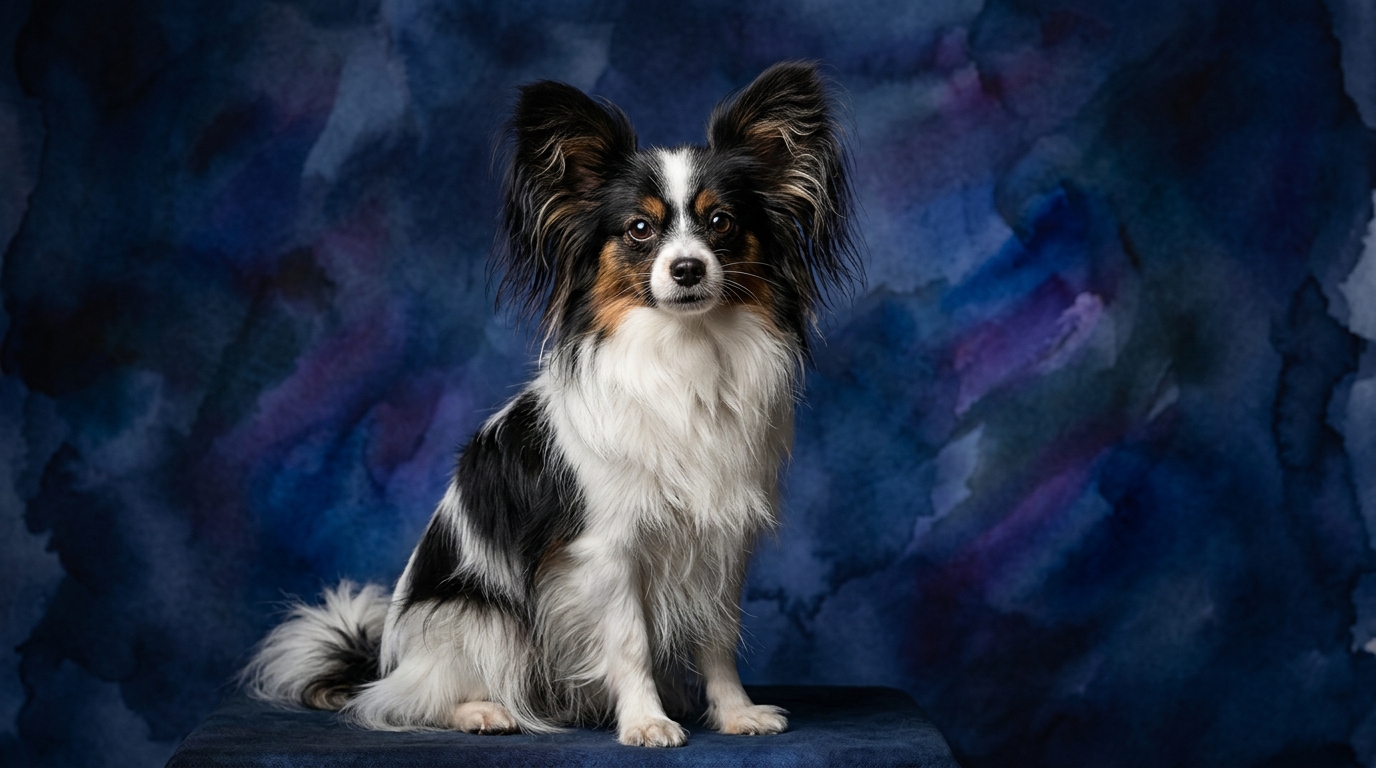
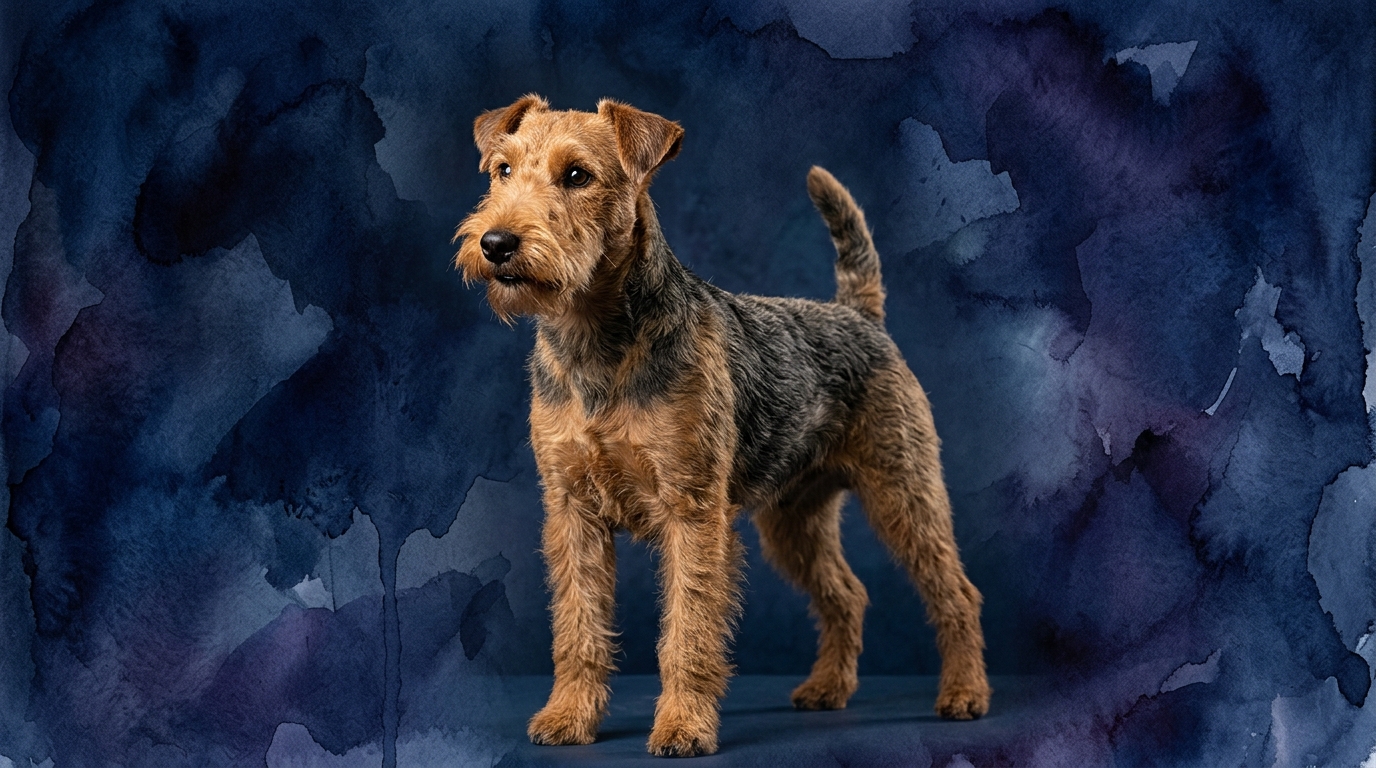
Side-by-Side IQ Profile: Papillon vs. Welsh Terrier
The Papillon, a breed often celebrated for its elegant appearance, also possesses a formidable cognitive profile, reflected in its Coren rank of #8 among all breeds. Our Cosmic Pet IQ Lab assessment shows them excelling in multiple dimensions: Problem Solving (5/5), Training Speed (5/5), Social Intelligence (4/5), Instinctive Drive (3/5), and Memory (5/5). This distribution suggests a breed with a remarkable capacity for learning and retention, coupled with a strong desire for interaction and understanding complex tasks.
In contrast, the Welsh Terrier, a sturdy and spirited member of the Terrier group, presents a different cognitive blueprint. While not included in Coren's rankings, our IQ Lab scores offer insight: Problem Solving (3/5), Training Speed (3/5), Social Intelligence (3/5), Instinctive Drive (3/5), and Memory (3/5). These uniform scores indicate a more balanced, perhaps less specialized, cognitive approach. Their intelligence is practical and often directed by their strong prey drive and independent nature, rather than a primary focus on human-directed tasks or complex obedience.
Where the Papillon's Mind Shines Brightest
The Papillon's cognitive strengths are particularly evident in its exceptional Problem Solving (5/5) and Training Speed (5/5). These scores manifest as a dog that rapidly grasps new commands and concepts, often anticipating what is expected of them. For instance, a Papillon can quickly learn intricate agility courses or complex trick sequences, demonstrating not just rote memorization but an understanding of the underlying patterns and cues. Their ability to decipher novel situations and adapt their behavior to achieve a desired outcome is consistently high, making them adept at navigating new environments or solving puzzle toys designed for advanced canine users.
Furthermore, their perfect Memory score (5/5) means that once a Papillon learns something, it tends to stick. This robust recall extends to remembering people, routines, and commands, even after extended periods of inactivity. This cognitive trait is invaluable for consistency in training and ensures that once a skill is mastered, it rarely needs extensive refreshing. Their high Social Intelligence (4/5) means they are generally attuned to human emotions and intentions, often making them eager to please and responsive to subtle social cues, which further enhances their learning and cooperative abilities in a household setting.
The Welsh Terrier's Unique Cognitive Strengths
While the Welsh Terrier's scores of 3/5 across the board might seem modest compared to the Papillon's peaks, they represent a distinct and functional form of intelligence, particularly suited to their heritage. Their Problem Solving (3/5) is less about intricate human-designed puzzles and more about practical, independent solutions, often involving tenacity and resourcefulness. For example, a Welsh Terrier might not quickly learn a complex multi-step trick, but they will relentlessly figure out how to access a desired toy or explore a new scent, demonstrating a different kind of persistence and focused determination.
Their Instinctive Drive (3/5) is a significant cognitive aspect; it fuels their curiosity and their drive to investigate, dig, and chase. This isn't a deficiency; it's a core component of their mental makeup that historically made them effective working dogs. Their social intelligence (3/5) means they form strong, loyal bonds with their families, though they might exhibit a more independent streak or be less universally demonstrative than some other breeds. Their memory (3/5) is sufficient for retaining essential commands and routines, but perhaps not with the same immediate recall or nuanced understanding of a Papillon, requiring more consistent reinforcement in early training.
Training Dynamics: A Tale of Two Temperaments
The stark differences in Training Speed (Papillon 5/5, Welsh Terrier 3/5) translate into very different training experiences. Papillons are typically a trainer's dream; they absorb new commands with impressive speed and often find the act of learning itself to be a rewarding activity. Their eagerness to engage and their strong memory mean that positive reinforcement methods yield rapid and lasting results. They thrive on variety and mental challenges, often enjoying advanced obedience, rally, or even competitive canine sports. Their high social intelligence also means they are usually keen to cooperate and understand human expectations, reducing resistance in training.
Conversely, training a Welsh Terrier often requires more patience, consistency, and a deeper understanding of their independent spirit. Their 3/5 Training Speed means they may take longer to grasp new concepts, and their instinctive drive can lead to distractions. A Welsh Terrier might pause mid-command if a compelling scent or a perceived 'prey' (like a squirrel) captures their attention, requiring the trainer to re-engage their focus. They respond best to positive reinforcement and engaging, varied sessions that prevent boredom, but they are less likely to be motivated by the sheer joy of pleasing their owner. Their tenacious nature can sometimes be perceived as stubbornness, necessitating creative training approaches that make learning feel like a game or a challenge they can 'win' on their own terms.
Matching Minds to Lifestyles: Active vs. Relaxed Owners
The Papillon's adaptable nature, combined with its high cognitive needs, makes it suitable for a range of owners, though it truly flourishes with those who can provide consistent mental engagement. While they are small enough for apartment living, they are not content to be mere lap warmers; they need puzzle toys, training sessions, and opportunities to learn. They can be active companions for owners who enjoy canine sports or long walks, but they are equally happy with relaxed owners who can dedicate time to intellectual games indoors. Their social intelligence means they usually integrate well into various family dynamics, seeking interaction and connection.
The Welsh Terrier, with its balanced but persistent cognitive profile and strong instinctive drives, is best suited for active owners who appreciate their spirited nature and can provide ample physical and mental outlets. They require regular exercise, not just for physical health but to satisfy their investigative and energetic minds. Owners who enjoy outdoor activities like hiking, exploring, or even earthdog trials would find a compatible partner in a Welsh Terrier. Their independent streak means they may not always be the most compliant, but for owners who value a loyal, robust, and characterful companion with a practical, problem-solving mind, the Welsh Terrier is an excellent match.
The Verdict: Choosing Your Canine Companion
The Verdict
Choose a Papillon if you seek a highly trainable, quick-witted companion eager to learn, excel in various activities, and thrive on close intellectual partnership. Their adaptable nature and strong memory make them rewarding for dedicated owners seeking a responsive canine.
Opt for a Welsh Terrier if you appreciate an independent, tenacious companion with a practical, problem-solving mind and a spirited disposition. They are best for active owners who can provide consistent training, engage their natural drives, and enjoy a dog with distinct character.
🧠 Find Your Pet's IQ Score
Our Pet IQ Lab assessment covers 25+ tests across 5 cognitive dimensions — personalized to your breed.
Take the Full IQ Test →Frequently Asked Questions
How does 'Instinctive Drive' differ between these two breeds?
For the Papillon (3/5), instinctive drive is moderate and often channeled into play or learning, such as chasing a tossed toy or engaging in agility. For the Welsh Terrier (3/5), this drive is strongly tied to their terrier heritage, manifesting as a persistent urge to hunt, dig, and explore scents, requiring specific outlets.
Can a Welsh Terrier be trained for complex tasks like a Papillon?
While a Welsh Terrier can certainly learn complex tasks, their 3/5 training speed and independent nature mean it will likely require more patience, consistency, and creative motivation than with a Papillon. They may not find the same intrinsic joy in rapid, intricate learning as the Papillon.
Are Papillons good family dogs considering their high IQ?
Yes, Papillons generally make excellent family dogs due to their high social intelligence (4/5) and adaptable nature. Their quick learning and desire to interact mean they can integrate well into family life, often enjoying games and learning with children, provided proper introductions and supervision.