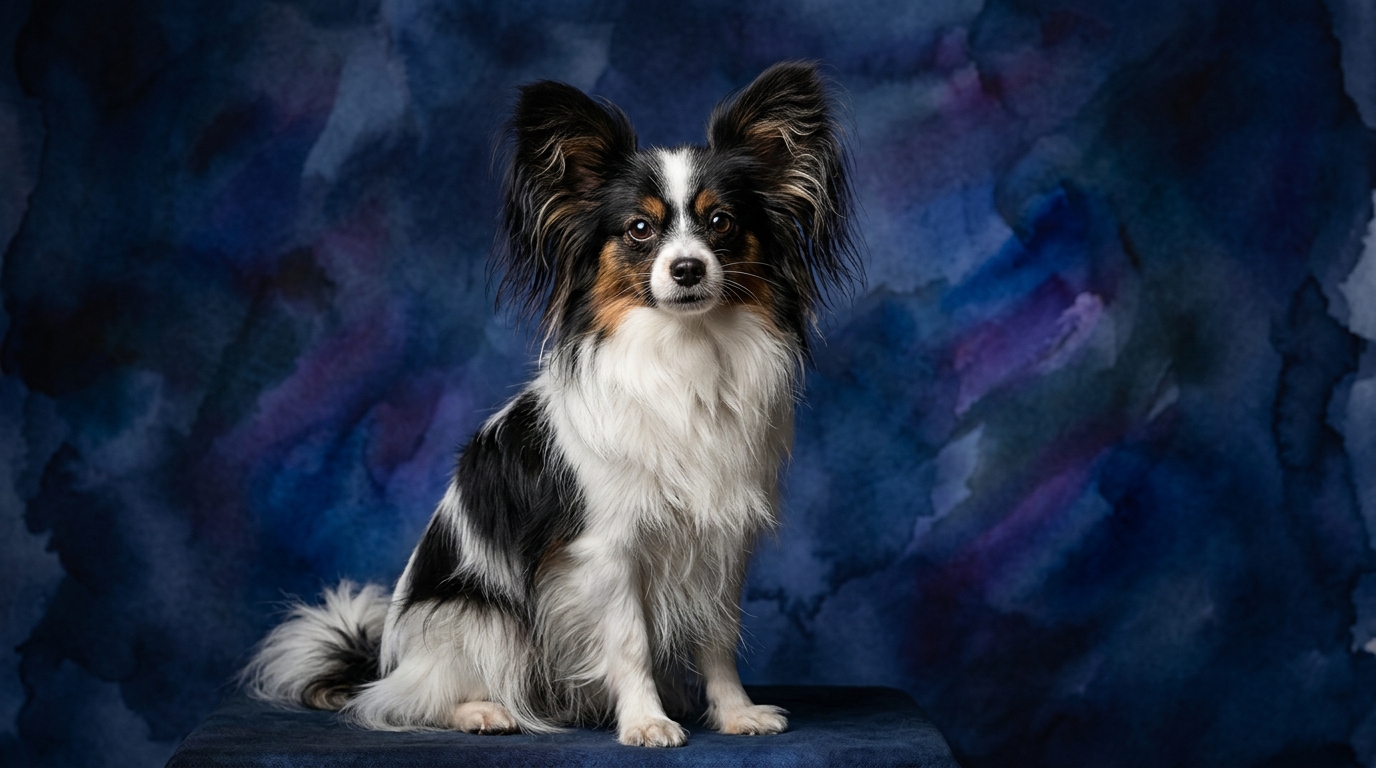
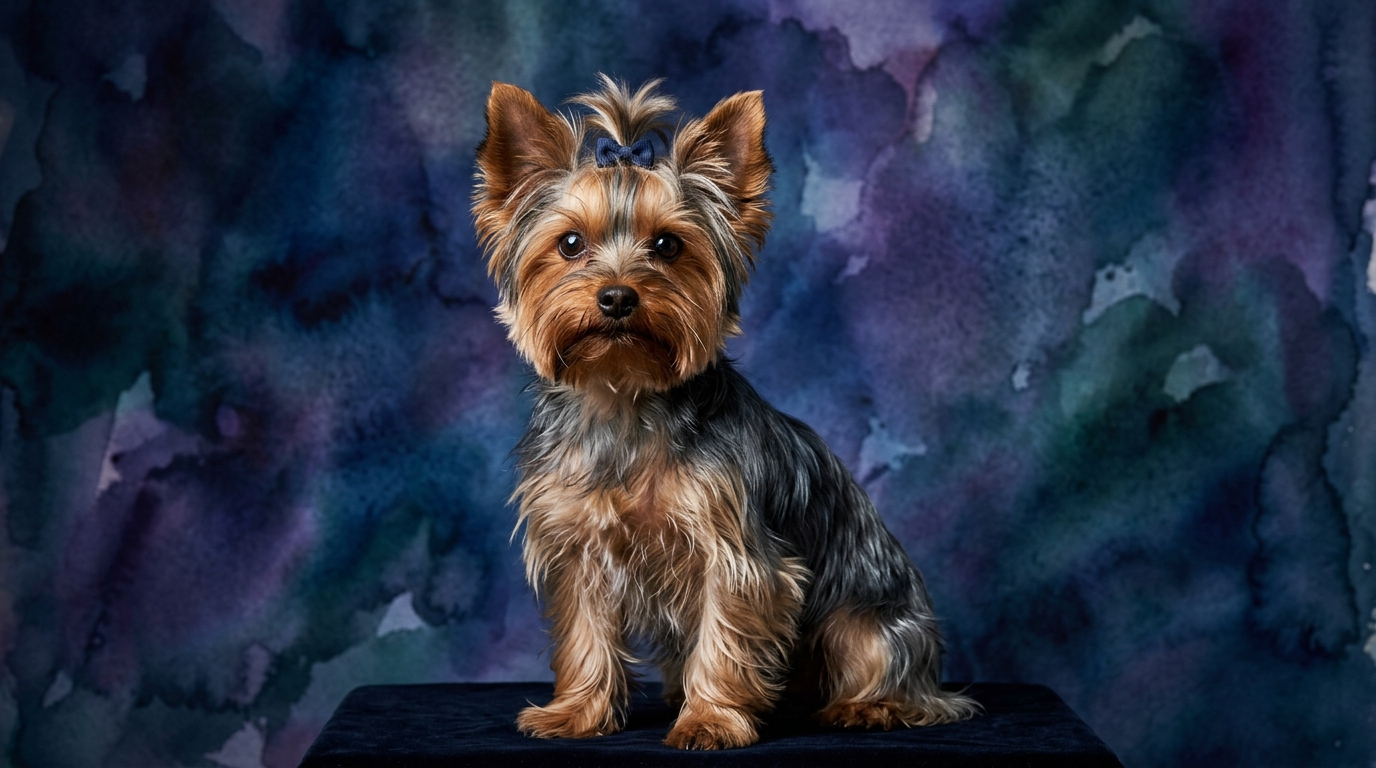
Side-by-Side Cognitive Profile: Papillon vs. Yorkshire Terrier
The Cosmic Pet Pet IQ Lab employs a five-dimensional framework to assess canine intelligence, providing a detailed look into how different breeds process information and interact with their environment. Here’s how the Papillon and Yorkshire Terrier measure up:
**Papillon (Coren Rank #8):** This breed’s cognitive profile is marked by exceptional mental agility. Their **Problem Solving (5/5)** score indicates an outstanding capacity for navigating novel challenges, quickly understanding cause-and-effect relationships, and adapting strategies when initial attempts fail. Complementing this is a **Training Speed (5/5)** that allows them to grasp new commands and routines with remarkable swiftness, often requiring only a few repetitions to solidify a behavior. Papillons demonstrate strong **Social Intelligence (4/5)**, adeptly interpreting human cues and emotional states, fostering deep bonds, though they might sometimes prioritize their own clever schemes. Their **Instinctive Drive (3/5)** is moderately expressed, with a focus more on intellectual engagement than strong prey pursuit. Finally, their **Memory (5/5)** is outstanding, ensuring long-term retention of learned commands and experiences.
**Yorkshire Terrier (Coren Rank #27):** The Yorkshire Terrier exhibits a spirited and tenacious cognitive approach. Their **Problem Solving (3/5)** capacity means they tackle challenges with determination but might require more trial-and-error or human guidance to solve complex problems. Yorkies possess a solid **Training Speed (4/5)**, learning new commands effectively with consistent instruction, though not with the instantaneous grasp of a Papillon. Their **Social Intelligence (4/5)** is on par with the Papillon, displaying a good understanding of human emotions and dynamics, forming close attachments. Reflecting their terrier heritage, Yorkies have a more pronounced **Instinctive Drive (4/5)**, particularly for chasing small objects and exploring. Their **Memory (4/5)** is robust, retaining learned information and routines well, contributing to reliable recall.
Where the Papillon Excels Cognitively
The Papillon’s cognitive prowess shines brightest in areas demanding mental agility and rapid processing. Their perfect 5/5 Problem Solving score means they excel at tasks requiring strategic thought, such as untangling a leash or figuring out how to open a treat-dispensing toy without prior demonstration. This isn't just about repetition; it's about genuine understanding of mechanisms and applying logical steps. Complementing this is their 5/5 Training Speed, allowing them to acquire complex sequences of actions, like advanced agility course maneuvers or multi-step tricks, far more rapidly than many other breeds. Furthermore, their perfect 5/5 Memory ensures that once a concept is grasped, it's rarely forgotten, making their learned skills incredibly durable. This combination creates a dog that not only learns quickly but learns deeply, capable of applying past knowledge to new situations with impressive fluidity and minimal refreshers.
Where the Yorkshire Terrier Excels Cognitively
While the Papillon excels in rapid cognitive processing, the Yorkshire Terrier brings a distinct set of strengths to the table, particularly in their drive and social adaptability. Their 4/5 Instinctive Drive, higher than the Papillon's 3/5, means they possess a more pronounced innate curiosity and a robust drive to explore and engage with their environment. This often translates into a spirited, tenacious approach to play and discovery, making them persistent in their pursuits. This terrier tenacity, while sometimes challenging to manage without proper outlets, fuels their engagement and can make them incredibly resilient in learning tasks that appeal to their natural predispositions, such as scent work or playful retrieval games. Their 4/5 Social Intelligence, on par with the Papillon, ensures they are equally attuned to human emotions and social cues, fostering a strong, responsive bond with their families. This allows for effective communication and a deep understanding of household dynamics, despite their slightly lower problem-solving score.
Training Dynamics: Which Breed is Easier to Instruct?
Evaluating ease of training requires considering both the dog’s inherent learning capacity and the owner’s approach. The Papillon, with its 5/5 Training Speed and 5/5 Problem Solving, presents an exceptionally receptive canvas for instruction. They not only absorb commands quickly but also understand the underlying logic of tasks, making them less prone to rote memorization and more capable of true comprehension. For example, a Papillon might generalize a “stay” command from the living room to a bustling park much faster because they grasped the concept of stillness, not just the action in a specific location. Their high memory score ensures that once trained, skills are retained with minimal refreshers, making them ideal for complex obedience or trick training. Their eagerness to engage mentally often translates into a highly cooperative training partner.
In contrast, the Yorkshire Terrier, with a 4/5 Training Speed and 3/5 Problem Solving, requires a slightly more patient and consistent approach. While they learn reliably, their terrier instincts might occasionally lead to delightful but distracting tangents. For instance, a Yorkie might be more inclined to follow a novel scent during a training session or investigate a rustling leaf, demanding more focused redirection from the handler. Their training is highly successful with positive reinforcement and short, engaging sessions that leverage their instinctive drive for exploration, but it requires a handler who appreciates their spirited nature and can channel it constructively. While they might not pick up every nuance as swiftly as a Papillon, their determination ensures they eventually master tasks with consistent guidance.
Matching Cognitive Profiles to Owner Lifestyles
The cognitive profiles of these breeds suggest different compatibility with owner lifestyles. The Papillon, with its boundless mental energy and quick learning ability, thrives with owners who can provide consistent, varied mental stimulation. This includes regular, dynamic training sessions, learning new tricks, participating in dog sports like agility or rally, and engaging in complex puzzle games that challenge their problem-solving skills. They are not necessarily high-energy in a physical sense, but their minds demand activity; a relaxed owner who neglects mental engagement might find a Papillon inventing its own (potentially mischievous) forms of entertainment to satisfy its intellectual curiosity. They are best suited for individuals who enjoy an intellectually interactive relationship with their companion.
Conversely, the Yorkshire Terrier, while spirited, can adapt well to both moderately active and more relaxed households, provided their innate curiosity and drive are acknowledged and met. They enjoy regular walks, interactive playtime, and opportunities to explore their immediate environment. Their mental stimulation often revolves around engaging with their family, exploring new scents on a walk, or playful retrieval games. A relaxed owner who enjoys consistent, affectionate interaction, moderate daily activity, and appreciates a tenacious, curious companion will find a Yorkie a delightful friend. They might not demand the same level of advanced intellectual challenge as a Papillon, but they certainly appreciate varied experiences and dedicated attention.
The Verdict
Choose the Papillon if you are an owner eager to delve into advanced training, enjoy teaching complex tricks, or wish to participate in dog sports that demand exceptional cognitive agility and memory.
Opt for the Yorkshire Terrier if you appreciate a spirited companion with a tenacious personality, are willing to engage with their innate curiosity, and seek a loyal friend who thrives on consistent affection and moderate mental engagement.
🧠 Find Your Pet's IQ Score
Our Pet IQ Lab assessment covers 25+ tests across 5 cognitive dimensions — personalized to your breed.
Take the Full IQ Test →Frequently Asked Questions
Do Papillons get bored easily if not mentally stimulated?
Yes, Papillons, with their high problem-solving and memory scores, require significant mental engagement. Without adequate intellectual challenges, they can become bored and may invent their own activities, which might not always align with household rules, sometimes leading to unwanted behaviors.
How does the Yorkshire Terrier's instinctive drive affect daily life?
The Yorkie's pronounced instinctive drive often translates into a keen interest in exploring, chasing small objects, and a general tenacity. This can make them spirited playmates and eager explorers but also means they might require more consistent guidance and training to manage during walks or when encountering novel stimuli, to prevent them from giving in to their impulses.
Can a Papillon and a Yorkshire Terrier live harmoniously together?
Absolutely, with proper introductions and management, these two breeds can coexist well. Their social intelligence allows them to adapt to household dynamics, though the Papillon's quick wit and the Yorkie's spirited nature mean owners should facilitate positive interactions and ensure both dogs receive adequate individual attention and mental engagement.