Side-by-Side IQ Profile: Corgi vs. Great Dane
The Cosmic Pet Pet IQ Lab evaluates canine cognitive abilities across five key dimensions, revealing nuanced profiles for each breed. Understanding these specific scores helps illuminate their inherent strengths and preferred modes of interaction.
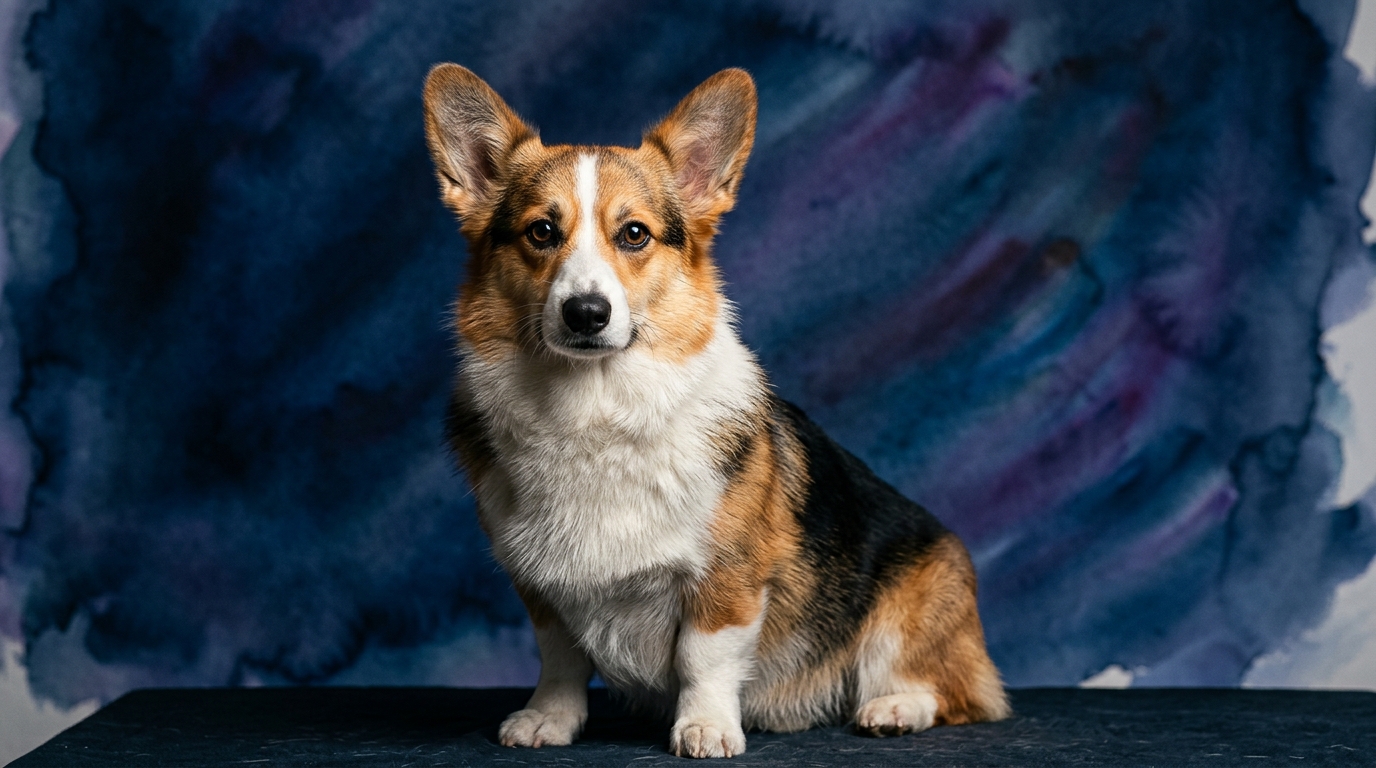
For the **Pembroke Welsh Corgi**, a breed rooted in herding, their profile reflects a dynamic and responsive intellect: Coren Rank #11 (indicating a strong capacity for obedience and adaptive learning). Their Problem Solving is rated 4/5, showing a notable ability to navigate complex situations and figure out solutions independently. Training Speed stands at an exceptional 5/5, highlighting their quickness in grasping new commands. Social Intelligence is 4/5, demonstrating keen awareness of human cues, while their Instinctive Drive, deeply tied to their heritage, scores 5/5. Their Memory is also strong at 4/5, contributing to consistent recall and performance.
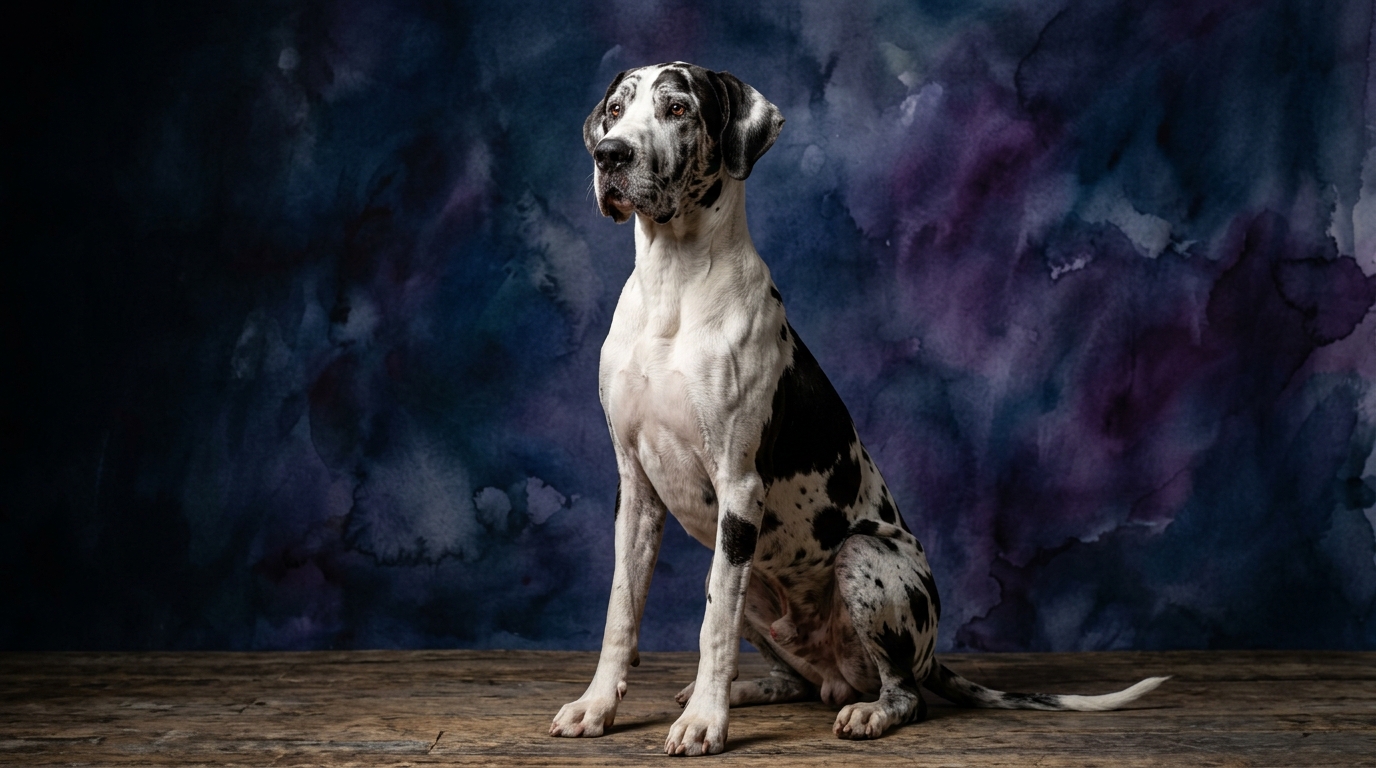
The **Great Dane**, a working breed known for its gentle nature, exhibits a cognitive profile that emphasizes composure and social attunement: Coren Rank #48 (suggesting a solid, though less rapid, capacity for adaptive learning compared to top-tier breeds). Their Problem Solving is 3/5, indicating they resolve challenges, but may require more guidance. Training Speed is 3/5, meaning they learn at a steady pace with consistent methods. Social Intelligence matches the Corgi at 4/5, showcasing a profound capacity for understanding human emotions. Their Instinctive Drive is 3/5, generally less intense than herding breeds. Memory is 3/5, retaining information adequately but benefiting from occasional refreshers for complex tasks.
Where the Pembroke Welsh Corgi Wins Cognitively
The Pembroke Welsh Corgi's cognitive profile reveals a breed optimized for dynamic, responsive tasks. Their problem-solving score of 4/5, coupled with an exceptional training speed of 5/5, means they not only quickly grasp new concepts but also adeptly apply them to novel scenarios. For instance, a Corgi might more readily figure out how to open a child-proof gate or devise a strategy to retrieve a toy stuck under furniture. Their instinctive drive, rated 5/5, is a powerful engine for their cognitive activity, pushing them to engage with their surroundings and often to 'manage' their human family members, a remnant of their herding roots. This drive translates into a persistent curiosity and a proactive approach to their environment. Furthermore, their 4/5 memory score ensures that once a solution is found or a command is learned, it is retained with impressive fidelity, leading to consistent and reliable behavioral responses over time. This combination of quick learning, effective problem-solving, and strong recall makes them highly adaptable to various training challenges and mental enrichment games.
Where the Great Dane Wins Cognitively
While not scoring as high in speed-based cognitive metrics, the Great Dane excels in areas where their calm demeanor and social perception are paramount. Their social intelligence, matching the Corgi at 4/5, highlights a profound capacity for empathy and understanding human emotional states. This isn't just about recognizing a command; it's about sensing a shift in mood, offering comfort when needed, or understanding subtle social cues in a complex family environment. This high social intelligence contributes to their reputation as gentle giants, making them remarkably attuned companions. Their problem-solving, though rated 3/5, is often applied in a more deliberate, less frantic manner. A Great Dane might take longer to assess a situation, but their large physical presence and calm resolve can be a form of problem-solving in itself, such as patiently deterring an unwanted visitor without aggression. Their lower instinctive drive (3/5) means they are less compelled by constant activity, leading to a more relaxed and often more predictable cognitive output, which can be a distinct advantage in a quiet household seeking a composed presence.
Which Is Easier to Train and Why
The Pembroke Welsh Corgi generally presents as an easier breed to train, primarily due to their stellar training speed (5/5) and robust instinctive drive (5/5). Their herding background instilled a deep desire to work collaboratively and respond to direction, making them eager participants in training sessions. Corgis tend to pick up new commands and cues almost immediately, often requiring fewer repetitions than many other breeds. Their strong memory (4/5) reinforces this, ensuring that once a lesson is learned, it sticks. They thrive on mental challenges and are often motivated by the opportunity to engage their cognitive abilities.
In contrast, the Great Dane's training speed (3/5) and memory (3/5) suggest a more gradual learning curve. While perfectly capable of mastering commands, they may require more patience, consistency, and positive reinforcement to solidify new behaviors. Their lower instinctive drive (3/5) means they might not always possess the same intrinsic eagerness to constantly engage in training exercises, sometimes preferring a more relaxed pace. However, their high social intelligence (4/5) means they are very receptive to their owner's emotions and desires, which can be a powerful motivator in itself, provided the training is structured, positive, and builds on their desire to please.
Suiting Active vs. Relaxed Owners
For active owners who relish constant engagement and mental stimulation, the Pembroke Welsh Corgi is an excellent match. Their high instinctive drive (5/5) means they thrive when given tasks, puzzles, and regular opportunities to use their problem-solving skills (4/5) and quick learning abilities. They need structured activities like obedience training, agility, herding games, or extensive daily walks and interactive play to satisfy their cognitive and physical energy. Owners who appreciate a dog constantly observing, 'managing,' and interacting with their environment will find a Corgi rewarding.
Conversely, the Great Dane is often better suited for more relaxed owners who appreciate a calmer, more composed canine companion. While they still require regular exercise, their lower instinctive drive (3/5) means they are generally content with a moderate amount of activity, followed by ample time to relax. Their substantial size means their exercise is often a brisk walk rather than prolonged, high-intensity exertion. Owners seeking a loyal, affectionate presence that is deeply attuned to family dynamics but less demanding of constant mental and physical tasks will find the Great Dane's temperament and cognitive profile align well with a more laid-back lifestyle.
The Verdict
Choose a Pembroke Welsh Corgi if you seek a highly engaged companion eager for consistent mental challenges and swift training progression.
Opt for a Great Dane if your lifestyle favors a calm, socially perceptive companion who thrives on deep emotional bonds and a more relaxed pace.
🧠 Find Your Pet's IQ Score
Our Pet IQ Lab assessment covers 25+ tests across 5 cognitive dimensions — personalized to your breed.
Take the Full IQ Test →Frequently Asked Questions
Do Corgis bark more due to their cognitive traits?
Corgis often use vocalizations, including barking, as part of their instinctive drive (5/5) to manage their environment and communicate. This is a cognitive expression of their herding heritage, not necessarily a sign of distress, and can be managed with consistent training.
Is a Great Dane's lower problem-solving score a disadvantage for family life?
Not at all; a Great Dane's problem-solving (3/5) is sufficient for navigating typical family situations, particularly when guided by their strong social intelligence (4/5). They rely more on cues from their human companions and less on independent strategizing, which can be perfectly suited for a stable home environment.
How does Coren's ranking relate to a dog's everyday behavior?
Coren's ranking primarily reflects a breed's capacity for obedience and adaptive learning from human instruction, correlating strongly with training speed and problem-solving. A higher rank, like the Corgi's #11, generally indicates a dog that learns commands and adapts to new situations more quickly than a lower-ranked breed like the Great Dane at #48.