Side-by-Side Cognitive Profile
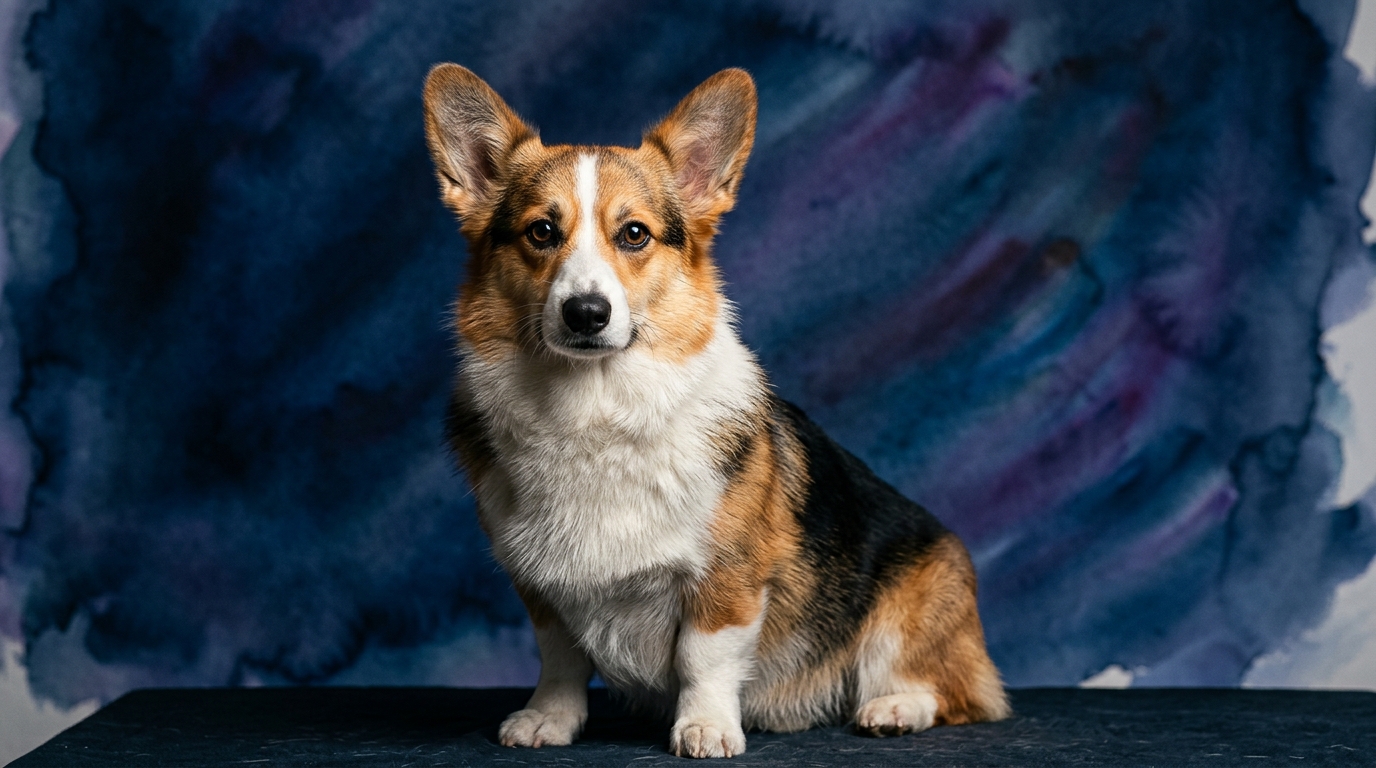
The Pembroke Welsh Corgi, a member of the Herding Group and notably ranked #11 by Stanley Coren for working intelligence and obedience, presents a robust and well-rounded cognitive profile. Their Problem Solving is rated at 4/5, indicating a strong capacity to navigate complex situations and devise solutions independently, often driven by their ancestral task of managing livestock. Training Speed shines at an exceptional 5/5, suggesting these dogs grasp new commands and routines with remarkable quickness, a trait essential for responsive herding work and general obedience. Social Intelligence, at 4/5, reflects their ability to read human cues and adapt behavior, fostering strong bonds within their family unit while also understanding group dynamics. An Instinctive Drive of 5/5 underscores their innate desire to work and engage with their environment, often manifesting as a keen desire to 'herd' family members or toys. Finally, their Memory is solid at 4/5, allowing them to retain learned behaviors and environmental layouts over extended periods, crucial for both intricate herding routes and household rules.
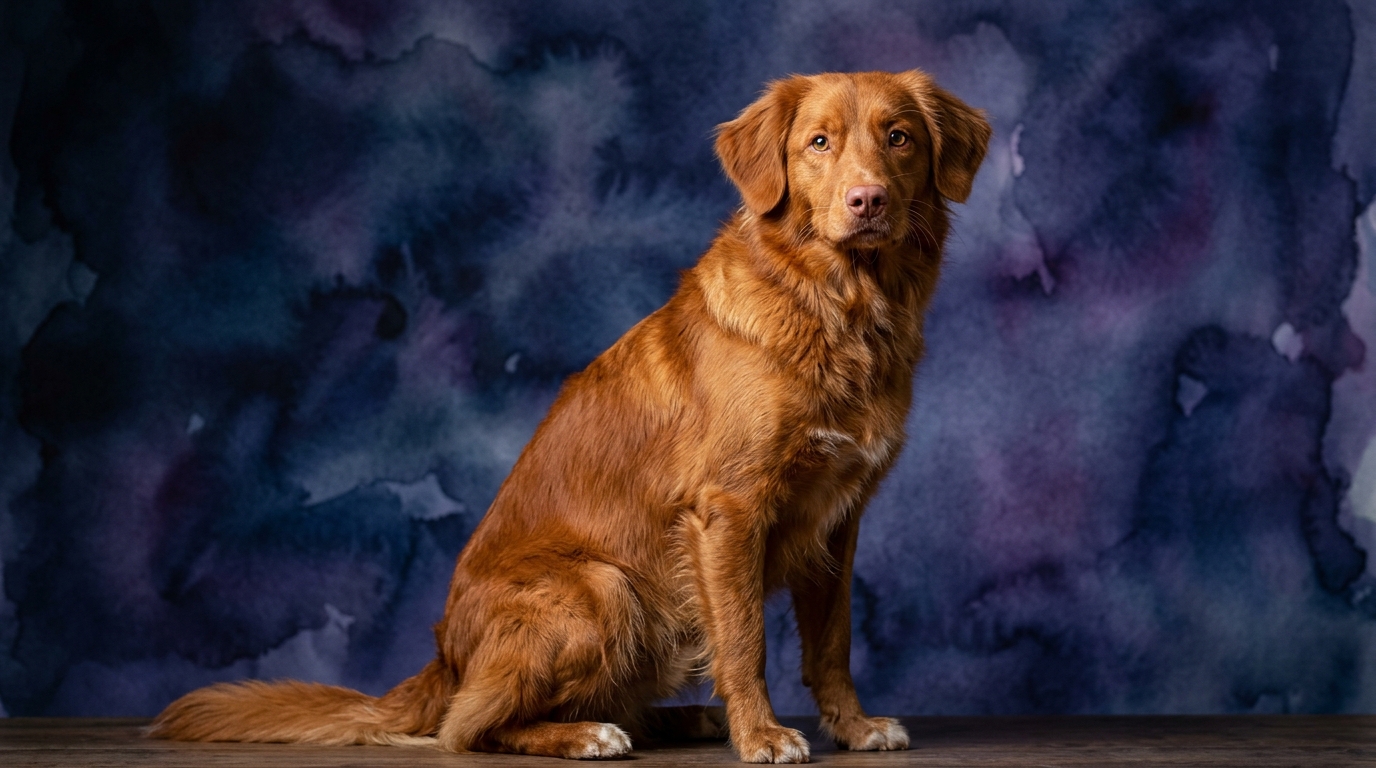
In contrast, the Nova Scotia Duck Tolling Retriever, hailing from the Sporting Group, and not specifically ranked by Coren, demonstrates a distinct set of cognitive strengths tailored to its historical role. Each of its five cognitive dimensions — Problem Solving, Training Speed, Social Intelligence, Instinctive Drive, and Memory — is consistently rated at 3/5. This balanced scoring suggests a purposeful, rather than broadly high-achieving, set of mental faculties. Their Problem Solving, at 3/5, indicates an adequate ability to overcome obstacles in a hunting scenario, such as retrieving game from challenging terrain, without necessarily seeking novel solutions to abstract puzzles. Training Speed at 3/5 means they are capable learners, though they may require more repetition or varied approaches compared to a Corgi, reflecting a steady rather than rapid absorption of new information. Social Intelligence at 3/5 points to a good understanding of their handler's intentions and pack dynamics, vital for cooperative hunting, but perhaps less inclined towards broad social manipulation. An Instinctive Drive of 3/5 highlights their inherent drive for retrieving and 'tolling' (luring ducks), a focused intensity rather than an all-encompassing need to control. Their Memory, also 3/5, serves them well for remembering retrieval locations and learned commands, though perhaps with less capacity for vast, intricate sequences than a breed with higher scores.
Where Pembroke Welsh Corgi Excels Cognitively
The Pembroke Welsh Corgi consistently outpaces the Toller across all five cognitive metrics, showcasing particular strengths in areas vital for their herding heritage and general adaptability. Their 4/5 in Problem Solving means they are adept at figuring out how to achieve a goal, whether it's manipulating a puzzle toy, opening a cabinet, or strategically moving a group of ducks. This isn't just about following commands; it's about independent thought and tactical planning to overcome obstacles. Their exceptional 5/5 Training Speed is another clear advantage, translating into a dog that picks up new cues, tricks, and complex sequences with remarkable alacrity. This makes them highly responsive to consistent training, quickly internalizing expectations and thriving on mental challenge. The Corgi's 5/5 Instinctive Drive fuels their proactive engagement with their environment and tasks, often leading them to initiate activities or 'manage' their surroundings, a clear manifestation of their deep-seated desire to herd and organize. This strong drive, combined with their 4/5 Social Intelligence, allows them to not only understand human intentions but also to use that understanding to influence outcomes, whether it's getting an extra treat or directing household traffic. Their 4/5 Memory robustly supports this by enabling them to recall intricate routines and past experiences, building a comprehensive internal map of their world and its rules. For owners seeking a dog that actively engages with mental challenges and learns new behaviors with swift precision, the Corgi's cognitive profile offers a compelling edge.
Where Nova Scotia Duck Tolling Retriever Shines Cognitively
While the Nova Scotia Duck Tolling Retriever's individual cognitive scores may not numerically exceed the Corgi's, their particular combination of 3/5 across all dimensions creates a distinct and exceptionally effective cognitive strength perfectly suited to their specialized purpose. The Toller's 'win' lies in the focused, enduring application of its moderate cognitive abilities for specific, sustained tasks. Their 3/5 Problem Solving isn't about broad, abstract cleverness, but about practical, persistent ingenuity in a hunting context – figuring out how to navigate dense reeds, retrieve a downed bird from challenging water, or follow a complex scent trail. This is a purposeful intelligence, less about solving puzzles for the sake of it and more about executing a task effectively and efficiently. Their 3/5 Instinctive Drive manifests as a deep, unwavering focus on retrieving and the unique 'tolling' action, a specialized luring behavior. This isn't a broad, controlling drive like a herder's, but a highly specialized, repetitive, and enduring motivation that allows them to perform demanding tasks for extended periods without losing interest or focus. The Toller’s 3/5 Social Intelligence allows for strong, cooperative partnerships with their handler in the field, understanding subtle signals and working as a cohesive team, rather than attempting to lead or outsmart. This specific blend of moderate scores results in a dog that is consistently reliable, persistent, and intensely task-oriented within its domain, exhibiting a robust, practical intelligence that excels in focused, repetitive work where endurance, steadfast application, and a strong work ethic are paramount. Their cognitive strength is in their unwavering dedication to their job, a consistent application of their abilities to achieve a singular goal.
Training Aptitude: Which is Easier to Guide?
When evaluating ease of training, the Pembroke Welsh Corgi generally presents a more straightforward experience for most owners due to its superior scores in Training Speed (5/5) and Instinctive Drive (5/5). Corgis possess an innate eagerness to learn and respond rapidly to new commands, often picking up complex sequences with minimal repetition. Their high instinctive drive means they are naturally motivated to engage in activities and seek purpose, which, when channeled correctly, makes them highly receptive to positive reinforcement training. They genuinely enjoy the mental stimulation of learning and excel in obedience, agility, and even complex trick training. Their 4/5 in Social Intelligence also helps them quickly interpret human cues and intentions, further streamlining the training process by allowing for more nuanced communication. In contrast, the Nova Scotia Duck Tolling Retriever, with consistent 3/5 scores in Training Speed and Instinctive Drive, requires a more patient and consistent approach. Tollers are capable learners, but they may need more repetitions to solidify new behaviors and can sometimes display a more independent streak, particularly if the task doesn't immediately align with their inherent retrieving instincts. While highly driven for their specific 'tolling' and retrieving tasks, their broader instinctive drive might not translate as readily to generalized obedience tasks without careful and consistent motivation. They can be sensitive to harsh training methods and respond best to positive reinforcement that makes training feel like an engaging game, leveraging their playful nature. For an owner seeking rapid progress and a dog that thrives on constant mental engagement and new challenges, the Corgi's cognitive setup makes them inherently 'easier' to train in a general sense. The Toller requires an owner who appreciates and caters to its specific motivations and is prepared for a steady, rather than lightning-fast, learning curve.
Matching Breeds to Lifestyles: Active vs. Relaxed Owners
The choice between a Pembroke Welsh Corgi and a Nova Scotia Duck Tolling Retriever depends significantly on an owner's lifestyle and activity levels. The Pembroke Welsh Corgi, despite its compact size, is a former herding dog with a robust 5/5 Instinctive Drive. This means they are not content to be couch potatoes; they require consistent mental stimulation and physical activity to prevent boredom and potential behavioral issues. Their 4/5 in Problem Solving and 4/5 in Social Intelligence means they thrive on engaging with their environment, learning new things, and participating actively in family activities. They suit active owners who enjoy daily walks, puzzle toys, regular obedience training, or dog sports like agility and herding trials. While they can adapt to apartment living, their need for engagement and purpose means a relaxed owner who prefers minimal interaction might find a Corgi's energy and demand for attention overwhelming, potentially leading to nuisance barking or destructive chewing. The Nova Scotia Duck Tolling Retriever, on the other hand, is unequivocally suited for highly active owners. With a 3/5 Instinctive Drive, primarily focused on retrieving, and a sporting background, Tollers possess considerable stamina and a deep need for rigorous physical exertion, especially activities involving water and fetching. They excel in dog sports such as dock diving, flyball, advanced retrieving games, and long hikes. Their 3/5 in Problem Solving and Memory, while not as high as the Corgi's, is entirely sufficient for excelling in complex, task-oriented activities that demand endurance and focused effort. A relaxed owner would struggle significantly to meet a Toller's substantial exercise requirements, potentially leading to frustration for both dog and owner, manifesting as destructive behaviors, excessive vocalization, or general restlessness. Therefore, Corgis fit active owners who want an engaged companion but aren't necessarily seeking an extreme athlete, while Tollers are best for owners whose lives revolve around rigorous outdoor activities and dog sports, offering a dedicated and energetic partner.
The Verdict
Choose the Pembroke Welsh Corgi if you desire a highly trainable companion that quickly grasps new concepts, thrives on mental challenges, and actively engages with family life, offering a blend of cleverness and enthusiastic participation.
Opt for the Nova Scotia Duck Tolling Retriever if you lead a very active lifestyle and seek an enduring, task-oriented partner specifically for outdoor adventures and dog sports, appreciating its focused drive and steady working intelligence.
🧠 Find Your Pet's IQ Score
Our Pet IQ Lab assessment covers 25+ tests across 5 cognitive dimensions — personalized to your breed.
Take the Full IQ Test →Frequently Asked Questions
Are Pembroke Welsh Corgis good at learning tricks?
Yes, Pembroke Welsh Corgis are generally very adept at learning tricks. Their 5/5 Training Speed and 4/5 Problem Solving mean they quickly understand new commands and enjoy the mental engagement of trick training, often surprising owners with their capacity for complex sequences and rapid learning.
Do Nova Scotia Duck Tolling Retrievers require a lot of mental stimulation?
Nova Scotia Duck Tolling Retrievers do require mental stimulation, primarily through purposeful activities that engage their retrieving instincts. While their general problem-solving is 3/5, they thrive on tasks that allow them to use their focused drive and stamina, such as scent work, advanced obedience, or retrieving games, providing a sense of purpose.
Which breed is better for a first-time dog owner?
For a first-time dog owner, the Pembroke Welsh Corgi might be slightly easier to manage due to its higher training speed and adaptability to various household routines. However, both breeds require consistent training and socialization; a Toller's higher exercise needs and specific drive might be a significant challenge for an inexperienced owner to fulfill.