Side-by-Side Cognitive Profiles: Corgi vs. Schipperke
The Cosmic Pet Pet IQ Lab employs a multi-dimensional framework to assess canine cognition, moving beyond simple obedience to explore the intricate workings of a dog's mind. For the Pembroke Welsh Corgi, ranked #11 by Coren, and the Schipperke, ranked #15, these profiles illuminate their core intellectual distinctions, despite both breeds demonstrating substantial learning capacity.
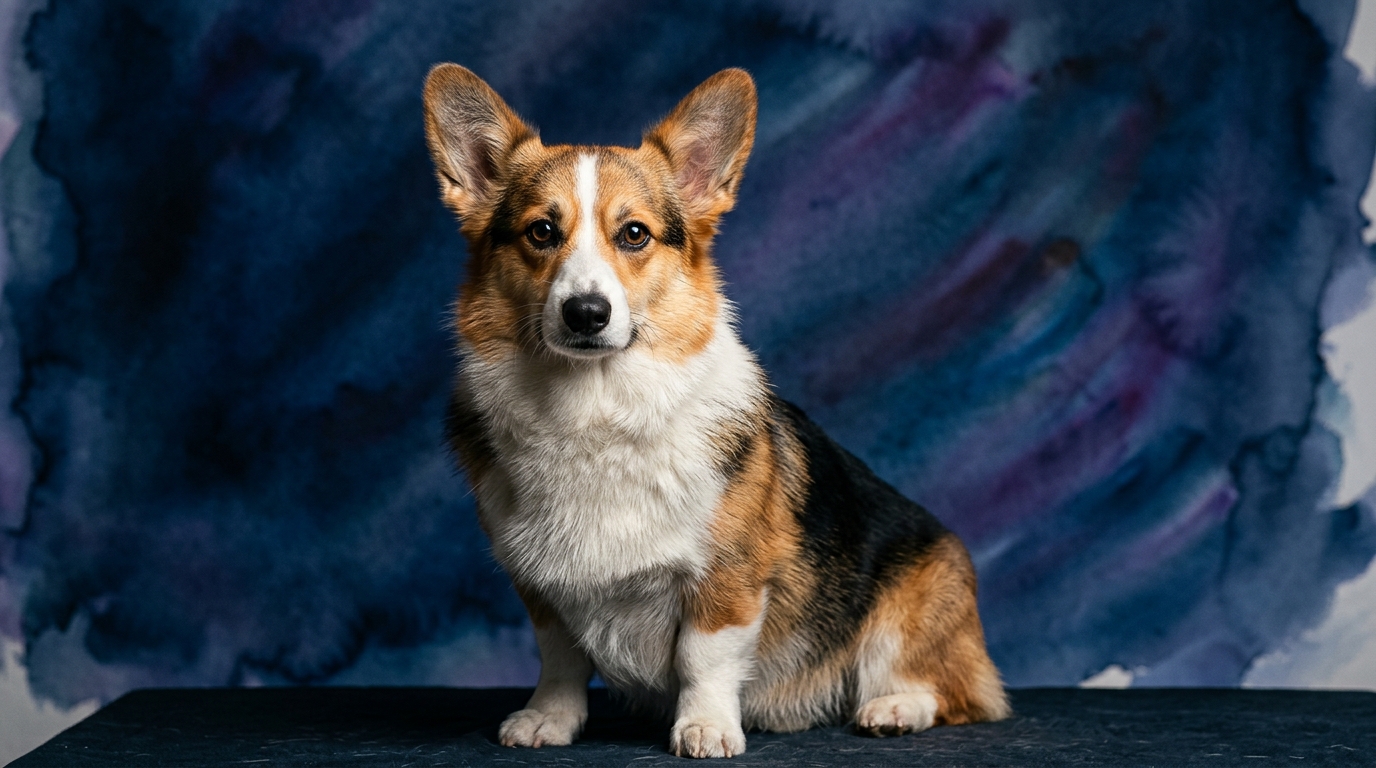
The Pembroke Welsh Corgi, a member of the Herding group, exhibits a Problem Solving score of 4/5, indicating a strong capacity for navigating novel situations and figuring out how to achieve goals. Their Training Speed is an impressive 5/5, reflecting their quick grasp of new commands and routines. Social Intelligence stands at 4/5, meaning they are adept at reading human cues and adapting their behavior accordingly. An Instinctive Drive of 5/5 underscores their strong innate motivations, often tied to their herding heritage, while their Memory is rated 4/5, allowing them to retain learned information effectively.
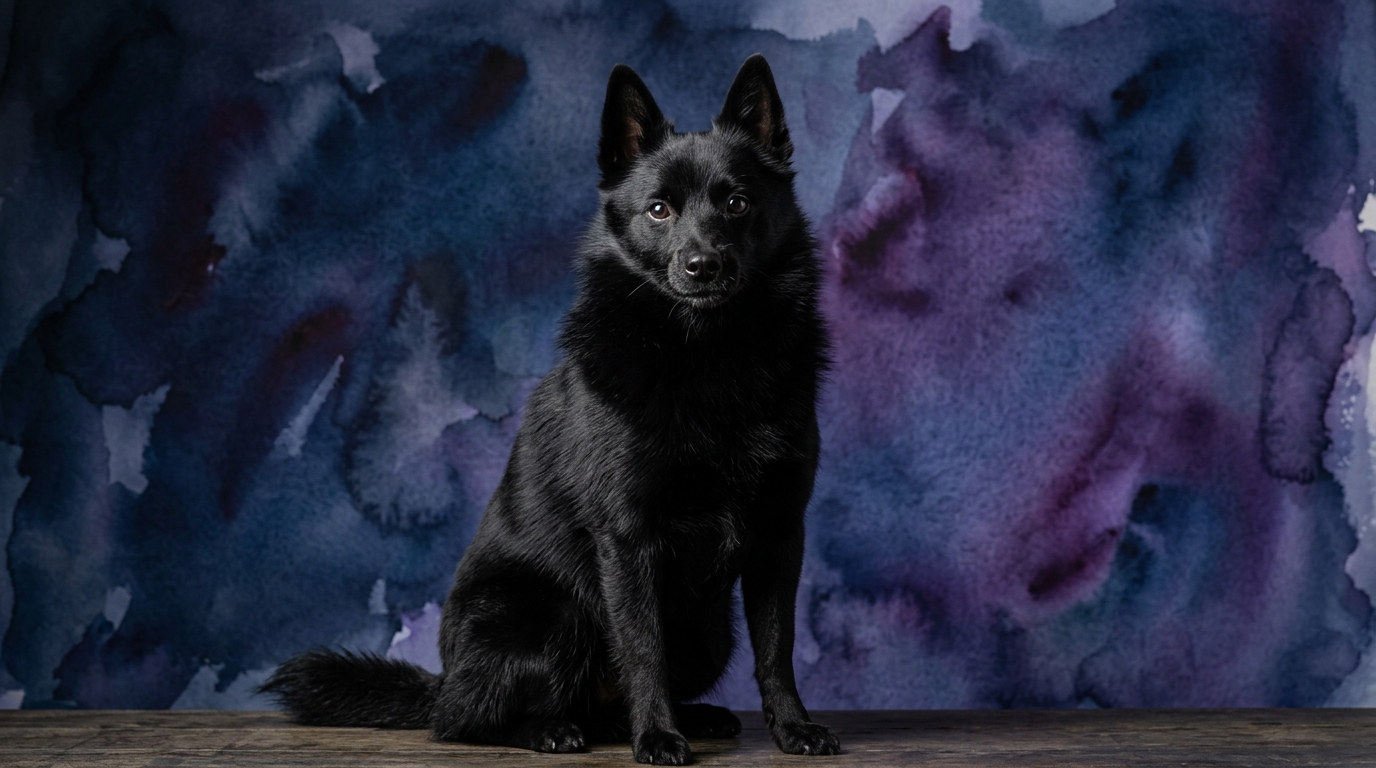
In contrast, the Schipperke, from the Non-Sporting group, boasts an exceptional Problem Solving score of 5/5, suggesting a superior aptitude for complex cognitive challenges and independent strategizing. Their Training Speed also reaches 5/5, demonstrating an equally rapid ability to acquire new skills. However, their Social Intelligence is 3/5, indicating a more independent nature and less reliance on human guidance for decision-making. An Instinctive Drive of 3/5 suggests their internal motivation is present but perhaps less overtly directed or intense than a Corgi's. Finally, their Memory is a stellar 5/5, signifying an outstanding recall of experiences and learned behaviors.
Where the Pembroke Welsh Corgi Excels Cognitively
The Pembroke Welsh Corgi’s cognitive strengths are particularly evident in their social acumen and deeply ingrained drive. With a Social Intelligence score of 4/5 compared to the Schipperke's 3/5, Corgis typically demonstrate a greater attunement to human emotional states and social structures. They are often more perceptive of subtle shifts in their owner's mood or intentions, making them highly responsive companions in collaborative tasks. This heightened social awareness contributes to their general desire to please and participate in family activities, often seeking out interaction and feedback.
Furthermore, the Corgi’s Instinctive Drive, rated at a robust 5/5 versus the Schipperke’s 3/5, highlights their persistent and directed energy. Originating as herding dogs, this drive manifests as a deep-seated motivation to gather, organize, and control. While this might sometimes translate into 'herding' family members or other pets, it also fuels a determined work ethic and a sustained focus on tasks once engaged. This strong internal motivation, coupled with their social intelligence, means a Corgi is often intrinsically motivated to engage with and respond to their human partners, making them excellent candidates for activities requiring coordinated effort and sustained enthusiasm.
Where the Schipperke Demonstrates Superior Cognition
The Schipperke's cognitive profile reveals distinct advantages, particularly in their problem-solving prowess and memory capabilities. Their Problem Solving score of 5/5, surpassing the Corgi's 4/5, indicates an exceptional ability to independently analyze situations, devise strategies, and execute solutions. This isn't just about learning tricks, but about navigating complex environments, figuring out how to open gates, or even outsmarting perceived obstacles. They possess a strategic mind, often observing and planning before acting, which can make them formidable opponents in any mental challenge.
Complementing their superior problem-solving is the Schipperke’s outstanding Memory, scoring a perfect 5/5 against the Corgi's 4/5. This means they are remarkably adept at retaining complex sequences of actions, remembering specific locations, or recalling past experiences with acute detail. This strong memory supports their problem-solving by allowing them to learn from previous attempts and refine their approaches. An owner might notice a Schipperke remembering a specific route through a crowded park after only one visit, or recalling a complex series of commands even after a long break, demonstrating a profound capacity for long-term retention and application of knowledge.
Trainability: Nuances Beyond Speed
Both Pembroke Welsh Corgis and Schipperkes share an impressive Training Speed of 5/5, indicating that neither breed struggles to grasp new commands or concepts quickly. However, the *ease* of training, and the overall training experience, diverge significantly due to their other cognitive dimensions. A Corgi's high Social Intelligence (4/5) and robust Instinctive Drive (5/5) often translate into an eagerness to please and a natural inclination to work cooperatively with their human handler. Their herding background means they are generally receptive to direction and thrive on having a 'job' or purpose, making them highly motivated by praise and collaboration. Training a Corgi often feels like a partnership, where their drive is channeled by human guidance.
The Schipperke, while equally quick to learn, approaches training with a different cognitive framework. Their superior Problem Solving (5/5) and Memory (5/5) allow them to master complex tasks, but their lower Social Intelligence (3/5) and Instinctive Drive (3/5) mean they are often more independent thinkers. A Schipperke might learn a command instantly but then weigh whether it's worth their effort to comply, especially if they perceive a more interesting alternative. They are less inherently driven by human approval and more by their own internal logic or perceived reward. Training a Schipperke requires consistency, creativity, and a deep understanding of their independent, often clever nature; they might challenge the trainer or try to find loopholes, turning training into a mental chess match rather than a straightforward collaboration.
Matching Canine Intellect to Owner Lifestyles
Understanding these cognitive distinctions is key to matching a breed to an owner's lifestyle. The Pembroke Welsh Corgi, with its high Instinctive Drive (5/5) and Social Intelligence (4/5), generally suits owners who are active and enjoy engaging in structured activities with their dog. While not needing marathon runs, Corgis thrive on consistent mental and physical stimulation, often involving tasks that tap into their herding instincts, such as agility, obedience, or even advanced trick training that requires coordination and responsiveness. They are often happiest when included in family activities and given a role, making them ideal for owners seeking a responsive, engaged, and relatively predictable companion for shared adventures.
The Schipperke, on the other hand, with its stellar Problem Solving (5/5) and Memory (5/5) but lower Instinctive Drive (3/5) and Social Intelligence (3/5), aligns well with owners who appreciate independent thinkers and are prepared for a dog that thrives on mental challenges rather than constant physical exertion. While they do require regular exercise, their needs often lean towards quality over quantity – engaging puzzle toys, scent work, advanced problem-solving games, or opportunities for urban exploration where they can strategize and observe. They are suited for owners who enjoy a dog with a distinct personality, who can appreciate a clever, sometimes mischievous, companion that might prefer to 'manage' its own day and requires a more nuanced, patient approach to training and interaction.
The Verdict
Choose a Pembroke Welsh Corgi if you seek a highly social, driven companion eager to collaborate and participate in structured activities, thriving on a clear sense of purpose within the family unit.
Opt for a Schipperke if you appreciate a profoundly clever, independent strategist who excels at complex problem-solving and memory tasks, enjoying mental challenges and opportunities for self-directed exploration.
🧠 Find Your Pet's IQ Score
Our Pet IQ Lab assessment covers 25+ tests across 5 cognitive dimensions — personalized to your breed.
Take the Full IQ Test →Frequently Asked Questions
Are Corgis difficult to train due to their herding instincts?
Corgis possess a Training Speed of 5/5 and high Social Intelligence (4/5), making them generally eager to learn and responsive to human direction. While their herding instincts (5/5 Instinctive Drive) require appropriate channeling, this drive often fuels their enthusiasm for training rather than hinders it, especially when engaged in purpose-driven activities.
Do Schipperkes require a lot of physical exercise to stay content?
Schipperkes have an Instinctive Drive of 3/5, suggesting they don't necessarily need the intense physical output of some working breeds. However, their exceptional Problem Solving (5/5) and Memory (5/5) mean they thrive on mental stimulation. Daily walks and opportunities for independent exploration or puzzle-solving are often more crucial than long, strenuous runs for their overall well-being.
Which breed is typically better suited for families with young children?
The Pembroke Welsh Corgi, with its higher Social Intelligence (4/5), is often more attuned to family dynamics and human cues, making them generally adaptable to households with children. A Schipperke's lower Social Intelligence (3/5) and independent nature mean they might be less tolerant of unpredictable child behavior and require more careful supervision and socialization to ensure harmonious interactions.