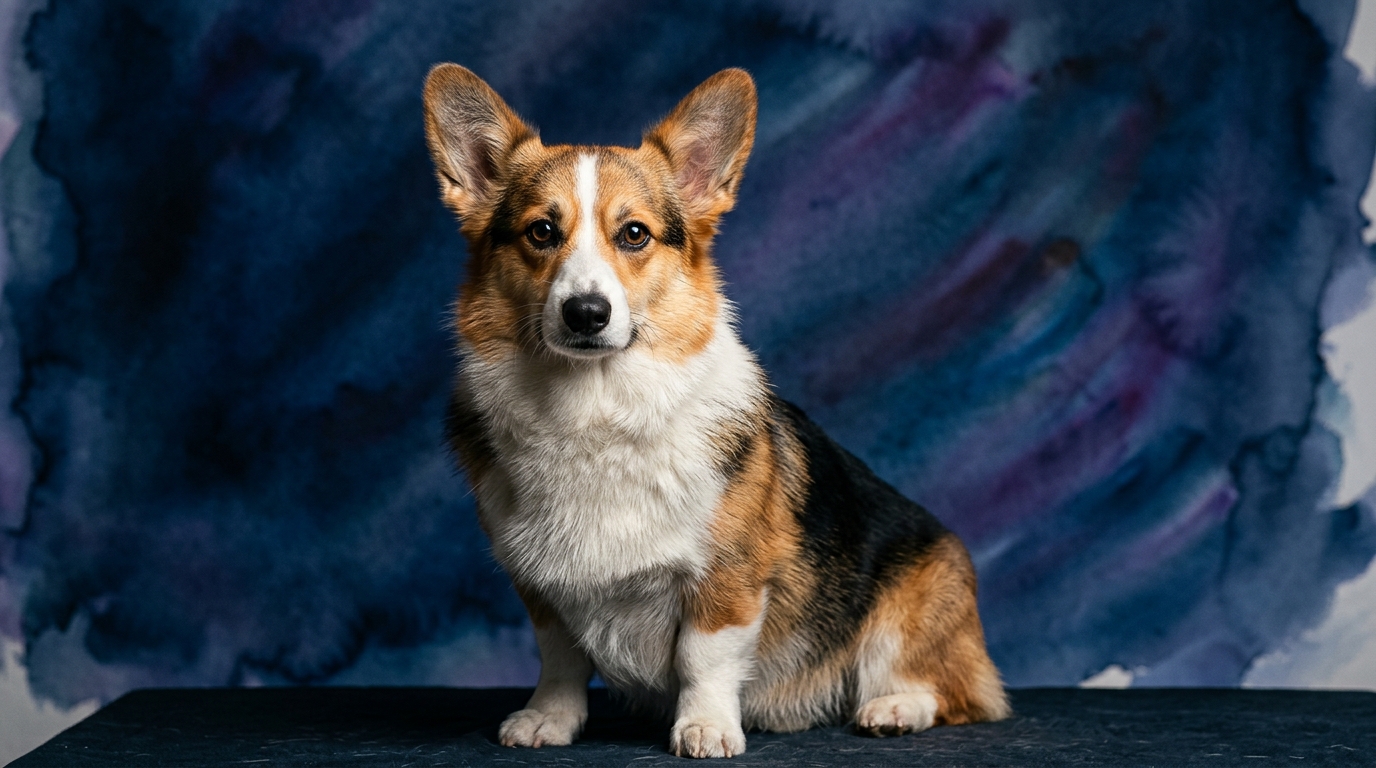
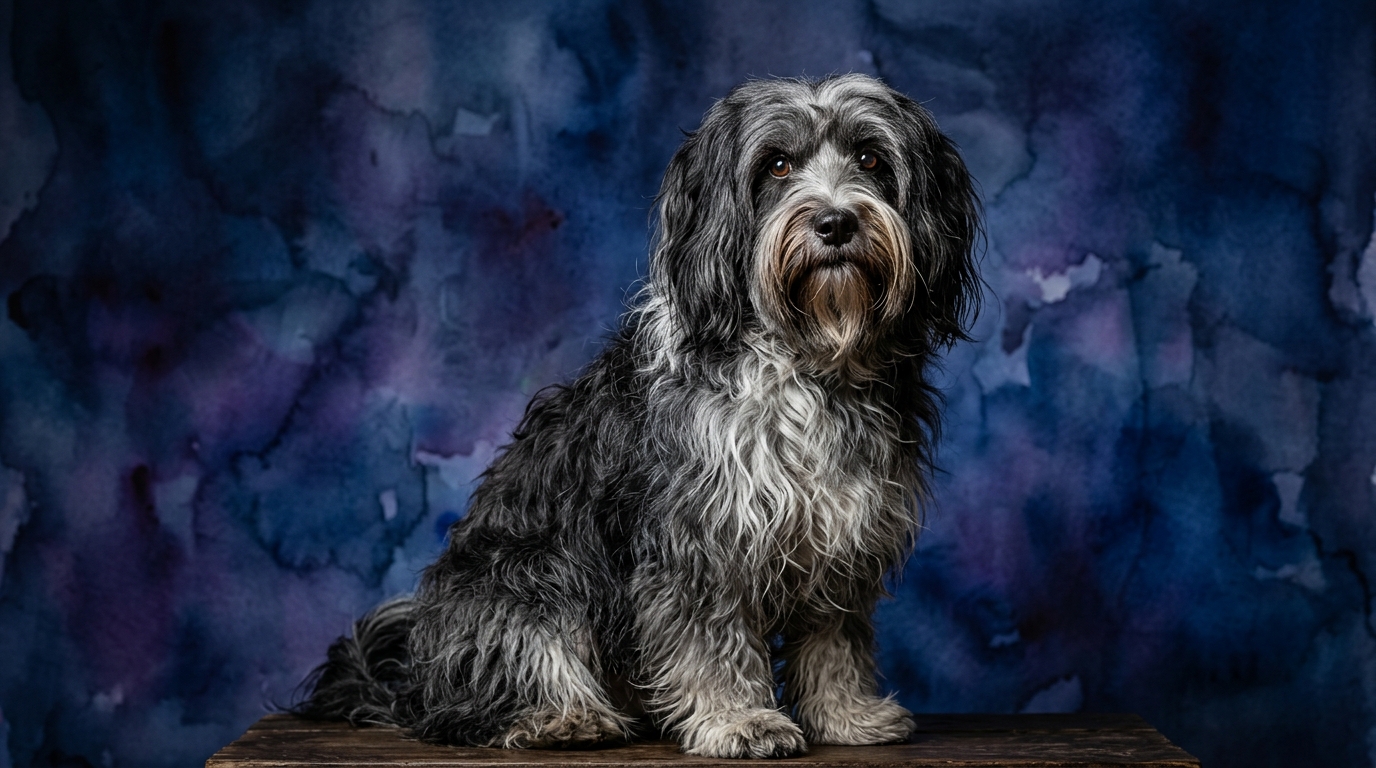
Side-by-Side IQ Profile: Pembroke Welsh Corgi vs. Tibetan Terrier
At The Cosmic Pet Pet IQ Lab, we evaluate canine intelligence across five key dimensions, offering a nuanced understanding beyond simple obedience. Let's examine how the Pembroke Welsh Corgi (Coren rank #11) and the Tibetan Terrier (Coren rank #63) compare.
The Pembroke Welsh Corgi, a member of the Herding group, exhibits a robust cognitive profile. Their Problem Solving is rated 4/5, indicating a strong capacity for figuring out novel situations and strategic thinking. Training Speed is an impressive 5/5, reflecting their rapid acquisition of new commands and routines. Social Intelligence scores 4/5, showing their adeptness at interpreting human cues and forming cooperative bonds. Their Instinctive Drive is a powerful 5/5, a hallmark of their herding ancestry, translating into a strong innate desire to work and perform. Finally, their Memory is rated 4/5, allowing for consistent performance and recall over time.
The Tibetan Terrier, from the Non-Sporting group, presents a different set of cognitive strengths. Their Problem Solving is rated 3/5, suggesting a moderate ability to navigate and resolve new challenges, often with a more methodical approach. Training Speed is 3/5, meaning their pace for acquiring new commands is more deliberate, requiring consistent repetition. Social Intelligence also scores 3/5, indicating a nuanced social understanding and the formation of deep connections, often with a more reserved approach. Their Instinctive Drive is 3/5, less geared towards specific tasks and favoring companionship over constant work. Their Memory is rated 3/5, functional for routines and learned behaviors, though not as immediately reinforced as breeds with higher scores.
Where the Pembroke Welsh Corgi Wins Cognitively
The Pembroke Welsh Corgi's cognitive profile shines particularly in areas demanding quick uptake, responsiveness, and a strong work ethic. Their 5/5 training speed is a testament to their inherent capacity for rapid learning, making them exceptionally receptive to formal instruction and new cues. This isn't just about obedience; it reflects a neural wiring that processes and internalizes information swiftly, allowing them to master complex sequences and variations of commands with remarkable efficiency. Furthermore, their 5/5 instinctive drive, rooted in their herding background, provides an unparalleled motivation to engage in tasks, to manage and direct, and to find purpose in structured activity. This drive translates into a persistent focus and a proactive approach to problem-solving (4/5) that often involves anticipating outcomes and strategizing within a given framework. For instance, a Corgi might quickly learn to navigate an agility course, not just remembering the obstacles but understanding the most efficient path, driven by an inner desire to complete the 'work'. Their social intelligence (4/5) complements this by ensuring they are highly attuned to their human handler's intentions and subtle body language, facilitating a seamless partnership in tasks. This combination of rapid learning, strong work ethic, and communicative attunement makes the Corgi a standout in environments requiring precise, responsive, and driven cognitive engagement.
Where the Tibetan Terrier Wins Cognitively
While the Tibetan Terrier's cognitive scores might appear lower on a scale often biased towards task-oriented performance, their unique intelligence lies in areas of independent thought, adaptability, and nuanced social engagement. Their 3/5 problem-solving score, rather than indicating a deficit, points to a more self-reliant approach. They are less driven by a need to please and more inclined to observe, assess, and then devise their own solutions to environmental puzzles, often with a patient, deliberate method. This can manifest as an inventive capacity to figure out how to access a desired object or navigate a new space without constant human direction. Their 3/5 social intelligence, while not as overtly cooperative as a Corgi's, signifies a deeper, more discerning bond; they form profound connections with their chosen family members, often showing a keen sensitivity to emotional states and subtle household dynamics. This less overtly demonstrative social intelligence allows them to be perceptive companions, offering comfort or companionship without needing constant instruction. The moderate instinctive drive (3/5) allows for a flexibility that means they are not perpetually seeking a job, but rather are content with a varied routine and less structured mental engagement, making them highly adaptable to diverse living situations. Their cognitive strength lies in their self-possession, their ability to thrive in varied circumstances, and their capacity for thoughtful, independent decision-making, rather than rapid, task-focused execution.
Which is Easier to Train and Why
When considering ease of training, the Pembroke Welsh Corgi distinctly holds the advantage, primarily due to its exceptional training speed (5/5) and potent instinctive drive (5/5). Corgis were bred to herd cattle, a job demanding quick reactions, understanding complex commands, and working in close partnership with a human. This genetic predisposition means they often pick up new commands after just a few repetitions, showcasing a remarkable eagerness to comply and perform. Their high instinctive drive translates into a strong desire to engage in structured activities and to have a 'job', making them intrinsically motivated by training sessions. They respond well to positive reinforcement, and their strong memory (4/5) ensures that once a command is learned, it is retained effectively. For example, teaching a Corgi a multi-step trick or an obedience routine often progresses rapidly, as their focus and drive keep them engaged.
In contrast, the Tibetan Terrier, with its 3/5 scores in training speed and instinctive drive, requires a more patient and nuanced approach. Originating as companions and watchdogs in monasteries, they were not primarily bred for complex obedience tasks. This background has fostered a more independent and sometimes philosophical nature. They are capable of learning, but their learning curve is more gradual, often requiring more repetitions and a highly motivating reward system. Their moderate instinctive drive means they might not always see the immediate 'point' of performing a specific command if it doesn't align with their own internal motivations or seems arbitrary. A Tibetan Terrier might learn a command but choose not to execute it if they don't perceive a clear benefit or if their attention is elsewhere. They can sometimes appear 'stubborn,' but it's often more an expression of independent thought than defiance. Training a Tibetan Terrier is more about building a collaborative relationship and finding what truly motivates them, rather than relying on an inherent drive to please or perform tasks. It requires creativity, consistency, and an understanding of their more self-directed cognitive style.
Which Suits Active Owners vs. Relaxed Owners
The cognitive profiles of these two breeds naturally align with different owner lifestyles. The Pembroke Welsh Corgi, with its 5/5 instinctive drive and 4/5 problem-solving capabilities, thrives with active owners who are prepared to provide consistent mental and physical stimulation. Their herding heritage means they possess abundant energy and a strong need for purpose-driven activity. Owners who enjoy dog sports like agility, obedience trials, or even advanced trick training will find the Corgi an enthusiastic and capable partner. They need daily opportunities to engage their minds and bodies, whether through long walks, interactive games that simulate herding, or regular training sessions. A Corgi that lacks sufficient mental and physical outlets can become bored and potentially channel its formidable cognitive energy into less desirable behaviors, like excessive barking or nipping. They are not content to be mere couch potatoes; their sharp minds and robust bodies demand engagement.
The Tibetan Terrier, on the other hand, with its moderate 3/5 scores across most cognitive dimensions, is a better fit for owners who appreciate a more relaxed yet still engaged companionship. While they certainly enjoy activity and can participate in various dog sports, their need for constant, task-oriented work is lower than that of a Corgi. Their problem-solving (3/5) and instinctive drive (3/5) suggest they are content with a varied routine that includes walks, play, and opportunities for independent exploration, but without the intense demand for structured 'work'. They enjoy being part of family activities, whether it's a leisurely hike or simply lounging near their loved ones. Owners who prefer a companion that is adaptable to different paces of life, who enjoys shared experiences without needing a constant 'job', will find the Tibetan Terrier a fulfilling match. They are often described as thoughtful companions who appreciate a quieter, more observant role within the family, making them suitable for owners who might not have the time or inclination for daily intensive training sessions but still want an engaged and loving pet.
The Verdict
You should choose a Pembroke Welsh Corgi if you are an owner who relishes engaging in consistent training, dog sports, and providing structured mental challenges, appreciating a highly responsive and driven partner ready to work and learn alongside you.
You should choose a Tibetan Terrier if you seek a more independent, thoughtful companion who thrives on a varied routine, enjoys less structured engagement, and offers a discerning, loyal bond without demanding constant task-oriented activity.
🧠 Find Your Pet's IQ Score
Our Pet IQ Lab assessment covers 25+ tests across 5 cognitive dimensions — personalized to your breed.
Take the Full IQ Test →Frequently Asked Questions
Are Corgis generally more vocal than Tibetan Terriers?
Corgis, with their strong herding instincts and social intelligence, tend to be more vocal, using barks to alert or communicate, a trait stemming from their historical role. Tibetan Terriers, while capable of barking, are often more reserved, using their voice selectively, perhaps as a watchful sentinel rather than a constant communicator.
Which breed adapts better to apartment living?
Both breeds can adapt to apartment living with sufficient exercise, but the Tibetan Terrier's moderate energy and instinctive drive might make it slightly more content in smaller spaces, provided its social and physical needs are met. Corgis require more structured outlets for their considerable energy and mental acuity, making consistent outdoor activity crucial for apartment dwellers.
Do Corgis and Tibetan Terriers have similar social needs with other pets?
Corgis, with their higher social intelligence and herding drive, often enjoy the company of other dogs, though their herding instincts can sometimes manifest as nipping at heels. Tibetan Terriers can be more selective in their canine friendships, often preferring established bonds within their family unit and showing a more reserved approach to new animal acquaintances.