Side-by-Side IQ Profile: Corgi vs. Toy Poodle
The Cosmic Pet Pet IQ Lab employs a comprehensive five-dimensional framework to assess canine cognitive abilities, providing a nuanced understanding beyond simple obedience. This framework evaluates Problem Solving, Training Speed, Social Intelligence, Instinctive Drive, and Memory, each scored on a scale of 1 to 5.
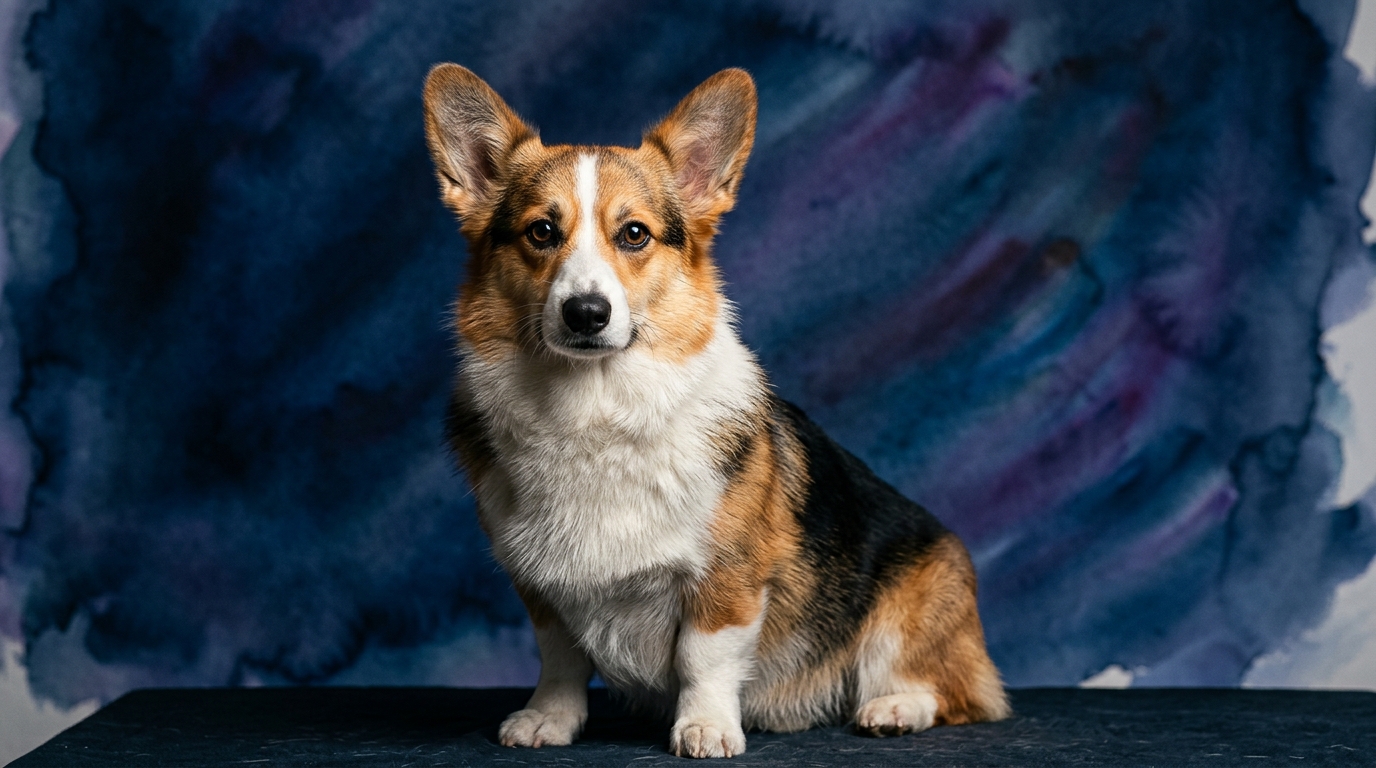
The Pembroke Welsh Corgi, a Herding group member with a Coren rank of #11, exhibits a robust cognitive profile tailored for its historical role. This breed scores a 4/5 in Problem Solving, demonstrating effective, practical solutions to challenges. Their Training Speed is exceptional at 5/5, indicating rapid command acquisition. Social Intelligence is strong at 4/5, reflecting their awareness of group dynamics. An impressive Instinctive Drive of 5/5 highlights their inherent motivation for work and purpose, complemented by a solid Memory score of 4/5.
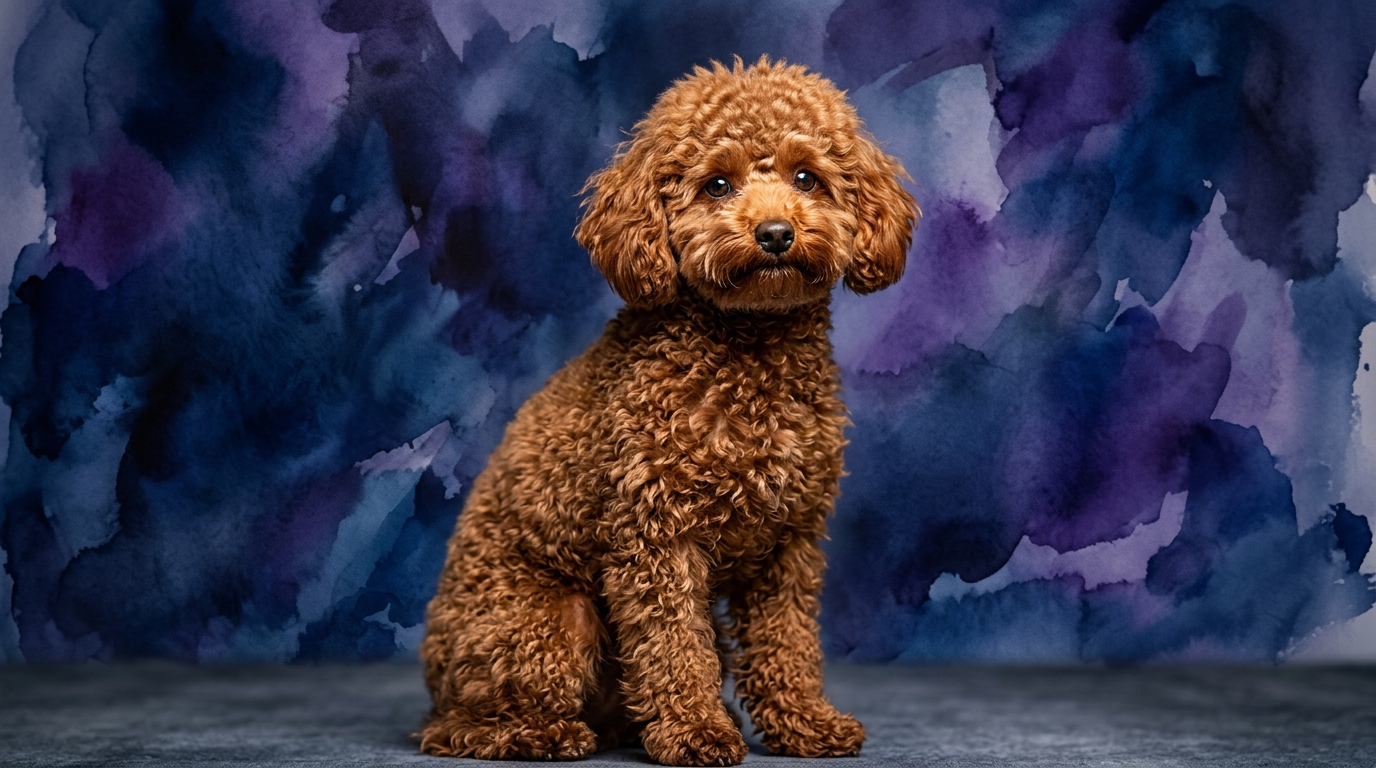
In contrast, the Toy Poodle, a companion breed with a remarkable Coren rank of #2, showcases a different set of cognitive strengths. They achieve a perfect 5/5 in Problem Solving, suggesting a profound capacity for analytical thought and complex solutions. Their Training Speed also stands at an outstanding 5/5. Social Intelligence, at 3/5, indicates a more focused, perhaps less group-oriented, social engagement. Their Instinctive Drive is moderate at 3/5, pointing to a less intense need for 'work.' However, their Memory is exceptional, scoring a perfect 5/5.
Comparing these profiles, we see two distinct cognitive blueprints. Both breeds learn commands with impressive speed, yet the Corgi leans into social cohesion and inherent drive, while the Toy Poodle excels in abstract problem-solving and information retention.
Where Pembroke Welsh Corgi Wins Cognitively
The Pembroke Welsh Corgi's cognitive strengths particularly shine in areas related to group dynamics and task-oriented motivation. With a Social Intelligence score of 4/5, the Corgi demonstrates a superior understanding of hierarchical structures and interpersonal cues within its human 'flock.' This means they are often adept at navigating family interactions, understanding unspoken rules, and responding appropriately to the emotional states of their companions, fostering a harmonious household environment.
Furthermore, the Corgi's exceptional Instinctive Drive (5/5) is a significant cognitive advantage. Rooted in their herding heritage, this drive translates into a powerful intrinsic motivation to engage in activities with purpose, whether it's 'herding' children, patrolling the yard, or participating in structured training. This inherent need for a job means a Corgi is not just performing tasks but doing so with a deep-seated sense of fulfillment and focus, making them incredibly engaged partners in activities that tap into their working spirit. Their practical Problem Solving (4/5) often involves finding efficient, direct routes to achieve these driven goals, such as figuring out how to get a stray toy back into the play area.
Where Toy Poodle Wins Cognitively
The Toy Poodle's cognitive prowess is most evident in their capacities for intricate thought and retention. Scoring a perfect 5/5 in Problem Solving, this breed displays an advanced ability to analyze situations, devise multi-step solutions, and adapt to novel challenges with remarkable ingenuity. This isn't just about simple cause-and-effect; it's about discerning patterns, understanding abstract concepts, and applying learned principles to new contexts, making them adept at complex puzzle toys or intricate agility courses.
Coupled with their flawless Memory (5/5), the Toy Poodle possesses an extraordinary capacity to recall vast amounts of information, including sequences of commands, routines, and past experiences. This superior recall means they can master an expansive repertoire of tricks and behaviors, retaining them over long periods without frequent refreshers. Their memory also contributes to their ability to anticipate daily routines, often knowing what comes next in the household schedule. While their Instinctive Drive is moderate (3/5) and Social Intelligence is slightly lower (3/5), their sharp intellect and memory allow them to engage deeply with their human companions through mental challenges, making them highly adaptable and capable learners in diverse environments.
Which is Easier to Train and Why?
When it comes to raw Training Speed, both the Pembroke Welsh Corgi and the Toy Poodle achieve a perfect 5/5, indicating that both breeds absorb new commands and behaviors with impressive rapidity. However, the 'ease' of training extends beyond mere speed and delves into their underlying motivations and behavioral tendencies, which differ significantly due to their distinct cognitive profiles.
The Corgi's high Social Intelligence (4/5) and profound Instinctive Drive (5/5) often translate into an eager desire to cooperate and work alongside their handler. Their herding background means they are naturally inclined to respond to direction and to feel a sense of purpose in their tasks. This willingness to be a part of a team and to fulfill a 'job' can make Corgis highly responsive to positive reinforcement, viewing training as a collaborative effort and a meaningful engagement with their human. They are often inherently motivated by the opportunity to participate and contribute.
The Toy Poodle, conversely, leverages its superior Problem Solving (5/5) and Memory (5/5) to excel in training. While their Social Intelligence is slightly lower (3/5) and Instinctive Drive is moderate (3/5), their analytical minds allow them to quickly grasp the logic behind commands and sequences. They often learn not just *what* to do, but *why* it leads to a reward. This intellectual approach means they can master complex chains of behaviors and retain them with minimal repetition, making them exceptional candidates for advanced obedience, trick training, and dog sports that demand precision and intricate understanding.
Behaviorally, Corgis, with their herding instincts, might occasionally exhibit independent decision-making or a tendency to 'manage' their environment, requiring consistent guidance to channel their drive. Toy Poodles, while sometimes perceived as less 'driven' by a specific task, are often highly attentive to their handler when mentally stimulated, focusing intently on solving the training puzzle presented to them. Therefore, while both learn quickly, the Corgi might be 'easier' for owners who value a highly engaged, cooperative partner, while the Poodle might be 'easier' for those who enjoy teaching complex, nuanced behaviors to an analytical learner.
Which Suits Active Owners vs. Relaxed Owners?
The choice between a Pembroke Welsh Corgi and a Toy Poodle significantly depends on an owner's lifestyle and their preferred level and type of engagement. For active owners who enjoy a purpose-driven companion, the Pembroke Welsh Corgi is often a superb match. Their high Instinctive Drive (5/5) means they thrive on having a 'job,' whether it's participating in dog sports like agility or herding, going on adventurous hikes, or simply being an integral, active part of daily chores. They require consistent physical and mental stimulation to channel their working energy, and owners who can provide outlets for their inherent drive will find them incredibly rewarding and engaged partners.
The Toy Poodle, with its adaptability and profound cognitive abilities, can suit a wider spectrum of owners, including those with a more relaxed lifestyle, provided their intellectual needs are met. While agile and capable in dog sports, their moderate Instinctive Drive (3/5) means they might not demand the same level of strenuous, purpose-driven activity as a Corgi. Instead, they excel with owners who enjoy intellectual engagement through puzzle toys, learning new and complex tricks, or participating in less physically demanding but mentally stimulating activities like canine freestyle or scent work. Their high Problem Solving (5/5) and Memory (5/5) make them incredibly rewarding for owners who appreciate a dog that can master intricate challenges and adapt smoothly to various home environments, from a bustling family to a quiet individual, as long as their sharp minds are kept busy.
The Verdict: When to Choose Each Breed
The Verdict
Choose a Pembroke Welsh Corgi if you seek a highly engaged, socially astute companion who thrives on purpose and participatory activities alongside their human family, offering a strong, driven presence in your daily life.
Opt for a Toy Poodle if you admire a keen, analytical mind capable of mastering intricate challenges and retaining vast amounts of information, fitting seamlessly into various lifestyles with their adaptable and intellectually curious nature.
🧠 Find Your Pet's IQ Score
Our Pet IQ Lab assessment covers 25+ tests across 5 cognitive dimensions — personalized to your breed.
Take the Full IQ Test →Frequently Asked Questions
Corgi vs Poodle: Who learns new commands faster?
Both breeds score a perfect 5/5 in Training Speed, indicating they absorb new commands very quickly. The difference lies more in their motivation and the *type* of commands they might excel at, with Poodles perhaps grasping complex sequences slightly faster due to their problem-solving edge.
Are Corgis or Toy Poodles better with other pets and family?
Pembroke Welsh Corgis generally exhibit higher Social Intelligence (4/5) compared to Toy Poodles (3/5). This suggests Corgis are often more attuned to group dynamics and can integrate smoothly into multi-pet or larger family environments, though individual personalities always vary.
Which breed requires more mental stimulation to prevent boredom?
Both breeds benefit immensely from mental stimulation, but their high Instinctive Drive (5/5) means Corgis often require consistent engagement that taps into their working dog heritage to prevent boredom and destructive behaviors. Toy Poodles, with their superior problem-solving and memory, also need intellectual challenges, but perhaps less tied to a 'job' and more to complex learning or puzzle games.