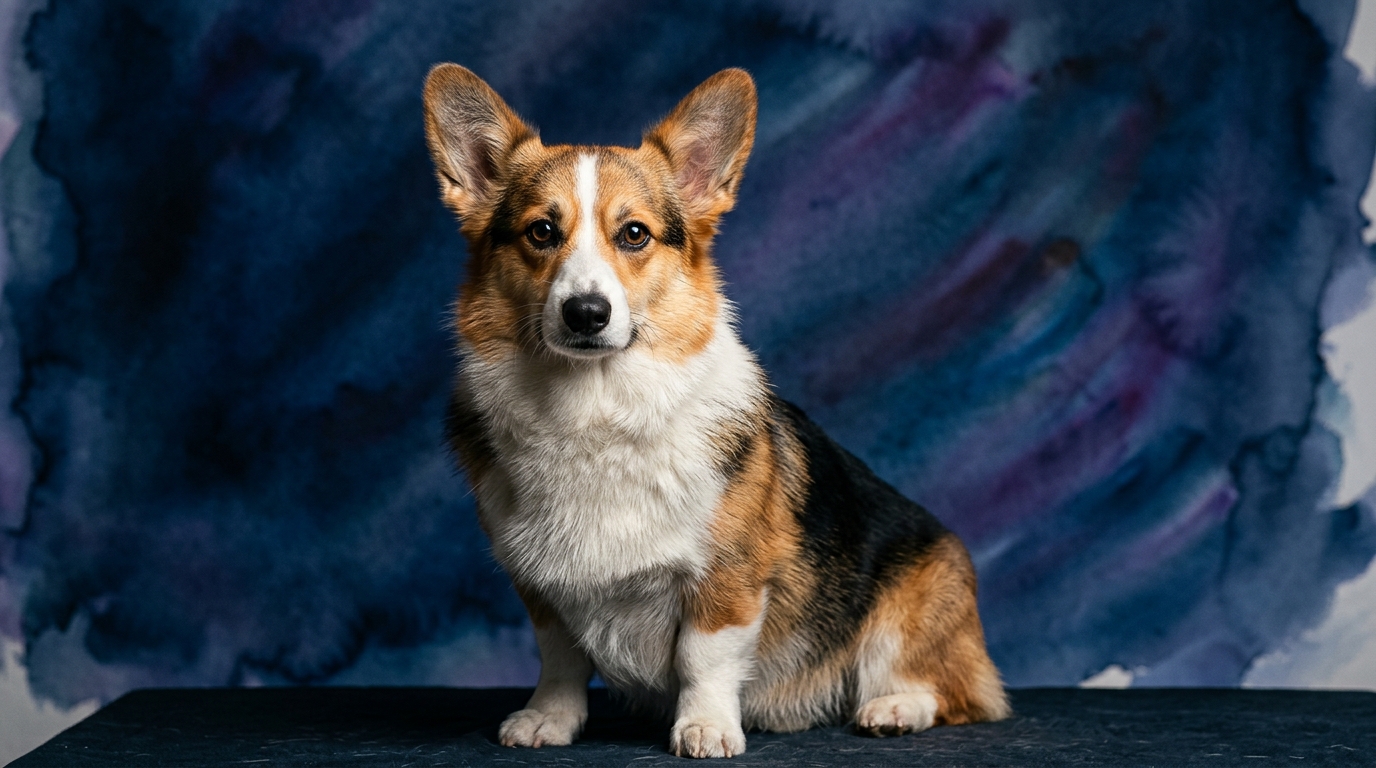

Side-by-Side IQ Profile: Corgi vs. Yorkie
The Cosmic Pet Pet IQ Lab provides a detailed breakdown of cognitive dimensions, illuminating the unique mental landscapes of these two breeds. The Pembroke Welsh Corgi, a member of the Herding group with a Coren rank of #11, exhibits a robust cognitive architecture. It scores 4/5 in Problem Solving, indicating a strong capacity for independent thought and navigating novel situations. Its Training Speed is exceptional at 5/5, suggesting a quick grasp of commands and routines, often eager to please and work alongside a handler. Social Intelligence, rated at 4/5, points to a strong capacity for understanding human cues and integrating into social structures. A potent Instinctive Drive of 5/5 underscores its heritage as a working herding dog, manifesting as a strong desire to manage and influence its environment, often channeling this energy towards tasks or play. Finally, a Memory score of 4/5 ensures it retains learned behaviors and experiences effectively, contributing to its overall adaptability and trainability.
In contrast, the Yorkshire Terrier, a Terrier group member with a Coren rank of #27, presents a spirited and capable cognitive profile. Its Problem Solving score of 3/5 demonstrates an ability to tackle challenges, albeit perhaps with more reliance on trial-and-error or persistence than complex strategic planning. Training Speed is commendable at 4/5, indicating a good capacity for learning commands, though it might require a slightly more patient and engaging approach than the Corgi. Social Intelligence matches the Corgi at 4/5, showcasing its capacity for forming strong bonds and interpreting human emotions, despite its small stature. An Instinctive Drive of 4/5 reflects its terrier roots, characterized by a tenacious pursuit of goals, often related to exploration or perceived "prey," though less about managing a flock. Its Memory, also 4/5, allows it to recall past lessons and experiences, aiding in consistent behavior and adaptation.
Where the Pembroke Welsh Corgi Shows Cognitive Superiority
The Pembroke Welsh Corgi's cognitive strengths distinctly outshine the Yorkshire Terrier in several key areas, largely stemming from its Herding group lineage. Its superior Problem Solving score of 4/5 versus the Yorkie's 3/5 illustrates a more advanced capacity for analytical thought and independent strategizing, crucial for a dog tasked with moving livestock. This means Corgis are often quicker to assess new situations, devising solutions to obstacles or puzzles with a remarkable efficiency that speaks to a deeper cognitive processing ability. The Corgi's perfect 5/5 Training Speed is another significant advantage, reflecting an eagerness and aptitude for learning and executing commands rapidly. This isn't just about obedience; it's about a fundamental desire to engage and cooperate with a human partner, absorbing new information with impressive speed. Furthermore, its 5/5 Instinctive Drive, compared to the Yorkie's 4/5, signifies a more profound innate motivation to work and control its environment. For the Corgi, this manifests as a persistent desire to herd, organize, or engage in goal-oriented tasks, providing a powerful internal engine for activity and mental engagement. This higher drive translates into a greater intrinsic motivation for structured activities and a more pronounced satisfaction from completing "work," making them exceptionally responsive to task-based training and enrichment.
Where the Yorkshire Terrier Demonstrates Distinct Cognitive Strengths
While the Yorkshire Terrier's raw scores might not surpass the Corgi's, its cognitive profile presents unique strengths that are highly advantageous for specific lifestyles and owner preferences. The Yorkie's 3/5 in Problem Solving, combined with its 4/5 Instinctive Drive, paints a picture of a dog that, despite its size, possesses a formidable tenacity and independent spirit. Unlike the Corgi's inclination to "herd" or manage, the Yorkie's drive is often channeled into exploring, digging, and pursuing, reflecting its terrier heritage of hunting vermin. This translates into a focused determination to achieve its immediate goals, often with a cleverness born from persistence rather than complex strategy. Its Social Intelligence, also a strong 4/5, allows it to form incredibly deep and perceptive bonds with its human companions, often understanding subtle emotional cues and adapting its behavior accordingly, sometimes even more acutely than larger breeds. This makes them exceptionally attuned companions, thriving on close interaction and responsive to nuanced social dynamics. The Yorkie's cognitive makeup, while less geared towards complex group management, excels in individual-focused interaction and a spirited, self-reliant approach to its world, requiring less structured "work" to feel fulfilled and often finding novel ways to entertain itself or its people. This independence can be a cognitive asset for owners who appreciate a dog with its own distinct personality and less reliance on constant direction for mental stimulation.
Training Aptitude: Which Breed Learns More Easily?
When it comes to ease of training, the Pembroke Welsh Corgi generally holds an edge over the Yorkshire Terrier, primarily due to its perfect 5/5 Training Speed compared to the Yorkie's 4/5. The Corgi's herding background instills a profound desire to work cooperatively with humans, making them highly receptive to commands and eager to learn new tasks. This innate drive to please and the historical role of following handler cues means they often absorb lessons quickly, requiring fewer repetitions to solidify behaviors. Their instinctive drive to organize and manage also translates into a natural inclination towards structured activities like obedience, agility, or even complex trick training, viewing these as engaging "jobs." In contrast, the Yorkshire Terrier, while having a commendable 4/5 Training Speed, often exhibits a more independent and sometimes stubborn streak, characteristic of the Terrier group. Their historical role involved independent hunting and problem-solving without direct human instruction, fostering a self-reliant mindset. This means that while Yorkies are certainly capable of learning, they may require more creative motivation, consistent positive reinforcement, and a patient approach to maintain focus and overcome their inherent inclination to follow their own agenda. Their training often benefits from making it feel like a game or a challenge they can "win," rather than simply complying with a command. Therefore, for an owner seeking a dog that will quickly pick up and reliably execute a wide range of commands, the Corgi typically presents an easier training experience.
Matching Cognitive Profiles to Owner Lifestyles
The cognitive profiles of these two breeds offer clear guidance for matching them with owner lifestyles. The Pembroke Welsh Corgi, with its 4/5 Problem Solving and powerful 5/5 Instinctive Drive, is decidedly better suited for active owners who can provide consistent mental and physical engagement. Their herding heritage means they thrive on having a "job" to do, whether it's participating in dog sports like agility, herding trials, or even just daily puzzle toys and complex training sessions. An active owner would appreciate their eagerness to learn and participate, channeling their innate drive into constructive outlets. Without sufficient mental stimulation, a Corgi might invent its own "jobs," potentially manifesting as nipping heels, excessive barking, or attempting to "herd" family members. For relaxed owners seeking a companion that requires less structured mental exertion, the Yorkshire Terrier is often a more fitting choice. While spirited and active in bursts, its 3/5 Problem Solving and 4/5 Instinctive Drive, coupled with its smaller stature, mean its cognitive needs can often be met with less intensive, yet consistent, interaction. Yorkies enjoy walks, play, and companionship, but their "work" might be satisfied through exploring a backyard, chasing a toy, or simply engaging in interactive play with their family. They are generally content with a routine that includes regular physical activity and plenty of social interaction, without the same deep-seated need for complex tasks or managing a "flock" that defines the Corgi.
The Verdict
Choose a Pembroke Welsh Corgi if you are an active owner eager to engage in consistent training, provide ample mental challenges, and appreciate a dog with a strong work ethic and keen problem-solving skills.
Opt for a Yorkshire Terrier if you seek a spirited, affectionate companion who thrives on close social bonds and independent play, and you can provide patient, engaging training to nurture its tenacious spirit.
🧠 Find Your Pet's IQ Score
Our Pet IQ Lab assessment covers 25+ tests across 5 cognitive dimensions — personalized to your breed.
Take the Full IQ Test →Frequently Asked Questions
Does the Corgi's higher Coren rank mean it's strictly "smarter" than the Yorkie?
The Coren rank primarily measures "working and obedience intelligence," focusing on trainability. While the Corgi's #11 rank (vs. Yorkie's #27) indicates superior trainability and understanding of commands, it doesn't encompass all facets of intelligence like social acumen or specific problem-solving relevant to their breed's original purpose. Both breeds possess distinct cognitive strengths.
How does their instinctive drive impact daily life for owners?
The Corgi's high instinctive drive (5/5) means it often seeks tasks and can be prone to herding behaviors like nipping at heels if not properly channeled, requiring consistent mental stimulation. The Yorkie's drive (4/5), while strong, often manifests as tenacious exploration or independent play, which may require less structured "work" but still benefits from engaging activities to prevent boredom.
Are there any shared cognitive strengths between the two breeds?
Yes, both breeds share a strong 4/5 rating in Social Intelligence and Memory. This means both the Pembroke Welsh Corgi and the Yorkshire Terrier are adept at understanding human social cues, forming strong bonds, and retaining learned information and experiences effectively, making both capable and responsive companions in different ways.