
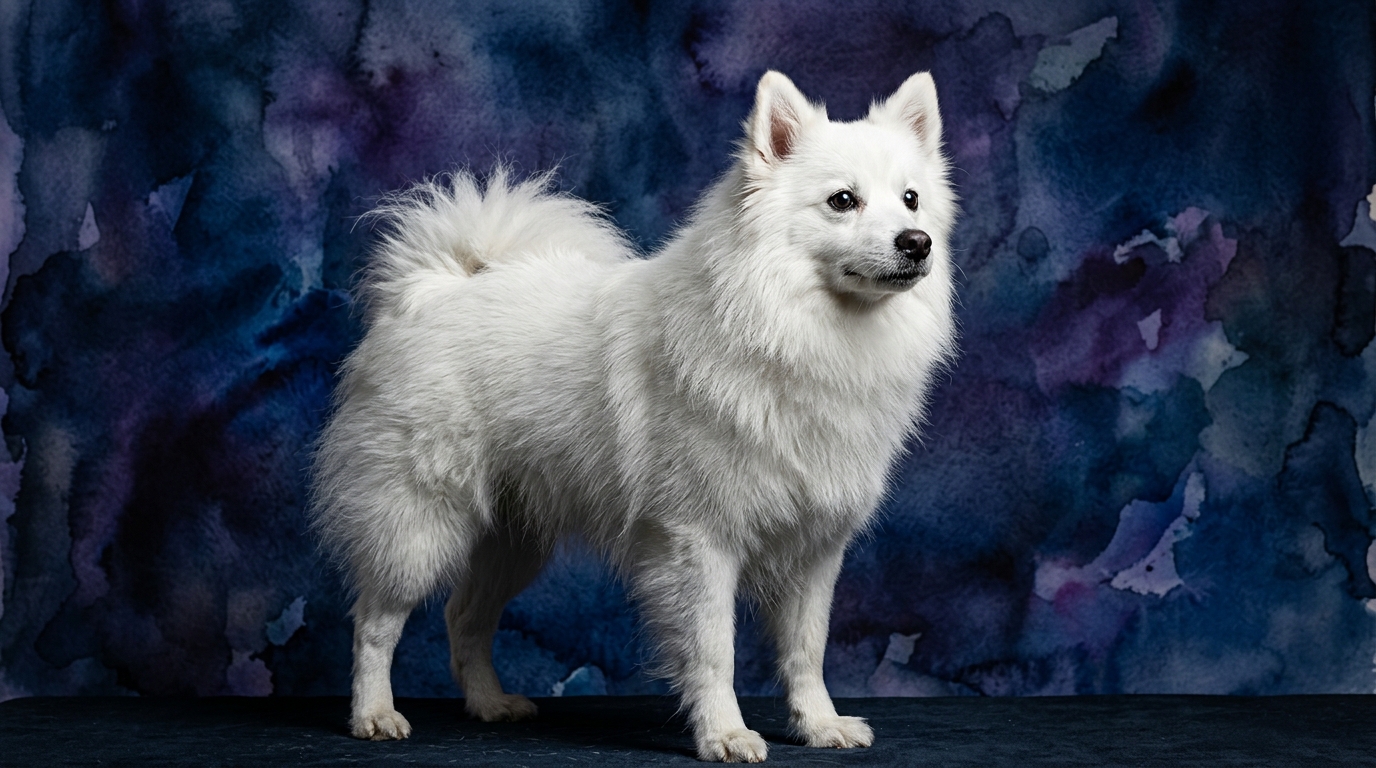
Side-by-Side IQ Profile: Unpacking Identical Scores
The Cosmic Pet's IQ Lab evaluates canine cognition across five key dimensions, and for both the Petit Basset Griffon Vendéen (PBGV) and the American Eskimo Dog (AED), the score is a consistent 3 out of 5. This score suggests a capable, average aptitude in each area, but the underlying expression of these capacities is profoundly shaped by their breed-specific traits.
For **Problem Solving (3/5)**, the PBGV's approach is often rooted in its hound heritage. They excel at figuring out how to navigate complex scent trails, or perhaps how to get through a loosely latched gate if an intriguing smell lies beyond. Their problem-solving is practical and purpose-driven, focused on achieving an objective related to their senses. The AED, on the other hand, applies its 3/5 problem-solving to more social or environmental challenges. They might cleverly figure out how to get your attention for a treat, manipulate a situation for extra play, or learn to open a cupboard door to access a toy. Their solutions often involve observation of their human environment and a desire for interaction.
When it comes to **Training Speed (3/5)**, both breeds demonstrate a capacity to learn, but the journey differs. A PBGV can grasp commands, but their independent nature and powerful nose mean that compliance is often conditional on the absence of a more compelling scent. They require consistent, patient training with high-value rewards, and even then, their hound instinct can override learned behaviors outdoors. The AED, while also scoring 3/5, often learns commands readily and enjoys the engagement of training sessions with their person. However, their independent streak and occasional stubbornness mean that they need clear motivation and consistent reinforcement; they aren't always simply eager to please without a clear benefit.
Their **Social Intelligence (3/5)** also manifests uniquely. The PBGV is generally a friendly and outgoing dog, enjoying companionship with people and other canines. Their social intelligence allows them to integrate well into family life and group settings, although their focus can quickly shift to an environmental scent, making them less acutely attuned to subtle human social cues when distracted. The AED, conversely, exhibits a strong, human-centric social intelligence. They are often deeply bonded to their families, adept at reading their owners' moods and intentions. While sometimes reserved with strangers, their social acumen within their immediate 'pack' is pronounced, often anticipating needs or seeking interaction.
The **Instinctive Drive (3/5)** is perhaps where the most striking divergence occurs despite the identical score. For the PBGV, this 3/5 is almost entirely dedicated to their highly specialized scent drive. They are driven to track, follow, and investigate odors, a powerful, almost singular instinct that defines much of their behavior. This isn't a general 'drive' but a finely tuned, persistent pursuit of a scent. The AED's 3/5 instinctive drive is more multifaceted, encompassing a strong desire for companionship, a vocal watchdog tendency (alert barking), and a robust play drive. Their instincts are geared towards being an active, engaged member of their family unit and protecting their home.
Finally, **Memory (3/5)** in a PBGV is exceptional for scents and locations associated with those scents. They can recall where they found an interesting trail days later and navigate complex routes based on olfactory cues. While they remember training cues, their recall might be overridden by a fresh scent. The AED's 3/5 memory is strong for routines, people, and learned behaviors. They reliably recall commands and past experiences, thriving on predictable schedules and remembering which behaviors earn them praise or rewards.
Where the Petit Basset Griffon Vendéen Shines Cognitively
Despite sharing an identical 3/5 score across the board, the Petit Basset Griffon Vendéen excels in a highly specialized form of cognitive function that many breeds, even those with higher general intelligence ratings, simply cannot match: their olfactory problem-solving and memory. Their ability to dissect, follow, and recall complex scent trails is a marvel of canine cognition. A PBGV can filter out a myriad of environmental odors to focus on a specific target, demonstrating an unparalleled cognitive focus when on the hunt. This specialized 'win' means they are adept at tasks requiring persistent, detail-oriented sensory processing, making them brilliant partners for scent work, tracking sports, or simply exploring the world through their nose.
Furthermore, their social intelligence, while a 3/5, lends itself to a friendly adaptability that can be a significant advantage. PBGVs generally welcome new people and other dogs with an open, cheerful demeanor. This means they often integrate smoothly into multi-pet households or social gatherings, offering a relaxed and amiable presence. Their lack of intense focus on human social cues when a scent is present can be interpreted as a 'win' for owners who appreciate a dog that is sociable but not overly demanding of constant human attention, allowing them to engage with their environment independently.
Where the American Eskimo Dog Excels Cognitively
The American Eskimo Dog's cognitive strengths, while also rated 3/5, lie in their profound human-centric social intelligence and their capacity for applying problem-solving to their domestic environment. An AED truly shines in their ability to read and respond to their human family's emotions and intentions. Their keen awareness of their surroundings, combined with a strong desire to be involved, makes them highly responsive to social cues and excellent at anticipating routines. This means they are often quick to understand what is expected of them in a family setting, making them adept at learning household rules and thriving on consistent interaction.
Their problem-solving, rated 3/5, is often channeled into strategic interactions with their people or environment to achieve desired outcomes, such as getting a toy from a difficult spot or 'talking' their way into extra playtime. This playful, sometimes manipulative, intelligence can be a 'win' for owners who enjoy a dog with a distinct personality and a flair for engaging in clever ways. The AED's memory is robust for routines and learned behaviors, ensuring they often remember commands and house rules reliably, contributing to a harmonious home life.
Training Dynamics: A Tale of Two 3/5s
Both breeds score a 3/5 in Training Speed, yet the practical experience of training them can feel remarkably different due to their underlying behavioral blueprints. Training a Petit Basset Griffon Vendéen is often a persistent exercise in managing their powerful, independent scent drive. While they are capable of learning commands, their instinct to follow a compelling odor can make them appear 'deaf' or 'stubborn' outdoors. An owner might find that a PBGV perfectly executes a 'recall' indoors, but instantly 'forgets' it the moment a rabbit trail crosses their path. Success with a PBGV hinges on patience, consistency, high-value rewards, and understanding that their nose is their primary directive, often requiring secure, fenced environments for off-leash activities.
The American Eskimo Dog, also with a 3/5 Training Speed, generally responds well to positive reinforcement and enjoys the mental stimulation of learning. They are often eager to please their family, which can facilitate faster learning of basic obedience. However, their independent streak and occasional stubbornness mean that they need a trainer who can keep them engaged and motivated, as they might disengage if they don't see the point or if the training isn't fun. Their vocal nature also means that training often includes specific work on managing barking, a behavior that comes naturally to them as alert watchdogs. While both breeds present training challenges commensurate with a 3/5 score, the AED's motivation is more often tied to human interaction and rewards, while the PBGV's is dictated by their nose, making the AED potentially feel 'easier' for a novice owner due to their stronger focus on human engagement.
Matching Lifestyles: Active Explorers vs. Engaged Companions
When considering which breed aligns with an active versus a relaxed owner, it's crucial to understand how their cognitive profiles influence their daily needs. The Petit Basset Griffon Vendéen thrives with owners who are active in a specific way: those who appreciate and can facilitate their profound need for scent exploration. An 'active' owner for a PBGV is someone who enjoys long, meandering 'sniffaris' in safe, enclosed areas, participates in scent work or tracking sports, or provides ample opportunity for their dog to engage its powerful nose. While they possess stamina, their exercise isn't necessarily about high-impact running; it's about persistent, investigative movement. A relaxed owner might struggle significantly with a PBGV's independent nature and their drive to follow a scent, as they aren't content to simply lounge without mental stimulation.
The American Eskimo Dog suits owners who are active in a more interactive, engagement-focused sense. They need regular physical exercise like walks, playtime, and opportunities for dog sports such as agility or obedience, but equally important is mental stimulation and consistent interaction with their human family. An 'active' owner for an AED is someone who enjoys training, playing games, and generally involving their dog in daily family life. For a more relaxed owner, an AED can adapt if they receive ample mental stimulation through puzzle toys and consistent, quality interaction, but their inherent energy and strong desire for companionship mean they are not suited for truly sedentary lifestyles. Both breeds require engagement, but the *type* of engagement differs significantly.
The Verdict: When to Choose Which Companion
The Verdict
Choose the Petit Basset Griffon Vendéen if you are captivated by the unique world of scent, prepared for an independent spirit that follows its nose, and seek a robust, friendly companion for outdoor adventures focused on exploration and tracking.
Opt for the American Eskimo Dog if you desire a highly interactive, clever, and alert companion who thrives on being an integral part of your family's daily life, offering both playful energy and devoted, communicative companionship.
🧠 Find Your Pet's IQ Score
Our Pet IQ Lab assessment covers 25+ tests across 5 cognitive dimensions — personalized to your breed.
Take the Full IQ Test →Frequently Asked Questions
Are Petit Basset Griffon Vendéen good apartment dogs?
While their size is moderate, PBGVs have a strong instinctive drive for scent work and require significant exercise and mental stimulation. An apartment living situation would need an owner dedicated to providing daily, engaging 'sniffaris' or scent games, as their independent nature and vocal tendencies might otherwise lead to frustration.
Do American Eskimo Dogs bark a lot?
Yes, American Eskimo Dogs possess a natural watchdog instinct and are often quite vocal, using barking to alert their owners to new sights, sounds, or visitors. While this can be managed with consistent training, owners should be prepared for a dog that expresses itself audibly and will need to work on appropriate barking behaviors.
How do their '3/5' problem-solving scores manifest differently in daily life?
A PBGV's 3/5 problem-solving often involves navigating the physical world through scent, like figuring out how to get to a particular smell or finding their way back on a trail. An AED's 3/5 problem-solving is more often applied to social situations or manipulating their environment to get attention, treats, or access to preferred areas, demonstrating a more human-centric, strategic approach.