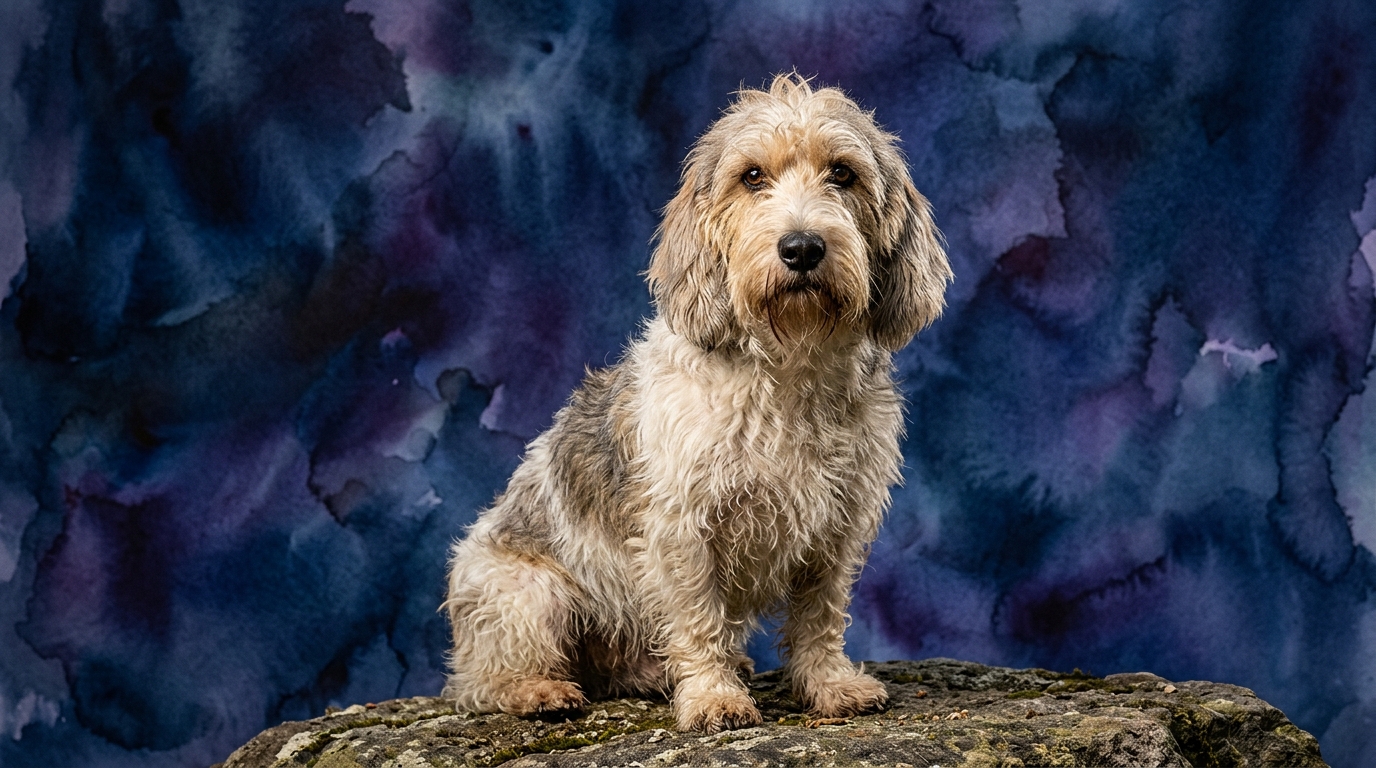
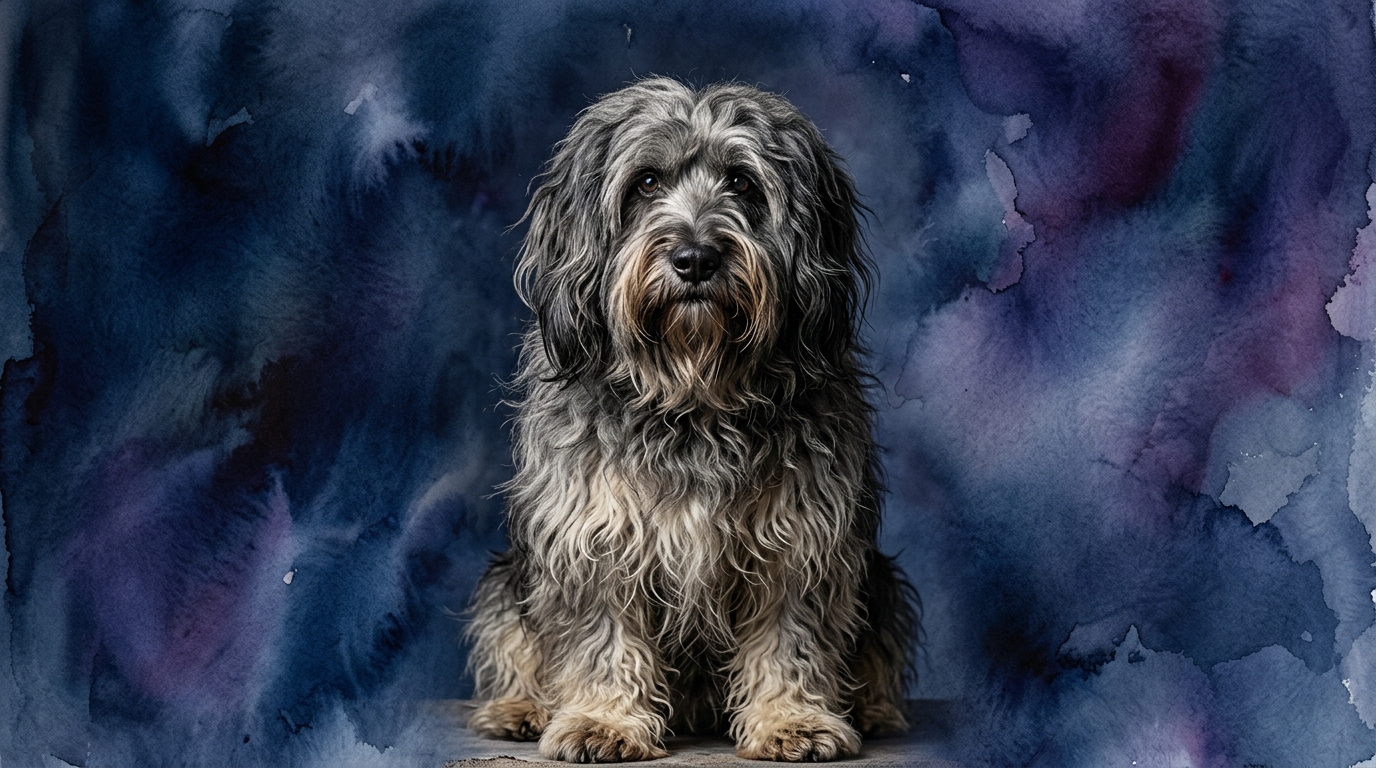
Side-by-Side Cognitive Profiles
At The Cosmic Pet Pet IQ Lab, we evaluate dog intelligence across five key dimensions. For both the Petit Basset Griffon Vendéen and the Polish Lowland Sheepdog, our assessment shows a balanced 3/5 score in each category. However, understanding their breed-specific expressions of these scores is crucial for a complete picture.
For the **Petit Basset Griffon Vendéen (PBGV)**, a hound breed, their **Problem Solving (3/5)** isn't about abstract human-devised puzzles; rather, it's an intricate dance with the environment. They excel at deciphering complex scent trails, navigating varied terrain, and devising routes to locate quarry, demonstrating a practical, instinct-driven intelligence focused on their primary purpose. This requires sophisticated sensory interpretation and on-the-spot decision-making. Their **Training Speed (3/5)** sees them capable of grasping commands, but their deeply ingrained independent nature and powerful olfactory distractions mean training often demands significant patience, consistency, and a highly engaging approach. They learn best when lessons are made more compelling than the myriad of scents beckoning them, making rapid, rote obedience less characteristic of the breed. **Social Intelligence (3/5)** for PBGVs generally means they are convivial and cooperative within their established human 'pack' and with other canines, adept at interpreting group dynamics for collaborative efforts, much like a hunting pack. Their social awareness is more geared towards understanding roles in a shared activity or environment, often prioritizing environmental cues over subtle human emotional shifts. A profound, innate **Instinctive Drive (3/5)** to track, scent, and vocalize is the defining characteristic of the PBGV. Their world is predominantly dictated by their nose, compelling them to follow a trail with single-minded determination, often overriding other stimuli or human directives in the face of an irresistible scent. Lastly, their **Memory (3/5)**, while impressive for specific scent pathways, past finds, and established routines, can occasionally be momentarily overshadowed by the immediate, overwhelming pull of a fresh, intriguing scent or sound, requiring consistent reinforcement of learned commands.
The **Polish Lowland Sheepdog (POL)**, a herding breed, expresses its 3/5 scores differently. Their **Problem Solving (3/5)** acumen is rooted in their herding heritage, making them adept at understanding spatial relationships, anticipating the movements of a flock, or even managing the flow of family members. They demonstrate practical intelligence in dynamic situations, quickly devising strategies to gather, guide, and protect their charges. Regarding **Training Speed (3/5)**, POLs are capable and willing learners, quickly picking up commands necessary for their work or daily life when presented with clear, consistent guidance. However, their strong-willed and independent nature means they require a firm, fair hand and strong leadership to ensure consistent compliance, as they are not simply passive followers but partners who need to understand the 'why'. Their **Social Intelligence (3/5)** means they form deep bonds with their families, displaying an intuitive understanding of their human's expectations, routines, and even subtle emotional shifts. While often reserved or wary with strangers, they are highly attuned to the dynamics within their household, often acting as diligent and protective guardians who read their family's needs. A potent and inherent **Instinctive Drive (3/5)** to gather, protect, and control their 'flock' (whether livestock or their human family members) defines the POL. This drive can include nudging, circling, or attempting to direct movement, born from a deep-seated working heritage that requires vigilance. Finally, POLs exhibit a robust **Memory (3/5)** for commands, complex household routines, and the established 'rules' of their domain. They readily recall learned behaviors, spatial layouts, and the identities of those within their accepted circle, contributing significantly to their effectiveness as a home guardian and a responsive working dog.
Where the Petit Basset Griffon Vendéen Excels Cognitively
The Petit Basset Griffon Vendéen truly excels in independent pursuit and sustained, singular focus on compelling environmental stimuli, particularly scent. Their cognitive strength lies in their unparalleled ability to process incredibly complex olfactory information, differentiate between countless trails, and maintain a relentless, often self-directed drive to locate the source of an intriguing smell. This is a highly nuanced form of intelligence, requiring sophisticated sensory interpretation, strategic decision-making in real-time, and often a remarkable degree of perseverance without constant human direction. A PBGV's capacity to 'read' a landscape through its nose, piecing together a detailed narrative from invisible cues, showcases a unique cognitive prowess unmatched by many breeds. They are absolute masters of their sensory domain, making them exceptional at tasks requiring deep environmental engagement and extensive, self-motivated exploration.
Where the Polish Lowland Sheepdog Excels Cognitively
The Polish Lowland Sheepdog's cognitive edge shines brightest in their capacity for nuanced social monitoring and strategic oversight within their perceived 'flock' or family unit. Their intelligence is acutely geared towards understanding intricate group dynamics, anticipating movements, and maintaining a sense of order, whether among actual livestock or their human companions. This involves a subtle, continuous interplay of keen observation, independent decision-making, and often non-verbal communication to guide and protect. POLs demonstrate a superior understanding of cause-and-effect in social situations, quickly learning which actions elicit desired responses from their charges or family members. Their cognitive strength lies in their remarkable ability to function as both a highly cooperative partner in a task and an independent, proactive decision-maker when supervising, making them exceptionally adept at complex, dynamic roles that require constant assessment and adaptation.
Training Aptitude: PBGV vs. POL
When comparing trainability, the Polish Lowland Sheepdog generally presents as the more straightforward student, primarily due to their intrinsic desire to work cooperatively with their human and their focused attention on their partner. Their herding background predisposes them to respond to direction and seek a 'job' to do, making them inherently more amenable to structured obedience lessons and consistent command following. While they undeniably possess a strong will and can be independent thinkers, this drive is often channeled into performing tasks effectively once they clearly understand the goal and their role within it. In stark contrast, the Petit Basset Griffon Vendéen's independent hunting spirit and overwhelming drive to follow a scent can make training a more patient and creatively challenging endeavor. Their nose is a constant, compelling distraction, and their primal urge to follow a trail can easily override a learned command, especially in an exciting outdoor environment. Training a PBGV means consistently competing with an entire world of fascinating smells, requiring exceptionally engaging, reward-based methods and a deep understanding of their hound nature to achieve reliably consistent responses. The POL's inherent desire to please and their focus on their human's directives often makes them quicker to grasp and execute commands, even in moderately distracting environments, compared to the scent-addicted PBGV.
Matching Breeds to Lifestyles: Active vs. Relaxed Owners
For active owners who thrive on outdoor adventures, engaging in structured dog sports, and providing consistent mental stimulation, the Polish Lowland Sheepdog is an excellent match. Their need for both significant physical exertion and intellectual engagement means they excel in activities like agility, obedience, rally, or even herding trials, demanding a dedicated owner who can channel their boundless energy and purpose. A more relaxed owner might find the POL's inherent drive and desire for a 'job' overwhelming, potentially leading to boredom-induced behavioral issues if their needs are not adequately met. Conversely, the Petit Basset Griffon Vendéen, while certainly active in short, intense bursts of scent-tracking, can also adapt remarkably well to a more relaxed home environment, provided their fundamental sniffing needs are generously indulged. They thoroughly enjoy leisurely, exploratory walks where they can immerse themselves in a world of scents, but aren't necessarily looking for high-intensity, structured workouts every single day. Owners who appreciate a dog content to nap after a good sniff-a-thon, but who are also prepared for enthusiastic, often vocal, outbursts when a particularly compelling scent presents itself, would find the PBGV a fitting companion. Their activity level is more about profound mental engagement through scent work and exploration rather than constant, high-octane physical exertion.
The Verdict
Select the Petit Basset Griffon Vendéen if you value a companion whose cognitive strength lies in independent sensory exploration and who brings a spirited, vocal presence to your home. They thrive with owners who appreciate their hound instincts and can provide outlets for their powerful nose.
Opt for the Polish Lowland Sheepdog if you seek a vigilant, cooperative partner who excels in structured activities and thrives on having a 'job' to do, offering both companionship and a protective presence. They suit owners prepared for consistent training and engagement.
🧠 Find Your Pet's IQ Score
Our Pet IQ Lab assessment covers 25+ tests across 5 cognitive dimensions — personalized to your breed.
Take the Full IQ Test →Frequently Asked Questions
Are Petit Basset Griffon Vendéens difficult to train due to their scent drive?
While not 'difficult' in the sense of lacking capacity, their powerful scent drive means training requires extra patience, consistency, and engaging methods. Distractions from compelling smells can make them seem less responsive than breeds without such a strong olfactory focus.
Do Polish Lowland Sheepdogs require a lot of mental stimulation?
Yes, Polish Lowland Sheepdogs are working dogs with a history of managing livestock, so they absolutely thrive on mental stimulation. Without regular engagement through training, puzzles, or dog sports, they can become bored and potentially develop unwanted behaviors.
Which breed is better for a first-time dog owner?
Neither breed is typically recommended for a completely novice owner without prior research or commitment. The PBGV's independent hound nature and the POL's strong herding drive and protective instincts both require an owner who understands breed-specific traits and is dedicated to consistent training and socialization.