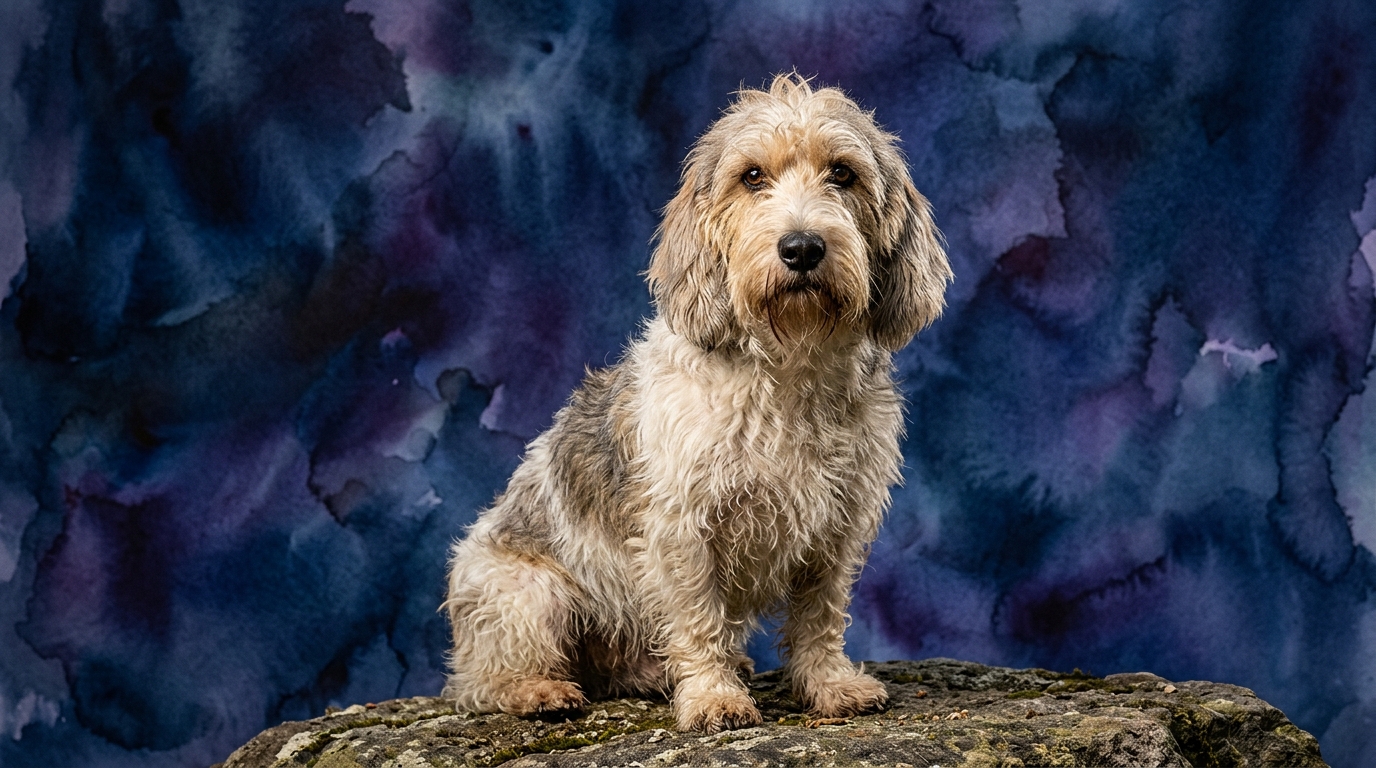

Side-by-Side IQ Profile: Unpacking the 3/5 Scores
At The Cosmic Pet Pet IQ Lab, both the Petit Basset Griffon Vendéen (PBGV) and the Tibetan Terrier consistently earn a 3/5 rating across all five cognitive dimensions: problem-solving, training speed, social intelligence, instinctive drive, and memory. This uniform score, however, belies the rich, breed-specific ways these capacities manifest. For the PBGV, a French scent hound, a '3' in problem-solving often translates to their adeptness at navigating intricate scent puzzles in varied terrain, using their keen nose to overcome environmental obstacles and locate a target. Their training speed at 3/5 reflects a moderate pace of learning, often influenced by their independent, scent-driven focus which can occasionally override immediate human directives. Social intelligence at 3/5 means they are generally attuned to their human companions and pack dynamics, but their primary social focus might shift when a compelling scent presents itself. Their instinctive drive, also 3/5, is powerfully geared towards tracking and vocalizing, a core part of their ancestral role. Memory at 3/5 allows them to retain complex scent patterns and learned routes, crucial for successful hunting.
The Tibetan Terrier, a venerable companion and watchdog from the high Himalayas, also scores 3/5 across the board, yet their cognitive expression is distinctly different. Their problem-solving at 3/5 often involves navigating complex domestic social situations, figuring out how to gain attention or access desired resources within a household setting, sometimes with a clever, independent streak. A 3/5 training speed for a Tibetan Terrier means they absorb commands at a steady pace, but their independent nature can lead to moments of selective hearing if they don't perceive the immediate value or logic of a request. Their social intelligence, also 3/5, is marked by a deep bond with their primary family, showing sensitivity to their emotions and routines, though they can be reserved or discerning with strangers. The 3/5 instinctive drive in a Tibetan Terrier is rooted in their historical role as watchful companions, exhibiting a natural inclination to alert their families to novelties and possessing a moderate protective instinct. Their 3/5 memory allows them to recall routines, people, and specific social interactions with remarkable clarity, forming lasting bonds and expectations.
Where the Petit Basset Griffon Vendéen Excels Cognitively
While both breeds share identical numerical scores, the PBGV's cognitive strengths are deeply intertwined with their heritage as a working scent hound. Their '3/5 problem-solving' shines brightest when faced with environmental challenges that require persistent, independent investigation. A PBGV excels at deciphering complex scent trails, demonstrating a unique ability to filter out extraneous odors and focus on a specific target scent, even after long periods or across difficult terrain. This isn't merely following a trail; it involves active deduction and memory recall of scent patterns, making them exceptional at tasks requiring sustained, autonomous olfactory work. Their '3/5 instinctive drive' is a finely tuned instrument, manifesting as an unyielding determination to pursue a scent, often overriding other distractions. This drive isn't just about speed; it's about a focused, cognitive engagement with their environment through their nose, a form of intelligence that is highly specialized and effective in its domain. This breed’s memory, also 3/5, is particularly robust for recalling specific scent profiles and the pathways associated with them, allowing them to retrace steps or recognize a familiar trail even days later, a critical aspect of their hunting prowess.
Where the Tibetan Terrier Excels Cognitively
The Tibetan Terrier’s cognitive prowess, while also rated 3/5 across the board, truly distinguishes itself in the realm of social navigation and domestic ingenuity. Their '3/5 problem-solving' is often directed at understanding and influencing their human environment. A Tibetan Terrier might cleverly figure out how to open a cupboard for a treat, manipulate a toy to get attention, or even orchestrate a play session by engaging their family members. This form of problem-solving is less about external navigation and more about understanding cause-and-effect within a social context, often displaying a nuanced understanding of human behavior. Their '3/5 social intelligence' is particularly acute within their family unit, enabling them to read subtle cues and adapt their behavior to the household mood. They often act as sensitive barometers of family dynamics, offering comfort or initiating play at opportune moments. This social acumen, combined with their 3/5 memory, allows them to build intricate mental maps of their family's routines, preferences, and individual personalities, fostering a deep and responsive companionship. Their '3/5 instinctive drive' expresses itself as a vigilant awareness of their surroundings, making them excellent, discerning watchdogs who are quick to alert without being overly aggressive, demonstrating a cognitive balance between alertness and measured response.
Which is Easier to Train and Why?
When considering ease of training, the identical 3/5 training speed scores for both breeds require a deeper look at their intrinsic motivations and distractions. The Petit Basset Griffon Vendéen, despite its moderate training speed, can present unique challenges due to its profound instinctive drive. A PBGV's nose is its primary tool for understanding the world, and once a compelling scent is detected, their focus can become singularly devoted to it. This means that while they are capable of learning commands, their ability to execute them promptly can be severely hampered by environmental olfactory stimuli. Training a PBGV often requires exceptional patience, consistency, and high-value rewards to compete with the allure of a captivating scent. Their independent nature, a hallmark of many hounds, means they are not inherently driven to please in the same way some other breeds might be; they need to find the training itself rewarding or the reward compelling enough to override their primary sensory input. Effective training for a PBGV often involves making it a game, integrating scent work, and ensuring a quiet, distraction-free environment initially.
In contrast, the Tibetan Terrier, also with a 3/5 training speed, can be easier to train for many owners due to their strong desire for companionship and their social intelligence. While they possess an independent streak and can be discerning about obeying commands they deem pointless, they are generally more amenable to positive reinforcement methods focused on building a bond. Their '3/5 social intelligence' means they are often more attuned to human approval and disappointment, which can be leveraged in training. Unlike the PBGV, whose primary distraction might be an external scent, the Tibetan Terrier's challenge often stems from their own assessment of the situation – if they don't see the immediate benefit or are feeling stubborn, they might simply choose not to comply. However, once motivated and engaged, they learn quickly and reliably. Consistency, clear communication, and making training sessions fun and engaging are key to unlocking the Tibetan Terrier's moderate but willing trainability. Their intelligence often means they grasp concepts quickly, but their independent spirit means they need a good reason to perform.
Which Suits Active Owners vs. Relaxed Owners?
The Petit Basset Griffon Vendéen is unequivocally better suited for active owners, particularly those who appreciate and can accommodate a dog with a strong working drive. Their '3/5 instinctive drive' as a scent hound translates into a need for substantial physical exercise and, crucially, mental stimulation centered around their olfactory abilities. A PBGV thrives on long, engaging walks where they are allowed to explore scents, participate in scent work games, or even engage in dog sports like tracking or agility. Without adequate outlets for their energy and nose, they can become bored, vocal, and potentially destructive. Their happy-go-lucky temperament needs an owner who can match their enthusiasm for outdoor adventures and provide consistent, engaging activities. Owners who are prepared for a dog that will enthusiastically follow its nose, sometimes to the detriment of immediate recall, will find a joyful companion in the PBGV.
The Tibetan Terrier, while certainly an active and playful breed, offers more versatility and can adapt to both moderately active and somewhat relaxed owners. Their '3/5 instinctive drive' is geared more towards companionship and vigilance rather than sustained physical exertion in the field. They enjoy walks, playtime, and outdoor adventures, but are generally content to settle down for cuddles or quiet observation indoors once their exercise needs are met. Their '3/5 social intelligence' makes them excellent family companions who enjoy being involved in household activities, making them suitable for owners who prefer a dog that is an integral part of their daily routine, whether that involves hiking or just lounging on the couch. While they do require regular exercise to maintain their physical and mental well-being, their adaptability means they can thrive in various home environments, provided they receive consistent attention and engagement from their family. They are not a sedentary breed, but their exercise needs are often more flexible than those of a dedicated working hound.
The Verdict
Choose the Petit Basset Griffon Vendéen if you are an active individual or family eager to engage with a dog's profound scenting abilities and independent spirit, prepared for consistent outdoor activity and scent-based enrichment.
Opt for the Tibetan Terrier if you desire a highly social, adaptable, and clever companion who thrives on family interaction and offers a balanced blend of playful energy and calm companionship, suitable for varied lifestyles.
🧠 Find Your Pet's IQ Score
Our Pet IQ Lab assessment covers 25+ tests across 5 cognitive dimensions — personalized to your breed.
Take the Full IQ Test →Frequently Asked Questions
Do Petit Basset Griffon Vendéens bark a lot?
Yes, PBGVs are known for their vocal nature, including baying, barking, and howling. This is a direct expression of their 3/5 instinctive drive as scent hounds, used to alert hunters to game or communicate with their pack, and requires understanding and management from owners.
Are Tibetan Terriers good with children and other pets?
Tibetan Terriers, with their 3/5 social intelligence, are generally good with well-behaved children and other pets, especially if raised with them. They are sensitive and playful but can be reserved, so early socialization and respectful interactions are key to fostering positive relationships.
How much exercise do these breeds need daily?
A Petit Basset Griffon Vendéen requires at least an hour or more of vigorous exercise daily, ideally involving off-leash exploration in a secure area or scent work, due to their strong instinctive drive. A Tibetan Terrier needs moderate daily exercise, typically 30-60 minutes of walking or playtime, but appreciates mental engagement and family activity.