The Cosmic Pet Pet IQ Lab: A Side-by-Side Cognitive Profile
To understand the distinct mental landscapes of the Petit Basset Griffon Vendéen (PBGV) and the Toy Poodle, we turn to The Cosmic Pet Pet IQ Lab’s comprehensive profiling across five key dimensions. This allows for a granular comparison, moving beyond broad labels to specific cognitive aptitudes.
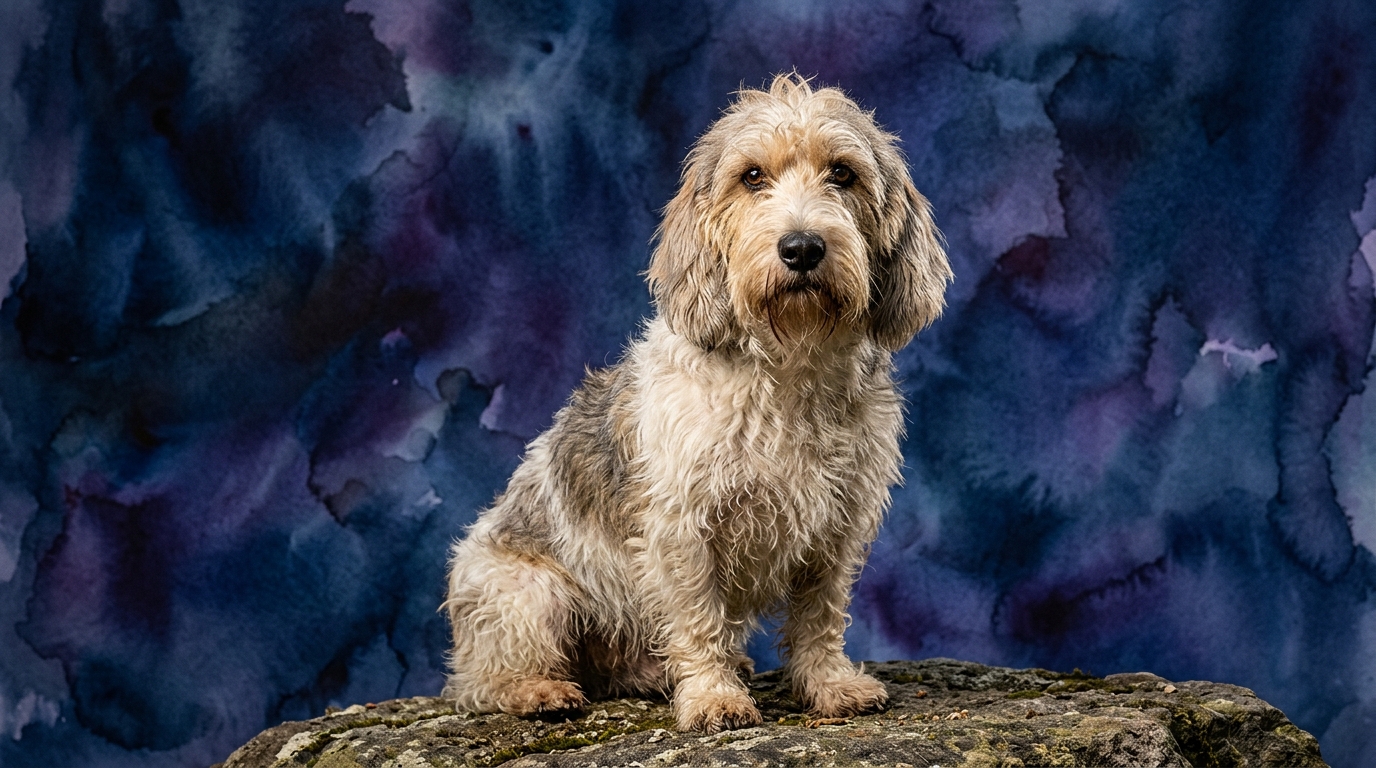
For the Petit Basset Griffon Vendéen, a breed rooted in tracking game across rugged terrain, its cognitive profile reflects a balanced, self-reliant intellect. Its problem-solving ability scores 3/5, suggesting a methodical approach, often relying on instinct and persistence rather than rapid innovation. Training speed also sits at 3/5, indicating that while capable of learning, the PBGV may require more consistent repetition and patience, often prioritizing its sensory world over immediate human directives. Social intelligence is rated 3/5, suggesting a capacity for connection but not an overwhelming drive for human-centric interaction, often being more oriented towards its immediate environment or a canine pack. Its instinctive drive is 3/5, primarily manifesting as a strong, enduring scenting ability that can override other considerations. Memory, at 3/5, supports its hunting tasks, allowing it to recall scent trails and routines, but perhaps not with the same detail or retention speed as other breeds.
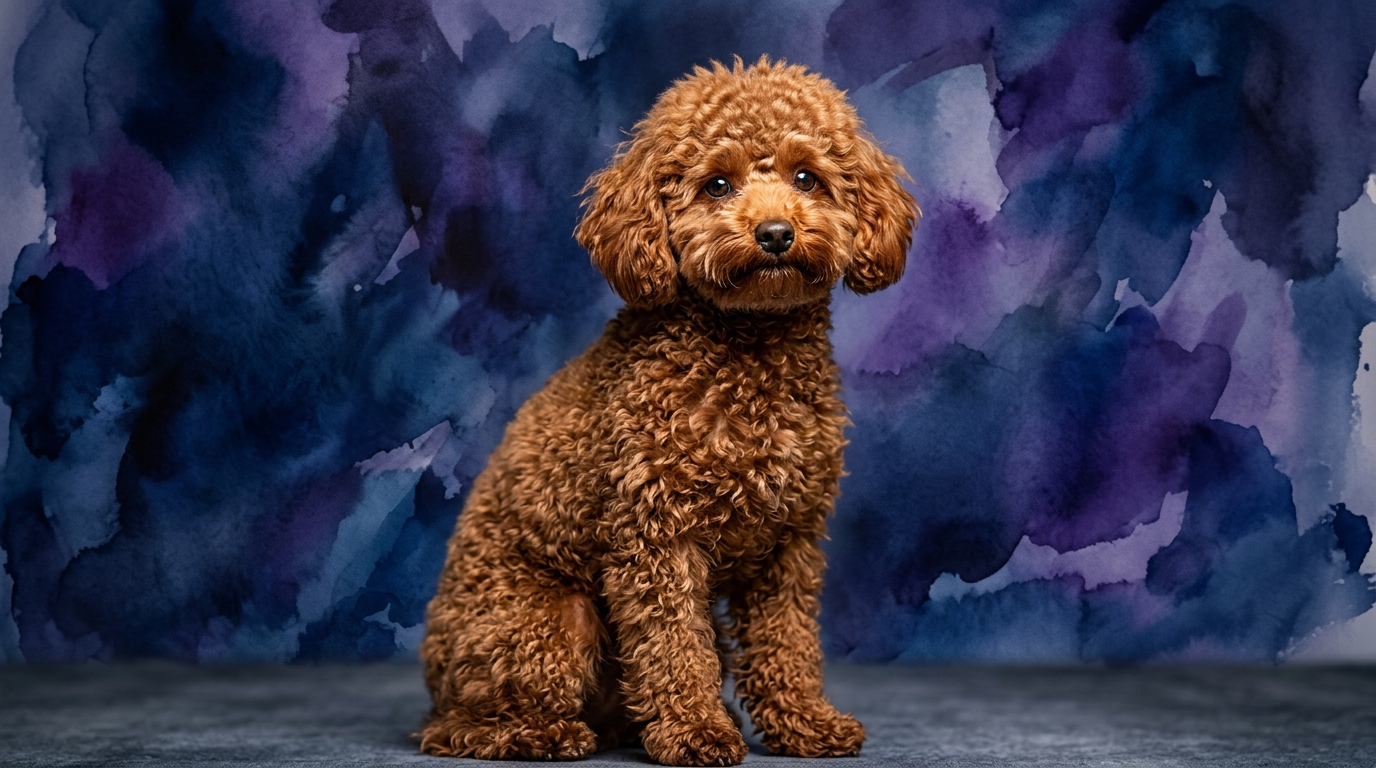
In contrast, the Toy Poodle, a breed developed for companionship and performance, presents a profile marked by agility and rapid learning. Its problem-solving ability is exceptional at 5/5, reflecting a capacity for abstract thought, quick adaptation to new situations, and a knack for figuring things out independently. Training speed matches this at 5/5, indicating an eagerness to learn and a remarkable ability to grasp new commands and behaviors with minimal repetition. Social intelligence, similar to the PBGV, scores 3/5, suggesting a sociable nature that enjoys interaction but might not possess the deep intuitive understanding of human emotions seen in some other breeds. Its instinctive drive is also 3/5, often channeled into activities like retrieving, agility, or performance, rather than a singular, overriding primal urge. Memory, at 5/5, is a standout trait, enabling the Toy Poodle to retain a vast repertoire of commands, experiences, and routines with remarkable clarity and longevity.
Where the Petit Basset Griffon Vendéen Demonstrates Unique Cognitive Strengths
While the PBGV's individual scores might appear modest compared to the Toy Poodle's, its cognitive strengths lie in their synergistic application, particularly within its natural element. The PBGV truly excels in what might be termed 'environmental problem-solving' – the intricate, sustained cognitive effort required to follow a complex scent trail through varied terrain. Its 3/5 problem-solving score doesn't indicate a lack of intelligence, but rather a specialized form of it, focused on decoding olfactory information and navigating physical obstacles with tenacity. A PBGV's mind is constantly processing a rich tapestry of smells, discerning individual scents, and remembering their trajectory, a complex cognitive task that often goes underappreciated in generalized intelligence metrics.
Furthermore, the PBGV’s 3/5 instinctive drive, while not a perfect score, represents a profound and unwavering commitment to its primary purpose: the chase. This isn't a mere physical act; it's a cognitive loop of detection, analysis, and pursuit, often requiring independent decision-making far from human guidance. Its memory, at 3/5, is perfectly adequate for recalling specific scent patterns or the layout of frequently hunted areas, enabling efficient navigation and tracking. This breed’s mental fortitude allows it to persist in demanding situations, demonstrating a resilience and focus that is a distinct cognitive advantage when faced with a challenging task requiring sustained effort and independence, even if it means momentarily tuning out human instruction.
Where the Toy Poodle’s Mind Shines Brightest
The Toy Poodle's cognitive profile, marked by high scores in problem-solving, training speed, and memory, showcases a general-purpose intellectual agility that makes it exceptionally adaptable to a wide array of domestic and performance roles. Its 5/5 problem-solving ability means it can quickly assess novel situations and devise effective solutions, whether it's figuring out how to open a treat puzzle or understanding complex sequences in obedience or agility training. This isn't just about learning tricks; it's about a foundational capacity for understanding cause and effect and applying learned principles to new contexts.
The Toy Poodle's 5/5 training speed is a direct reflection of its keen observational skills and rapid cognitive processing. They absorb new information with remarkable efficiency, often requiring only a few repetitions to grasp a new command or concept. This quick uptake is supported by their exceptional 5/5 memory, which ensures that once a lesson is learned, it is retained with impressive fidelity. This combination allows Toy Poodles to build a vast repertoire of behaviors and responses, making them highly versatile companions who can excel in competitive dog sports, therapy work, or simply as well-mannered household members. Their cognitive strengths lie in their capacity for nuanced learning and their ability to apply that learning flexibly across different scenarios, often driven by a desire to engage with their human companions.
Training Dynamics: Which Breed Offers Greater Ease?
When it comes to ease of training, the differences between the Petit Basset Griffon Vendéen and the Toy Poodle are quite pronounced, largely stemming from their divergent evolutionary purposes and corresponding IQ scores. The Toy Poodle, with its 5/5 training speed and 5/5 memory, is generally a delight to train. They possess a natural eagerness to please and a quick understanding of human cues. Their capacity to learn complex sequences rapidly and retain them for extended periods means that owners can progress through training levels efficiently. Behavioral differences like their focused attention on their human and their motivation for interaction and rewards make them responsive students. They are less likely to be sidetracked by environmental stimuli and more inclined to engage directly with their trainer, making the learning process smoother and often more rewarding for both parties.
The Petit Basset Griffon Vendéen, scoring 3/5 in training speed and memory, presents a different training experience. While not untrainable, their hound heritage instills a strong independent streak and a profound focus on their olfactory world. A fascinating scent trail will often take precedence over a 'sit' command, making consistent attention a challenge. Their problem-solving at 3/5 means they might take longer to connect actions with consequences, requiring more patient repetition. Owners must understand that a PBGV isn’t being defiant; it’s simply following its highly developed instincts, a cognitive priority inherent to its breed. Training a PBGV demands creativity, consistency, and an understanding of how to work with, rather than against, their powerful scent drive. This might involve using high-value rewards, training in low-distraction environments, and incorporating scent games into their routine to satisfy their natural inclinations.
Matching Canine Minds to Owner Lifestyles: Active vs. Relaxed Owners
The distinct cognitive profiles of the PBGV and Toy Poodle mean they thrive in different environments and with different owner temperaments. For active owners who enjoy robust outdoor pursuits and appreciate a dog with a strong sense of purpose, the Petit Basset Griffon Vendéen is an excellent match. Their 3/5 instinctive drive, primarily focused on scent, means they need opportunities to explore and engage their formidable noses. These are not dogs content with a quick walk around the block; they need longer excursions, scent games, or even participation in tracking sports to truly satisfy their cognitive and physical needs. Owners who find joy in watching a dog meticulously work a scent trail, even if it means a bit more independence on the lead, will appreciate the PBGV's specialized intelligence. They are perfect for hikers, trail walkers, or those living in rural areas where safe, expansive exploration is possible.
The Toy Poodle, conversely, is remarkably versatile and can adapt to both active and more relaxed lifestyles, provided their mental stimulation needs are met. While they have an energetic spirit, their smaller size means their physical exercise requirements can often be satisfied with indoor play, moderate walks, or trips to the dog park. Their 5/5 problem-solving and memory excel with mental challenges like puzzle toys, learning complex tricks, or engaging in dog sports like agility or obedience. This makes them suitable for active owners who enjoy teaching and participating in mentally stimulating activities. However, their adaptability also makes them a good fit for relaxed owners who are committed to providing consistent mental engagement through interactive games, training sessions, and companionship. They are less about sustained physical endurance and more about consistent, varied mental interaction, making them a flexible choice for various home environments.
The Verdict
Choose the Petit Basset Griffon Vendéen if you seek a resilient, independent companion who thrives on olfactory exploration and outdoor adventures, and you are prepared for a training journey that respects their strong hound instincts.
Opt for the Toy Poodle if you desire a highly trainable, adaptable companion who excels at rapid learning and thrives on consistent mental engagement and close interactive partnership.
🧠 Find Your Pet's IQ Score
Our Pet IQ Lab assessment covers 25+ tests across 5 cognitive dimensions — personalized to your breed.
Take the Full IQ Test →Frequently Asked Questions
Are Petit Basset Griffon Vendéens difficult to live with due to their independence?
PBGVs are not inherently difficult, but their independence and strong scent drive mean they require consistent training and management. Owners must understand their hound nature and provide outlets for their instincts, such as scent games or secure off-leash areas, to ensure a harmonious household.
Do Toy Poodles need a lot of mental stimulation despite their size?
Absolutely. Toy Poodles possess exceptional problem-solving abilities and memory, meaning they thrive on mental challenges. Without adequate mental engagement, they can become bored or develop undesirable behaviors, so regular training, puzzle toys, and interactive play are essential for their well-being.
Which breed is better suited for first-time dog owners?
For first-time dog owners, the Toy Poodle generally offers an easier entry point due to its high trainability and eagerness to please. The PBGV's independent nature and specific hound instincts can be more challenging for those without prior experience in managing a scent-driven breed.