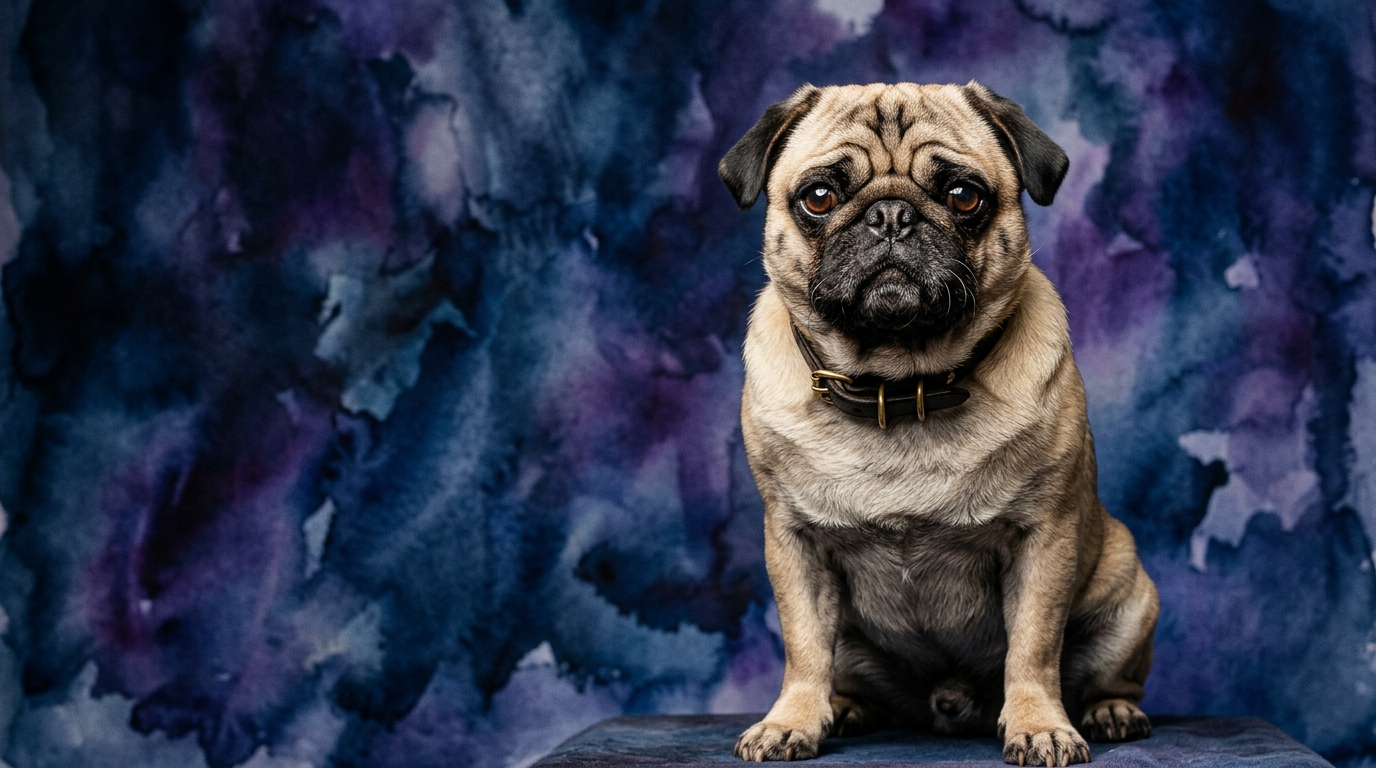
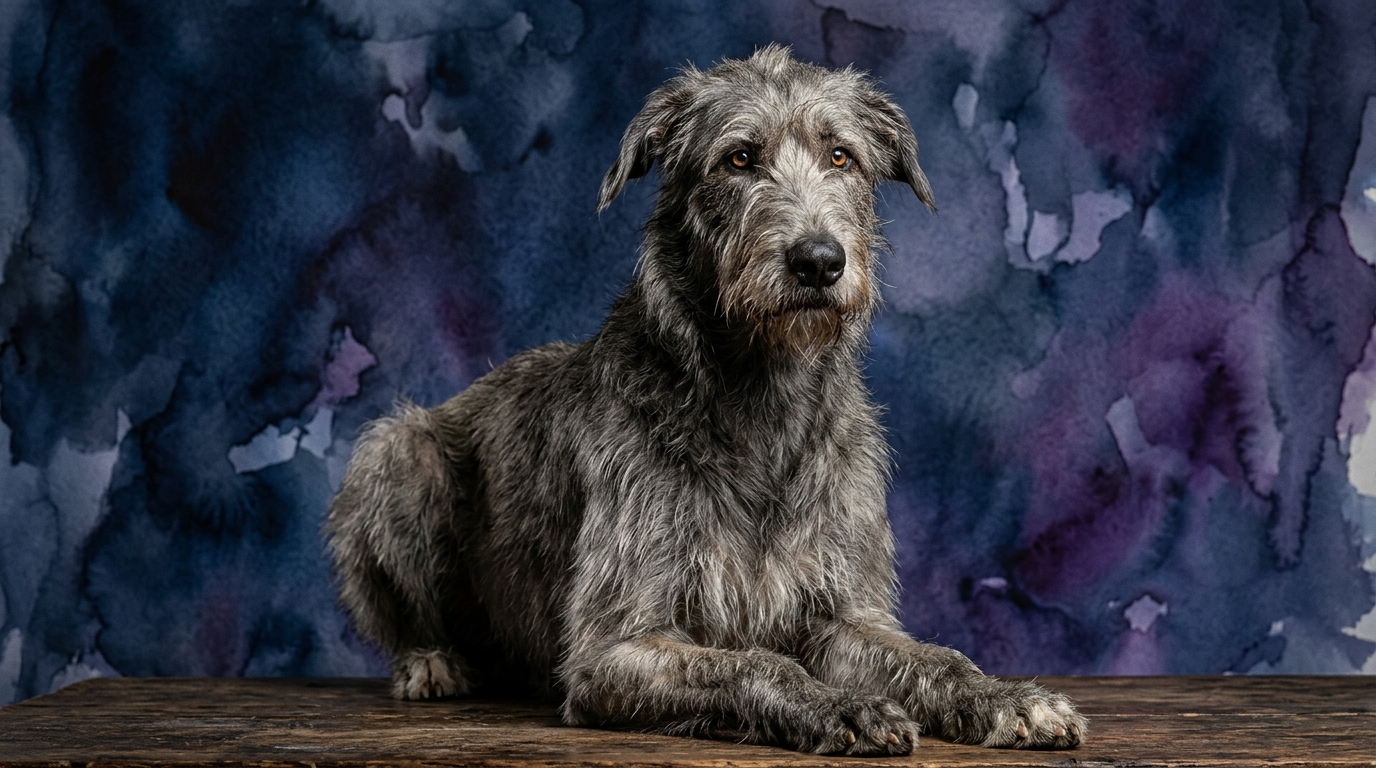
The Cosmic Pet IQ Profile: Pug vs. Irish Wolfhound
At The Cosmic Pet Pet IQ Lab, we analyze canine intelligence across five critical dimensions to provide a nuanced understanding of each breed's cognitive architecture. For the Pug, a Toy group dog with a Coren rank of #57, and the Irish Wolfhound, a majestic Hound, these profiles illuminate their inherent mental leanings.
The Pug's IQ profile paints a picture of a companion first and foremost. Their Problem Solving is rated at 2/5, indicating they are not typically inclined to independently dissect complex environmental challenges, often preferring to rely on established routines or human guidance. Training Speed also scores 2/5, suggesting that Pugs may require more repetition and patience to grasp new commands, not due to a lack of capacity, but perhaps a different motivational focus. However, their Social Intelligence shines at an exceptional 5/5, reflecting their profound attunement to human emotions and social cues, making them masters of companionship. Instinctive Drive is a low 2/5, meaning they possess minimal inclination for activities like hunting, herding, or guarding, instead focusing their energy on interaction. Their Memory is a moderate 3/5, allowing them to retain routines and basic commands effectively.
In contrast, the Irish Wolfhound, a breed not appearing on Stanley Coren's traditional ranking but evaluated by our lab, presents a more balanced cognitive profile. Their Problem Solving capability is rated 3/5, indicating a moderate ability to navigate novel situations and figure out solutions, especially those related to comfort or access. Training Speed also scores 3/5, suggesting they can learn new tasks at a respectable pace with consistent methods, though they might not be as quick as some high-drive working breeds. Their Social Intelligence is a solid 3/5; while affectionate and gentle, they are less intensely focused on reading nuanced human social cues than a breed like the Pug. Instinctive Drive is also 3/5, reflecting their sighthound heritage with a tempered chasing instinct, balanced with a calm demeanor. Their Memory, like the Pug's, stands at 3/5, allowing for good retention of learned behaviors and experiences.
Where the Pug's Cognition Excels
The Pug's undisputed cognitive strength lies in their extraordinary Social Intelligence, rated at a perfect 5/5. This isn't merely about being friendly; it's a deep-seated ability to perceive, interpret, and respond to human emotions and social dynamics with remarkable precision. Pugs are masters of non-verbal communication, often anticipating their owner's moods or needs, adapting their behavior to offer comfort or solicit attention. This cognitive acumen manifests as an almost uncanny empathy, allowing them to form intensely strong, reciprocal emotional bonds that define their role as a companion animal. They excel at reading subtle facial expressions, vocal tones, and body language, leveraging this understanding to integrate seamlessly into human family life. Their 'velcro dog' reputation stems directly from this profound social cognitive ability, making them highly responsive to their human's emotional landscape.
This exceptional social acumen means a Pug can often understand what you want or how you feel before you even utter a word. They are adept at using their own body language and vocalizations to communicate their desires, often employing a range of expressions and sounds to engage their humans. This isn't just learned behavior; it's an inherent cognitive wiring that prioritizes social connection and interaction above almost all else. While they may not be solving complex puzzles, their ability to navigate the intricacies of human-canine social interaction is unparalleled, making them uniquely suited for their historical role as lap companions.
Where the Irish Wolfhound's Cognition Stands Out
The Irish Wolfhound's cognitive strengths lean more towards practical problem-solving and a balanced environmental awareness, distinguishing them from the Pug's social focus. With a Problem Solving score of 3/5, Irish Wolfhounds possess a greater capacity for independent thought and figuring out moderate challenges within their environment. This might manifest as them subtly experimenting with how a gate latch works, navigating complex outdoor terrain with ease, or devising strategies to access a comfortable sleeping spot. Their cognitive approach is often more self-directed, allowing them to process and react to their surroundings with a degree of autonomy that is less pronounced in the Pug.
Furthermore, their moderate Training Speed (3/5) and Instinctive Drive (3/5) contribute to a cognitive profile that is more engaged with the physical world. While not as intensely driven as a working breed, they retain a capacity to learn and apply knowledge to their environment. This means they are more likely to assess situations independently, rather than immediately deferring to human intervention. Their brain is wired to process spatial information and environmental cues more robustly, a remnant of their sighthound heritage where independent judgment was crucial for tracking game. This cognitive framework allows them to be more adaptable to varied situations and to learn from their interactions with the physical world in a way that is less central to the Pug's cognitive priorities.
Training Aptitude: Pug vs. Irish Wolfhound
When considering which breed is 'easier' to train, the answer is nuanced, depending on the type of training and the owner's approach. For basic obedience and household manners, the Pug's strong social intelligence (5/5) often makes them highly compliant and eager to please their human, despite their lower training speed (2/5). They thrive on positive reinforcement, attention, and praise, making them relatively 'easy' to motivate for simple tasks, provided the owner is patient with repetition and makes training a positive, bonding experience. Their desire for connection can overcome their slower learning curve for many owners, as they are intrinsically motivated by the social reward.
In contrast, the Irish Wolfhound, with a moderate training speed (3/5) and social intelligence (3/5), might grasp commands quicker but also possess a more independent streak. Their sighthound heritage means they can be easily distracted by external stimuli like moving objects or interesting scents, requiring more consistent, engaging, and patient training methods to maintain focus, especially as they mature into their massive size. While they are not difficult to train, their cognitive process involves more independent assessment, which means they are less likely to blindly follow commands without understanding or if a more compelling distraction arises. Early and consistent socialization and positive reinforcement are crucial for the Wolfhound to channel their cognitive abilities effectively into training, particularly given their imposing stature which necessitates good manners.
Lifestyle Match: Active vs. Relaxed Owners
The stark differences in their physical and cognitive profiles make the Pug and Irish Wolfhound suitable for very different owner lifestyles. The Pug is an ideal match for relaxed owners who prioritize companionship and a low-key routine. With an Instinctive Drive of 2/5 and a compact build, Pugs are not built for strenuous activity. They are perfectly content with short, leisurely walks around the neighborhood, indoor play sessions, and extended periods of napping or cuddling on the couch. Their high social intelligence means they thrive on constant proximity to their human family, preferring to be a shadow rather than an independent explorer. They are a wonderful choice for individuals or families seeking a devoted, low-maintenance exercise companion who will always be by their side.
The Irish Wolfhound, while possessing a calm and gentle indoor demeanor, requires a moderately active owner. Despite their 'gentle giant' reputation, their large frame and sighthound heritage necessitate regular, moderate exercise to maintain their physical health and mental well-being. Their Instinctive Drive of 3/5 means they appreciate opportunities to stretch their legs and engage in a good run in a securely fenced area. While they are far from hyperactive, they need more than a Pug's minimal exercise regimen. An owner who enjoys daily walks, has access to open spaces for safe off-leash play, and is prepared to accommodate their considerable size in their home and vehicle will find the Irish Wolfhound a dignified and rewarding companion. They are not suited for owners seeking an intensely athletic partner, but they do require more than a sedentary lifestyle.
The Verdict: When to Choose Each Breed
Choosing between a Pug and an Irish Wolfhound comes down to aligning their unique cognitive and physical attributes with your lifestyle and expectations. Their distinct intelligence profiles mean they excel in different domains and require different approaches to care and training.
The Verdict
Choose a Pug if you seek an intensely socially bonded companion, thrive on constant interaction, and enjoy a more relaxed, indoor-centric lifestyle, valuing a dog that excels in emotional attunement and companionship over complex problem-solving or strenuous activity.
Choose an Irish Wolfhound if you appreciate a gentle, dignified giant with a quiet independence, are prepared for a dog that requires moderate exercise and consistent, respectful training, and can provide ample space for their considerable size, valuing a companion with balanced cognitive abilities and a calm presence.
🧠 Find Your Pet's IQ Score
Our Pet IQ Lab assessment covers 25+ tests across 5 cognitive dimensions — personalized to your breed.
Take the Full IQ Test →Frequently Asked Questions
Do Pugs understand human emotions better than Irish Wolfhounds?
Yes, Pugs possess an exceptional social intelligence score of 5/5, indicating a profound attunement to human emotional states and social cues. This allows them to often adapt their behavior to comfort or engage their owners, a cognitive strength that is more pronounced in Pugs than in Irish Wolfhounds.
Can Irish Wolfhounds be trained for complex tasks or dog sports?
With a problem-solving score of 3/5 and training speed of 3/5, Irish Wolfhounds are capable of learning moderately complex tasks and can participate in certain dog sports, particularly those that leverage their sighthound agility and endurance. While they might not excel at intricate obedience routines, they can master multi-step commands and enjoy activities like lure coursing or long-distance walking.
How does size relate to the intelligence differences between these breeds?
Size itself doesn't directly dictate the *type* of intelligence a breed possesses. The Pug, though small, excels in social cognition, while the large Irish Wolfhound demonstrates more balanced problem-solving and environmental awareness. Their cognitive strengths are shaped by their distinct breed purposes and evolutionary paths, rather than a simple correlation with physical dimensions.