Side-by-Side Cognitive Profiles: Pug vs. Scottish Deerhound
The Cosmic Pet Pet IQ Lab employs a five-dimensional framework to assess canine intelligence, moving beyond simplistic notions to explore the specific ways breeds interact with their world. Let's examine how the Pug and the Scottish Deerhound measure up in each dimension, offering a detailed look at their inherent cognitive leanings.
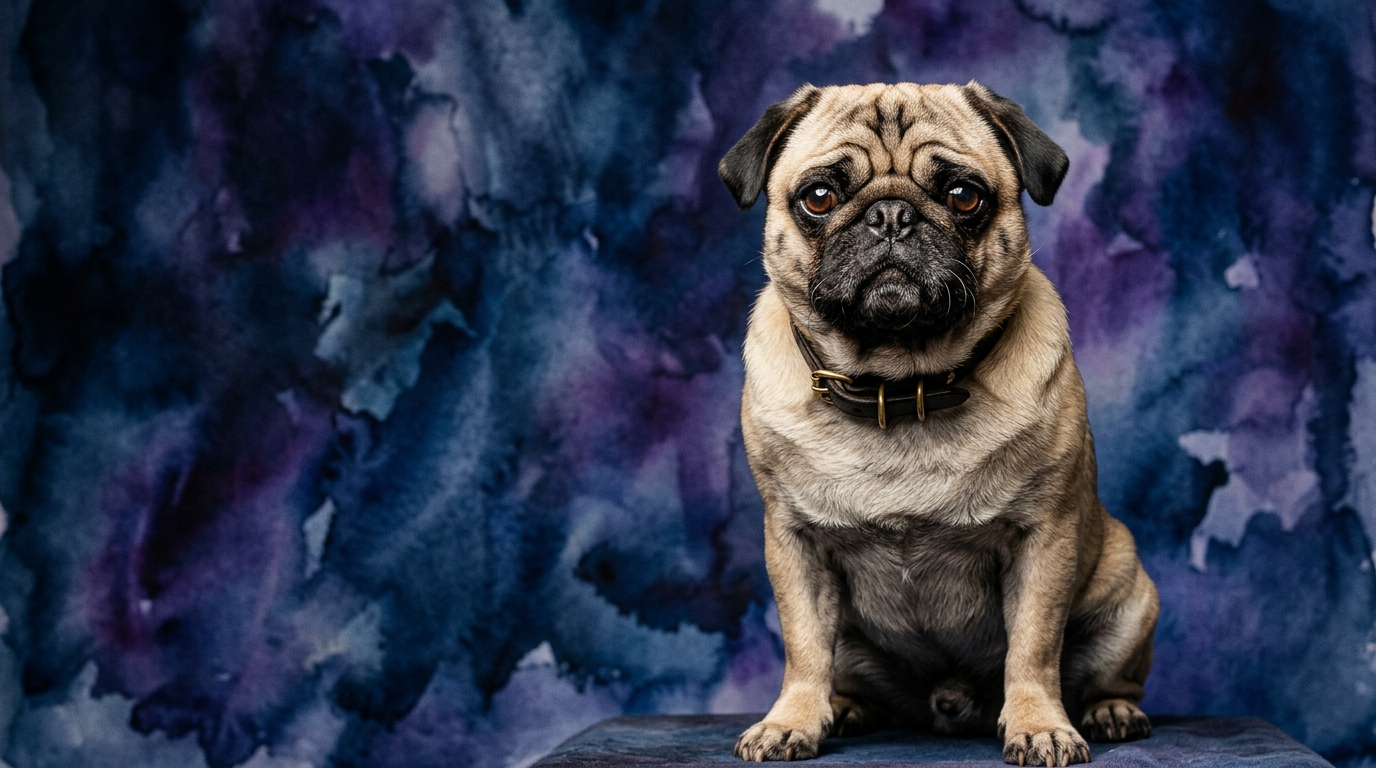
The Pug, a member of the Toy group, is a breed shaped by centuries of companionship. Our lab data assigns the Pug a Coren rank of #57, placing it in the lower-middle tier for working and obedience intelligence, but this ranking only tells part of their cognitive story. In Problem Solving, the Pug scores 2/5, indicating a preference for relying on human guidance rather than independent strategizing. Their Training Speed is also 2/5, suggesting that patience and consistency are key to teaching new commands. However, the Pug shines brilliantly in Social Intelligence, earning a perfect 5/5, reflecting their exceptional ability to read and respond to human emotions and social cues. Their Instinctive Drive is low at 2/5, meaning they possess minimal inherent hunting or independent working urges. Finally, their Memory is rated 3/5, an average capacity for retaining learned information and routines.
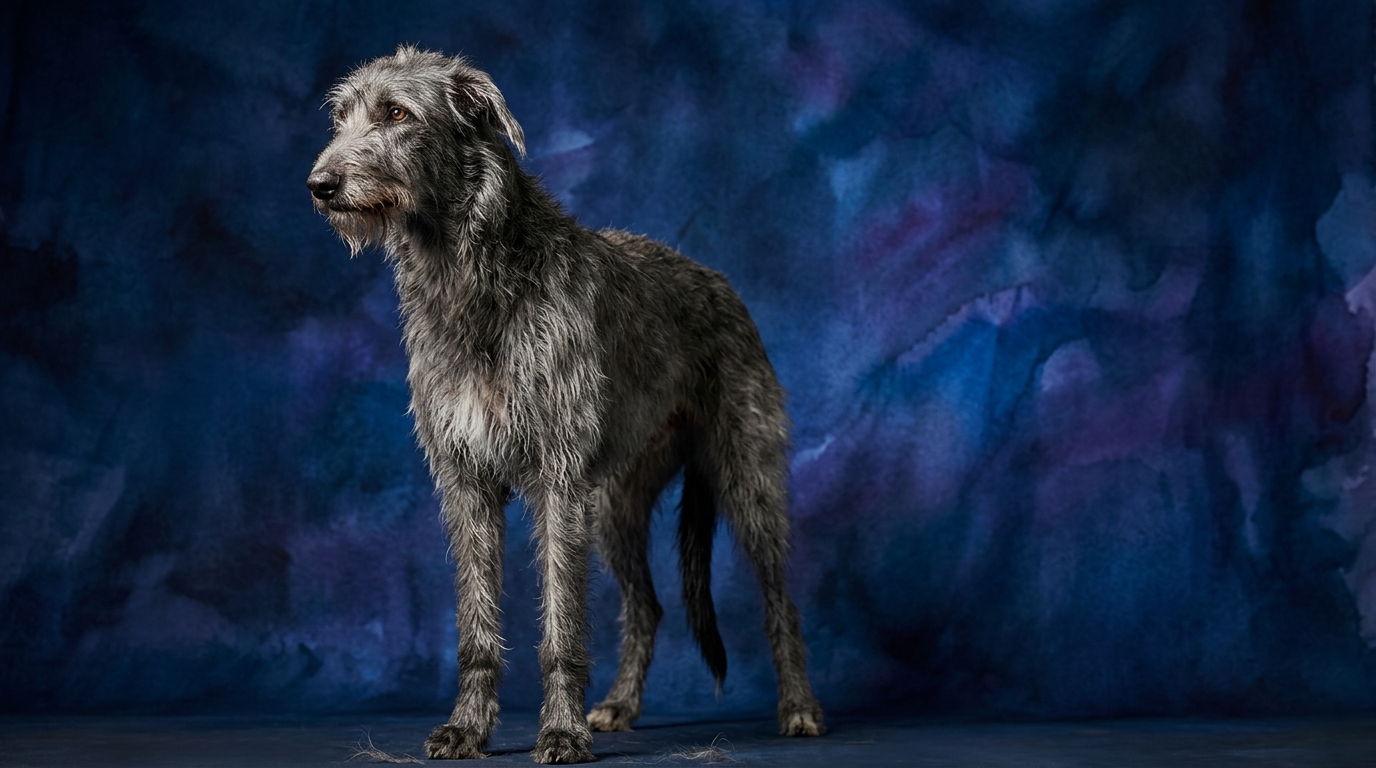
In contrast, the Scottish Deerhound, a majestic sighthound, is a breed forged for specific, demanding tasks. While not included in Coren's traditional ranking, our IQ Lab provides a comprehensive assessment. The Scottish Deerhound registers a 3/5 in Problem Solving, demonstrating a greater capacity for independent thought and navigating complex situations, particularly those related to their environment. Their Training Speed is also 3/5, indicating a moderate pace of learning, often requiring engaging and purposeful methods. In Social Intelligence, they score 3/5, showing general awareness but not the intense human-centric focus of the Pug. Their Instinctive Drive is 3/5, reflecting a moderate sighthound prey drive and an intrinsic motivation for pursuit. Like the Pug, their Memory is rated 3/5, an average score for recall and retention.
Where the Pug's Mind Excels: The Social Maestro
The Pug's undisputed cognitive strength lies in their extraordinary Social Intelligence, where they achieve a perfect 5/5 compared to the Scottish Deerhound's 3/5. This isn't merely about being 'friendly'; it's a deep, intuitive understanding of human emotional states, intentions, and communication nuances. Pugs are masters at reading body language, discerning subtle shifts in tone, and adapting their behavior to elicit desired responses from their human companions. They are adept at forming profound, almost telepathic bonds, often anticipating needs or moods without explicit commands. This exceptional social acumen makes them unparalleled emotional support animals, capable of offering comfort and companionship with an uncanny sensitivity. Their 'velcro dog' nature stems directly from this cognitive strength, as they are constantly engaging with and processing their human's social landscape, making them incredibly attuned and responsive companions within a household environment. Their intellect is geared towards harmonious coexistence and leveraging social dynamics.
Where the Scottish Deerhound's Mind Shines: Independent Thought and Environmental Acuity
The Scottish Deerhound demonstrates superior cognitive capabilities in areas that demand more independent action and environmental engagement. Their Problem Solving score of 3/5, compared to the Pug's 2/5, highlights their capacity for self-directed strategizing, particularly when navigating open spaces or responding to visual stimuli. This is a breed that can assess a situation and make quick decisions, a legacy of their sighthound heritage where independent pursuit was crucial. They are less inclined to wait for human direction and more likely to devise their own approach to a perceived challenge or opportunity in their surroundings. Furthermore, their Training Speed of 3/5 surpasses the Pug's 2/5. While they may not be the fastest learners, Deerhounds absorb information more efficiently and are often more receptive to varied training methods once they understand the purpose behind a command. Their slightly higher Instinctive Drive (3/5 vs. 2/5) further supports their independent nature, providing a natural motivation for exploration and action within their environment, which, when channeled appropriately, can make them incredibly engaging companions for specific activities like lure coursing or long, exploratory walks. Their cognitive strengths lie in their ability to act autonomously and process environmental information effectively.
Training Dynamics: Patience for the Pug, Purpose for the Deerhound
When it comes to training, the differences between these two breeds become particularly apparent, largely due to their disparate scores in Training Speed and Problem Solving. The Pug, with its 2/5 Training Speed, often requires a significant investment of patience and creativity. While their high Social Intelligence means they generally *want* to please their human, their lower problem-solving ability and tendency for selective attention can make consistent learning a slow process. Pugs are masters of charming their way out of work and may decide that a command isn't worth the effort unless the reward is exceptionally appealing. Training a Pug demands short, fun sessions, high-value treats, and consistent, positive reinforcement to overcome their inherent stubbornness and keep them engaged. They learn best through repetition and positive emotional association, rather than complex chains of command.
The Scottish Deerhound, with its 3/5 Training Speed, generally picks up commands more readily than the Pug. However, their independent problem-solving nature means they need to understand the 'why' behind a command or find the task intrinsically rewarding. They are less prone to the outright stubbornness of the Pug but can be easily distracted by their environment, especially by movement, due to their sighthound instincts. Effective training for a Deerhound involves clear, consistent communication, engaging methods that appeal to their intelligence, and often incorporating their natural drives into activities. They respond well to fairness and logic, and while they can be independent, they are generally eager to cooperate once they perceive the value in doing so. Therefore, while both breeds benefit from positive reinforcement, the Pug requires more motivation and a focus on social connection, whereas the Scottish Deerhound benefits from purposeful, engaging tasks that respect their independent spirit and environmental awareness.
Matching Canine Cognition to Owner Lifestyles
Considering their distinct cognitive profiles, the Pug and Scottish Deerhound naturally gravitate towards different owner lifestyles. The Pug, with its unparalleled Social Intelligence (5/5), low Instinctive Drive (2/5), and lower Problem Solving (2/5), is an ideal companion for relaxed owners or those seeking a constant, emotionally attuned presence. They thrive in environments where close human interaction is paramount and extensive physical activity is not a daily requirement. Owners who appreciate a dog that is content to lounge, observe, and offer quiet companionship will find the Pug's cognitive makeup perfectly suited to their needs. Their intellect is geared towards being a devoted, intuitive housemate, making them excellent choices for apartment living or less active households where emotional bonding is a priority.
The Scottish Deerhound, with its moderate scores across the board (3/5 for Problem Solving, Training Speed, Social Intelligence, Instinctive Drive, and Memory), suits owners who are moderately active and appreciate a dog with a blend of independence and companionship. They require regular opportunities to stretch their long legs and satisfy their moderate instinctive drive, preferably in a secure, open area. Owners who enjoy structured walks, perhaps some lure coursing, or simply appreciate a dog that can navigate its world with a degree of autonomy will find the Deerhound's cognitive profile rewarding. While they are affectionate companions, their social intelligence is not as intensely human-focused as the Pug's, and they appreciate personal space. They fit well with owners who understand their sighthound heritage and can provide outlets for their natural inclinations without demanding constant, intense interaction.
The Verdict
For owners prioritizing an emotionally intuitive, deeply social companion who thrives on close human interaction and requires less intense physical activity, the Pug is an unparalleled choice.
For individuals seeking an elegant, independent-thinking companion with a moderate need for exercise and a capacity for more self-directed engagement, who appreciate a dog that can navigate its world with a degree of autonomy, the Scottish Deerhound is an excellent match.
🧠 Find Your Pet's IQ Score
Our Pet IQ Lab assessment covers 25+ tests across 5 cognitive dimensions — personalized to your breed.
Take the Full IQ Test →Frequently Asked Questions
Are Pugs difficult to train?
Pugs can present training challenges due to their lower training speed and independent streak, often requiring consistent positive reinforcement and high-value rewards to keep them engaged and motivated. While their strong social bond means they are willing to please, their focus can waver easily, demanding patience from their human companions.
Do Scottish Deerhounds need a lot of exercise?
Scottish Deerhounds require regular opportunities to stretch their long legs and run in a secure area, satisfying their moderate instinctive drive, but they are not high-energy dogs and are equally content to relax indoors. Daily walks and occasional sprints are usually sufficient to keep them physically and mentally content without being overly demanding.
How do these breeds show affection?
Pugs demonstrate affection through constant physical proximity, leaning, following, and highly attuned social cues, often seeking to be physically touching their owners and engaging in playful mischief. Scottish Deerhounds show affection through calm presence, gentle nudges, and a watchful loyalty, often enjoying a quiet cuddle after exercise and appreciating a shared, peaceful space.