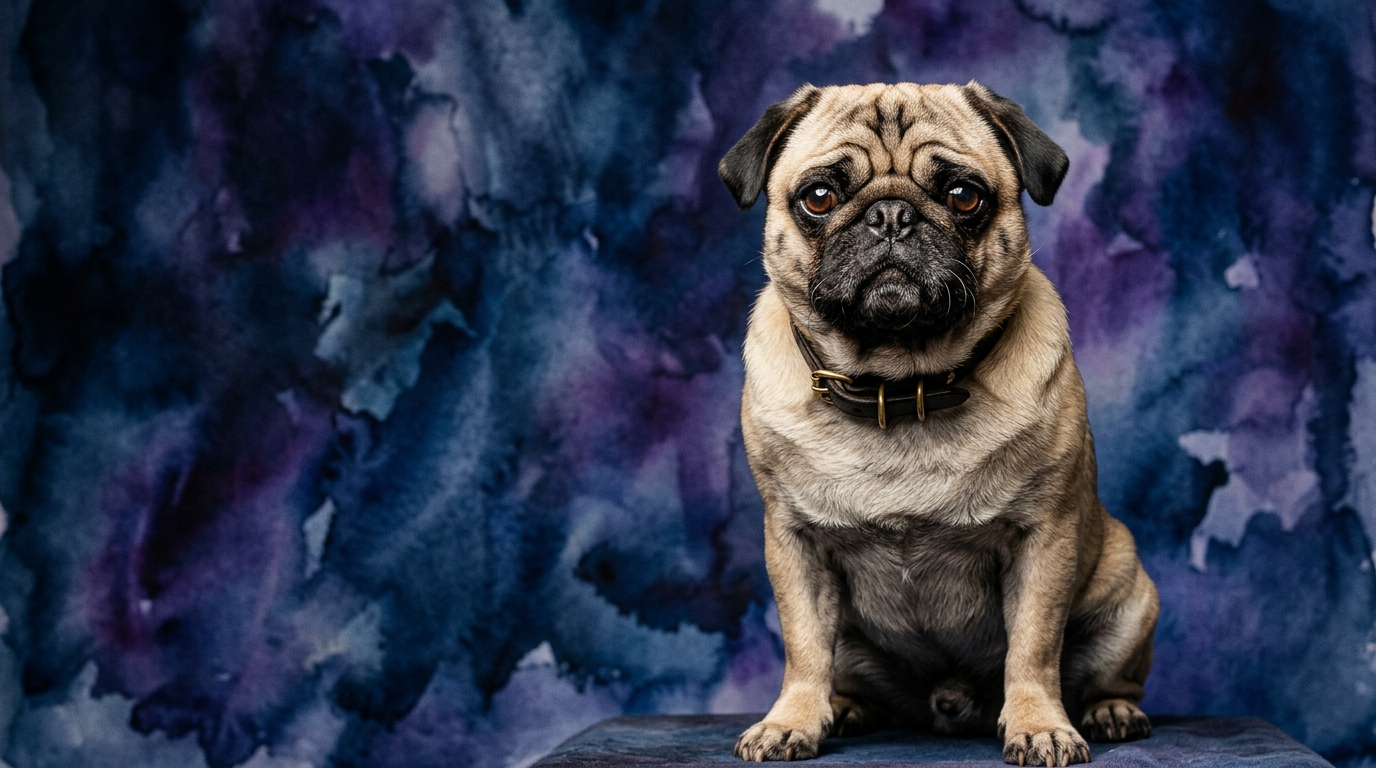
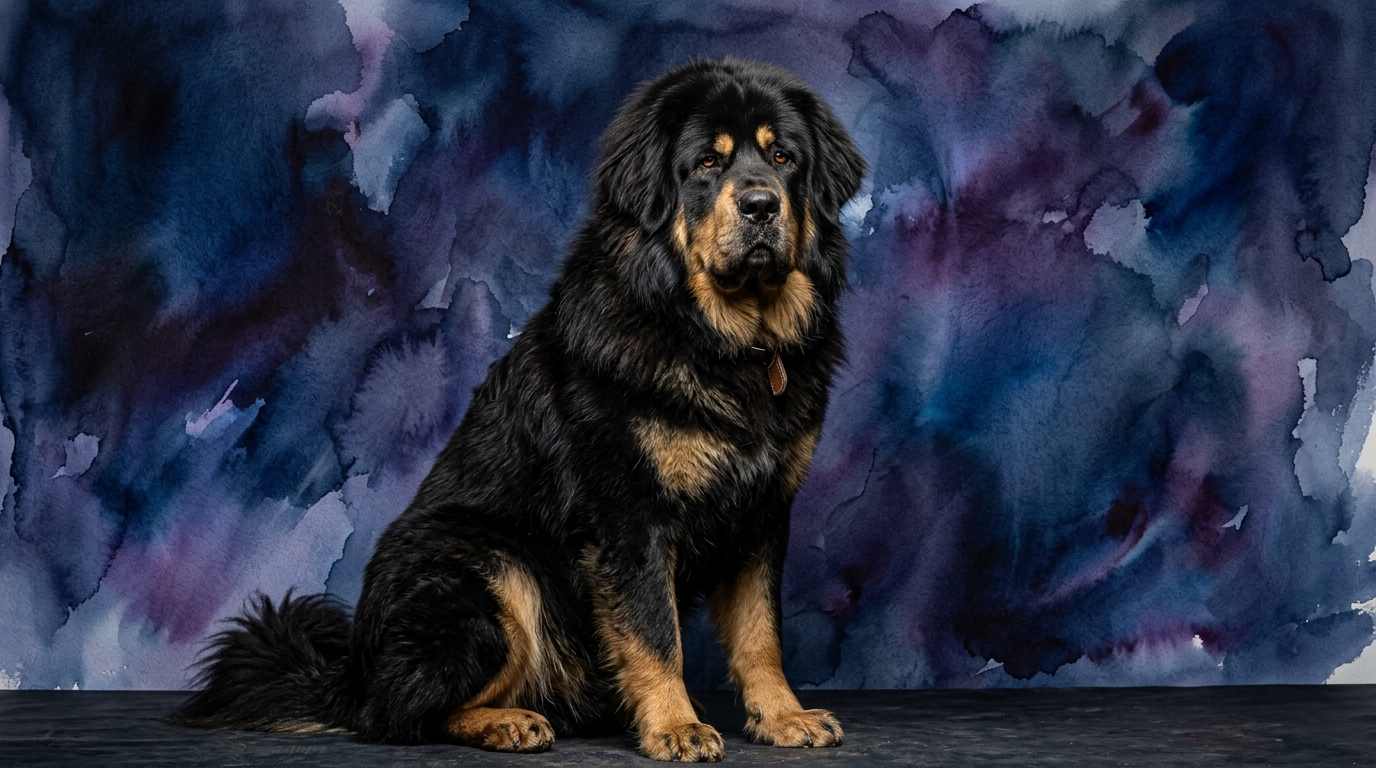
Side-by-Side IQ Profile: Pug vs. Tibetan Mastiff
**Pug:** A breed primarily developed for companionship, the Pug's intelligence metrics reflect its role. Its Problem Solving at 2/5 indicates it's not typically inclined to independently decipher complex environmental puzzles or multi-step tasks; instead, it often looks to its human for guidance. Training Speed also sits at 2/5, meaning new commands or routines might require significant repetition and patience from the owner, though their desire for attention can be a motivator. Where the Pug truly shines is in Social Intelligence, scoring a perfect 5/5, demonstrating an exceptional ability to read human emotions, adapt to social cues, and form deep, empathetic bonds. Its Instinctive Drive is low at 2/5, meaning primal urges like hunting, guarding, or herding are minimal, allowing its social nature to dominate. Memory, at 3/5, suggests it retains basic commands and routines adequately, but complex sequences might be challenging.
**Tibetan Mastiff:** Originating as a formidable livestock guardian in harsh mountain environments, the Tibetan Mastiff presents a different cognitive landscape. Its Problem Solving at 3/5 is a notch higher than the Pug, suggesting a greater capacity for independent thought when assessing situations, especially those related to its territory or perceived threats. Training Speed also registers at 3/5, indicating a moderate ability to learn new commands, though this is often paired with an independent streak that requires consistent, confident leadership. Social Intelligence for the Tibetan Mastiff is 3/5; while deeply loyal to its family, it's more discerning with strangers and less overtly people-pleasing than a Pug, prioritizing its protective duties. Its Instinctive Drive, also 3/5, highlights its strong natural inclination for guarding, territorial defense, and assessing its environment for potential dangers. Memory, like the Pug, scores 3/5, enabling it to remember boundaries, family members, and past encounters, crucial for its guarding role.
Where the Pug Wins Cognitively
The Pug's undisputed cognitive strength lies in its exceptional Social Intelligence, scoring a full 5/5. This isn't merely about being friendly; it's a sophisticated ability to interpret human body language, vocal inflections, and emotional states with remarkable accuracy. A Pug is adept at discerning its owner's mood, offering comfort or seeking play at opportune moments, making it an unparalleled emotional support companion. This high social acumen means they are highly attuned to their human family, often anticipating needs or reacting to subtle cues that other breeds might miss. Their cognitive focus is squarely on social interaction and connection, making them masters of cohabitation and emotional bonding within a family unit. This profound understanding of human social dynamics allows them to integrate seamlessly into domestic life, fostering deep, reciprocal relationships that are the hallmark of their existence.
Where the Tibetan Mastiff Wins Cognitively
The Tibetan Mastiff's cognitive advantages are rooted in its legacy as a guardian. Its Problem Solving score of 3/5, coupled with an Instinctive Drive of 3/5, allows it to excel in independent judgment and situational assessment. Unlike the Pug, which often defers to human guidance, the Tibetan Mastiff is more likely to independently evaluate potential threats or changes in its environment and act accordingly. This manifests as a discerning intelligence, where it weighs options and makes decisions based on its innate protective instincts. Its slightly higher Training Speed (3/5) compared to the Pug means it can grasp complex commands, particularly those related to its duties, though its independent nature means it must perceive the command as logical or beneficial. Furthermore, its memory, at 3/5, is effectively utilized to recall boundaries, perceived threats, and the identity of trusted individuals, enabling it to maintain vigilance and effectively perform its protective role over extensive periods.
Which Is Easier to Train and Why?
When considering ease of training for basic obedience, the Pug generally presents a more straightforward path for the average owner. Despite its 2/5 Training Speed, its paramount Social Intelligence (5/5) means it is highly motivated by human approval and connection. Pugs often want to please their people, and while they may require more repetitions to solidify a command, their eagerness for interaction and positive reinforcement makes the process rewarding. Their low Instinctive Drive (2/5) means fewer competing urges like guarding or hunting, allowing them to focus more readily on human-directed tasks. A Pug might display a stubborn streak, but this is often overcome by consistent, positive, and engaging training methods that leverage their desire for attention and treats.
The Tibetan Mastiff, with a 3/5 Training Speed, might learn new commands at a slightly faster pace initially, but its independent nature and strong Instinctive Drive (3/5) for guarding introduce significant training complexities. These dogs were bred to make autonomous decisions in vast, remote areas, not to blindly follow commands. Training a Tibetan Mastiff requires a confident, experienced, and consistent leader who can establish clear boundaries and earn the dog's respect. They are less motivated by simple praise and more by understanding the 'why' behind a command, or if it aligns with their protective duties. Their discernment means they might choose not to comply if they perceive a command as unnecessary or conflicting with their judgment. Early, extensive socialization and ongoing, firm but fair training are critical to channel their powerful instincts constructively. While capable of learning advanced tasks, their inherent independence makes them a more challenging breed to train consistently for compliance compared to the Pug's people-pleasing disposition.
Suitability for Active vs. Relaxed Owners
The Pug is an ideal companion for relaxed owners seeking a devoted, low-energy partner. Its low Instinctive Drive and moderate physical requirements mean it is content with short, leisurely walks and ample cuddle time on the sofa. Owners who prioritize emotional connection, a consistent presence, and minimal demands for strenuous activity will find the Pug's cognitive profile perfectly aligned with their lifestyle. Their high Social Intelligence ensures they thrive on domestic interaction, making them excellent companions for those who spend a lot of time at home or want a dog that easily adapts to a quiet, indoor routine. They do not require complex mental stimulation in the form of advanced training or puzzle-solving to be content; their contentment stems from being an integral part of their human family.
The Tibetan Mastiff, while not necessarily requiring constant physical exertion in the way a herding dog might, demands a different kind of 'active' owner: one who is highly engaged in management, training, and providing a structured environment. These are not dogs for first-time or passive owners. Their strong Instinctive Drive for guarding and moderate Problem Solving skills mean they need a secure, well-fenced yard and an owner who can consistently reinforce their role and boundaries. They require mental engagement through clear rules, consistent training, and opportunities to survey their territory. Owners must be prepared for their independent nature and potential wariness of strangers, which necessitates ongoing socialization and careful management in public. An owner with experience in large, independent, and protective breeds, who can dedicate significant time to their dog's mental and behavioral well-being, will be best suited. They are not suited for owners seeking a simple, compliant companion, but rather a formidable, discerning partner who requires respect and understanding of its unique protective psychology.
The Verdict
Opt for a Pug if your primary desire is an emotionally intelligent, highly affectionate companion who thrives on close human interaction and requires minimal physical exertion.
Select a Tibetan Mastiff if you are an experienced dog owner seeking a discerning, independent guardian for your property and family, prepared for their unique protective instincts and significant management needs.
🧠 Find Your Pet's IQ Score
Our Pet IQ Lab assessment covers 25+ tests across 5 cognitive dimensions — personalized to your breed.
Take the Full IQ Test →Frequently Asked Questions
Is a Pug difficult to house train because of its training speed score?
While a Pug's training speed is 2/5, house training success depends more on consistency and routine. Their desire to please their owners and their high social intelligence mean they can be house trained effectively with patience, frequent outdoor access, and positive reinforcement, despite needing more repetitions.
Can a Tibetan Mastiff be a family pet, given its guarding instincts and social intelligence score?
Yes, a Tibetan Mastiff can be a devoted family pet, but its 3/5 social intelligence means it's discerning rather than overtly friendly with everyone. It forms deep bonds with its immediate family but requires early and extensive socialization to accept strangers and other pets, and its guarding instincts need careful management.
Which breed requires more mental stimulation to prevent destructive behaviors?
The Tibetan Mastiff generally requires more thoughtful mental stimulation due to its independent nature and problem-solving abilities. Without appropriate outlets for its guarding instincts and discernment, it can become bored or territorial, potentially leading to unwanted behaviors. Pugs are typically content with social interaction and do not demand complex mental challenges.