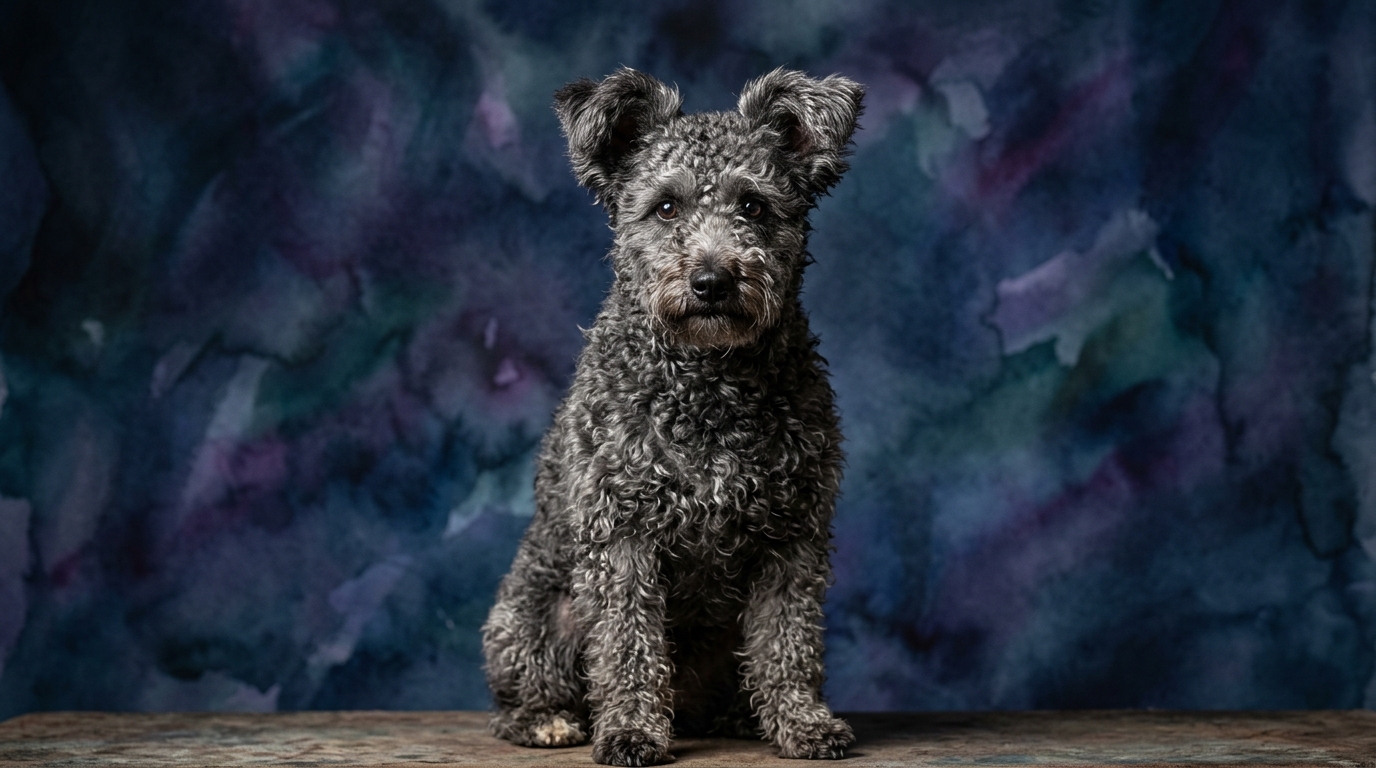
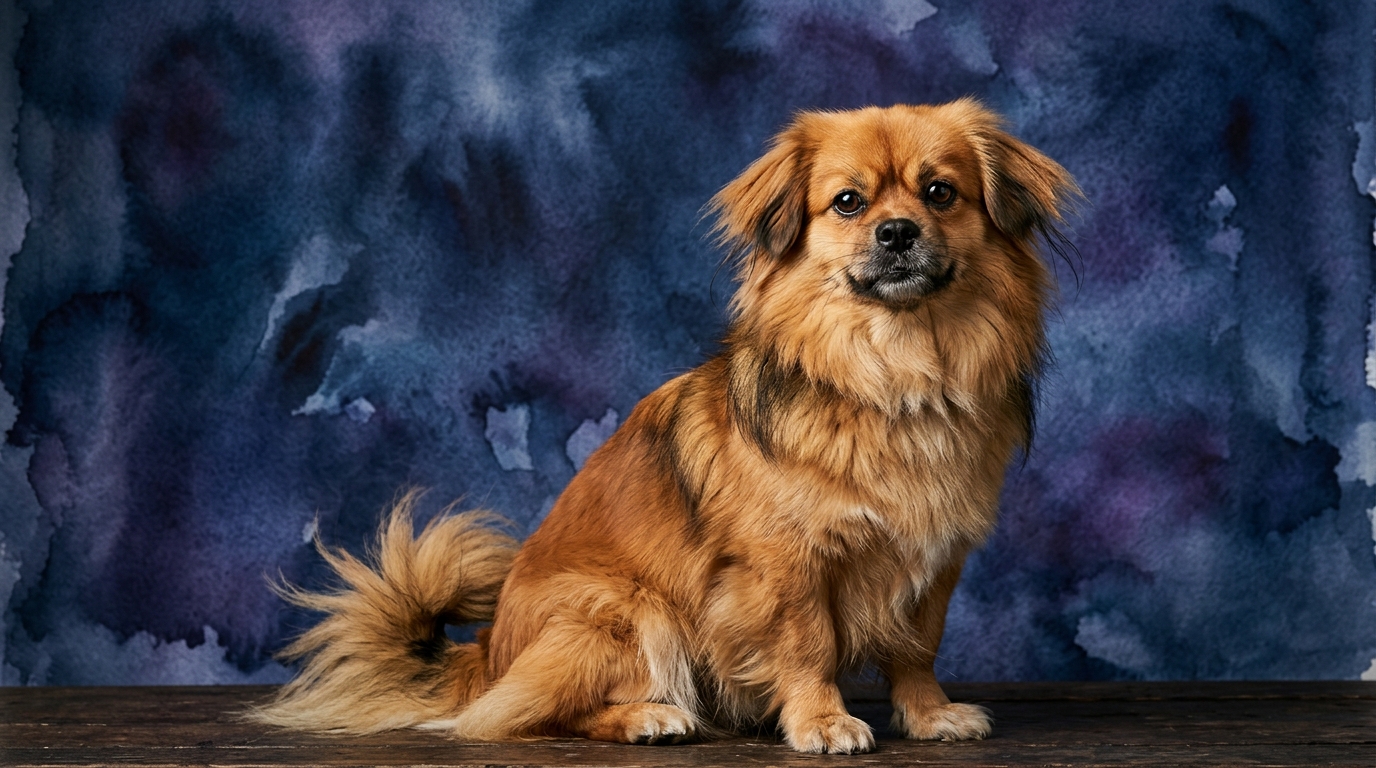
Side-by-Side IQ Profile: Pumi vs. Tibetan Spaniel
In The Cosmic Pet Pet IQ Lab, both the Pumi and the Tibetan Spaniel register a consistent 3/5 across all five cognitive dimensions: Problem Solving, Training Speed, Social Intelligence, Instinctive Drive, and Memory. While these scores suggest a similar baseline capacity, their breed histories as a Hungarian herding dog and a Tibetan companion/watchdog, respectively, mean these scores manifest in profoundly different ways. Understanding these nuances requires looking beyond the numbers to the behavioral context.
For the Pumi, a 3/5 in Problem Solving often translates to an independent, resourceful approach to tasks. This breed was developed to gather and drive livestock with minimal human direction, meaning their problem-solving tends to be active and physically engaged, focused on navigating dynamic environments and outsmarting animals. Their Training Speed at 3/5 reflects a willingness to learn coupled with a thoughtful independence; they absorb commands quickly but may weigh their own assessment of the situation before immediate compliance. Social Intelligence at 3/5 suggests they are attuned to their handler and family but can be reserved or discerning with strangers, a trait useful for protecting their flock. Their Instinctive Drive, also 3/5, is powerfully geared towards herding, displaying a strong urge to control movement and maintain order. Finally, Memory at 3/5 means they retain complex routines, command sequences, and spatial layouts, crucial for effective herding over varied terrain.
The Tibetan Spaniel, with identical 3/5 scores, presents a contrasting cognitive landscape shaped by centuries of companionship and watchfulness. Their Problem Solving at 3/5 is often more observational and strategic, focused on understanding household dynamics, resource acquisition (like finding the sunniest spot or a dropped treat), and alerting to perceived threats. Their Training Speed at 3/5 reflects a capacity to learn rapidly, particularly when motivated by positive reinforcement and strong familial bonds, though their independent spirit can sometimes lead to selective hearing. Social Intelligence at 3/5 means they are deeply empathetic and perceptive regarding their family’s moods and routines, while remaining aloof or suspicious of outsiders, fulfilling their ancient role as temple guardians. Instinctive Drive at 3/5 is pronounced in their watchdog tendencies, exhibiting a keen awareness of their surroundings and a strong impulse to bark warnings. Their Memory at 3/5 allows them to remember people, places, and specific events, contributing to their reliable alert system and consistent household behavior.
Where the Pumi Excels Cognitively
The Pumi's cognitive strengths distinctly emerge from its active herding heritage. Its 3/5 Problem Solving manifests as exceptional adaptability in dynamic, fast-changing situations. Unlike a dog solving a puzzle toy, a Pumi's cognitive prowess shines when it needs to make split-second decisions to redirect a stubborn sheep or maneuver a flock through a gate. This involves spatial reasoning, anticipating movement, and executing a precise, often physical, solution. Their independent thinking, while sometimes perceived as stubbornness in training, is a cognitive asset when a handler is not present to give explicit instructions. This dog can assess a situation, devise a plan, and implement it with minimal human input, a testament to its self-reliant problem-solving capacity.
Furthermore, the Pumi's Instinctive Drive, rated 3/5, is a finely tuned cognitive engine for complex tasks. It's not merely a physical urge but involves a sophisticated understanding of pressure and release, proximity, and the psychology of other animals. This drive, combined with their memory for intricate patterns and past successes, makes them adept at learning and perfecting multi-step routines. Their social intelligence, while selective, allows them to forge an intense working partnership, understanding subtle cues and working in tandem with a handler, a collaborative cognitive skill that sets them apart in task-oriented scenarios.
Where the Tibetan Spaniel Excels Cognitively
The Tibetan Spaniel's cognitive strengths are rooted in its centuries-old role as a vigilant companion and watchdog, making its 3/5 scores shine in different contexts. Their Problem Solving, while not physically demanding like herding, is highly observational and strategic within a home environment. They excel at understanding human routines, anticipating events, and finding clever ways to achieve comfort or attention. This might involve subtly manipulating household objects to gain a vantage point or employing a specific vocalization to communicate a desire. Their resourcefulness is often expressed through their ability to navigate complex social dynamics within a family, understanding who to approach for what and when.
The Tibetan Spaniel's Social Intelligence, also a 3/5, is particularly refined in its empathetic capacity. They possess a keen ability to read human emotions and respond accordingly, offering comfort or space as needed. This isn't just about simple recognition; it's about a deeper understanding of social cues and maintaining harmony within their immediate family group. Their 3/5 Instinctive Drive manifests as unparalleled situational awareness. They are highly alert to changes in their environment, possessing an acute sense of hearing and sight that allows them to detect novelties or potential threats long before humans do. This vigilance, combined with their excellent Memory for faces and sounds, makes them remarkably effective, albeit vocal, home guardians.
Which Is Easier to Train and Why?
Despite both breeds scoring 3/5 in Training Speed, the Pumi and Tibetan Spaniel present distinct training experiences due to their foundational behavioral differences. The Pumi, with its strong herding drive and independent problem-solving, can be highly motivated by work and mental engagement. They respond well to consistent, varied training that taps into their innate desire to have a job. However, their independent streak means they can sometimes question commands or prioritize their own assessment of a situation, especially if they perceive a task differently. Training a Pumi often requires an owner who understands how to channel their energy and intelligence into constructive activities, using positive reinforcement to build a strong working partnership rather than relying solely on rote obedience. Their persistence can be a challenge if not properly directed, as they are not easily deterred from a goal once set.
The Tibetan Spaniel, conversely, while also scoring 3/5 in Training Speed, is often driven by a desire for companionship and comfort. They learn quickly when training is engaging and rewards are highly valued, particularly if it strengthens their bond with their owner. However, their independent and sometimes stubborn nature, combined with a lower inherent drive for 'work' compared to a herding dog, can make them less inclined to perform repetitive tasks or commands they deem unnecessary. They can be sensitive to harsh corrections, which may cause them to shut down. Training a Tibetan Spaniel benefits from patience, creativity, and a focus on making learning a positive, collaborative experience. Owners might find success by integrating training into daily life and making it feel less like a chore and more like an interactive game, appealing to their clever and perceptive nature rather than their drive to obey.
Which Suits Active Owners vs. Relaxed Owners?
The Pumi is unequivocally better suited for active owners. Its herding background means it possesses a significant reservoir of energy, both physical and mental, that requires consistent outlets. An owner who enjoys daily vigorous exercise, such as long walks, jogs, or hiking, and is committed to providing regular mental stimulation through dog sports like agility, herding trials, or advanced obedience, will find the Pumi a rewarding companion. Their 3/5 Instinctive Drive needs to be channeled into productive activities; without sufficient engagement, a Pumi can become bored, potentially leading to undesirable behaviors like excessive barking or attempting to 'herd' family members or other pets. They thrive on having a purpose and genuinely enjoy being part of an active lifestyle.
The Tibetan Spaniel, while not a couch potato, is generally a better fit for more relaxed owners. Their exercise needs are moderate, consisting of daily walks and playtime in a secure yard. While they enjoy activity, their primary fulfillment comes from companionship and being an integral part of family life. Their vigilant nature means they are content to observe their surroundings from a comfortable perch, and their social intelligence makes them adept at blending into household routines. Owners who appreciate a sensitive, perceptive companion that enjoys indoor activities, short bursts of outdoor play, and plenty of cuddle time will find the Tibetan Spaniel an ideal match. They adapt well to apartment living as long as their modest exercise and significant companionship needs are met, making them suitable for individuals or families with a less intensely active lifestyle.
The Verdict
Choose a Pumi if you are an active, experienced owner eager to engage in dog sports or provide a 'job' that challenges its robust herding instincts and independent problem-solving.
Opt for a Tibetan Spaniel if you desire a perceptive, vigilant companion whose intelligence shines in understanding household dynamics and offering steadfast, empathetic presence.
🧠 Find Your Pet's IQ Score
Our Pet IQ Lab assessment covers 25+ tests across 5 cognitive dimensions — personalized to your breed.
Take the Full IQ Test →Frequently Asked Questions
Do Pumis require a lot of mental stimulation?
Yes, Pumis possess a 3/5 Problem Solving and Instinctive Drive, meaning they thrive on mental challenges. Without adequate mental engagement, such as puzzle toys, training, or dog sports, they can become bored and potentially develop undesirable behaviors. Regular, varied activities are crucial for their well-being.
Are Tibetan Spaniels good with children?
Tibetan Spaniels, with their 3/5 Social Intelligence, are generally good with respectful children. They are perceptive and empathetic, often forming strong bonds with family members. However, their independent nature means they prefer calm interactions and may retreat if overwhelmed, so supervision is always recommended.
How do their 3/5 training speeds differ in practice?
While both learn at a similar pace, the Pumi's 3/5 Training Speed is often driven by a desire for task fulfillment, sometimes with independent interpretation, whereas the Tibetan Spaniel's 3/5 is more motivated by positive reinforcement and strengthening the owner-dog bond, though they can be selectively attentive.