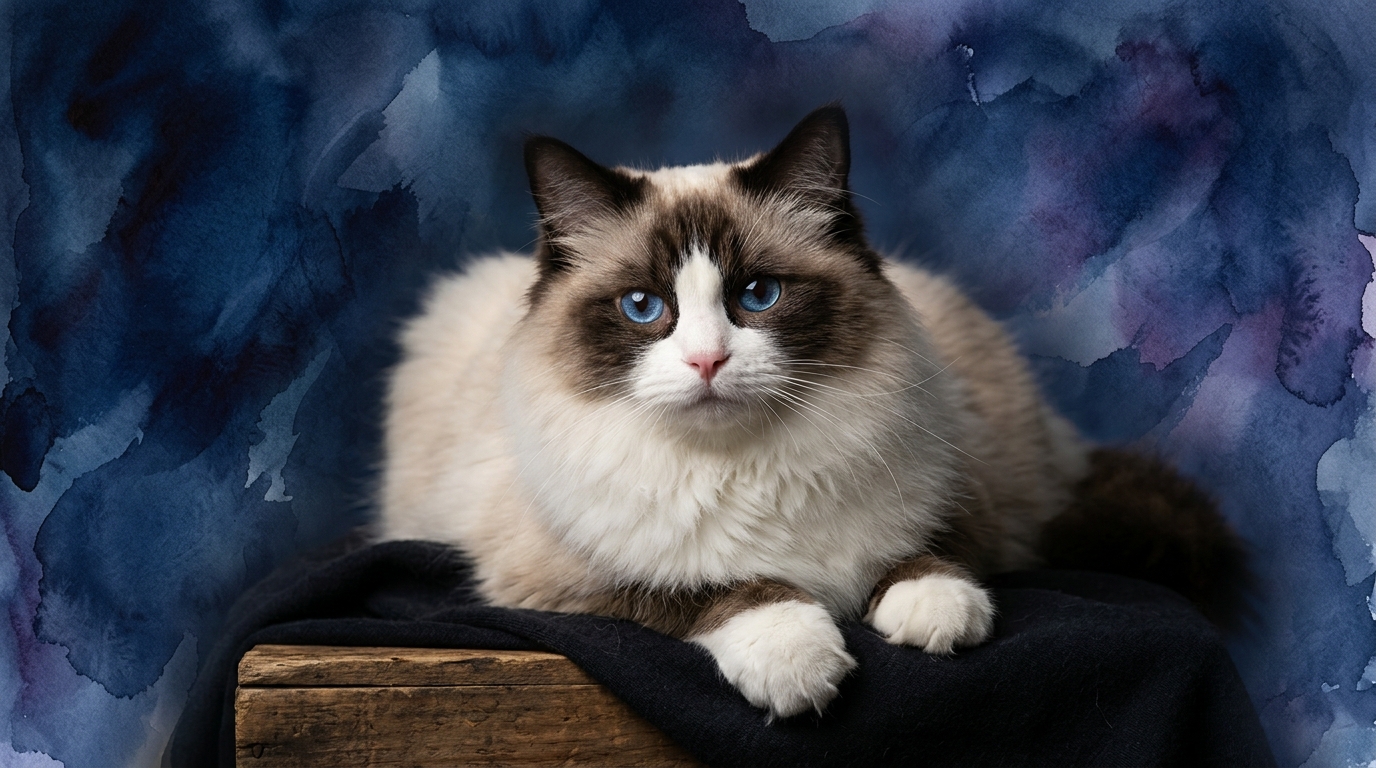
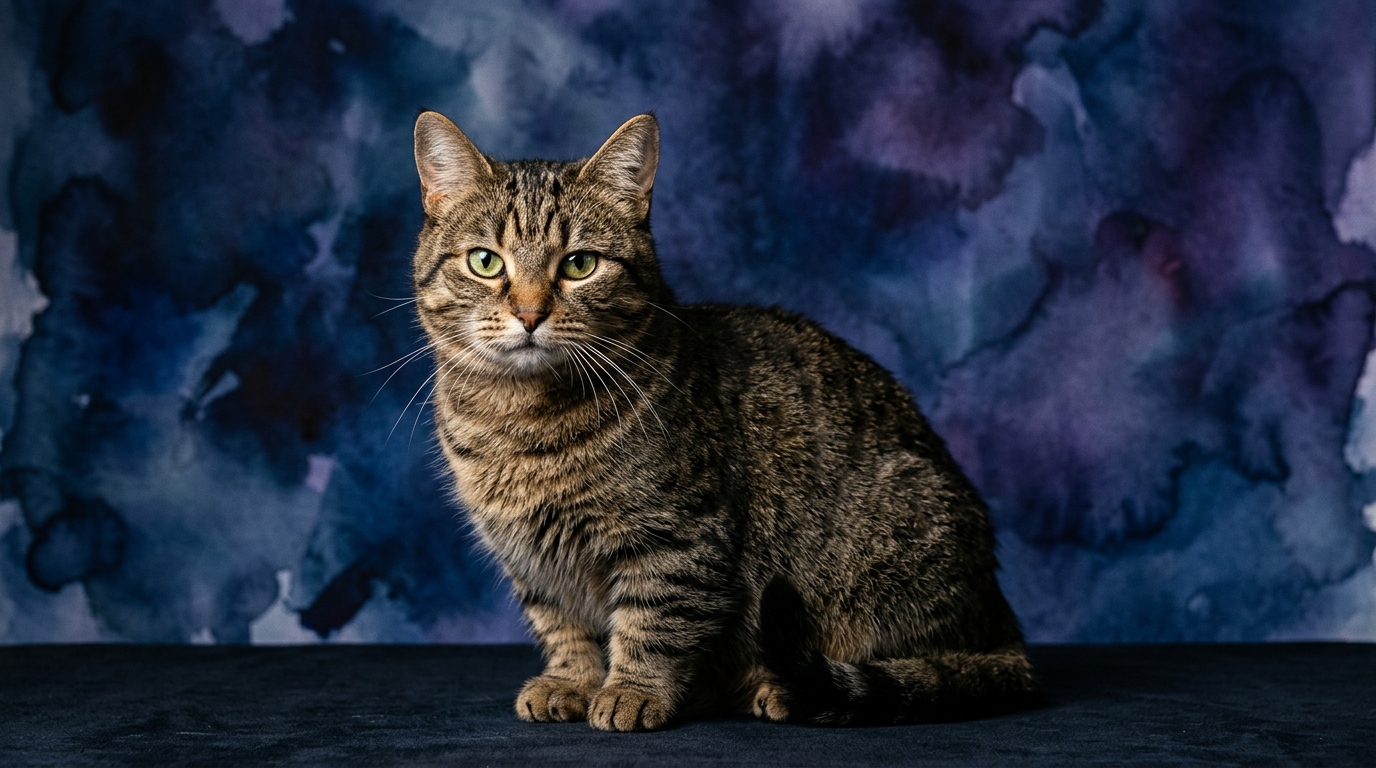
Side-by-Side Cognitive Profiles: Ragdoll vs. Munchkin
The Cosmic Pet Pet IQ Lab employs a comprehensive framework to assess feline cognitive abilities across five critical dimensions: Problem Solving, Training Speed, Social Intelligence, Instinctive Drive, and Memory. While both the Ragdoll and Munchkin breeds are unranked by Coren, their individual scores paint distinct pictures of their mental landscapes.
The Ragdoll presents a profile characterized by a moderate Problem Solving ability (3/5), indicating they can navigate common household challenges but might not excel at complex puzzles. Their Training Speed is also moderate (3/5), suggesting a steady learning pace for new behaviors. What truly sets the Ragdoll apart is its exceptional Social Intelligence (5/5), signifying a profound capacity for bonding and understanding human cues. Conversely, their Instinctive Drive is notably low (2/5), meaning less inclination towards hunting or highly independent exploration, while their Memory stands at a solid 3/5. The Munchkin, on the other hand, exhibits a remarkably balanced cognitive profile. They share the same moderate Problem Solving (3/5), Training Speed (3/5), and Memory (3/5) scores as the Ragdoll. However, their Social Intelligence is moderate (3/5), indicating they are friendly and interactive but perhaps not to the same intensely bonded degree as a Ragdoll. Crucially, their Instinctive Drive is also moderate (3/5), suggesting a more pronounced natural curiosity and engagement with their environment than their Ragdoll counterparts.
Where the Ragdoll Excels Cognitively
The Ragdoll's undisputed cognitive strength lies in its extraordinary Social Intelligence, scoring a perfect 5 out of 5. This isn't merely about being affectionate; it speaks to a deep, inherent capacity for emotional attunement and complex social interaction with humans. A Ragdoll is more likely to actively seek out companionship, demonstrating a profound understanding of social cues, body language, and vocalizations from their human companions. Their high social intelligence means they often form exceptionally strong bonds, displaying behaviors like following their owners from room to room, greeting them at the door, and seeking close physical contact. This cognitive trait allows them to integrate seamlessly into family life, often becoming a highly empathetic and responsive presence.
This elevated social capacity also translates into a unique ability to adapt to varying social dynamics within a household, often displaying patience and gentleness, particularly with children or other pets. Their comfort and preference for human interaction mean they are less prone to anxiety when their human companions are present, thriving on the consistent companionship and emotional exchange. This cognitive leaning makes them superb emotional support animals for those who value a constant, deeply connected feline presence.
Where the Munchkin Shines Cognitively
While the Ragdoll excels in social bonding, the Munchkin's cognitive advantage emerges from its more balanced and slightly elevated Instinctive Drive, scoring 3 out of 5 compared to the Ragdoll's 2 out of 5. This moderate drive means Munchkins possess a more pronounced natural curiosity and a greater inclination towards exploratory behaviors and interactive play that mimics hunting. They are more likely to engage independently with puzzle toys, chase wand toys with enthusiasm, and explore their environment with a keen sense of adventure, despite their short legs. This cognitive trait suggests a cat that is more self-entertaining and driven by its innate predatory instincts, albeit in a gentle, domesticated manner.
The Munchkin's balanced profile, with 3/5 across Problem Solving, Training Speed, Social Intelligence, Instinctive Drive, and Memory, indicates a highly adaptable and versatile feline mind. They are generally responsive to their environment and can find enjoyment in a broader range of activities, from quiet companionship to engaging play sessions. Their moderate instinctive drive, coupled with competent problem-solving skills, allows them to navigate and adapt to various enrichment opportunities, making them engaging companions for owners who appreciate a cat with a healthy dose of natural curiosity and playful independence.
Which is Easier to Train and Why?
Both Ragdolls and Munchkins share a Training Speed score of 3/5, suggesting they possess a similar inherent capacity to learn new commands and behaviors at a moderate pace. However, the *approachability* and *motivation* for training can differ significantly due to their other cognitive traits. A Ragdoll, with its outstanding 5/5 Social Intelligence, is often more motivated by the desire to please its human and the positive social interaction that training provides. They thrive on cooperative engagement, making them highly responsive to positive reinforcement methods that strengthen the human-animal bond. Their strong desire for companionship means they are often eager participants in training sessions, viewing them as valuable one-on-one time with their favorite person.
Conversely, while a Munchkin also has a 3/5 Training Speed, their moderate 3/5 Social Intelligence means they might not be as intensely driven by human approval alone. Instead, their 3/5 Instinctive Drive can be leveraged effectively in training. Training a Munchkin might involve more play-based methods, utilizing toys or food puzzles as rewards that tap into their natural curiosity and predatory instincts. They are perfectly capable of learning tricks and commands, but their motivation might stem more from the reward itself or the engaging nature of the activity, rather than solely from the desire for social connection. Therefore, while both learn at a similar pace, Ragdolls might appear easier to train for cooperative tasks due to their profound social motivation.
Cognitive Fit: Active Owners vs. Relaxed Owners
For owners seeking a deeply connected and relatively low-maintenance companion, the Ragdoll's cognitive profile is an ideal match. Their exceptional Social Intelligence (5/5) means they thrive on constant human companionship, often preferring to be in the same room as their owners, offering gentle purrs and affectionate nuzzles. Their low Instinctive Drive (2/5) indicates they are generally content with indoor living and require less intensive interactive play or complex environmental enrichment. They are perfectly suited for relaxed owners who desire a devoted, lap-loving cat that is a constant, calming presence, valuing deep emotional connection over vigorous activity. They are not demanding of constant stimulation but flourish when given ample affection and consistent presence.
Munchkins, with their balanced cognitive scores, including a moderate 3/5 Instinctive Drive and 3/5 Social Intelligence, are well-suited for owners who appreciate a more adaptable and moderately playful feline. They enjoy interactive play sessions that satisfy their natural curiosity and instincts, but they are equally capable of enjoying quiet companionship. Their cognitive make-up allows them to fit into a variety of household dynamics, from moderately active families who provide regular playtime and varied enrichment to individuals who want a friendly cat that also entertains itself. They offer a versatile companionship that balances independent exploration with affectionate interaction, making them suitable for owners who enjoy engaging with their cat in diverse ways without requiring constant, intense social demands.
The Verdict
Choose a Ragdoll if your primary desire is a profoundly affectionate, highly socially intelligent companion that thrives on deep emotional connection and a relaxed, consistent home environment.
Opt for a Munchkin if you seek a balanced, adaptable feline with a healthy curiosity and moderate play drive, capable of both engaging play and affectionate companionship.
🧠 Find Your Pet's IQ Score
Our Pet IQ Lab assessment covers 25+ tests across 5 cognitive dimensions — personalized to your breed.
Take the Full IQ Test →Frequently Asked Questions
Are Ragdolls good with other pets?
Yes, Ragdolls often integrate well with other pets due to their high Social Intelligence and gentle nature. Their strong desire for companionship extends to other household members, making them generally tolerant and adaptable in multi-pet homes.
Do Munchkins need a lot of playtime?
Munchkins have a moderate Instinctive Drive, meaning they appreciate regular interactive playtime to satisfy their curiosity and natural instincts. While not excessively demanding, consistent engagement with toys and enrichment helps keep them mentally and physically stimulated.
Can Ragdolls learn tricks?
Absolutely. With a Training Speed of 3/5 and exceptional Social Intelligence, Ragdolls are quite capable of learning tricks. Their motivation to please their human companions makes positive reinforcement training particularly effective for teaching them various behaviors.