
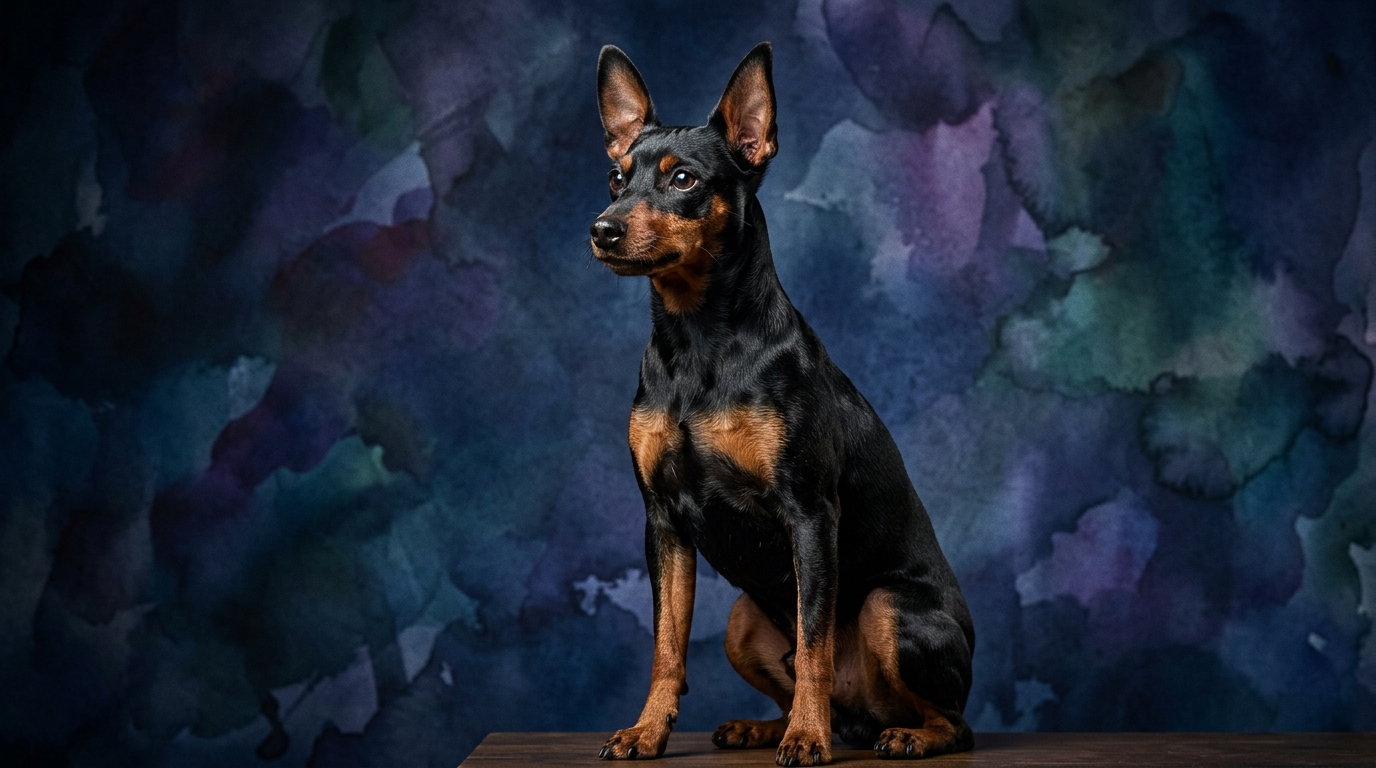
Side-by-Side IQ Profile: Rat Terrier vs. Miniature Pinscher
The Cosmic Pet Pet IQ Lab assesses canine intelligence across five key dimensions, assigning a score out of five for each. Interestingly, both the Rat Terrier and the Miniature Pinscher share identical scores across the board: Problem Solving 3/5, Training Speed 3/5, Social Intelligence 3/5, Instinctive Drive 3/5, and Memory 3/5. While these scores suggest a moderate and balanced cognitive capacity, the way these traits manifest and influence behavior is uniquely shaped by each breed's heritage and temperament.
For the Rat Terrier, a 3/5 in Problem Solving indicates a moderate capacity for independent thought and finding solutions. This often translates to practical applications like outsmarting small prey or navigating complex environments with a results-oriented approach. They persist when a puzzle relates to their instincts or offers a tangible reward. Their Training Speed at 3/5 means they absorb new commands at an average pace, responding well to consistent, positive reinforcement, though their independent spirit requires engaging methods. Social Intelligence, also 3/5, reflects an average understanding of social cues, yet their strong prey drive might sometimes override subtle social niceties. An Instinctive Drive of 3/5 primarily manifests as a keen prey drive, digging, and exploration, intrinsic to their breed history. Finally, their 3/5 Memory signifies an average ability to recall learned behaviors and past experiences, contributing to their adaptability over time.
The Miniature Pinscher, despite identical scores, expresses these cognitive traits differently. Their 3/5 Problem Solving often manifests as clever strategies for interacting with humans, like manipulating owners for attention or navigating household obstacles with agility. This indicates they are adept at finding creative ways to achieve their desires within a domestic setting. Their 3/5 Training Speed suggests they learn at an average pace, with effectiveness heavily influenced by owner consistency and engaging, rewarding methods, as their bold nature can lead to stubbornness with repetitive tasks. Social Intelligence at 3/5 means they have an average understanding of cues, but their confident, sometimes assertive, persona can color interactions. A 3/5 Instinctive Drive typically translates to a strong guarding instinct, vocalization, and territoriality, making them vigilant watchdogs rather than hunters. Their 3/5 Memory ensures they reliably remember routines, commands, and social interactions, quickly associating experiences with specific outcomes.
Where the Rat Terrier Wins Cognitively
The Rat Terrier's cognitive strengths often shine in environments demanding practical application of their senses and physical abilities. Their 3/5 problem-solving, when paired with their instinctive drive, makes them exceptionally adept at tasks requiring persistence and independent decision-making in pursuit of a goal. For example, in scent work or agility, a Rat Terrier is likely to relentlessly track a scent or figure out a complex course using its body and spatial awareness, rather than waiting for constant human direction. Their terrier heritage means they excel at tasks where they can channel their natural curiosity and drive to investigate, dig, and chase, making them self-starters in exploratory cognitive challenges. This practical intelligence, rooted in their working history, allows them to dissect a situation and apply learned solutions or invent new ones with a determined focus, especially when the task has a clear, tangible outcome related to their inherent drives.
Where the Miniature Pinscher Wins Cognitively
The Miniature Pinscher's cognitive edge often lies in their sharp observational skills and their ability to quickly learn and adapt within a domestic, human-centric environment. Their 3/5 problem-solving, combined with their social intelligence, frequently translates into clever strategies for interacting with their human companions. They are often quick to understand household routines, anticipating events like meal times or walk schedules. Min Pins can be remarkably adept at "training" their owners, learning which behaviors elicit desired responses, whether it's a specific bark for attention or a particular gaze for a treat. Their confident demeanor and moderate instinctive guarding drive also contribute to their acute awareness of their surroundings, making them excellent at noticing subtle changes or unfamiliar presences, and alerting their families promptly. This social and environmental intelligence allows them to thrive as engaged, sometimes manipulative, members of a human household.
Which is Easier to Train and Why
While both breeds share a 3/5 training speed, the Miniature Pinscher generally presents a slightly more straightforward training experience for the average owner, primarily due to differences in their primary motivators and instinctive drives. Min Pins, despite their independent streak, often have a stronger inherent desire to interact and perform for their chosen human, especially if it involves attention or food rewards. Their guarding instincts make them attentive to their surroundings and their owner's cues, which can be leveraged for focused learning. However, their stubbornness can surface if training becomes repetitive or if they perceive a lack of fairness, necessitating engaging and varied approaches.
The Rat Terrier, conversely, while equally capable of learning, can be more challenging for a novice trainer. Their strong prey drive and independent nature mean they might be more easily distracted by environmental stimuli, such as a squirrel outside, and are more likely to follow their nose or their instincts over a command, especially in novel or stimulating environments. Training a Rat Terrier requires exceptional consistency, creativity to keep them engaged, and a deep understanding of how to work with, rather than against, their natural terrier tenacity. While they absorb information at a similar rate, their application of that learning is often more selective, making their perceived "ease of training" lower for many.
Which Suits Active Owners vs. Relaxed Owners
For active owners, the Rat Terrier is often the more suitable companion. Their balanced 3/5 instinctive drive, combined with a robust physical constitution, means they thrive on regular, vigorous exercise and mental stimulation that taps into their working dog heritage. Activities like agility, lure coursing, earthdog trials, or long hikes are excellent outlets for their energy and cognitive engagement. Owners who enjoy outdoor adventures, have a secure yard for exploration, and are committed to consistent training and enrichment will find a Rat Terrier a tireless and engaging partner. Their moderate memory and problem-solving skills allow them to excel in structured activities, while their independent streak means they can often entertain themselves when given appropriate tasks.
The Miniature Pinscher, while energetic for a toy breed, often suits owners with a more relaxed lifestyle, particularly those living in apartments or smaller homes. Their energy can be adequately met with daily walks, indoor play, and interactive toys. While they enjoy activity, their "big dog in a small body" persona means their exercise needs are typically less demanding than a terrier. They excel as indoor companions who prefer to be central to family life, often content to observe and guard from a comfortable perch. Owners who value a vigilant watchdog, appreciate a confident and sometimes sassy personality, and prefer a dog whose primary activity involves close interaction and occasional bursts of play will find the Miniature Pinscher a charming and manageable fit. Their social intelligence and moderate memory make them excellent at integrating into a family routine.
The Verdict
Choose a Rat Terrier if you are an active individual or family seeking a tenacious, intelligent companion for outdoor adventures and mentally stimulating tasks, appreciating their independent problem-solving and spirited drive.
Choose a Miniature Pinscher if you desire a confident, alert, and affectionate companion for an indoor-centric lifestyle, valuing their social acuity and ability to integrate seamlessly into a family routine.
🧠 Find Your Pet's IQ Score
Our Pet IQ Lab assessment covers 25+ tests across 5 cognitive dimensions — personalized to your breed.
Take the Full IQ Test →Frequently Asked Questions
Do Rat Terriers and Miniature Pinschers have similar intelligence levels?
According to The Cosmic Pet Pet IQ Lab, both breeds share identical scores across five cognitive dimensions, including problem-solving, training speed, social intelligence, instinctive drive, and memory, all rated at 3/5. This suggests a moderate, balanced cognitive capacity for both, though their expression of these traits differs based on breed type and history.
How does a Rat Terrier's problem-solving differ from a Miniature Pinscher's, given the same score?
While both score 3/5, a Rat Terrier's problem-solving often leans towards practical, physical challenges related to their hunting instincts, like figuring out how to access a hidden toy or navigate complex terrain. A Miniature Pinscher's 3/5 problem-solving is typically more geared towards social manipulation within a domestic setting, such as learning how to get an owner's attention or access forbidden areas.
Are these breeds easy to train for first-time dog owners?
Both breeds have a 3/5 training speed, indicating an average learning pace. However, their distinct personalities mean training requires different approaches. Miniature Pinschers might be slightly more manageable for first-timers due to their social focus, while Rat Terriers' strong independent streak and prey drive can be more challenging without consistent, creative engagement.