
Side-by-Side Cognitive Profile: Rat Terrier
The Rat Terrier, a tenacious member of the Terrier group, consistently scores 3/5 across our five intelligence dimensions. Their problem-solving ability is characterized by a practical, persistent approach, especially when tasks involve discovery or securing a tangible goal. This reflects their heritage as vermin hunters, where ingenuity and direct action were paramount.
In terms of training speed, they possess a good capacity to learn new commands quickly, responding best to engaging, reward-based methods. However, their independent spirit means consistent motivation is crucial to maintain focus. Their social intelligence is robust, demonstrating a solid understanding of family dynamics and human cues, often forming strong, perceptive bonds within their household.
The Rat Terrier's instinctive drive is notably strong for prey, fueling their curiosity and engagement with their environment, manifesting in a desire to explore, dig, and chase small animals. Finally, their memory is reliable for routines, learned commands, and significant experiences, allowing them to navigate their world with a good sense of familiarity and expectation, remembering specific locations and successful past actions.
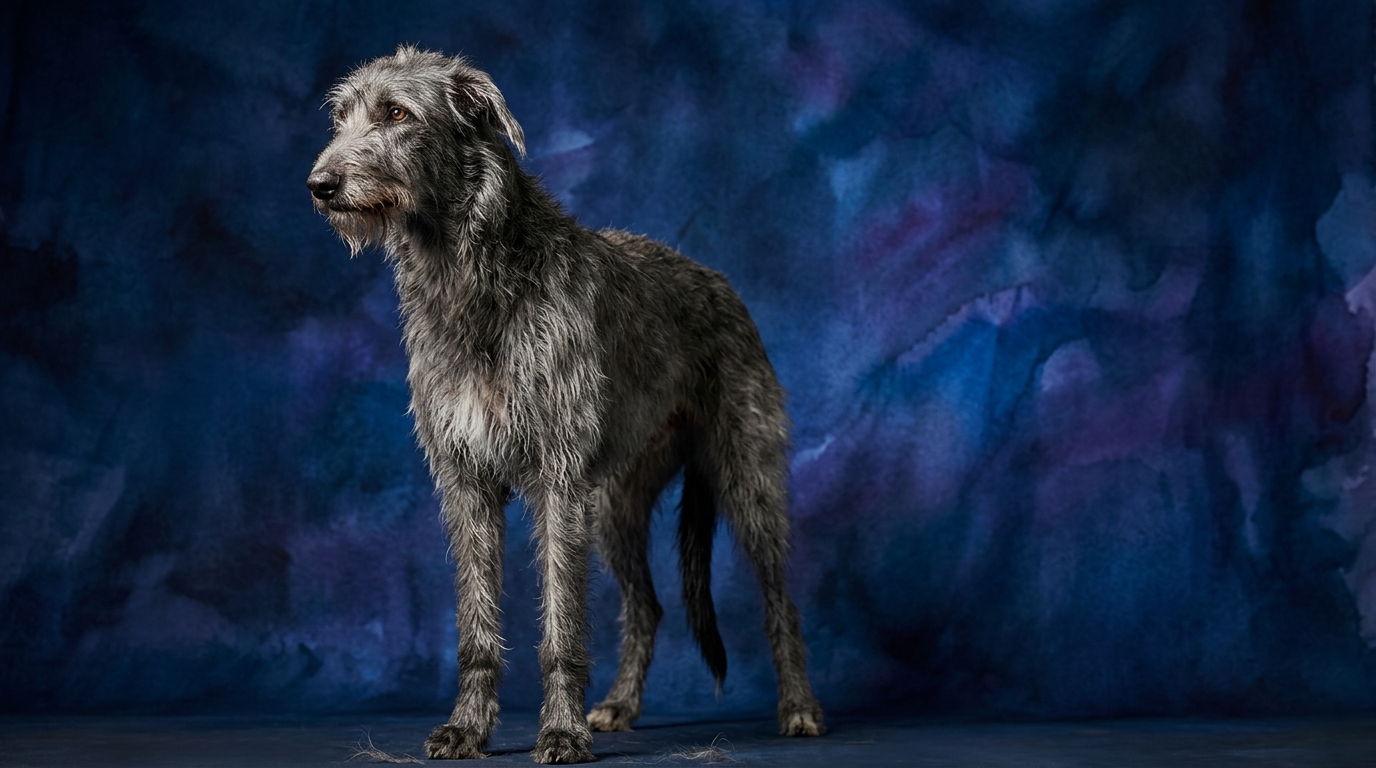
Side-by-Side Cognitive Profile: Scottish Deerhound
The Scottish Deerhound, a noble sighthound, also scores 3/5 across all five intelligence dimensions, yet their expression of these traits differs significantly. Their problem-solving approach is often more observational and strategic, particularly in open spaces. They tend to assess situations before acting, seeking efficient solutions, especially when it involves covering ground or tracking movement.
Regarding training speed, they are capable of learning commands with reasonable quickness, but their independent sighthound nature means they often need to understand the 'why' behind a request. They respond optimally to patient, positive reinforcement and a strong, trusting relationship. Their social intelligence is gentle and perceptive, making them attuned to their owner's moods and the household atmosphere, though they can be reserved with strangers.
The Deerhound's instinctive drive is exceptionally strong for visual chase, making them highly responsive to distant movement. This deeply ingrained instinct guides much of their focus and interaction with their environment. Their memory is particularly good for spatial relationships, routes, and the exhilaration of past running experiences, suggesting a strong recall for events tied to their core sighthound instincts and the layout of their surroundings.
Where the Rat Terrier Wins Cognitively
The Rat Terrier's cognitive strengths often shine in scenarios demanding quick, adaptable thinking within more confined or complex human environments. Their problem-solving (3/5) leans towards resourceful ingenuity, particularly when it involves manipulating objects or navigating obstacles to reach a desired outcome, like figuring out how to access a hidden treat or outsmarting a puzzle toy. This tenacious spirit, a hallmark of the Terrier group, translates into a persistent application of their intelligence, where they won't easily give up on a mental challenge.
Their social intelligence (3/5) often manifests as a more overt engagement with their human companions, making them highly responsive to subtle cues and capable of initiating interaction to get what they want, a trait that can feel very 'tuned in' to their owner's immediate presence. Furthermore, their memory, while rated similarly, often seems more focused on the intricate details of their immediate surroundings and the learned sequences that lead to rewards, making them excellent at remembering specific routines and the location of favored items within a familiar space.
Where the Scottish Deerhound Wins Cognitively
Conversely, the Scottish Deerhound’s cognitive edge often emerges in different contexts, particularly those involving expansive environments and strategic observation. Their problem-solving (3/5) is less about manipulating small objects and more about efficient, large-scale assessment. A Deerhound might excel at finding the most direct path across a field or strategically positioning themselves to observe distant movement, showcasing a reflective approach where they often process information before acting.
Their instinctive drive (3/5) is profoundly tied to their sighthound heritage, meaning their cognitive resources are heavily invested in visual detection and the planning of pursuit. This translates into an exceptional ability to scan horizons and identify subtle shifts in their environment, demonstrating a deep awareness of their surroundings over distance. Their memory, while also 3/5, is particularly robust for spatial relationships and the remembered exhilaration of a good run, suggesting a strong associative recall for experiences tied to their core instincts and the vastness of the outdoors.
Which is Easier to Train and Why
Despite both breeds scoring 3/5 for training speed, the *experience* of training them can differ significantly due to their underlying temperaments and drives. The Rat Terrier, with its lively curiosity and desire for engagement, often appears quicker to grasp new commands, especially when training is framed as a fun, interactive game. Their problem-solving tenacity can translate into a willingness to 'figure out' what you want, and their social intelligence makes them generally responsive to human direction.
However, their independent streak and strong instinctive drive can mean they are easily distracted by environmental stimuli or may decide a task isn't worth their effort if not sufficiently motivated. Consistent, positive reinforcement and varied training sessions are key to keeping them engaged. The Scottish Deerhound, while equally capable of learning, often presents a different training dynamic. Their independent sighthound nature means they might not possess the same inherent desire to 'please' as some breeds. They learn, but often on their own terms, requiring patience and a strong, trust-based relationship. Their profound instinctive drive for chase means that once something catches their eye, all other commands might temporarily fade from importance. Training a Deerhound often involves making the desired behavior more rewarding than any potential distraction, and understanding that their intelligence manifests in a more thoughtful, sometimes reserved manner. Neither is 'hard' to train, but the Rat Terrier might offer a more outwardly enthusiastic and immediately responsive training partner for many owners, while the Deerhound requires a more nuanced approach that respects their independent spirit and powerful instincts.
Which Suits Active Owners vs. Relaxed Owners
For owners with an active lifestyle, both breeds offer engaging companionship, but with different expressions of activity. The Rat Terrier, despite its smaller stature, is a dynamo of energy. Its instinctive drive and problem-solving nature mean it thrives on varied activities that engage both its body and mind, like agility, earthdog trials, or long, exploratory walks. They suit owners who enjoy consistent, interactive play and can provide mental challenges to prevent boredom. A relaxed owner might find a Rat Terrier's persistent demand for engagement overwhelming without sufficient outlets.
The Scottish Deerhound, while requiring substantial exercise, especially opportunities for galloping in a safe, enclosed space, also possesses a deeply relaxed, almost regal demeanor indoors. Their active needs are often met with bursts of intense speed followed by long periods of rest. They suit active owners who appreciate a companion for brisk walks and the occasional full-speed sprint, but who also value a calm, quiet presence in the home. Conversely, an owner seeking a constantly 'on-the-go' companion might find the Deerhound's periods of quiet contemplation too sedate, while a truly relaxed owner might underestimate their need for regular, vigorous exercise to maintain their physical and mental well-being.
The Verdict
If you seek a clever, tenacious companion eager for interactive problem-solving and adaptable to varied activities, the Rat Terrier is an excellent match.
For those who appreciate a dignified, observational partner with bursts of incredible speed and a calm home presence, the Scottish Deerhound offers unique companionship.
🧠 Find Your Pet's IQ Score
Our Pet IQ Lab assessment covers 25+ tests across 5 cognitive dimensions — personalized to your breed.
Take the Full IQ Test →Frequently Asked Questions
Are Rat Terriers good at puzzle toys?
Yes, Rat Terriers generally excel at puzzle toys due to their problem-solving ability and persistent nature. They enjoy the mental challenge of figuring out how to access a treat, leveraging their ingenuity and tenacity to solve the puzzle.
Do Scottish Deerhounds require a lot of mental stimulation?
While not typically requiring intricate puzzle games, Scottish Deerhounds do need mental stimulation that aligns with their sighthound instincts. This often includes opportunities for observation, exploring new environments, and engaging in strategic 'chase' games that satisfy their natural drives.
Can a Rat Terrier live in an apartment?
A Rat Terrier can adapt to apartment living if provided with sufficient daily exercise and mental engagement. Their compact size is suitable, but their energy and curiosity demand regular outings, interactive play, and training sessions to prevent boredom and destructive behaviors.