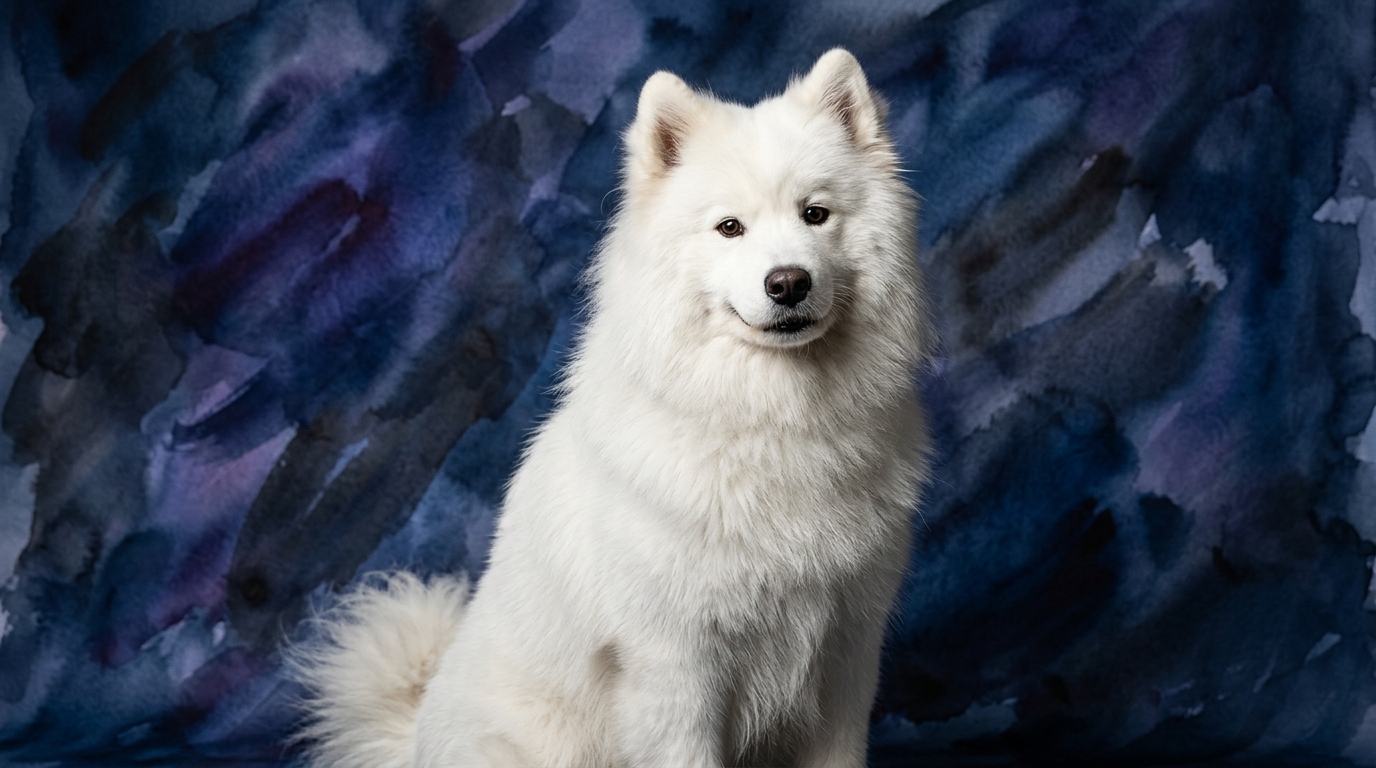
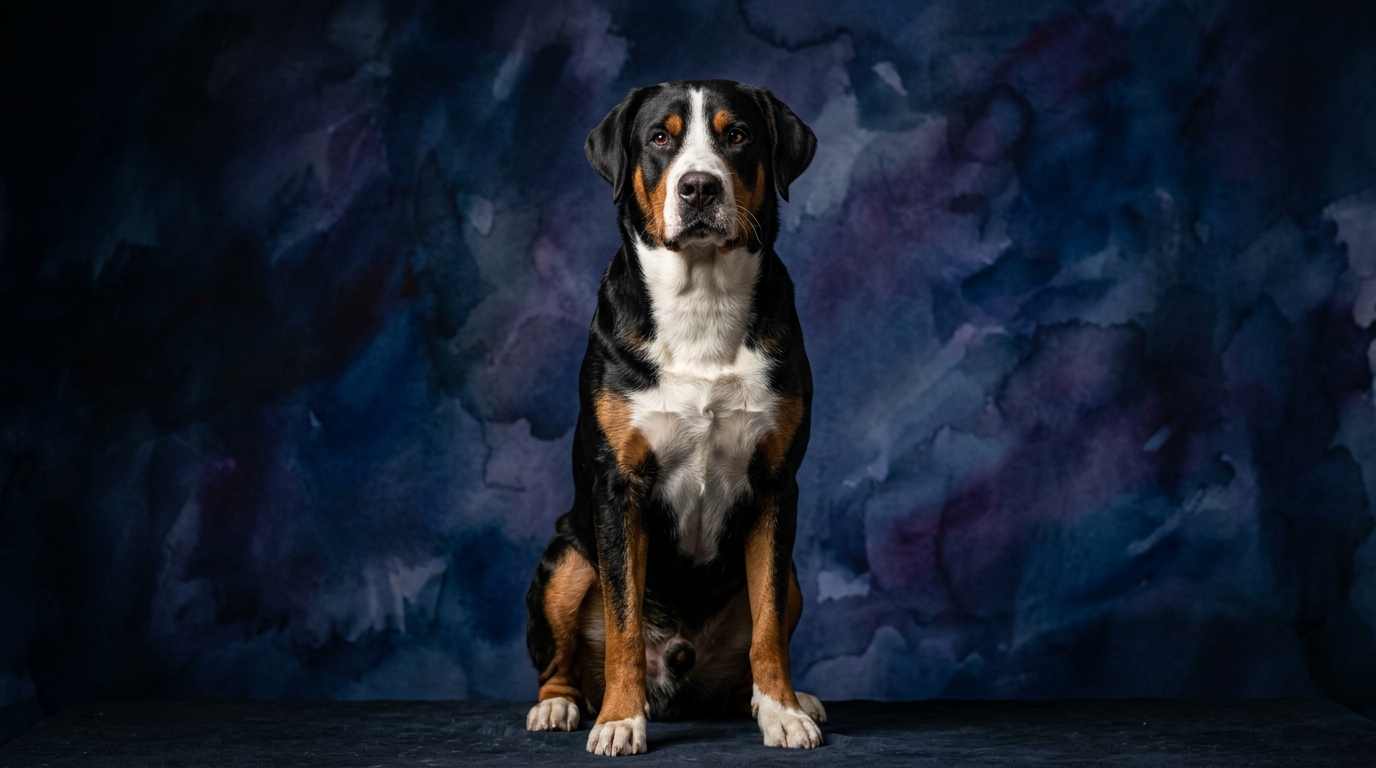
Side-by-Side IQ Profile: Samoyed vs. Greater Swiss Mountain Dog
The Samoyed, with a Coren rank of #33, falls into the 'Above Average Working Intelligence' category, suggesting a respectable capacity for learning and obedience. In terms of our specific IQ dimensions, Samoyeds exhibit a Problem Solving score of 3/5, demonstrating practical resourcefulness in navigating their environment, often driven by their desire for interaction or a tangible outcome. Their Training Speed is also 3/5, meaning they learn new commands at a moderate, steady pace, requiring consistent, positive reinforcement. A standout trait is their Social Intelligence, rated at an exceptional 5/5, indicating a profound ability to interpret human cues, understand social dynamics, and form deep, intuitive bonds. Their Instinctive Drive scores 4/5, reflecting a strong internal motivation for activity rooted in their sled-pulling and herding heritage, demanding regular engagement. Finally, their Memory is 3/5, providing a solid recall for routines, commands, and experiences.
The Greater Swiss Mountain Dog, not included in Coren's ranking, presents a profile of consistent, reliable capabilities across our IQ dimensions. They score 3/5 in Problem Solving, approaching novel situations with a methodical, practical mindset, reflecting their historical roles as drovers and farm guardians rather than requiring complex, abstract innovation. Their Training Speed is also 3/5, learning new commands with patience and thoroughness, responding best to clear, consistent methods. Social Intelligence is rated 3/5; they form deep, loyal bonds with their families but express their social aptitude through a more reserved, watchful demeanor than the effusive Samoyed. Their Instinctive Drive is 3/5, indicating a moderate yet purposeful inclination for tasks, less prone to high-energy pursuit or wanderlust without specific motivation. Their Memory also stands at 3/5, ensuring dependable recall of learned behaviors and familiar environments.
Where the Samoyed Wins Cognitively
The Samoyed's most distinct cognitive advantage lies in its exceptional Social Intelligence, scoring a perfect 5/5. This means they are profoundly attuned to human emotions, intentions, and subtle social cues, often anticipating their owner's moods or desires before they are explicitly expressed. This high level of social cognition translates into an unparalleled capacity for companionship and intuitive interaction, making them remarkably responsive to nuanced signals in a way the Greater Swiss Mountain Dog, with its 3/5 social intelligence, typically is not. Furthermore, their Instinctive Drive at 4/5, compared to the Greater Swiss's 3/5, provides a stronger, more persistent internal motivation for activity and engagement, particularly in tasks involving pulling, herding, or sustained physical effort. This deeper well of drive means a Samoyed will often exhibit more self-starting enthusiasm for tasks once their purpose is understood, and will relentlessly pursue goals that align with their innate working predispositions, making them formidable partners in active pursuits.
Where the Greater Swiss Mountain Dog Wins Cognitively
While the Greater Swiss Mountain Dog's individual cognitive scores might not surpass the Samoyed's in specific dimensions, its collective profile suggests a distinct advantage in steadiness and a grounded approach to tasks. With consistent 3/5 scores across Problem Solving, Training Speed, Social Intelligence, Instinctive Drive, and Memory, the Greater Swiss offers a predictable and reliable cognitive foundation. This breed excels in situations requiring a calm, unwavering presence and a methodical approach, rather than spontaneous problem-solving or effusive social engagement. Their moderate instinctive drive means they are less likely to be overwhelmed by high-arousal situations or to act impulsively, making them inherently more consistent in their responses once a task is learned. This 'slow and steady' cognitive style is a significant asset in roles demanding consistent guardianship or draft work, where reliability and a measured response are paramount over rapid, high-energy output. Their strength lies not in exceeding, but in consistently meeting expectations with a robust, dependable demeanor.
Which is Easier to Train and Why
Both breeds share a Training Speed score of 3/5, indicating a moderate learning curve where new commands are grasped with consistent effort over time. However, the Samoyed's superior Social Intelligence (5/5) offers a significant advantage in trainability. A Samoyed is often more eager to please and more sensitive to human feedback, making them highly receptive to positive reinforcement and praise. Their deep understanding of social dynamics means they quickly grasp what is expected within the human-dog relationship, often performing behaviors to maintain that positive interaction. Conversely, while the Greater Swiss Mountain Dog also learns well, its 3/5 social intelligence suggests a more independent streak. They are often less driven by a strong desire to please and more by a clear understanding of the task's utility or the consequences of non-compliance. Training a Greater Swiss requires more patience and a focus on clarity and consistency, as they are less likely to 'guess' what you want based on subtle social cues. Their moderate instinctive drive (3/5) also means they might not bring the same sustained enthusiasm to repetitive drills as a Samoyed (4/5) might, requiring trainers to keep sessions engaging and purposeful to maintain their focus.
Which Suits Active Owners vs. Relaxed Owners
The Samoyed, with its 4/5 Instinctive Drive and 5/5 Social Intelligence, is ideally suited for active owners who can provide consistent engagement and purposeful activity. Their historical roles as sled dogs and herders mean they thrive on regular, vigorous exercise, mental challenges, and extensive human interaction. Owners who enjoy long hikes, dog sports like agility or canicross, or simply want a highly interactive companion for daily adventures will find a Samoyed to be an enthusiastic and willing partner. Their need for social input means they prefer to be involved in family activities rather than left alone for extended periods, potentially developing undesirable behaviors if under-stimulated. In contrast, the Greater Swiss Mountain Dog, with its more moderate 3/5 Instinctive Drive and Social Intelligence, can adapt to a wider range of owner lifestyles, including those who are active but also appreciate periods of calm. While they certainly need daily exercise and mental stimulation, their energy levels are generally more manageable than a Samoyed's. They are content with a good daily walk, some playtime, and a watchful presence within the home. This makes them a better fit for owners who appreciate a strong, loyal companion but might not have the capacity or desire for constant high-energy engagement, preferring a more relaxed, yet still purposeful, canine presence.
The Verdict
Opt for a Samoyed if you seek an exceptionally socially attuned companion eager for extensive interaction and vigorous, purposeful activities that engage both body and mind.
Choose a Greater Swiss Mountain Dog for a reliably steady, loyal guardian who thrives on consistent routines, appreciates a calmer pace, and offers a dependable, watchful presence.
🧠 Find Your Pet's IQ Score
Our Pet IQ Lab assessment covers 25+ tests across 5 cognitive dimensions — personalized to your breed.
Take the Full IQ Test →Frequently Asked Questions
Are Samoyeds difficult to train due to their working dog traits?
Samoyeds are not inherently difficult to train, but their 4/5 instinctive drive and moderate training speed (3/5) mean they benefit from consistent, positive reinforcement and engaging methods. Their high social intelligence (5/5) makes them responsive to human cues, but they can be independent if not properly motivated or if training lacks structure and consistency.
Does the Greater Swiss Mountain Dog's lack of a Coren rank mean it's less intelligent?
No, the absence of a Coren rank for the Greater Swiss Mountain Dog simply means it wasn't included in that specific study or didn't fit its methodology. Its consistent 3/5 scores across various IQ dimensions indicate a practical, reliable intelligence suited to its historical working roles, rather than a deficiency in cognitive capacity.
Which breed is better for first-time dog owners?
For first-time owners, the Greater Swiss Mountain Dog might be marginally easier due to its more moderate instinctive drives and generally calmer demeanor, provided they can offer consistent training and socialization. The Samoyed's higher energy and social needs demand a more dedicated and experienced approach to ensure proper channeling of their considerable attributes without behavioral challenges.