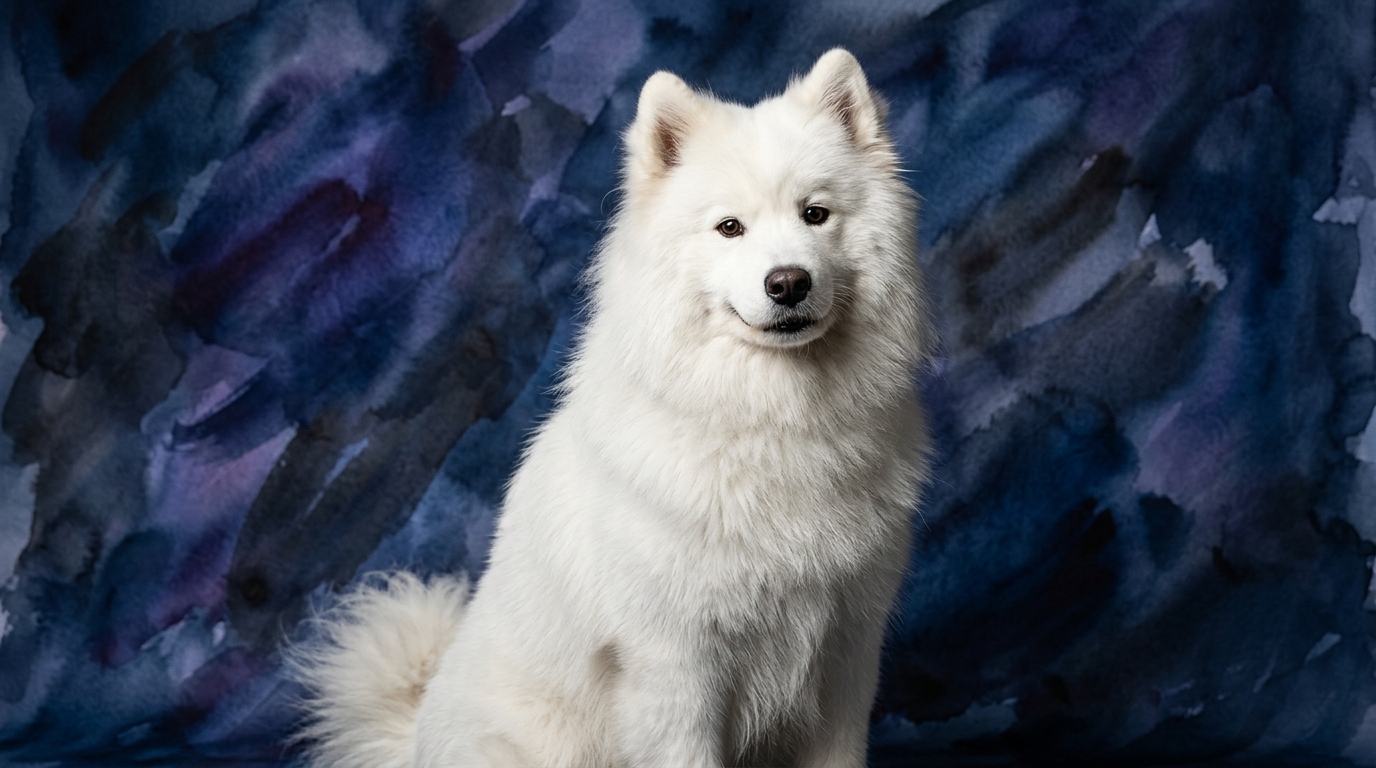
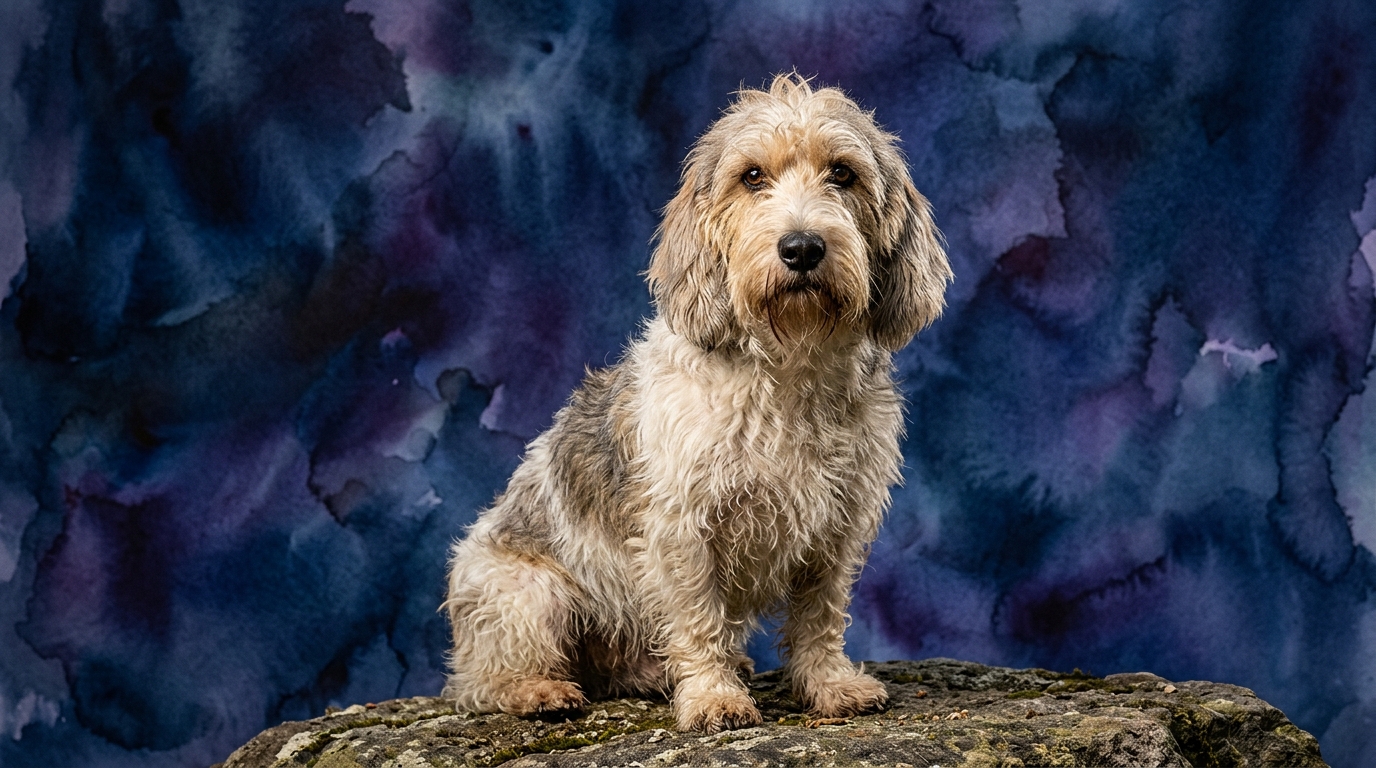
Side-by-Side Cognitive Profiles
The Cosmic Pet Pet IQ Lab employs a multi-dimensional approach to assess canine intelligence, moving beyond simple obedience to encompass a broader spectrum of cognitive abilities. For the Samoyed, a Working group dog, its profile is shaped by centuries of collaborative tasks, while the Petit Basset Griffon Vendéen (PBGV), a Hound, exhibits traits honed for independent pursuit.
The Samoyed's cognitive breakdown begins with Problem Solving at 3/5, indicating a moderate ability to navigate novel situations or devise solutions without prior instruction. Its Training Speed is also 3/5, suggesting it requires consistent, engaging methods to assimilate new commands effectively, a trait consistent with its Coren ranking of #33 among breeds for working and obedience intelligence. Where the Samoyed truly distinguishes itself is in Social Intelligence, scoring an exceptional 5/5, reflecting its profound capacity for understanding human cues, forming deep bonds, and desiring collaborative interaction. Its Instinctive Drive stands at 4/5, a robust impulse to perform breed-specific tasks like herding or pulling, often in partnership with humans. Finally, its Memory is rated 3/5, indicating an average retention of learned experiences and commands.
The Petit Basset Griffon Vendéen presents a profile more aligned with its independent hunting heritage. Its Problem Solving ability is rated 3/5, on par with the Samoyed, suggesting a similar capacity for independent thought when faced with challenges, though often applied to different contexts. Training Speed for the PBGV is also 3/5, meaning it learns at a moderate pace, but its motivation drivers may differ from the Samoyed. Its Social Intelligence is 3/5, indicating a reasonable but not outstanding connection to human directives; PBGVs are affectionate but often prioritize their own sensory world. The PBGV's Instinctive Drive is 3/5, a strong pull towards scent tracking and exploration, which, while powerful, is less oriented towards human-directed tasks than the Samoyed’s working drive. Its Memory is 3/5, mirroring the Samoyed's average retention of information.
Where the Samoyed Excels Cognitively
The Samoyed’s cognitive strengths are most evident in its exceptional Social Intelligence (5/5). This attribute allows them to form highly communicative relationships with their human companions, enabling them to interpret subtle facial expressions, vocal inflections, and body language with remarkable accuracy. This deep understanding fosters a cooperative spirit, making them highly receptive to human direction and emotionally attuned to their family's dynamics. Owners often describe them as intuitive, anticipating needs or moods, a direct result of this advanced social cognition.
Furthermore, the Samoyed's robust Instinctive Drive (4/5) is largely channeled towards purposeful activities that can be shared with humans. Their historical role in pulling sleds or herding reindeer has imbued them with a desire to contribute and work alongside people. This drive translates into a willingness to engage in structured activities, problem-solving within the framework of a task, and finding fulfillment in a shared objective, setting them apart from breeds whose drives are more solitary. Their capacity for sustained, directed effort in partnership is a clear cognitive advantage for owners seeking a canine collaborator.
Where the Petit Basset Griffon Vendéen Shows Unique Cognitive Strengths
While the PBGV's numerical scores might not always surpass the Samoyed's, its cognitive profile shines in areas directly linked to its hound heritage. The PBGV's Instinctive Drive (3/5), though numerically lower than the Samoyed's, is intensely focused on scent work, representing a distinct cognitive strength. This involves an extraordinary ability to discriminate and follow complex scent trails, often for extended periods, requiring immense focus, persistence, and independent decision-making in varied environments. Their problem-solving (3/5) in this context is about navigating physical obstacles and environmental distractions to achieve a scent-related goal, a form of cognitive effort that is profound in its specific application.
The PBGV's moderate Social Intelligence (3/5) contributes to an independent streak that, for the right owner, is a cognitive advantage. They are not as reliant on constant human validation and possess a self-assured curiosity. This independence means they are adept at making their own discoveries and pursuing their own investigations, a trait that requires a strong internal locus of control and a confidence in their own sensory data. While it can present training challenges, this self-directed cognitive approach is invaluable for a dog whose historical role was to range and hunt without constant human supervision.
Ease of Training: A Behavioral Comparison
When it comes to ease of training, the Samoyed generally presents a more collaborative experience, despite both breeds sharing a 3/5 Training Speed score. The Samoyed's exceptional Social Intelligence (5/5) means they are highly motivated by human approval and connection. They actively seek to understand and please their owners, making them responsive to positive reinforcement and eager to engage in training sessions that foster a bond. While their independence can sometimes surface, their desire for partnership often overrides it, leading to a more willing participant in obedience and trick training. Their Coren ranking of #33 further indicates a capacity for understanding and executing commands efficiently, provided training is consistent and engaging.
The Petit Basset Griffon Vendéen, in contrast, often requires a more patient and strategic approach to training. While their Training Speed is 3/5, their moderate Social Intelligence (3/5) means they are less driven by the desire to please and more by their own environmental interests, particularly compelling scents. Their strong Instinctive Drive for tracking can make them easily distracted in traditional training settings, as their nose often dictates their attention. Training a PBGV successfully involves making it incredibly fun, highly rewarding (often with food or scent-based games), and understanding that their independent nature means they'll question 'why' before complying. They are certainly trainable, but their inherent hound characteristics necessitate a different kind of owner dedication and creative methodology to achieve reliable results.
Suitability for Active vs. Relaxed Owners
The Samoyed is undeniably suited for active owners who can provide consistent engagement and purposeful interaction. Their high Social Intelligence and robust Instinctive Drive mean they thrive when given a 'job' or included in family activities. They require significant physical exercise to channel their energy, but equally important is mental stimulation that involves their human companions, such as advanced obedience, dog sports, or even simply being a constant, integrated part of family life. A relaxed owner who cannot meet these needs might find a Samoyed prone to boredom-induced behaviors, as their cognitive makeup demands interaction and purpose.
The Petit Basset Griffon Vendéen also requires an active owner, but the nature of that activity differs significantly. While they are not necessarily high-strung, their powerful Instinctive Drive for scent work means they need daily opportunities to explore and follow their noses in a safe, secure environment. A 'relaxed' owner who expects a purely sedentary companion will quickly find a PBGV creating its own, potentially destructive, entertainment. They are not content with mere backyard access; they need walks where they can investigate new smells, puzzle toys, and perhaps even structured scent work or earth dog trials. The owner for a PBGV should be relaxed about a dog that sometimes has its own agenda, but active in providing outlets for its innate cognitive drives.
The Verdict: When to Choose Each Breed
Choosing between a Samoyed and a Petit Basset Griffon Vendéen hinges on aligning the dog's cognitive profile with an owner's lifestyle and expectations for companionship. Both breeds offer unique rewards, but their approaches to the world are distinct.
The Samoyed is an ideal companion for owners seeking a highly communicative, cooperative, and socially engaged partner for an active, purposeful life. If you desire a dog that deeply connects with your emotions, thrives on shared tasks, and integrates seamlessly into a family unit, the Samoyed's exceptional social intelligence and working drive make it a compelling choice. They flourish with consistent interaction, mental challenges, and a role within their human 'pack'.
The Verdict
Choose the Samoyed if you are an active individual or family seeking a deeply social, cooperative, and communicative canine partner who thrives on shared activities and a strong emotional bond. They excel when given a purpose and consistent interaction within their human family.
Opt for the Petit Basset Griffon Vendéen if you appreciate an independent, curious, and persistent scent hound, and are prepared to channel its natural drives for exploration and tracking. This breed suits owners who value a dog with a strong sense of self and are willing to engage in activities that stimulate its keen sense of smell and autonomous problem-solving.
🧠 Find Your Pet's IQ Score
Our Pet IQ Lab assessment covers 25+ tests across 5 cognitive dimensions — personalized to your breed.
Take the Full IQ Test →Frequently Asked Questions
Are Samoyeds difficult to train given their 3/5 training speed?
While their training speed is moderate, Samoyeds are generally considered responsive due to their high social intelligence. They are eager to please and form strong bonds, which makes them highly motivated by positive reinforcement and collaborative training methods. Consistency and engagement are key to their success.
What kind of mental stimulation does a PBGV need, considering its strong instinctive drive?
A PBGV primarily needs mental stimulation that engages its powerful sense of smell and independent problem-solving. This includes regular walks for sniffing, scent work games, puzzle toys, and potentially participation in activities like tracking or earth dog trials to fulfill its natural hunting instincts.
How do the social needs of these two breeds differ?
Samoyeds have very high social needs, thriving on constant human interaction and integration into family life due to their 5/5 social intelligence. PBGVs, with 3/5 social intelligence, are affectionate but more independent; they appreciate companionship but are also content to follow their own interests, particularly scent trails, without constant human direction.