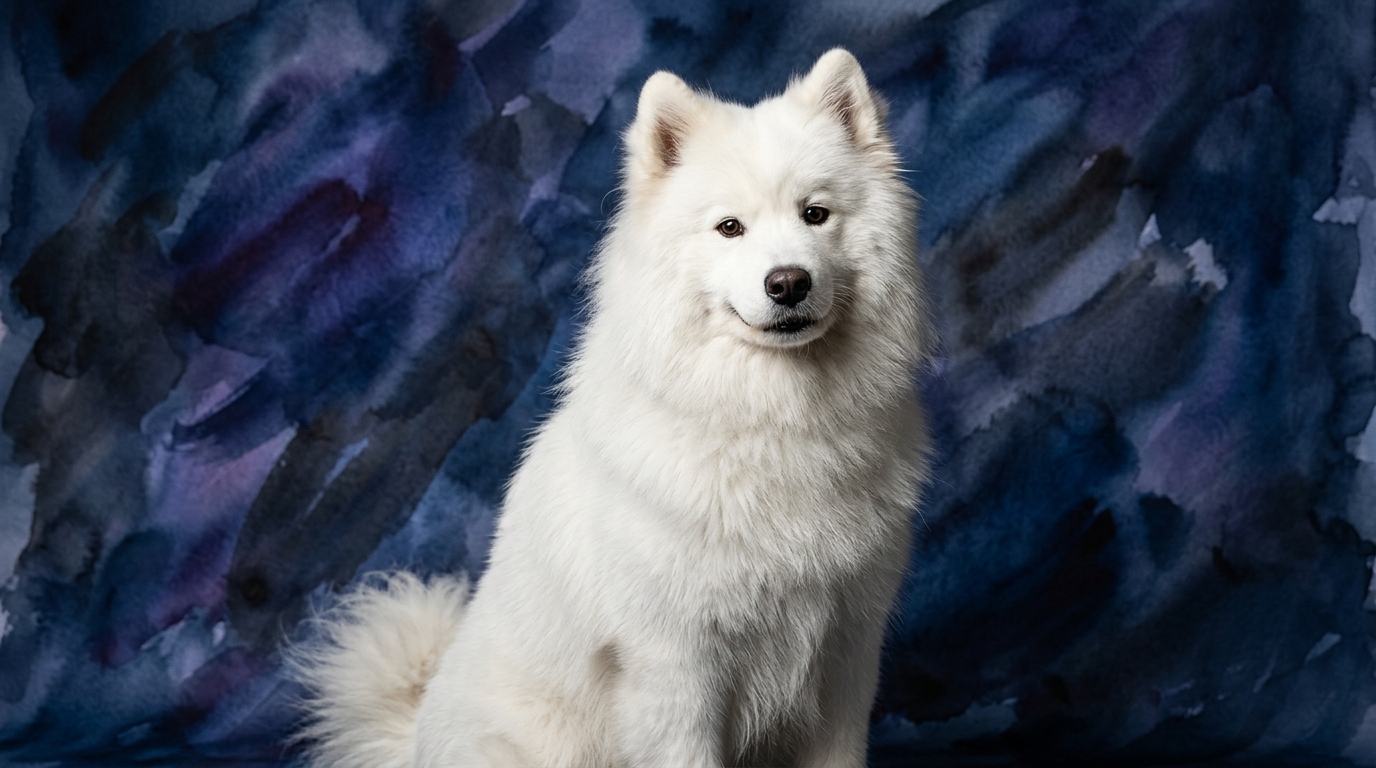

Side-by-Side IQ Profile: Samoyed vs. Tibetan Terrier
The Cosmic Pet Pet IQ Lab provides a unique framework for understanding canine cognition across five key dimensions. For the Samoyed, a Working group dog, we observe a Problem Solving score of 3/5, indicating an ability to navigate moderately complex challenges, and a Training Speed of 3/5, suggesting a moderate pace of learning new commands. Where the Samoyed truly shines is in Social Intelligence, scoring a perfect 5/5, reflecting an exceptional attunement to human emotions and social cues, forming deep, reciprocal bonds. Their Instinctive Drive is a strong 4/5, rooted in their heritage of pulling and herding, while their Memory stands at a solid 3/5, allowing them to retain learned behaviors and experiences effectively.
In contrast, the Tibetan Terrier, hailing from the Non-Sporting group, presents a more balanced, albeit generally moderate, cognitive profile. They share the Samoyed's Problem Solving score of 3/5, demonstrating a similar capacity for figuring out moderately difficult tasks. Their Training Speed also matches at 3/5, indicating a moderate learning pace. However, their Social Intelligence is a 3/5, meaning they form good bonds but are often less overtly attuned to subtle human cues and can exhibit more independence. Their Instinctive Drive is 3/5, reflecting a history as companions and watchdogs rather than intense working partners, and their Memory is also 3/5, retaining information at a moderate level.
Where the Samoyed Wins Cognitively
The Samoyed's most striking cognitive advantage lies in its unparalleled Social Intelligence, scoring a perfect 5/5 compared to the Tibetan Terrier's 3/5. This isn't merely about friendliness; it signifies a profound capacity for emotional reciprocity and understanding human non-verbal communication. Samoyeds are often described as having an empathetic presence, able to pick up on subtle changes in their owner's mood or intentions, making them deeply intuitive companions. This cognitive strength allows them to integrate seamlessly into family dynamics, anticipate needs, and form extraordinarily strong, almost telepathic bonds, which is a hallmark of their breed.
Furthermore, the Samoyed's higher Instinctive Drive (4/5 versus 3/5) translates into a cognitive readiness for purpose-driven activities. Their ancestral roles as herders and sled dogs have hardwired them with a strong desire for a 'job,' whether it's pulling a cart, participating in agility, or engaging in extensive outdoor adventures with their human. This drive isn't just physical; it’s a cognitive inclination towards problem-solving within a structured task, and a fulfillment derived from contributing to a shared goal. Owners can leverage this inherent motivation to engage Samoyeds in mentally stimulating activities that satisfy their deep-seated need for purpose.
Where the Tibetan Terrier Wins Cognitively
While the Tibetan Terrier doesn't boast higher scores in specific dimensions compared to the Samoyed, its cognitive profile represents a unique strength in adaptability and independent resourcefulness. With moderate scores across the board – Problem Solving (3/5), Training Speed (3/5), Social Intelligence (3/5), Instinctive Drive (3/5), and Memory (3/5) – the Tibetan Terrier possesses a balanced intellect that allows them to thrive in various environments without requiring constant direction or a specific 'job' to feel fulfilled. Their moderate social intelligence means they are affectionate but not overly dependent, fostering a sense of self-sufficiency in their cognitive approach to the world.
This balanced intelligence, particularly their moderate social drive, allows Tibetan Terriers to be discerning observers and independent thinkers. They process information and react to their surroundings with a certain self-reliance, often weighing situations before engaging fully. This cognitive independence means they are less prone to separation anxiety than breeds with higher social drives and can entertain themselves or find solutions to minor challenges without always looking to their human for guidance. For owners who appreciate a companion with a thoughtful, self-contained intellect and a discerning nature, the Tibetan Terrier’s cognitive make-up offers a distinct advantage.
Which is Easier to Train and Why
Despite both breeds sharing a Training Speed score of 3/5, indicating a moderate pace of learning, the Samoyed generally proves easier to train due to a critical difference in their Social Intelligence. The Samoyed's exceptional 5/5 social intelligence means they are inherently motivated to please their human companions and are highly responsive to positive reinforcement and clear communication. They possess a strong desire to work collaboratively and understand what is expected of them, making them eager participants in training sessions. Their cognitive wiring is geared towards partnership, which translates into a more willing and cooperative student.
The Tibetan Terrier, with its 3/5 Social Intelligence, while capable of learning, approaches training with a more independent and sometimes discerning mindset. They are less inherently driven by the desire to please and may require more creative motivation and patience. Their independence can manifest as a 'what's in it for me?' attitude, meaning training must be consistently engaging and offer clear rewards to maintain their focus. While equally capable of learning, their cognitive independence means they might be less inclined to follow commands purely for the sake of human approval, demanding a more nuanced and persistent training approach.
Which Suits Active Owners vs. Relaxed Owners
The Samoyed, with its robust Instinctive Drive of 4/5 and high Social Intelligence of 5/5, is an ideal match for active owners who seek a deeply engaged and purpose-driven canine partner. These dogs thrive on shared activities that provide both physical exertion and mental stimulation, such as hiking, jogging, sledding, or participating in dog sports like agility or obedience. Their cognitive profile suggests they not only enjoy these activities but also derive significant satisfaction from working alongside their human, fulfilling their ingrained desire for partnership and contribution. A Samoyed requires consistent engagement to prevent boredom and channel its considerable energy and cognitive drive constructively.
The Tibetan Terrier, with its moderate Instinctive Drive of 3/5 and Social Intelligence of 3/5, is more suited for owners who appreciate a balanced lifestyle. While they enjoy regular walks, playtime, and mental enrichment, they do not demand the same level of intense, purpose-driven activity as a Samoyed. They are content to share a comfortable home, enjoying periods of activity interspersed with relaxation. Their cognitive independence means they are less demanding of constant human attention and can occupy themselves, making them a good fit for individuals or families who enjoy an active lifestyle but also value their downtime and a companion who is comfortable in their own space. They are adaptable companions who fit well into various household dynamics, from moderately active to more relaxed settings.
The Verdict
Choose the Samoyed if you seek a deeply connected, empathetic, and purpose-driven canine partner eager for shared adventures and reciprocal emotional engagement, thriving on a 'job' and strong human bond.
Opt for the Tibetan Terrier if you desire an adaptable, discerning, and independently resourceful companion who enjoys shared moments but also values their own space, providing a thoughtful and less demanding presence.
🧠 Find Your Pet's IQ Score
Our Pet IQ Lab assessment covers 25+ tests across 5 cognitive dimensions — personalized to your breed.
Take the Full IQ Test →Frequently Asked Questions
Are Samoyeds stubborn during training?
Samoyeds can exhibit independence due to their working dog heritage, but their strong social intelligence means they are often motivated by positive reinforcement and a desire to please their human companions, making them responsive to consistent, engaging training methods.
Do Tibetan Terriers require a lot of mental stimulation?
While they possess a moderate problem-solving IQ, Tibetan Terriers benefit from regular mental engagement through puzzle toys, varied walks, and learning new tricks to keep their minds sharp and prevent boredom-related behaviors.
How do their instinctive drives manifest in daily life?
The Samoyed's higher instinctive drive often translates to a desire for 'jobs,' like pulling carts or participating in dog sports, and a strong pack mentality, while the Tibetan Terrier's moderate drive means they enjoy activity but are content with less structured engagement, often displaying a watchful curiosity.