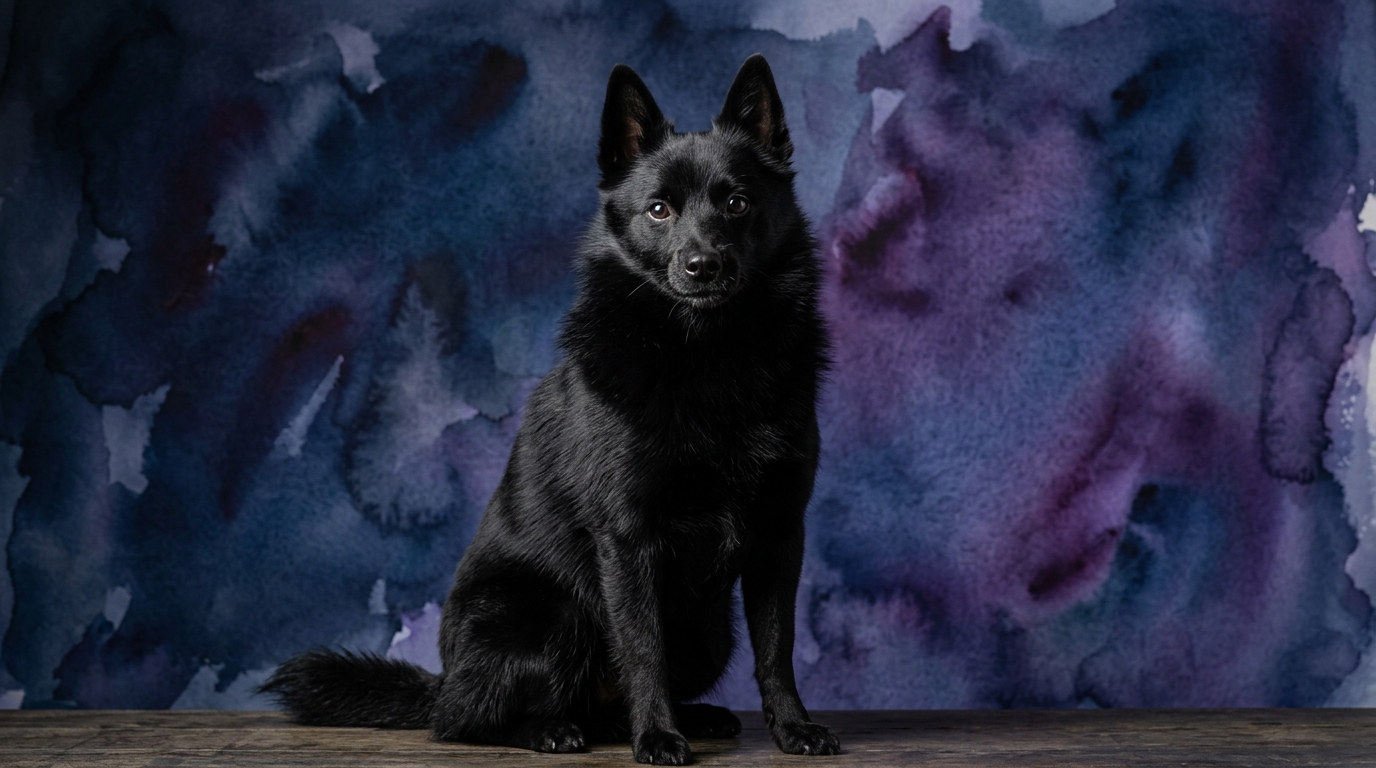
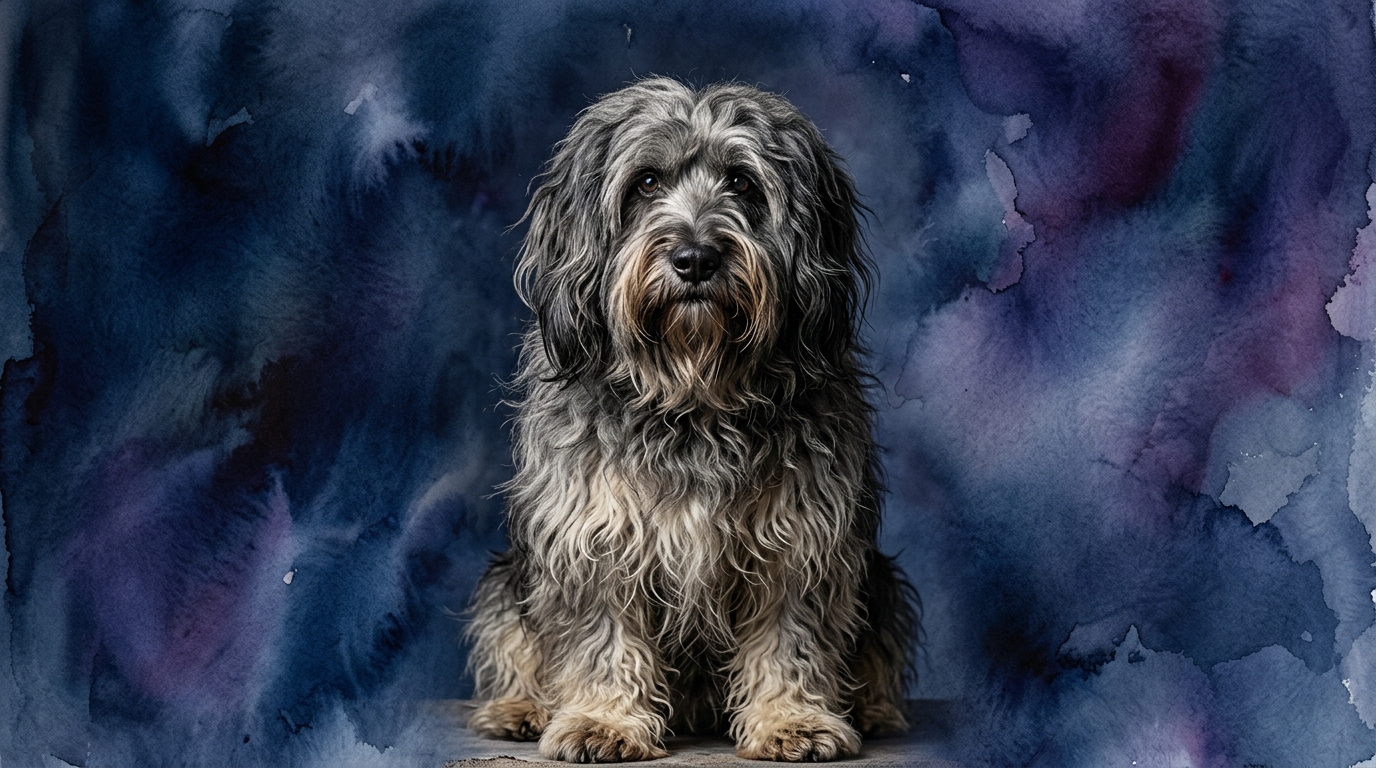
Side-by-Side IQ Profile: Schipperke vs. Polish Lowland Sheepdog
The Cosmic Pet Pet IQ Lab provides a detailed framework to understand canine cognition, evaluating five key dimensions. The Schipperke, a Non-Sporting breed with a notable Coren rank of #15, presents a cognitive profile marked by exceptional mental agility. It scores a perfect 5/5 in Problem Solving, indicating a strong capacity to independently navigate and overcome novel challenges, alongside a 5/5 in Training Speed, signifying rapid command acquisition. Its Memory also stands at an impressive 5/5, suggesting excellent retention of learned behaviors and experiences. However, its Social Intelligence and Instinctive Drive are both rated 3/5, suggesting a balanced but not overwhelming inclination towards social interaction or innate working behaviors.
In contrast, the Polish Lowland Sheepdog, a Herding breed not currently Coren-ranked, exhibits a more uniformly moderate cognitive blueprint. This breed consistently scores 3/5 across all five dimensions: Problem Solving, Training Speed, Social Intelligence, Instinctive Drive, and Memory. This balanced profile suggests a steady, functional intelligence that is less prone to extremes. While it may not demonstrate the same flash of insight or lightning-fast learning as the Schipperke, its consistent scores imply a reliable and adaptable mind, capable of learning and interacting without the intense demands or independent ingenuity seen in breeds with higher peak scores.
Where the Schipperke Wins Cognitively
The Schipperke distinctly outshines the Polish Lowland Sheepdog in several cognitive domains, primarily its remarkable Problem Solving, Training Speed, and Memory, all rated 5/5. A Schipperke's 5/5 Problem Solving score means it possesses an innate ability to assess new situations and devise solutions with surprising ingenuity. This might manifest as quickly figuring out how to open a child-proof gate, bypassing a barrier to reach a desired toy, or even manipulating its environment to its advantage, requiring owners to be consistently one step ahead. Its capacity for independent thought means it doesn't always wait for human direction to tackle a puzzle.
Coupled with its 5/5 Training Speed, the Schipperke absorbs new commands and routines with impressive swiftness, often grasping complex sequences in just a few repetitions. This makes them highly responsive to advanced obedience, agility, or trick training, where their quick uptake allows for rapid progression. Furthermore, their 5/5 Memory ensures that once a behavior or concept is learned, it is retained with remarkable fidelity over long periods. This means a Schipperke will remember past training, routes taken, or even specific interactions, building a rich internal map of its world and its learned experiences, making it a consistently reliable performer once taught.
Where the Polish Lowland Sheepdog Wins Cognitively
While the Polish Lowland Sheepdog (PON) does not achieve higher numerical scores than the Schipperke in any specific cognitive dimension, its balanced 3/5 ratings across Problem Solving, Training Speed, Social Intelligence, Instinctive Drive, and Memory offer a distinct, advantageous cognitive profile for certain lifestyles. This consistent moderation across the board can be interpreted as a "win" for owners seeking a predictable and functionally robust companion without the potential complexities of extreme cognitive peaks. A PON's 3/5 in Problem Solving suggests it is capable of addressing challenges, but is less likely to constantly seek out or invent them, potentially leading to a more manageable home environment.
Its uniform 3/5 profile implies a steady, dependable application of its mental faculties. For instance, while its Training Speed is 3/5, meaning it learns at a moderate pace, this often comes with a thoroughness and reliability once a concept is grasped. Its 3/5 Social Intelligence, rooted in a herding background, often translates to a desire for inclusion and participation within its family "flock," fostering a loyal and engaged, if not overtly demonstrative, partnership. The PON's cognitive balance means it's less prone to the "too clever for its own good" scenarios that can sometimes accompany breeds with very high problem-solving abilities, offering a stable and less demanding intellectual engagement from its human companions.
Which is Easier to Train and Why
When considering ease of training, the Schipperke holds a clear advantage due to its 5/5 Training Speed and 5/5 Memory. These attributes allow them to pick up new commands and routines with exceptional rapidity, often requiring fewer repetitions than many other breeds. A Schipperke can learn a complex new trick or an intricate agility sequence in a remarkably short time, and once mastered, that knowledge is retained with high fidelity. However, their equally high Problem Solving (5/5) means they might also quickly learn to outsmart their owners, such as figuring out how to open doors or evade restrictions, demanding consistent and creative training to channel their mental prowess constructively. Their training requires engaging their sharp minds to prevent self-directed, potentially mischievous, problem-solving.
The Polish Lowland Sheepdog, with its 3/5 Training Speed and 3/5 Memory, requires a more patient and consistent approach. While certainly trainable, they will generally take longer to grasp new concepts and may need more frequent reinforcement to solidify learned behaviors. Their herding background does instill a desire to cooperate and work alongside their human, which can be a strong motivator, but they are less inclined to learn purely for the sake of mental challenge. Real behavioral differences include the Schipperke's almost immediate understanding of a new hand signal versus the PON needing several sessions to consistently respond. The PON's training success relies more on clear, positive reinforcement and building a strong, trusting relationship, rather than relying on inherent speed of uptake.
Which Suits Active Owners vs. Relaxed Owners
The choice between these two breeds, particularly concerning owner activity levels, hinges significantly on their cognitive demands rather than just physical exercise. The Schipperke, despite its compact size, is better suited for owners who are mentally active and thrive on engaging with a quick-witted companion. Its 5/5 Problem Solving and Memory, combined with its high Training Speed, mean it requires consistent mental stimulation through training, puzzle toys, and varied activities to prevent boredom and potential mischief. Owners who enjoy teaching new tricks, participating in dog sports like agility or obedience, or simply engaging in daily brain games will find the Schipperke a rewarding partner. Their energy is often concentrated in their minds, making them ideal for individuals who can provide consistent intellectual challenges.
Conversely, the Polish Lowland Sheepdog, with its balanced 3/5 scores across all cognitive dimensions, generally suits owners seeking a more relaxed yet still engaged canine companion. While they are still herding dogs and appreciate regular exercise and purposeful activities, their cognitive demands are less intense and less prone to independent "inventiveness" compared to the Schipperke. They are content with consistent routines, moderate walks, and a steady pace of learning. Owners who appreciate a loyal, adaptable dog that isn't constantly seeking to outsmart them, and who prefer a calm, predictable presence, will likely find the PON a more comfortable fit for a less high-octane lifestyle.
The Verdict
Opt for the Schipperke if you are an owner who relishes a quick-thinking companion, eager to learn and solve puzzles, and can provide consistent mental engagement and advanced training. This breed thrives with individuals who appreciate a sharp, independent mind and are prepared to channel its substantial cognitive abilities.
Select the Polish Lowland Sheepdog if you seek a steady, reliable, and adaptable partner with a balanced cognitive profile, offering loyalty and a moderate pace of learning without extreme mental demands. This breed is ideal for owners who value consistency and a functional, dependable temperament over rapid-fire intellect.
🧠 Find Your Pet's IQ Score
Our Pet IQ Lab assessment covers 25+ tests across 5 cognitive dimensions — personalized to your breed.
Take the Full IQ Test →Frequently Asked Questions
Are Schipperkes challenging to manage due to their high problem-solving abilities?
Schipperkes' exceptional problem-solving (5/5) can lead them to figure out ways to access forbidden areas or create their own entertainment, which can be challenging if not properly managed. Consistent mental stimulation, structured training, and secure environments are crucial to channel their ingenuity constructively.
Do Polish Lowland Sheepdogs require extensive mental stimulation despite their moderate IQ scores?
While Polish Lowland Sheepdogs have moderate IQ scores (3/5 across the board), they still benefit from regular mental engagement, especially given their herding background. Daily training sessions, puzzle toys, and opportunities for purposeful activity help keep their minds active and prevent boredom, fostering a well-adjusted companion.
Which breed is generally more suitable for first-time dog owners?
The Polish Lowland Sheepdog might be a more forgiving choice for first-time owners due to its balanced and less intense cognitive demands, offering a more predictable learning curve. The Schipperke's high problem-solving and independent nature can be more demanding for inexperienced owners who may struggle to keep pace with its quick mind.