Side-by-Side Cognitive Profiles: Decoding Identical Scores
At first glance, the Scottish Deerhound and the Harrier present an intriguing challenge for cognitive comparison, as The Cosmic Pet Pet IQ Lab assigns both breeds an identical 3/5 across all five measured dimensions: Problem Solving, Training Speed, Social Intelligence, Instinctive Drive, and Memory. However, these scores are a starting point, not the entire story; the magic lies in understanding the specific expression of these traits within each breed's historical context and natural disposition.
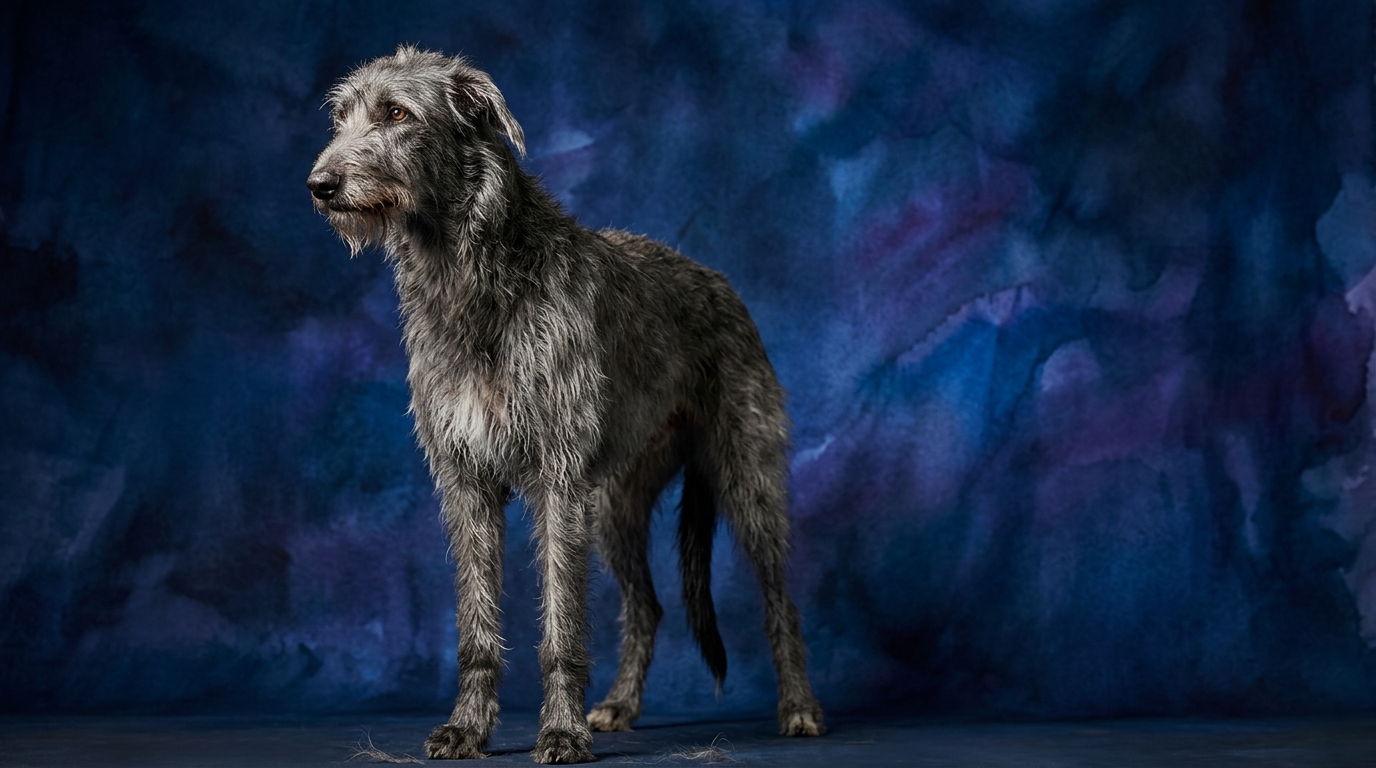
For the Scottish Deerhound, a '3/5' in **Problem Solving** often translates to an independent and strategic approach. Their origins as deer hunters mean they can assess vast landscapes and devise efficient chase strategies, often relying on visual cues and their own judgment rather than constant human direction. Their '3/5' **Training Speed** reflects a capacity for learning, though their independent spirit means they respond best to positive reinforcement and clear, compelling motivations. They absorb information at a steady pace but might need to understand the 'why' behind a command. Their '3/5' **Social Intelligence** manifests as a reserved dignity; they are deeply affectionate with their inner circle, reading familiar human emotions acutely, but are not overtly gregarious with strangers. A '3/5' **Instinctive Drive** points to a powerful sighthound prey drive, particularly for large, fast-moving quarry, which can be a consuming focus. Finally, their '3/5' **Memory** allows them to reliably recall routines, learned commands, and the comfortable spots in their environment, retaining experiences and associations effectively.
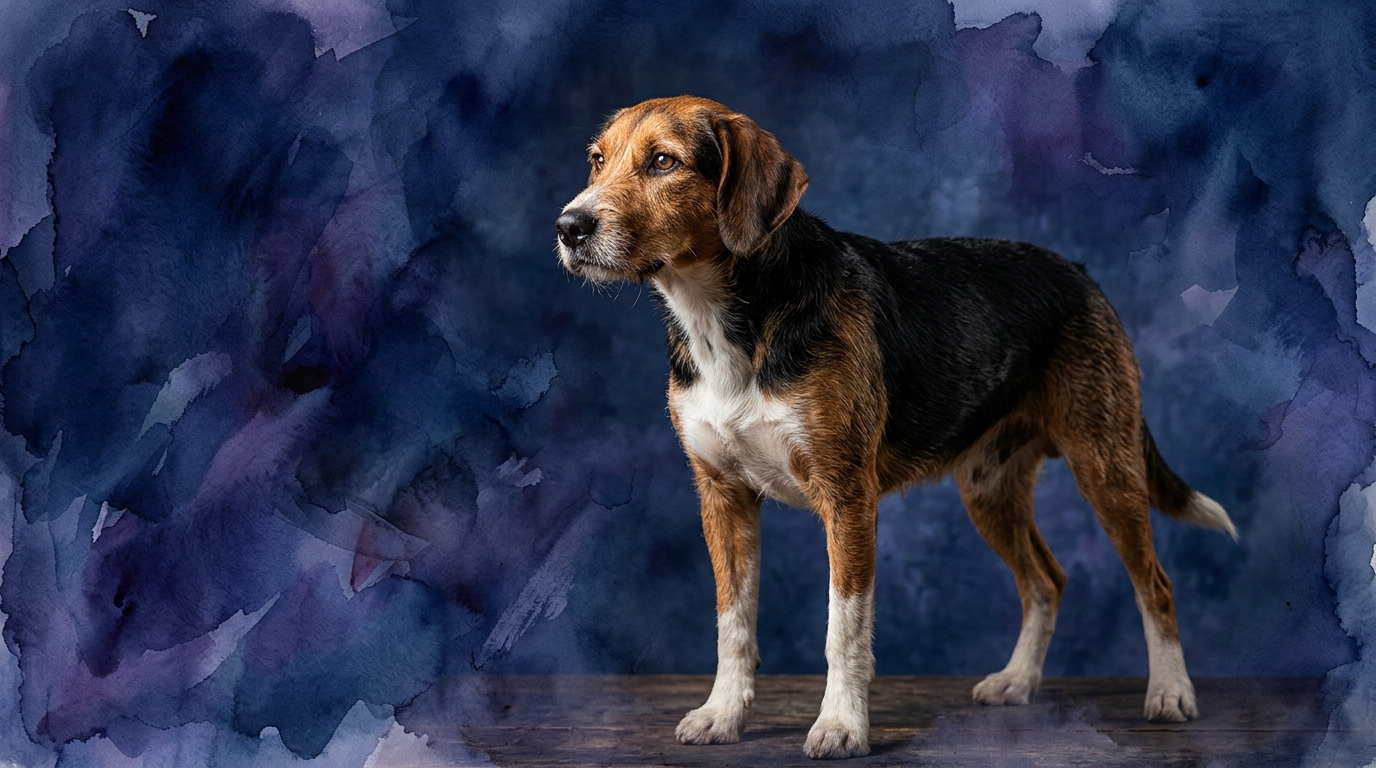
The Harrier, too, scores '3/5' across the board, but their expression is shaped by their pack-hunting, scent-driven heritage. Their '3/5' in **Problem Solving** often involves persistent, methodical tracking and navigating complex scent trails, demonstrating sustained focus to overcome environmental puzzles related to their quarry. A '3/5' **Training Speed** indicates they are capable learners, often eager to please and work within a group structure, though their strong scent drive can be a distraction. They pick up commands steadily, especially when training aligns with their desire for engagement and activity. Their '3/5' **Social Intelligence** is geared towards pack dynamics; they are typically outgoing, thriving on interaction with both humans and other canines, and are adept at understanding group cues. A '3/5' **Instinctive Drive** signifies an intense, pervasive scent drive, compelling them to follow a trail relentlessly, often with a collaborative spirit. Their '3/5' **Memory** is particularly strong for scent patterns, the locations of past finds, and the learned strategies within their pack, allowing them to build a rich tapestry of sensory recall.
Where the Scottish Deerhound Demonstrates Unique Cognitive Strengths
Despite identical numerical scores, the Scottish Deerhound showcases distinct cognitive strengths rooted in their sighthound nature and historical purpose. Their problem-solving, while rated 3/5, often involves a sophisticated form of spatial reasoning and visual assessment. A Deerhound excels at quickly evaluating distances, trajectories, and optimal paths during a chase, a cognitive skill refined over centuries of pursuing fast-moving game across open terrain. This visual acuity translates into an ability to navigate complex environments or identify subtle changes in their surroundings with precision, often before a scent-driven breed might register the same information. Their independent streak, a hallmark of many sighthounds, means they are adept at making decisions autonomously, processing information and acting without requiring constant human guidance, which can be a strength in situations demanding swift, individual judgment. This self-reliance in decision-making is a unique cognitive facet, enabling them to adapt to novel situations by drawing on their own internal logic rather than relying on external cues or a pack structure.
Where the Harrier Demonstrates Unique Cognitive Strengths
The Harrier, with its equally rated 3/5 cognitive profile, shines in areas uniquely tied to its heritage as a pack-hunting scent hound. Their problem-solving prowess, while numerically similar, is expressed through an extraordinary capacity for sustained focus and intricate pattern recognition related to scent. A Harrier can methodically unravel a complex scent trail, distinguishing individual odors and following a faint path over varied terrain and through distractions, a task requiring immense cognitive endurance and analytical processing. This ability to break down and reconstruct a narrative purely through olfaction is a profound cognitive strength. Furthermore, their inherent social intelligence and drive to work in a pack mean they possess a nuanced understanding of group dynamics and communication. They are adept at coordinating efforts, reading the intentions of their human and canine companions, and contributing to a collective goal. This collaborative problem-solving, where individual efforts are integrated into a cohesive group strategy, is a particular cognitive advantage for the Harrier, allowing them to leverage the 'brains' of the pack to achieve objectives.
Training Dynamics: Independence vs. Pack Drive
When considering ease of training, the identical 3/5 'Training Speed' scores belie significant behavioral differences between the Scottish Deerhound and the Harrier. The Deerhound, true to its sighthound lineage, possesses a dignified independence. While they are certainly capable of learning commands and routines at a steady pace, their primary motivation often stems from comfort, food, or a clear understanding of 'what's in it for them.' Their strong prey drive means that in an outdoor environment, a squirrel or a blowing leaf can instantly override human commands, requiring consistent, high-value reinforcement and early, meticulous recall training. They are not inherently driven to constantly please or seek approval; instead, they weigh the perceived value of compliance against their own desires, which can make training feel like a negotiation rather than eager participation. This means owners need patience, creativity, and a deep understanding of positive reinforcement to maintain engagement and achieve reliable responses, particularly in distracting environments.
The Harrier, on the other hand, while equally scoring 3/5 in 'Training Speed,' tends to be more biddable due to their strong pack drive and desire for engagement. They enjoy having a 'job' and thrive on working collaboratively, making them often more responsive to direction, especially when they perceive themselves as part of a team. Their strong scent drive can be a distraction, much like the Deerhound's sight drive, but their inclination to check in with their human 'pack leader' often provides more opportunities for redirection. Harriers benefit from structured, consistent training that leverages their love for activity and problem-solving, particularly scent-related games. While they can be stubborn if bored or if their nose takes over, their underlying desire to participate and please the group makes them generally more amenable to repeated training sessions and less prone to the 'what's the point?' attitude sometimes exhibited by more independent breeds. Therefore, while both learn at similar rates, the Harrier's inherent social structure often makes the *process* of training feel more straightforward and less challenging for the average owner.
Lifestyle Match: Active Endurance vs. Relaxed Sprints
The lifestyle fit for these two breeds hinges on understanding their distinct energy profiles. The Scottish Deerhound, despite its large size, is often described as a 'couch potato' indoors. They require intense bursts of exercise—sprints, gallops, and secure off-leash running in a very safe, enclosed area—but once these needs are met, they are content to lounge for hours. This makes them surprisingly suitable for owners who appreciate a calm, quiet companion indoors, provided they can commit to daily, high-intensity outdoor exercise. Their exercise needs are about quality over quantity in terms of sustained activity; short, fast runs are preferred over long, slow jogs. They thrive in homes with ample space, ideally a securely fenced yard where they can stretch their long legs. Owners who enjoy a relaxed home life but are dedicated to providing exhilarating, albeit brief, periods of outdoor freedom will find a good match with a Deerhound.
The Harrier, conversely, is built for endurance and sustained activity. As a pack hound, they possess a boundless energy supply and a drive to be constantly on the move, exploring with their nose. They require consistent, lengthy periods of exercise, often enjoying long walks, jogs, or hikes, and excel in activities like scent work, agility, and competitive obedience. A Harrier thrives with active owners who enjoy outdoor adventures and can provide regular, vigorous physical and mental stimulation. They are not content to be left alone for long periods or to simply lounge all day; their cognitive and physical needs demand engagement. Owners who lead an active lifestyle, enjoy training, and can integrate their dog into their daily routines will find the Harrier to be an enthusiastic and tireless companion. Their need for consistent stimulation means they are less suited for owners seeking a predominantly relaxed, low-maintenance canine presence.
The Verdict
Choose a Scottish Deerhound if you appreciate a dignified, independent companion who is calm indoors after fulfilling their need for intense, short bursts of secure outdoor sprinting.
Opt for a Harrier if you lead an active lifestyle and desire an outgoing, tenacious companion who thrives on consistent, vigorous exercise, scent work, and collaborative engagement.
🧠 Find Your Pet's IQ Score
Our Pet IQ Lab assessment covers 25+ tests across 5 cognitive dimensions — personalized to your breed.
Take the Full IQ Test →Frequently Asked Questions
Do Scottish Deerhounds and Harriers learn at the same rate?
The Cosmic Pet Pet IQ Lab rates both breeds at 3/5 for Training Speed, indicating they are equally capable of learning commands and routines. However, their motivations and inherent drives differ, meaning the *process* of training can feel distinct for owners.
Which breed is better with children?
Both breeds can be good with children when properly socialized, but their approaches differ. Deerhounds are often gentle giants, reserved but tolerant, while Harriers are typically more boisterous and playful, thriving on interaction within a family 'pack.'
Are these breeds suitable for apartment living?
Neither breed is ideally suited for apartment living due to their exercise requirements. While a Deerhound is calm indoors, their need for large, secure spaces to run freely is paramount. Harriers require even more sustained activity and mental stimulation, making a house with a yard and active owners a better fit for both.